 280,000
  30 years
  Secure


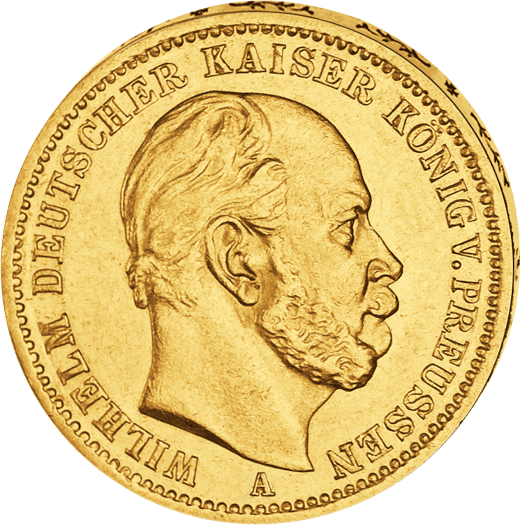


10 Mark Prussia Wilhelm I Gold Coin (First Issue of 1872 | Premium Coincard)













 Popular Product: Among the top 3 in category Goldmark
- Top Investment: A true investment classic
- Shipping costs: Free shipping within Germany available
 Price alert set
 share
share
10 Mark Prussia Wilhelm I. – the first gold mark of the German Empire
With the 10 Mark gold coin Wilhelm I. of Prussia, you hold a genuine piece of German history in your hands. The first issue of 1872 was the first ten-mark gold coin minted by the young German Empire after its founding – and it comes to you from Kettner Edelmetalle in a high-quality Premium Coincard that vividly tells the historical context of this coin.
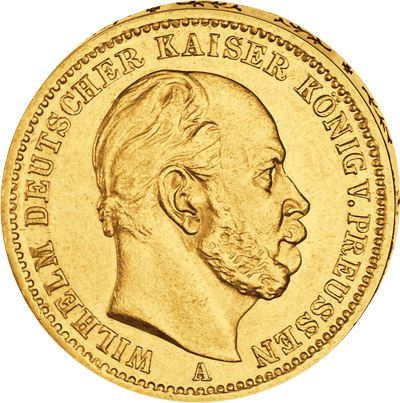
Design: The obverse features the distinctive, sharply rendered profile of Emperor Wilhelm I. with the inscription "WILHELM DEUTSCHER KAISER KÖNIG V. PREUSSEN". The reverse is dominated by the crowned imperial eagle with the Hohenzollern shield – flanked by the inscription "DEUTSCHES REICH", the year of issue, and the abbreviated denomination "10 M".
Material / Fineness: The coin is struck from reddish-shimmering 900 fine gold. The robust alloy consists of nine parts fine gold and one part copper – resulting in a pure gold content of 3.58 g fine gold from a gross weight of 3.98 g.
Manufacturer: The coin was struck by the imperial German mints. The mint mark "A" visible on this issue refers to the historic Mint of Berlin.
Why the first issue of 1872 is something special
After the founding of the Empire in 1871, the Mark of 100 Pfennig was introduced as the new, unified currency. As early as the following year, the first 10-mark coin of the Empire appeared – a historic milestone. One detail makes the early years of issue particularly sought after among collectors: in the mintings of 1872 and 1873, the face value was still written in abbreviated form as "10 M". Only from 1874 onwards was "10 Mark" written out in full, in order to firmly establish the young imperial currency in people's minds. Anyone who owns a Mark-Wilhelm minting from the first year of issue holds a clearly time-defined original in their hands.
The origin of the precious metal is also fascinating: a large portion of the gold came from French gold coins that flowed in as reparations following the Franco-Prussian War, were melted down and re-minted into German imperial gold coins. The included Premium Coincard covers this chapter and describes the legendary imperial war treasure stored in the Julius Tower of the Spandau Fortress.
The most important coin data at a glance
Face value: 10 Mark (Reichsmark)
Material: Gold, 900/1,000 (remainder copper)
Fine weight: 3.58 g fine gold
Gross weight: 3.98 g
Diameter: 19.50 mm
Design series: German Empire, Wilhelm I. of Prussia
Year of mintage: First issue 1872
Condition: Circulated, bank-grade
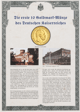
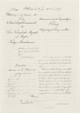
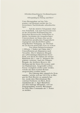
Delivery: in coin capsule and Premium Coincard with the protocol of the imperial proclamation of 24 January 1871, coin specifications, information on the first Reichsbank in 1876, and a high-quality replica of the imperial treasury featuring the imperial eagle.
Appealing to collectors and investors alike
Historic gold coins like this one unite two worlds: the cultural-historical appeal of an imperial gold coin over 150 years old and the tangible material value of the precious metal it contains. Those who collect Empire coins not infrequently begin their collection with a Prussian minting – the 10 Mark Wilhelm I. is considered a classic among the so-called gold marks. Compared to the larger 20-mark pieces, the 10-mark coin is more manageable and lower in price, making it an ideal entry point. Alongside the British Sovereign, the Swiss Vreneli, or Austrian ducats, it fits seamlessly into the family of classic trade gold coins.
Gold is the oldest currency in the world – a proven store of value for over 6,000 years that has never fallen to zero, because it possesses an inherent, intrinsic value.
Physical gold protects against loss of purchasing power and has always been regarded as a reliable inflation hedge. While central banks can expand fiat money almost without limit, the supply of gold is naturally scarce – a key reason for its long-term value stability. It is no coincidence that those very central banks are among the world's largest holders of gold. As a globally tradeable, highly liquid precious metal, gold can be converted back into cash at any time, thus also offering solid crisis protection in economically uncertain times.
Tax advantages of investment gold
Another advantage: investment gold is exempt from VAT (Value Added Tax) in Germany. If you sell your gold coin after a holding period of at least one year, any gains realised are generally tax-free. This historic gold coin can therefore be understood not only as a collector's item, but also as a long-term wealth-building asset – a value that can be passed down through generations. Secure the first issue of the 10 Mark Prussia Wilhelm I. in the Premium Coincard and bring a gleaming piece of the German Empire home.
Product depiction may differ from the final product.
