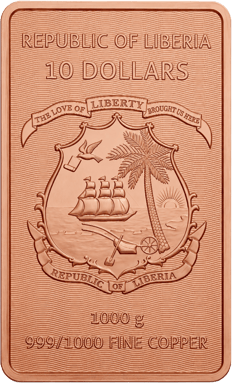
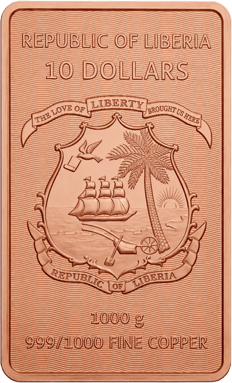
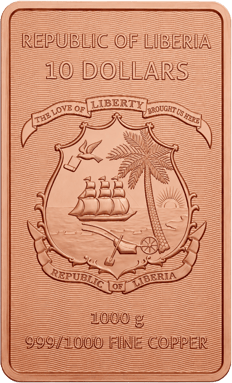
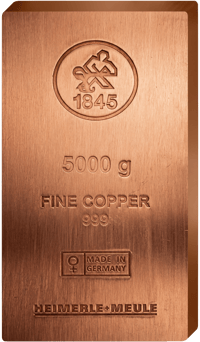
1kg Copper Bar Heimerle und Meule
€89.90€99.90
incl. VAT and excl. shipping
Ships from 03/12/2026
 More than 310,000
 Over 30 years
 Secure shipping
 Google: 4.9/5
Copper as an investment is enjoying increasing demand in the form of copper bars or copper coins. Rising industrial demand is making the freely available quantity of copper ever smaller and driving prices higher. Copper possesses excellent electrical and thermal conductivity and, due to its low internal resistance, is even more conductive than gold.


Most of us hold copper in our hands every day. The 1, 2 and 5‑cent coins have a skin of copper, with steel underneath. The Deutsche Bundesbank describes them as strongly magnetic.
The 10, 20 and 50‑cent coins are made of “Nordic gold”. It is not gold: the alloy is 89 per cent copper, with aluminium, zinc and tin added. It is not magnetic.
A magnet lifts the 1‑cent coin. The 10‑cent coin stays where it is.
The idea is older than the euro. The 1 pfennig coin of the D‑Mark had a steel core covered with copper on both sides. It measured 16.50 millimetres across, weighed 2.00 grams and was introduced in 1948. At 16.25 millimetres, the 1‑cent coin is almost the same size.
All three at the same scale. The diameters are given by the Deutsche Bundesbank, the ECB and our product data.
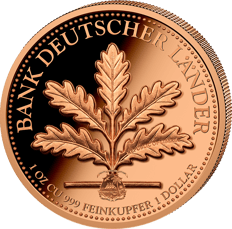
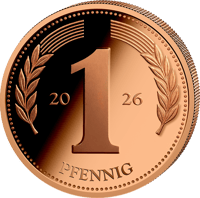 1 ounce copper Pfennig 2026Copper Pfennig 2026Liberia, 1 dollar1 ounce, 40 mmCopper 999/1,000
The design of the old pfennig, the numeral 1 between two ears of grain, now exists in copper for collectors. The coin was issued by Liberia, with a face value of 1 dollar.
Pure gold and pure silver are too soft for coins that pass through many hands. That is why copper was added to them. For the gold coins of the German Empire, the ratio was laid down in law.
“The mixing ratio of the Imperial gold coins is fixed at 900 thousandths gold and 100 thousandths copper.”
Gesetz, betreffend die Ausprägung von Reichsgoldmünzen, of 4 December 1871, § 4, Reichsgesetzblatt 1871, p. 404
Two years later, the silver coins were given the same formula. The Münzgesetz, the coinage act of 9 July 1873, lays down in Article 3: “900 parts silver and 100 parts copper” (Reichsgesetzblatt 1873, p. 234).
Sterling silver has a fineness of 925/1,000. According to The Royal Mint, the rest is usually copper, because copper makes the soft silver stronger.
Swiss gold coins, the Vreneli among them, are 90 per cent gold and 10 per cent copper. Of this alloy, Swissmint writes: “The colour of this material is quite red.”
The coins became yellow because the blanks were treated in a pickling bath before striking. In the process, copper is removed from the surface. The alloy itself makes the coin hard and resistant to wear and tear.
Goldmark, 1871Goldmark
Sterling silverSterling
Each grid has 1,000 squares, and each square is one thousandth. In sterling silver, the rest is usually copper.
The Statue of Liberty in New York is made of copper. Its skin is only 3/32 inch thick, about 2.4 millimetres, according to the National Park Service.
The copper was shaped in Paris, in the workshop of Gaget, Gauthier & Co. There the sheets were hammered over wooden forms, and the statue was assembled from 1881 to 1884.
The skin does not carry its own weight. Flat metal straps connect it to Gustave Eiffel’s framework. They hold the statue together and flex like springs.
Taken apart into 350 pieces, the statue arrived in New York on 17 June 1885 aboard the ship “Isère”. It was dedicated on 28 October 1886.

Both at the same scale, enlarged. The thickness of the skin is given by the National Park Service, that of the coin by the ECB.
There is a lot of copper in American small change, too. The 5‑cent coin is called the “nickel” there, but it is three quarters copper.
“The 5‑cent coin is an alloy of 75 percent copper and 25 percent nickel.”
United States Code, 2024 edition, Title 31, § 5112 (b)
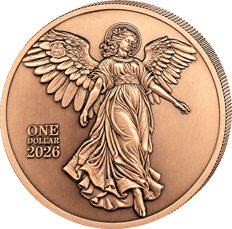
For collectors, there is the Libertas Americana 2026 in copper, issued by Liberia with a face value of 1 dollar.
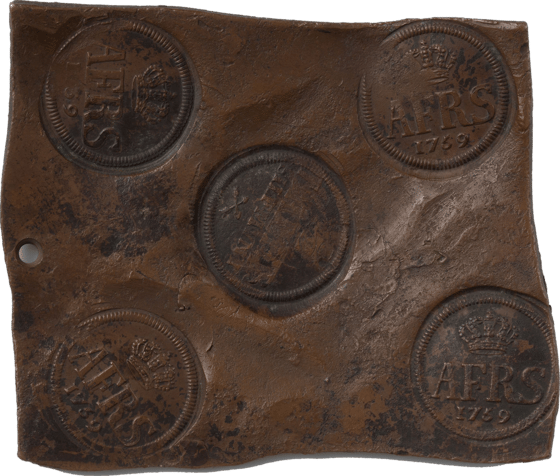
In Sweden in the 17th and 18th centuries, copper itself was money. The coins were worth as much as their metal. Because copper was worth less than silver, a copper coin of 10 daler had to be large and heavy.
The 10‑daler plate made at Avesta in 1644 weighs 19.7 kilograms. The Royal Coin Cabinet in Stockholm calls it the largest coin in the world.
The plates were moved on sledges. Europe’s first banknotes were issued in 1661 by Stockholms Banco. They quickly became popular because they were more convenient than the heavy copper coins, according to Sweden’s Riksbank.
Both at the same scale, seen from above. The measurements of the plate are given by the Rijksmuseum in Amsterdam, those of the coin by the ECB. A ½‑daler plate of 1759 with five stamps. Rijksmuseum Amsterdam, public domain (CC0).
By calculation: 19.7 kilograms is just under four bars of 5 kilograms each.
In the 17th century, at times around two thirds of the world’s copper came from Sweden, above all from the mine at Falun.
At Midsummer 1687, the mine collapsed. It left behind the “Stora Stöten”, a crater 95 metres deep. No miner was killed, because they all had time off to celebrate Midsummer.

In the Mansfeld region of Saxony‑Anhalt, the copper lies in a thin, dark layer of rock, the copper shale. It is only 20 to 40 centimetres thick and was laid down as sediment in a sea about 255 million years ago.
According to tradition, the miners Nappian and Neucke found this layer near Hettstedt in the year 1199. This is reported in the Mansfeldische Chronik by Cyriacus Spangenberg, dating from 1572.
Copper was mined here and near Sangerhausen for almost 800 years. Mining in the Mansfeld basin ended in 1969, near Sangerhausen in 1990.
Diagram of a section two metres high. The thickness of the layer is to scale, based on the Landesamt für Geologie und Bergwesen Sachsen‑Anhalt, the state office for geology and mining.
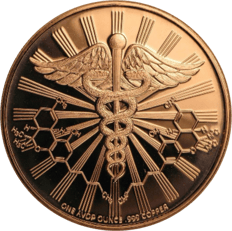
Buying copper at Kettner Edelmetalle means holding genuine fine copper in your hand, as a copper bar with a hallmark and certificate, or as a copper coin with a design and limited mintage. Here you will find everything about the red semi-precious metal in one place, from heavy bars from major manufacturers to collector's items in Proof quality. Every order travels to you fully insured and in neutral packaging.
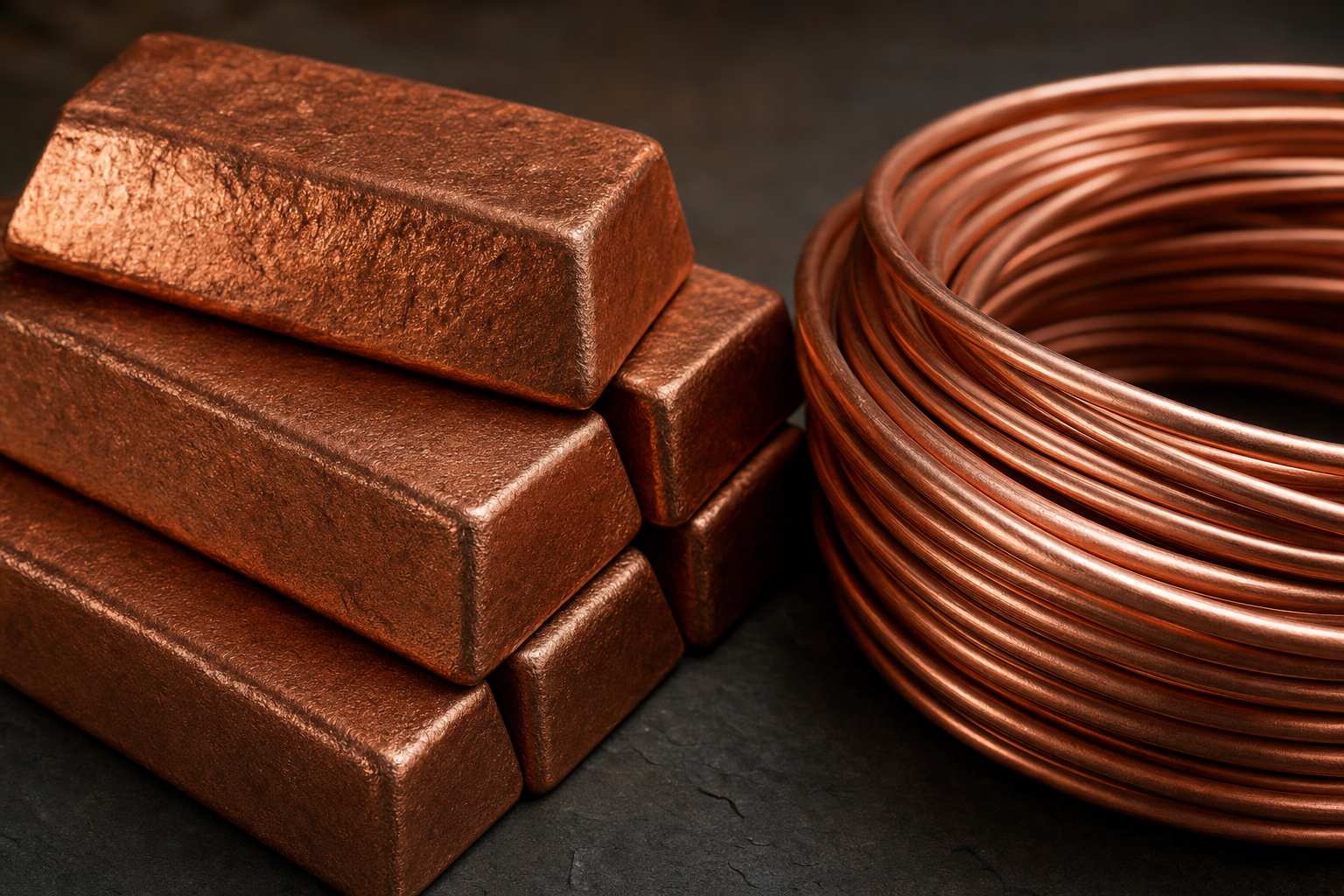
Our range is divided into three forms. Which one suits you depends on whether you want a lot of weight or a piece with a story. You can compare all products directly in the list at the top of this page.
Our bars come from two renowned houses. Heimerle + Meule from Pforzheim produces the 1 kg copper bar and the 5 kg copper bar, while Germania Mint produces its kilo bar with a double eagle and individual serial number. Weight and fineness 999 are stamped on each bar. Anyone looking for as much weight as possible in a single piece should opt for a bar.
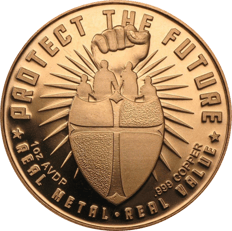
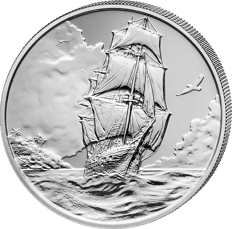
With coins, besides the metal, the design matters too. Some series from our shop:
You can find all series under further series. Coins in Proof quality are best stored in their capsule or in suitable coin capsules.
Strictly speaking, no. The precious metals are gold, silver and the platinum group metals such as platinum and palladium. Copper is considered a semi-precious metal: it is nobler than iron, does not rust, and over time develops a protective patina in the air. Its element symbol is Cu, from the Latin cuprum.
Nevertheless, copper is closely linked to precious metals. It is found in many gold coins as an alloy: the gold Krugerrand consists of 91.67 per cent gold, with the remainder being copper, which gives it its warm, reddish tone. Red gold, too, is gold alloyed with copper. As a standalone investment, copper complements your precious metals with an industrial metal of its own character.
Anyone wanting to invest in copper is backing a raw material without which the modern world would not function. After silver, copper has the best electrical conductivity of all metals, while being far more readily available. Because of this property, it is found in power grids, motors, wind turbines, solar installations and the data centres of artificial intelligence. Electromobility is boosting demand further: an electric car requires several times as much copper as a combustion vehicle, and charging stations and new cabling add to this.
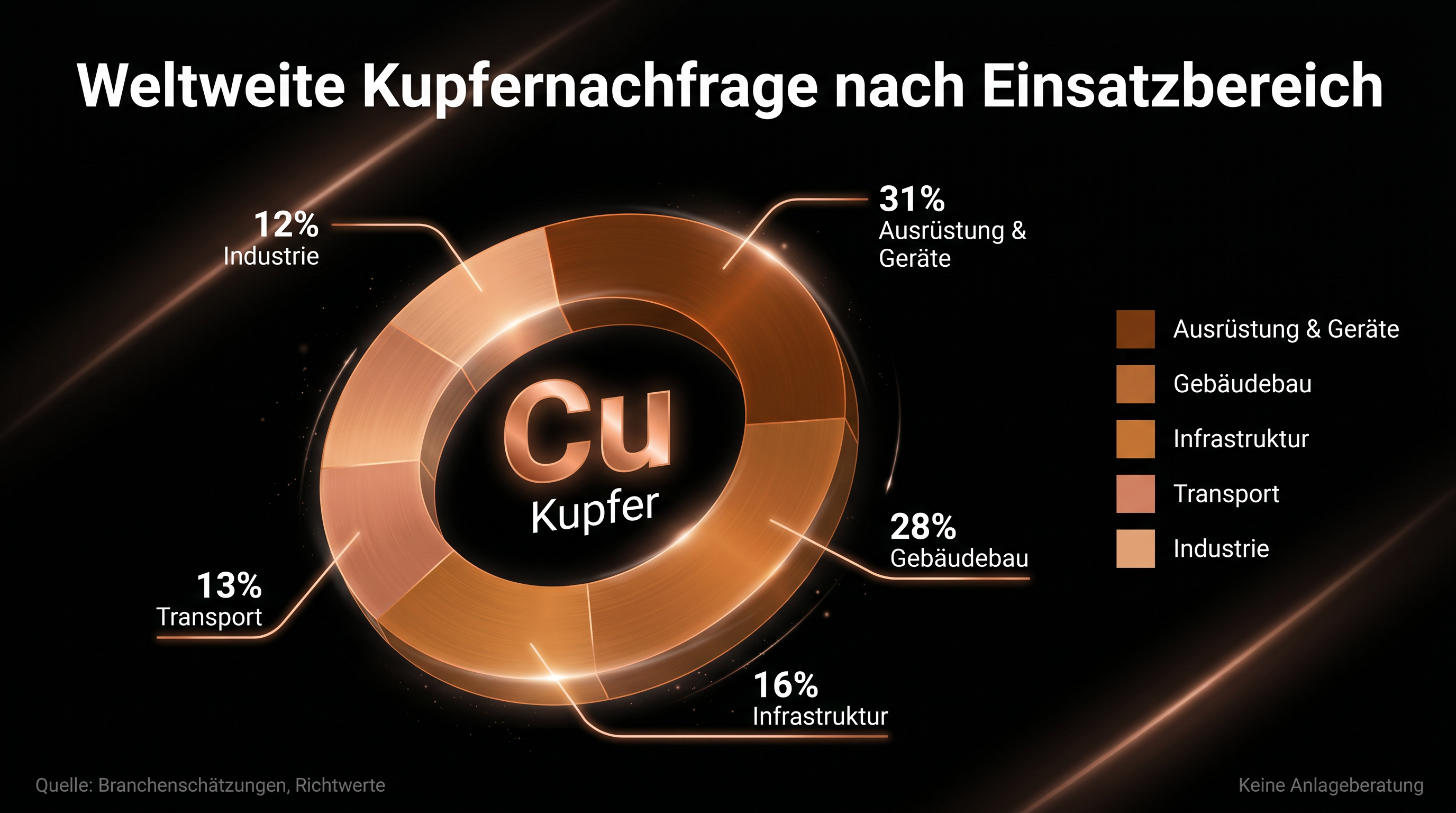
Investors who invest physically in raw materials thus benefit from demand that is driven simultaneously by various industries. On the other hand, there are clear risks you should be aware of:
Our conclusion: copper does not replace gold bars or silver bars, but it is an appealing addition for diversification and a tangible way into tangible assets. You can read more background in our guide Copper as an Investment.
On the stock exchange, you can invest in copper via commodity ETCs, mining share ETFs, futures contracts, or shares in individual mining companies. Such instruments can be bought and sold quickly, but they only track the price and carry the issuer's risk. Those who buy physically own the metal itself: a bar or a coin that belongs to you, independent of any bank, exchange or issuer. This is exactly the feeling many of our customers are looking for.
Copper is traded on major commodity exchanges such as the London Metal Exchange, quoted in US dollars per tonne. Because copper is used in almost every industry, market observers call it Dr. Copper: its price is an early indicator of how the world economy is doing. You can find the price, converted per kilogram, on our page about the copper price.

On the supply side, Chile leads by a wide margin, followed by the Democratic Republic of the Congo and Peru. New mines often take more than a decade from discovery to production, while demand is growing faster. Part of the demand is met through recycling, since copper can be melted down again without any loss of quality.
You can see the current prices directly on each product, always including VAT. Unlike investment gold, copper is not tax-free: as a rule, the standard rate of 19 per cent applies, with the reduced rate applying to some collector's coins, and some items being offered under the margin scheme. The exact details are stated for each item.
We ship fully insured until the parcel is handed over to you, and the package is neutrally packaged. At home, store copper in a dry place and in its original packaging. Bars are best handled with cotton gloves. A patina is normal, it protects the surface and does not change the fineness in any way.
Directly here in the Kettner Edelmetalle shop. You choose a copper bar in 1 kg or 5 kg, a copper coin from one of our series, or a minted bar, add it to your basket and receive your order fully insured and in neutral packaging.
No, copper is a semi-precious metal. Precious metals are gold, silver and the platinum group metals. Copper does not rust, but forms a patina in the air. In gold coins such as the Krugerrand, it serves as an alloying metal.
Copper benefits from power grids, electromobility and renewable energy, but as an industrial metal it fluctuates with the economic cycle. As an addition to gold and silver and as a tangible entry into commodities, buying it can make sense. There is no guarantee of rising prices.
Yes. As a rule, it is 19 per cent, the reduced rate applies to some collector's coins, and some items are taxed under the margin scheme. The information is stated for each item, and the displayed price already includes the tax.
Anyone who wants as much metal as possible should buy bars. Anyone who enjoys designs, mintages and gifts should choose coins. In comparison, many investors opt for both: a kilo bar as a base holding and coins for the collection.
Pure copper has a salmon red to reddish brown colour and is not magnetic. For bars, the stamped hallmark with manufacturer, weight and fineness 999, as well as an accurate scale, can help. Brass and bronze appear more yellowish.
Stay informed with product launches, financial news and exclusive offers. Sign up for our free newsletter today.
By entering your email address and clicking the “Submit” button, you give the following consent: “I agree to be informed by email about new products, financial news and exclusive offers, and therefore consent to the processing of my email address for the purpose of sending the newsletter. I can revoke this consent at any time without giving reasons, with effect for the future. The lawfulness of processing carried out prior to revocation remains unaffected.”