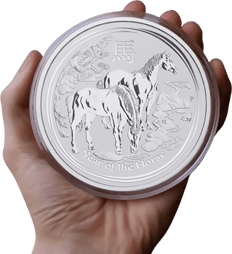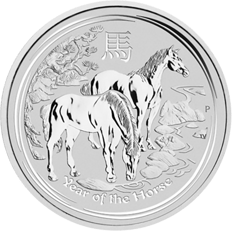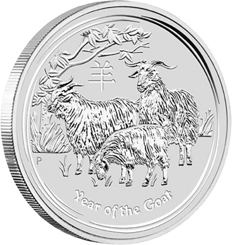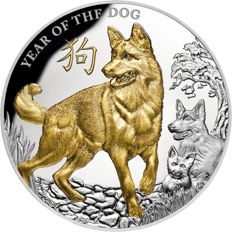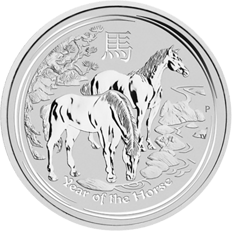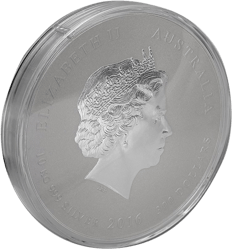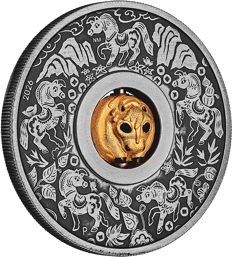
1 oz Silver Year of the Horse Rotating Charm 2026 (Mintage: 3,000 | Antique Finish)
€249.00
incl. VAT and excl. shipping
Available in 2–3 business days

 More than 310,000
 Over 30 years
 Secure shipping
 Google: 4.9/5
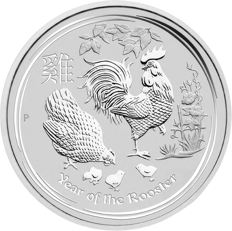
The Silver Lunar Series II (2008-2019) is the logical successor to the first series, which conquered the coin market with great success. Following the incredible growth in demand for the first series, the silver coins of the 12 years featuring the designs of the 12 Chinese zodiac signs are even more sought after. A more contemporary, modern design and increasing overall demand for silver make the Lunar Series II in silver one of the most affordable collector's coins on the market. The Lunar 2 Series in gold is available here.


The Lunar Series II in silver is one of the best-known design series in the modern coin world. Between 2008 and 2019, the Australian Perth Mint released a new zodiac sign of the Chinese lunar calendar every year, from the mouse to the pig. This guide explains the history and background of the twelve-part series, the available denominations, authenticity features, the tax treatment of silver coins, and the difference between bullion and collector pieces.
The Lunar Series II is the successor to the first Lunar series and builds on its success. It is issued by the Perth Mint in Western Australia, one of the world's most traditional mints. After the end of the first series, the second edition started with a revised, internationally oriented design and a larger diameter with a slightly flatter strike. The focus is placed more strongly on the respective animal design on the reverse.
Each edition features one of the twelve zodiac signs of the Chinese calendar. The cycle follows a fixed order and repeats every twelve years. This combines Far Eastern symbolism with Western minting artistry, a concept that sets the series apart from purely Western design series such as the Maple Leaf or the Vienna Philharmonic. The entire series is part of the extensive range of silver coins, which spans from pure bullion classics to limited collector pieces.
The Perth Mint strikes the Lunar coins from 999 fine silver and is also responsible for the gold and platinum variants of the series. In addition to the silver edition, the series also exists as Lunar Series II in gold. Those who want to trace the development of the design concept will find the original series in the Lunar Series I and the current continuation in the Lunar Series III.
Over twelve years, a complete set was created. Each year represents a zodiac sign that carries its own characteristic meaning in Chinese astrology. The individual years of issue are:
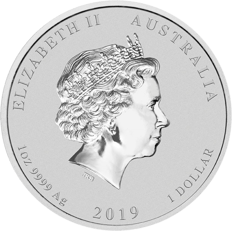
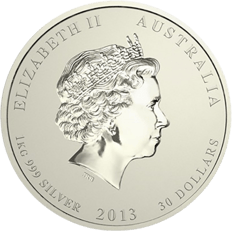
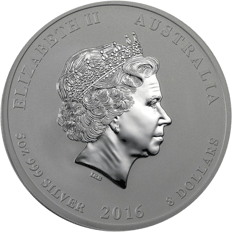
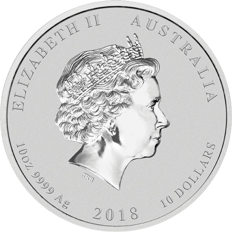
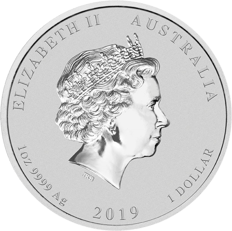
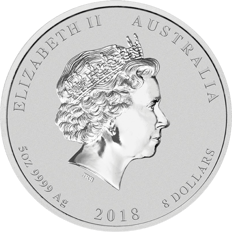
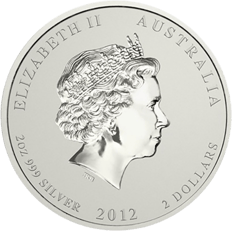
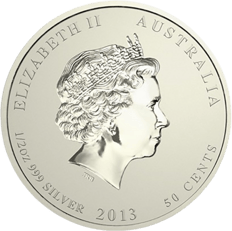
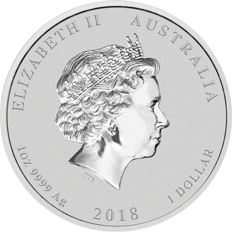
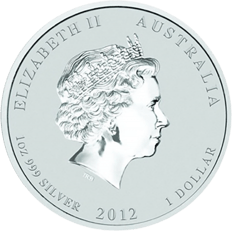
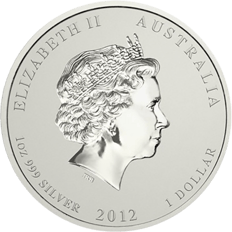
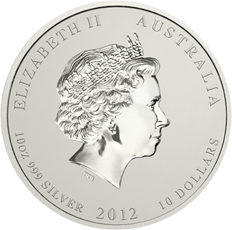
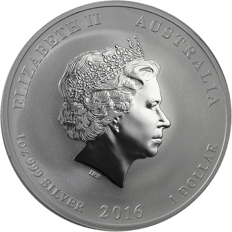
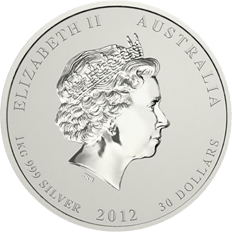
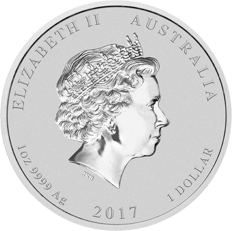
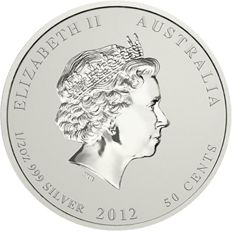
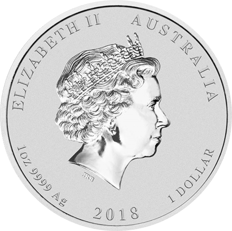
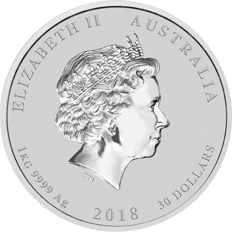
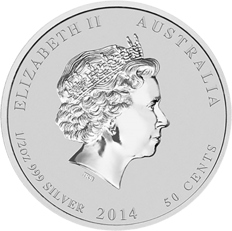
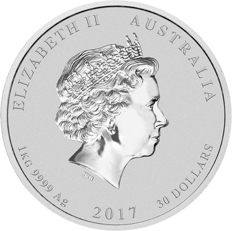
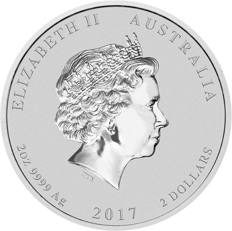
The obverse shows a uniform portrait on all editions, along with details of weight, fineness and face value. Some years of issue additionally appeared as a coloured variant or in Proof quality. Those interested in the individual animal designs and their cultural symbolism will also find yearly changing animal depictions in the Perth Mint's Koala and Kookaburra editions.

A hallmark of the series is the wide range of sizes available. This makes the series suitable both for newcomers with a small budget and for collectors seeking impressive large formats. The years of issue typically appeared in the following weights:
The smaller denominations are flexible to trade and can later be sold individually. The large formats tie up more capital but impress with low mintages. Suitable coin capsules are recommended for the safe storage of individual pieces, while complete year sets find an orderly place in a coin case. Those who focus purely on material value will find a lower-premium alternative in classic silver bars.
Silver coins from the Perth Mint are considered forgery-proof because they combine several well-documented features. Precise minted details, exact weight specifications and the standardised diameter are particularly important. The following points help with verification:
At Kettner Edelmetalle, precious metals undergo an ISO-compliant authenticity verification before leaving the logistics centre. Those seeking additional security opt for editions with an included certificate of authenticity. Comparable security standards also apply to other bullion classics such as the American Eagle or the Britannia.
Unlike investment gold, silver coins in Germany are generally subject to VAT. For bullion coins made of silver, however, the margin scheme taxation frequently applies, under which tax is charged only on the trading margin and not on the full purchase price. This reduces the effective mark-up compared to regular taxation.
Tax notice
For private sales transactions in Germany, a one-year speculation period applies: those who hold silver coins for longer than twelve months can realise any capital gain tax-free. This is general information and does not replace individual tax advice.
Because the tax situation differs between gold and silver, many collectors combine both metals. Investment-oriented buyers therefore often supplement their silver holdings with VAT-exempt gold coins or with silver bullion coins to balance costs and opportunities.
Silver reacts more sensitively to environmental influences than gold and can tarnish on contact with moisture or sulphur. Proper storage therefore preserves the collector's value. The following have proven effective:
For transport or protected presentation, coin pouches are suitable, while extensive collections can be clearly stored in a coin case. Those who own coloured pieces or pieces struck in Proof quality should protect them particularly from direct finger contact to preserve the sensitive surface.

The Lunar Series II moves between two worlds. As a pure silver investment, the 1 oz denomination offers a low mark-up on the material value and can always be sold easily. As a collector's series, it scores points through the limited mintages of individual years and the complete design sequence spanning twelve years.
A complete design series tells a story spanning twelve years, and that is exactly what makes the Lunar series so appealing for collectors.
Particularly sought after are the dragon and snake years, as well as the coloured special editions in Proof quality. Those with a collector's focus will find further thematic series in the collector's coins category. For the long-term, systematic build-up of a holding, it is worth taking a look at the savings plan products. Design-related alternatives from the Asian region are also offered by the China Panda with its yearly changing design.
The series consists of twelve editions issued from 2008 to 2019. Each coin depicts one of the twelve Chinese zodiac signs, from the mouse to the pig.
The issuer is the Perth Mint in Western Australia. It strikes the coins from 999 fine silver and is also responsible for the gold and platinum variants of the series.
The years of issue were released, among others, in 1/2 oz, 1 oz, 2 oz, 5 oz, 10 oz, 1 kg as well as in rare 10 kg editions. The 1 oz variant is the most traded size.
Silver coins are subject to VAT in Germany, although the margin scheme taxation frequently applies to bullion coins. After a holding period of more than one year, private capital gains can be tax-free. This does not replace individual tax advice.
The second series is larger in diameter and flatter in design, the design was given an international orientation and places greater focus on the animal motif. The first series, by contrast, was more closely tailored to the Asian market.
Particularly coveted are the 2012 dragon year and the 2013 snake year, as well as the coloured special editions in Proof quality with low mintages.
 Lunar Series II
Stay informed with product launches, financial news and exclusive offers. Sign up for our free newsletter today.
By entering your email address and clicking the "Submit" button, you give the following consent: "I agree to be informed by email about new products, financial news and exclusive offers, and therefore consent to the processing of my email address for the purpose of sending the newsletter. I can revoke this consent at any time without giving reasons, with effect for the future. The lawfulness of processing carried out prior to revocation remains unaffected."