Offer -100,00 €

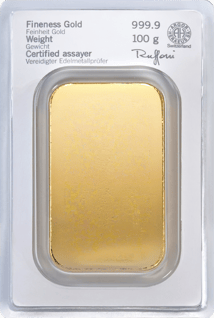
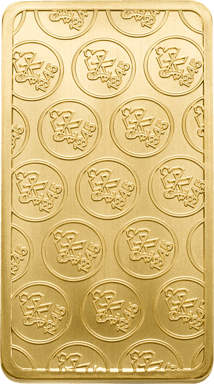
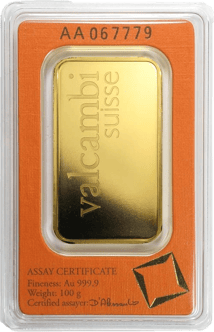
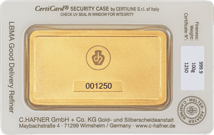
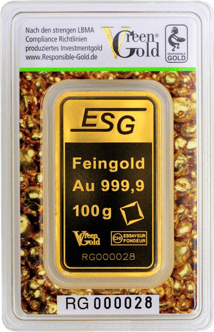
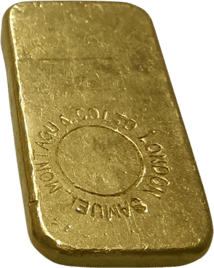
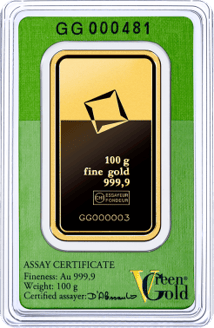
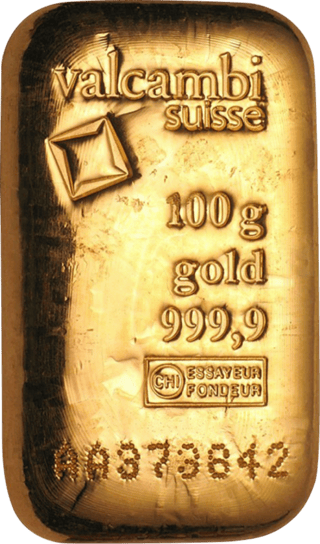
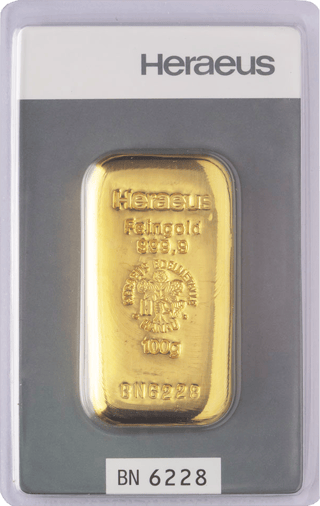
100g Gold Bar Heimerle und Meule (cast)
12.878,84 €12.978,84 €
VAT-free and excl. shipping
Available in 3–4 business days

 More than 280,000
 Over 30 years
 Secure shipping
 Google: 4.9/5
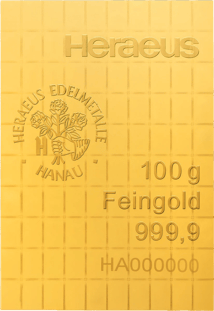
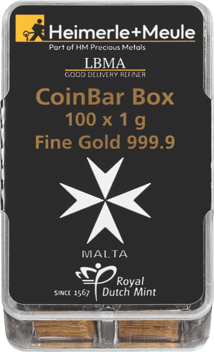
100g gold bars are often regarded as the premium category among gold bars. The variety within this category is fascinating. Take the time to discover the differences: cast bars (some heat-sealed), minted bars (some in blister packaging) and CombiBars. This variety also extends across various renowned manufacturers, ready to impress you.


The Shanghai Gold Exchange delivers its Au99.99 contract in bars of one kilogram. Each of these bars has a fineness of at least 999.9/1,000.
“The Exchange shall only provide whole bars and ingots for withdrawal, and will not offer to cut or exchange any bars or ingots.”
Shanghai Gold Exchange, Detailed Delivery Rules of 2019, Article 36
Based on the Detailed Delivery Rules of the Shanghai Gold Exchange of 2019, Annex 1 and Article 14, and its product page for Au99.99. The 100 tick marks are calculated: 1,000 grams per bar, 10 grams per lot.
This contract is traded in lots of 10 grams. Whoever withdraws gold from the exchange’s vault, however, receives it only as a whole bar. By calculation, that is 100 lots for one kilo bar.
Kilo bars may go into any vault the exchange has certified. The large bars of 12.5 kilograms are accepted only in its vaults in Shanghai and Shenzhen.
Refineries recognised by the LBMA, the association of the London precious metals market, may also deliver. The gold and silver exchange in Hong Kong also has its own contract for the kilo bar of 999.9/1,000.
In the London wholesale market, the kilo bar does not count as a standard bar. For the kilo bar of 999.9/1,000 there is a separate specification, endorsed by the LBMA, the association of the London precious metals market, and by the gold exchange in Shanghai.
It sets out a frame: 80 to 120 millimetres long, 40 to 60 millimetres wide and 7 to 14 millimetres high, rectangular and weighing at least 1,000 grams.
“Specifications are for cast bars.”
LBMA and Shanghai Gold Exchange, specifications for the kilo bar of 999.9/1,000
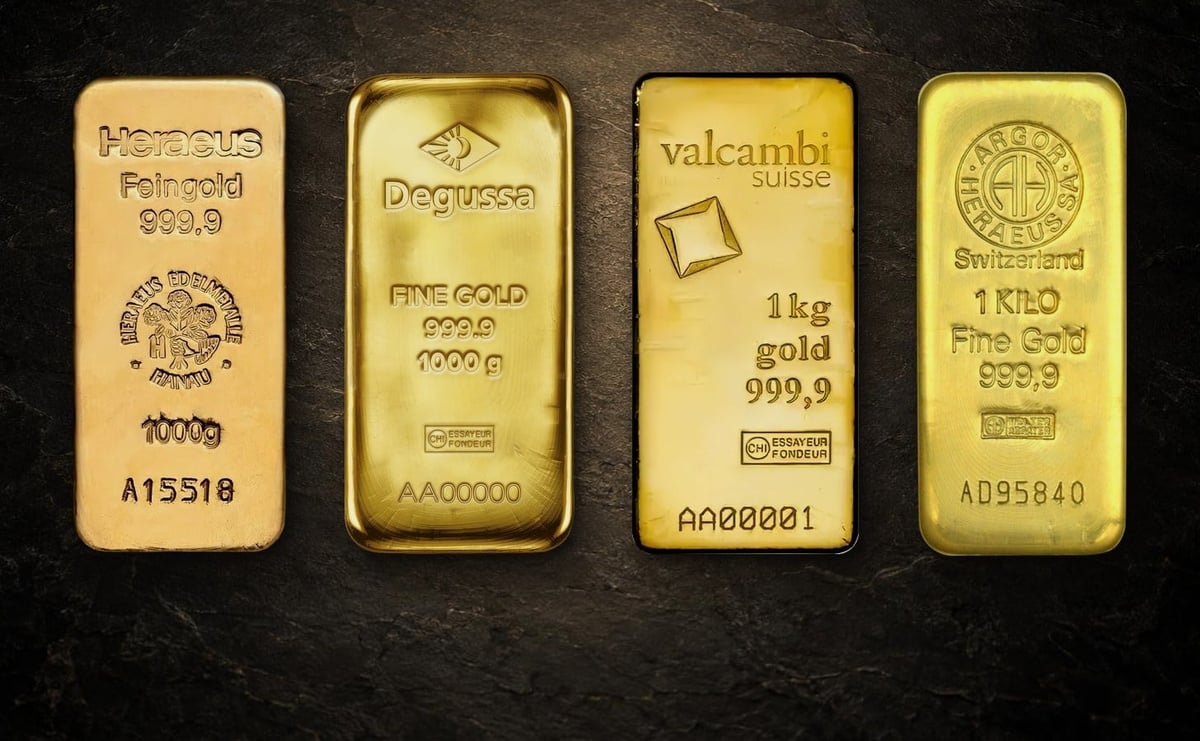
Outlines according to the makers: Heraeus 116 × 51, Degussa 117 × 51, Valcambi 117 × 53, Argor‑Heraeus 117.5 × 52 millimetres. Heraeus, Degussa and Argor‑Heraeus state the height, Valcambi does not. The identity card in the card format ID‑1. At the same scale, not at a scale of 1:1.
Four details belong on each of these bars: the refiner’s stamp, a serial number, the weight and the fineness to four digits. Every bar leaves the refinery with a certificate of analysis, and no serial number may be issued a second time.
In length and width, the kilo bars from Heraeus, Degussa, Valcambi and Argor‑Heraeus fall within this frame. According to the makers, they measure 116 to 117.5 by 51 to 53 millimetres.
For comparison, an identity card: it is 85.6 millimetres wide and 54 millimetres high. So these kilo bars are roughly as wide as the card is high, and about three centimetres longer than it is wide.
The London gold trade works in large bars of 350 to 430 fine ounces of gold. The World Gold Council calls them 400‑ounce bars. By calculation, 400 fine ounces are 12.44 kilograms of fine gold, enough for twelve kilo bars.
“… the shipment and transformation, on an epic scale, of 400oz London Good Delivery (LGD) bars into smaller denominations more suitable for consumers’ pockets.”
World Gold Council, Gold Demand Trends Full year 2013
Seen from above, at the same scale. The large bar in the middle of the dimensions the LBMA permits: 250 by 70 millimetres on top, 35 millimetres high, about four times as high as a kilo bar of 9 millimetres. Weights calculated at 31.1035 grams per fine ounce.
That is how the World Gold Council described the year 2013. At the time, much gold went from western vaults via refineries in North America, Switzerland and Dubai to Asia and the Middle East.
In the assessment of Thomson Reuters GFMS, the large bars went mainly through Swiss refineries and were converted there into kilo bars or smaller bars. According to its customs statistics, Switzerland exported 2,777 tonnes of gold that year, Reuters reported in February 2014.
Two formats meet here: London stores large bars, while in Shanghai, Hong Kong and India the kilo bar is one of the usual sizes.
Around two‑thirds of the gold India imports arrives as cast kilo bars of 995.0/1,000 or as 100‑gram bars. So the World Gold Council wrote in 2021. In the year before, the largest supplier was Switzerland.
There is a weight for gold and silver there that is older than the gram: the tola. Its name comes from the Sanskrit word tulā, “a balance”. That is what the Anglo‑Indian dictionary Hobson‑Jobson records, in its edition of 1903.

The balance is schematic, its tilt not to scale. Valcambi states the footprint of both bars, not their height. Calculated at 0.06479891 grams per grain, the value of the grain since 1959.
In 1833 the tola was fixed in British India at 180 grains, the weight of a silver rupee. In 1939 a law laid down the tola of 180 grains for the whole of British India, in force from 1 July 1942. By calculation, that is 11.66 grams.
By calculation, a bar of ten tola weighs just over 116.6 grams, about a sixth more than a 100‑gram bar. Valcambi in Switzerland still casts it today. At Valcambi, both bars have the same footprint of 26 by 44 millimetres. The extra weight of the tola bar lies in its height.
On 1 October 1958, India officially began to use the metric system. In 2003, Indian customs expressly set tola bars apart from bars that carry their weight in grams or kilograms and a serial number. In trade, the tola lives on: in the Emirates, according to an LBMA report, bars for private buyers range from 1 gram up to 10 tola.
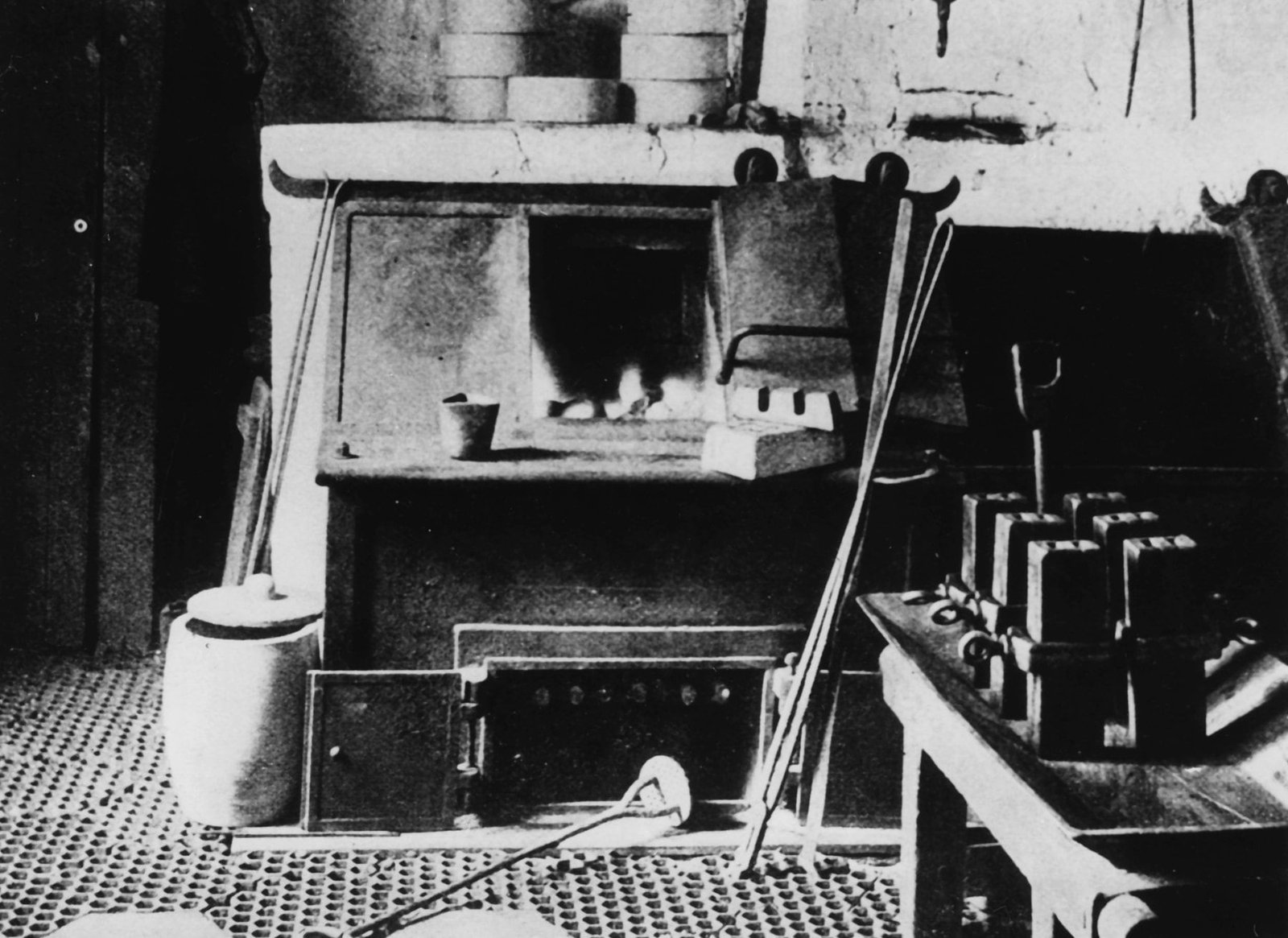
Large gold bars are mostly cast. For its large gold bars, the LBMA permits exactly two methods, both with moulds of graphite or cast iron.
“… either by the conventional method of pouring molten metal into them; or non‑conventional method of melting grain in an induction tunnel system …”
LBMA, Good Delivery List Rules, January 2022, section 2.1.2
Schematic, after the Rand Refinery for open casting and the equipment maker Italimpianti for the tunnel furnace.
In open casting, the caster directs a soft gas flame onto the gold in the mould until the top has solidified. In this way the bar cools from the bottom upwards, no shrinkage cavities remain, and the flame polishes the surface at the same time. Then the bar goes into the water bath. That is how a description of the Rand Refinery in South Africa from the 1980s puts it.
In the tunnel furnace, the gold already lies in the graphite mould as grain. A pusher moves the moulds into the melting zone, where induction melts the gold, and then over a water‑cooled plate, usually under nitrogen instead of air. Each bar weighs as much as the grain that lay in its mould, so the grain is weighed beforehand. That is how the equipment maker Italimpianti describes it.
Stamping comes only after casting. At the Rand Refinery in the mid‑1980s, the large bars waited for the laboratory result first, and only then was their fineness stamped in.
Receive a free and individual precious metals offer matching your financial goals within just a few minutes.
 Request offer now
Ein Barren mit 100 Gramm Feingold liegt schwer und satt in der Hand – ein kleines Stück konzentrierter Wert, das ein halbes Vermögen in eine handtellergroße Fläche packt. Genau diese Verbindung aus überschaubarem Format und hohem Gegenwert macht den 100-g-Goldbarren zu einem der beliebtesten Einstiege in die größeren Stückelungen. In den folgenden Abschnitten geht es um Herstellung, Feingehalt und Hersteller, um die Frage geprägt oder gegossen, um Echtheit, Steuer und Aufbewahrung – kurz: um alles, was vor dem Kauf eines 100-Gramm-Barrens zählt.
Der 100 g Goldbarren gilt neben dem Krügerrand als eines der meistgehandelten Anlageprodukte aus physischem Gold in Deutschland. Der Grund liegt im Verhältnis von Wert und Handlichkeit: Ein einzelner Barren bündelt einen Betrag, für den es in kleineren Größen viele Einzelstücke bräuchte, bleibt dabei aber noch gut zu transportieren und zu lagern. Wer sein Kapital in physisches Gold umschichten möchte, findet in diesem Gewicht einen soliden Kompromiss zwischen Aufpreis und Flexibilität.
Entscheidend ist der Aufgeld-Vorteil größerer Barren: Je höher das Feingewicht, desto näher liegt der Marktpreis am reinen Goldpreis. Ein 100-Gramm-Barren trägt prozentual einen deutlich geringeren Ausgabeaufschlag als etwa mehrere 10-Gramm-Stücke mit demselben Gesamtgewicht. Damit profitiert der Käufer bei steigenden Notierungen unmittelbarer von der Kursentwicklung. Diese Information ersetzt keine Anlageberatung, verdeutlicht aber, warum die 100-Gramm-Klasse als Standardgröße im Goldbarren-Segment gilt.
Gut zu wissen
100 Gramm Feingold entsprechen rund 3,2 Feinunzen – eine Feinunze wiegt 31,1035 Gramm. Ein einzelner 100-g-Barren bündelt damit etwas mehr Gold als drei klassische 1-oz-Einheiten und ersetzt eine ganze Reihe kleinerer Stückelungen; das erleichtert die Übersicht über den eigenen Bestand.

Vor dem Kauf steht oft die Grundsatzfrage nach der Form. Beide Wege führen zu physischem Gold, unterscheiden sich aber in Details, die je nach Ziel den Ausschlag geben. Barren punkten mit einem niedrigeren Aufgeld und klarer Gewichtslogik, Goldmünzen mit staatlicher Prägung und potenziellem Sammlerreiz.
Wer klassische Anlagemünzen bevorzugt, findet Orientierung beim Krügerrand oder beim Maple Leaf. Für die reine Gewichtsanlage bleibt der Barren jedoch die kosteneffiziente Wahl – und in der 100-Gramm-Klasse besonders ausgewogen.
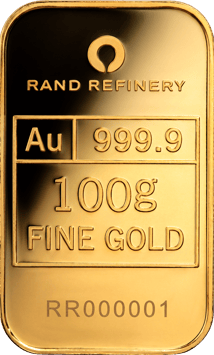
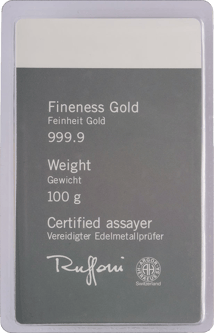
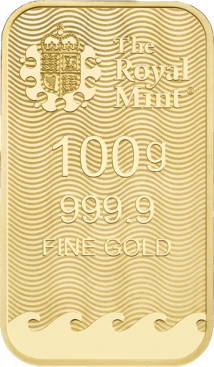
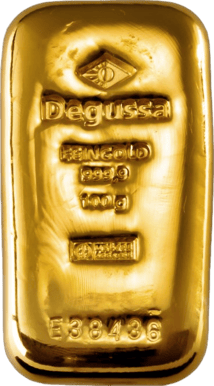
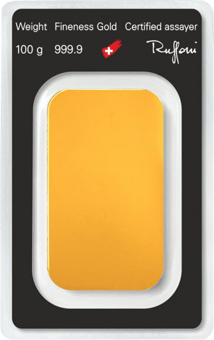
Anlagegold dieser Klasse weist einen Feingehalt von 999,9 auf – also 24 Karat reines Feingold. Diese Feinheit ist bei 100-Gramm-Barren praktisch durchgängig Standard und Voraussetzung dafür, dass sich der Preis eng am Goldpreis orientiert. Auf der Vorderseite trägt ein Barren üblicherweise den Herstellernamen samt Logo, die Feinheitsangabe „999,9“, das Feingewicht „100 g“ sowie eine individuelle Seriennummer.
100-Gramm-Barren gibt es in zwei Fertigungsarten, die sich optisch deutlich unterscheiden, im Goldgehalt aber identisch sind. Die Wahl ist damit vor allem eine Frage des Geschmacks.
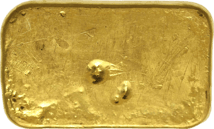
Weil Gussbarren dicker sind, fallen sie im direkten Größenvergleich kleiner in der Fläche aus als geprägte Barren desselben Gewichts. Wer die kompakte Bauform schätzt, greift zum gegossenen Stück; wer die klare, saubere Optik mag, zum geprägten. Kombibarren wie Gold-Tafelbarren bieten zusätzlich die Möglichkeit, ein größeres Stück später in kleinere Einheiten zu teilen.
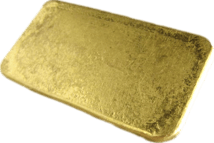
Ein Gussbarren erzählt vom Feuer, aus dem er entstand – kein Stück gleicht dem anderen.
Der Markt für 100-Gramm-Goldbarren ist breit, und die Herkunft spielt für Wiederverkäuflichkeit und Vertrauen eine Rolle. Besonders gefragt sind Barren etablierter Scheideanstalten und Prägestätten. Zu den bekannten Namen zählen unter anderem:
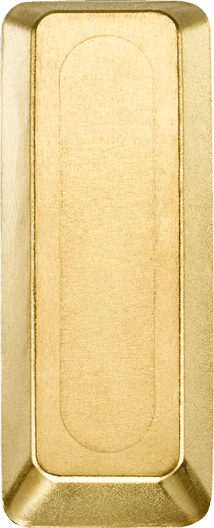
Viele dieser Barren stammen aus dem Tessin in der Schweiz, das als Herz der internationalen Goldbarren-Industrie gilt. Eine Übersicht aller geführten Marken bietet die Herstellerseite; wer gezielt sucht, findet etwa Heraeus oder Valcambi als eigene Kategorien. Die Rückseite bleibt bei den meisten Barren schlicht, während die Vorderseite alle relevanten Angaben trägt.
Beim Kauf von Feingold lohnt der prüfende Blick auf die Details. Seriöse 100-Gramm-Barren tragen eine individuelle Seriennummer und werden mit einem passenden Zertifikat geliefert, das Gewicht, Feinheit und Nummer bestätigt. Auch die Verpackung ist Teil der Sicherheit: Geprägte Barren stecken meist in einer versiegelten Blisterkarte, die den Barren vor Kratzern schützt und die Zusammengehörigkeit von Barren und Zertifikat sichert.
Ein weiteres Qualitätssignal ist der LBMA-Status „Good Delivery“. Die London Bullion Market Association ist ein Zusammenschluss von Unternehmen, die mit Feingold arbeiten – darunter Scheideanstalten und Händler. Barren anerkannter Refiner gelten als uneingeschränkt bankenhandelsfähig, was den späteren Wiederverkauf erleichtert. Bei Kettner Edelmetalle durchläuft eingehende Ware eine ISO-konforme Echtheitsprüfung, bevor sie das Hochsicherheitslogistikzentrum verlässt.
Ein wesentlicher Vorteil von Anlagegold: In Deutschland ist der Kauf von Anlagegold gemäß § 25c UStG umsatzsteuerbefreit. Für 100-Gramm-Barren mit einer Feinheit von 999,9 fällt somit keine Mehrwertsteuer an – anders als bei den meisten Silberprodukten. Zusätzlich sind Gewinne aus dem Verkauf physischen Goldes nach einer Haltedauer von mehr als einem Jahr steuerfrei. Diese Angaben dienen der Information und ersetzen keine steuerliche Beratung im Einzelfall.
Aufbewahrung
Ein 100-g-Barren ist kompakt genug für das heimische Wertfach und für ein Bankschließfach. Wichtig ist, den Barren in seiner versiegelten Verpackung zu belassen – das erhält den Zustand und die Verbindung zum Zertifikat. Passendes Zubehör findet sich in der Kategorie Zubehör.
Für die sichere Verwahrung eignen sich Dosensafes oder ein Bankschließfach; wer mehrere Barren und Münzen sammelt, ordnet sie übersichtlich in Münzkassetten. Da ein einzelner 100-Gramm-Barren einen hohen Wert bündelt, sollte die Lagerung entsprechend abgesichert sein.
Die 100-Gramm-Klasse richtet sich an alle, die einen substanziellen Betrag in einem einzigen, gut überschaubaren Stück anlegen möchten. Viele Anleger bevorzugen bewusst einen einzelnen Barren gegenüber vielen kleinen Einheiten – das erleichtert den Überblick über den eigenen Edelmetallbestand und wirkt oft emotional greifbarer als eine reine Zahl im Depot.
Wer maximale Teilbarkeit und Flexibilität als Tauschmittel sucht, ist mit kleineren Stückelungen wie dem 50 g Goldbarren oder handlichen 10 g Goldbarren besser bedient. Wer dagegen noch näher an den reinen Goldpreis heranrücken möchte und den höheren Kapitaleinsatz nicht scheut, blickt auf die nächste Klasse: den 1 kg Goldbarren. Das persönliche Budget sollte über die passende Größe entscheiden.
Ein Wort zur Abgrenzung von Silber: Auch in Silber gibt es Barren zu 100 Gramm, doch spielt diese Größe bei Silberbarren eine kleinere Rolle. Zudem unterliegen Silberprodukte anders als Anlagegold der Mehrwertsteuer – ein weiterer Grund, warum steuerfreie 100-Gramm-Goldbarren bei der reinen Wertanlage so gefragt sind.
Anlagebarren dieser Größe weisen praktisch durchgängig einen Feingehalt von 999,9 auf, also reines Feingold in 24 Karat. Diese Feinheit ist Voraussetzung für die enge Orientierung am Goldpreis und für die Umsatzsteuerbefreiung.
Der Goldgehalt ist bei beiden Varianten identisch, die Entscheidung ist reine Geschmackssache. Gegossene Barren wirken ursprünglich und sind kompakter, geprägte Barren erscheinen glatt, modern und werden oft in einer Blisterkarte geliefert.
Nein. Anlagegold ist in Deutschland gemäß § 25c UStG von der Umsatzsteuer befreit. Für 100-Gramm-Barren mit einer Feinheit von 999,9 fällt daher keine Mehrwertsteuer an. Diese Angabe ersetzt keine individuelle Steuerberatung.
Echtheitsmerkmale sind die individuelle Seriennummer, das mitgelieferte Zertifikat sowie die versiegelte Verpackung. Barren von LBMA-anerkannten Herstellern gelten als bankenhandelsfähig und lassen sich unkompliziert wieder verkaufen.
Ein 100-Gramm-Barren trägt prozentual ein geringeres Aufgeld als mehrere kleine Einheiten mit gleichem Gesamtgewicht. Wer dafür etwas Flexibilität bei der Teilbarkeit aufgibt, erhält den Gegenwert näher am reinen Goldpreis.
Ja. Barren mit 100 Gramm Feingewicht sind beim Ankauf gern gesehen und lassen sich schnell wieder veräußern – besonders Stücke bekannter Hersteller mit vollständigem Zertifikat und intakter Verpackung.
 100 g Goldbarren
Stay informed with product launches, financial news and exclusive offers. Sign up for our free newsletter today.
By entering your email address and clicking the "Submit" button, you give the following consent: "I agree to be informed by email about new products, financial news and exclusive offers, and therefore consent to the processing of my email address for the purpose of sending the newsletter. I can revoke this consent at any time without giving reasons, with effect for the future. The lawfulness of processing carried out prior to revocation remains unaffected."