


Sold out

100 Ounces Copper Bar Schloss Güldengossa (cast)
€84.32
incl. VAT and excl. shipping
currently not available

 More than 310,000
 Over 30 years
 Secure shipping
 Google: 4.9/5
The 100 oz copper bar is the heavyweight among copper bars and is aimed at anyone wishing to purchase physical copper in larger quantities at a favourable price per unit. With a fine weight of 100 troy ounces (around 3,110 grams) of 999.9 fine copper, this format combines a low premium per gram with the tangible presence of a solid metal block. This guide examines production, fineness, the cast bar format, the copper value, tax treatment, proper storage, and how copper compares to classic precious metals.
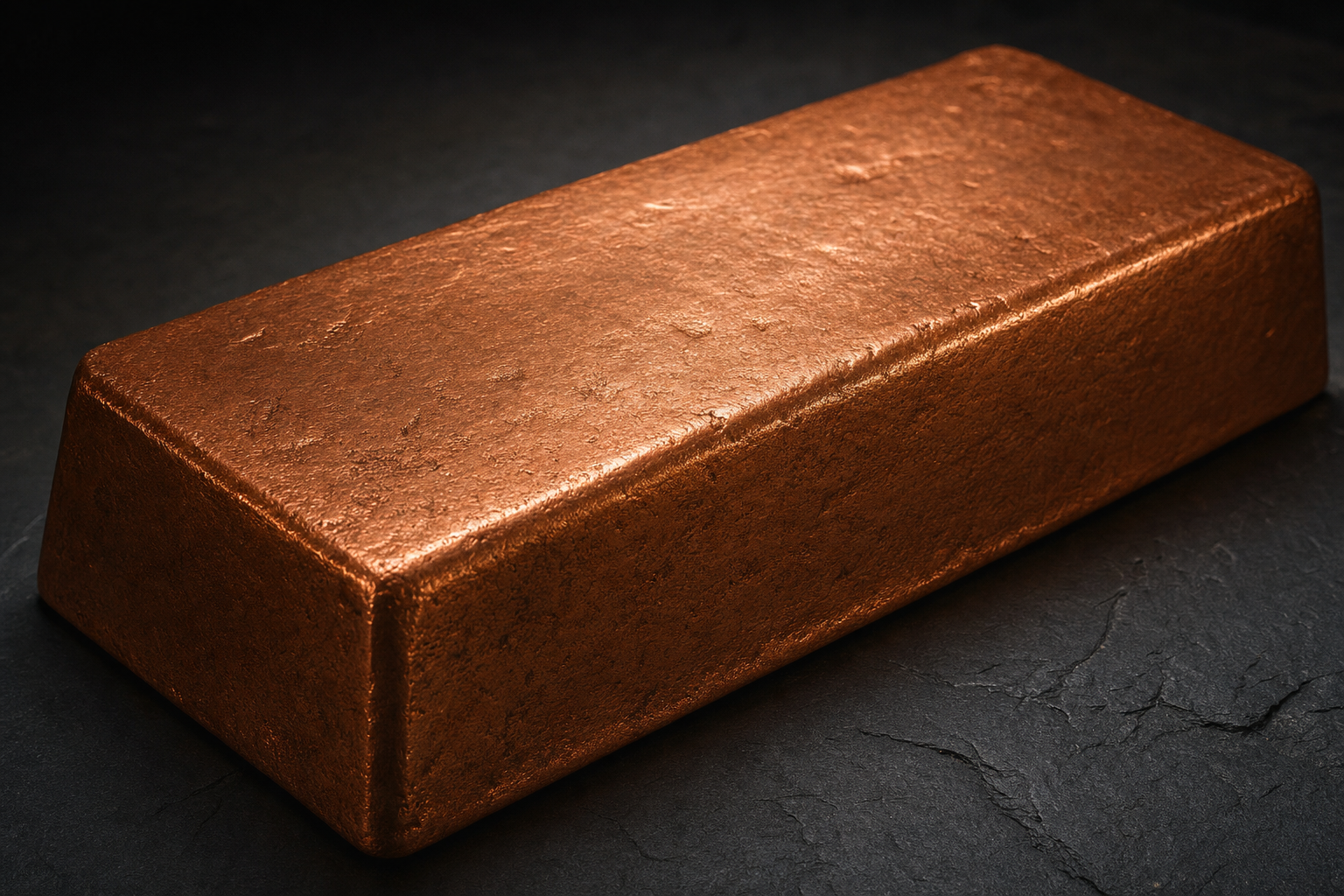
A 100-ounce bar is one of the large denominations within the copper range. A weight of 100 troy ounces corresponds to approximately 3,110.35 grams of pure copper. Throughout, 999.9 fine copper (Cu, purity 99.99 per cent) is used, meaning practically pure electrolytic copper without any significant additions. This high degree of purity is typical of modern investment and collector bars made of copper and clearly distinguishes them from industrial semi-finished products.
Large copper bars are predominantly produced using the casting process. With a cast bar, the molten copper is poured into a mould and solidifies there. The result is a bar with a slightly irregular, natural-looking surface and a distinctive material character, as is also appreciated with cast gold and silver bars. Smaller formats, on the other hand, are often minted and then display a smooth, glossy surface. Anyone wishing to compare the various sizes will find the entire range, from the one-ounce piece to the five-kilogram bar, in the parent category Copper Bars.
Many large copper bars in German-speaking countries feature a relief-style design on the obverse along with the weight and fineness details. Designs with regional or architectural references are popular on cast copper bars because they add a collectable element to the otherwise functional metal block. Alongside the pure material value, this creates an object that also impresses both to the touch and visually.
The key specifications of a 100 oz copper bar can be summarised compactly. They form the basis for correctly classifying the bar and understanding its material value.
Anyone who would rather have several more manageable units instead of a single heavyweight bar should take a look at the 10 oz copper bar or the 1 oz copper bar. While the premium per gram is higher with the smaller formats, they are easier to store and more flexible to divide.
The price of a copper bar consists of the material value plus a production and trading premium. Copper is traded on commodity exchanges, above all the London Metal Exchange, in US dollars per tonne. Because copper is considerably cheaper per unit of weight than gold or silver, the premium for minting, packaging and distribution makes up a relatively large proportion of the price for small bars. This is exactly where the 100-ounce format plays to its strength: the larger the bar, the lower the price per gram, because the fixed production costs are spread over more material.
Copper is considered an economically sensitive industrial commodity. Its price responds to global demand from the construction industry, electrical engineering and, increasingly, electromobility, which is why copper is often referred to as an economic barometer. For those interested in copper as a building block of a more broadly diversified tangible-asset allocation, it is worth taking a look at the Copper guide page for further background information on this commodity.
Note on value assessment
Copper is an industrial metal and not a classic investment precious metal. A 100-ounce bar is primarily suited as a tangible asset and collectable. This text is for informational purposes only and does not constitute investment advice.
One key difference to investment gold concerns VAT. While investment gold in Germany is exempt from VAT in accordance with statutory provisions, copper bars are subject to the full VAT (Value Added Tax) rate of 19 per cent. For tax purposes, copper is treated like an ordinary commodity rather than a tax-privileged precious metal.
This point should be taken into account when calculating the actual resale value. Anyone who values the more favourable tax treatment of gold will find the VAT-exempt alternative in the gold bar range. For an overview of how copper, silver and gold differ in tax terms, the silver bar range also offers helpful pointers, as silver occupies an intermediate position through the margin scheme.
A bar weighing over three kilograms places different demands on storage than a small coin. Although copper is a base metal and therefore robust, it can oxidise over time and develop a dark patina. To preserve its appearance, dry, cool storage without direct contact with moisture or aggressive vapours is recommended.
In principle, the same storage rules apply as for precious metals:
To protect smaller copper pieces and coins, the accessories range offers suitable solutions; anyone collecting copper coins will find an easy way to guard against scratches and tarnishing with coin capsules.
Copper occupies a special position among the metals used for bars. It is by far the cheapest and, at the same time, the most heavily industrially used metal in this group. While gold is regarded as a store of value and silver is both an investment and an industrial metal, copper is clearly positioned on the commodity side.
The low entry price makes copper appealing to beginners who want to experience holding physical metal without tying up large sums. Anyone looking for copper as a design-focused collectable rather than a bar will find what they need among the copper coins.

This large format appeals primarily to three groups: price-conscious copper enthusiasts seeking the lowest possible price per gram; collectors who appreciate the massive look of a cast heavyweight; and anyone wishing to hold a tangible asset alongside precious metals. Anyone wanting to build up metal holdings regularly and in small steps will find suitable approaches under savings plan products.
As a German family business with ISO-compliant authenticity verification and 100 per cent insured shipping, Kettner Edelmetalle places great importance on offering industrial metals such as copper in verified quality and with transparent fineness as well.
A bar with 100 troy ounces corresponds to around 3,110 grams, i.e. just over three kilograms of pure copper with a fineness of 999.9.
With the 100-ounce format, the fixed costs for production, packaging and distribution are spread over considerably more material than with a 1 oz piece. This reduces the premium per gram, making the large format attractive to price-conscious buyers.
No. Unlike investment gold, copper bars are subject to the full VAT rate of 19 per cent, as copper is treated for tax purposes as an ordinary commodity rather than a privileged precious metal.
In the casting process, liquid copper is poured into a mould and solidifies there. This results in a slightly irregular, natural-looking surface, in contrast to minted bars, which have a smooth, glossy surface.
Yes. Copper oxidises in air and can develop a dark patina. Dry, cool storage without moisture slows this process down and preserves the bar's appearance.
 100 oz Copper Bars
Stay informed with product launches, financial news and exclusive offers. Sign up for our free newsletter today.
By entering your email address and clicking the "Submit" button, you give the following consent: "I agree to be informed by email about new products, financial news and exclusive offers, and therefore consent to the processing of my email address for the purpose of sending the newsletter. I can revoke this consent at any time without giving reasons, with effect for the future. The lawfulness of processing carried out prior to revocation remains unaffected."