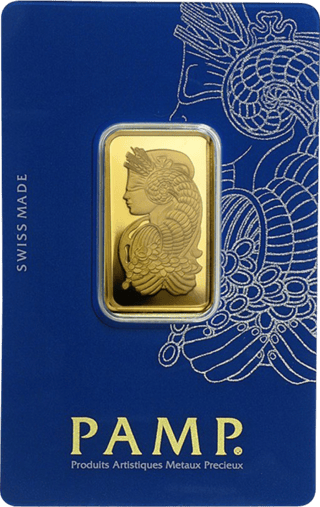
20g Gold Bar Heimerle und Meule
€2,419.41
VAT-free and excl. shipping
Available in 3–4 business days

 More than 310,000
 Over 30 years
 Secure shipping
 Google: 4.9/5
Buyers of 20g gold bars can look forward to 0% VAT (Value Added Tax) and a fineness of 999.9/1000 gold. The bars are priced at a similar level to comparably weighted coins, but feature a serial number and even a certificate of authenticity. Since the bars are shipped securely in a blister pack, the likelihood of consistently high quality is also very high.


Gold bars between 5 and 50 grams come in two units, in grams and in ounces. One ounce of gold weighs 31.1 grams. At the large refineries, both sizes have stood in the same range for decades.
“[Argor] is generally acknowledged as the first LBMA-accredited refiner to have manufactured a range of minted bars, in 1952.”
Gold Bars Worldwide on Argor‑Heraeus, 2014
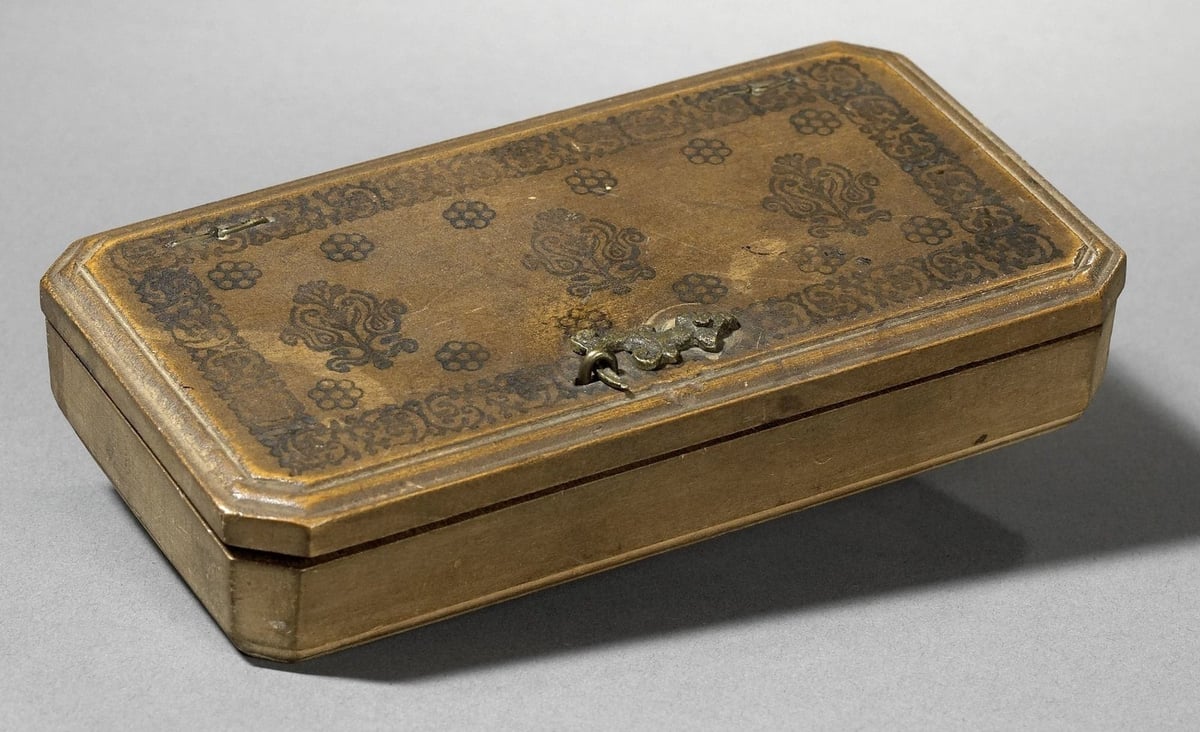
Argor is based in Switzerland and is now called Argor‑Heraeus. Its first range of 1952 ran from 5 to 100 grams. In 1979, the ounce, the half ounce and the quarter ounce were added to it.
At PAMP, also in Switzerland, seven rectangular minted bars came out in 1979: 5, 10, 20, 50 and 100 grams, plus one ounce and half an ounce. There, gram and ounce stood in the same range.
The gram range of 5, 10, 20 and 50 lies on the same grid as the weights used to test scales: 1, 2 and 5, then ten times each. This is laid down in the international recommendation OIML R 111 for weights. At 31.1 grams, the ounce lies beside this grid.
On this scale, ten times as much always takes the same space: from 1 to 10 grams is as far as from 10 to 100 grams. Grid according to OIML R 111‑1 of 2004, section 4.2. The ounce calculated at 31.1035 grams.
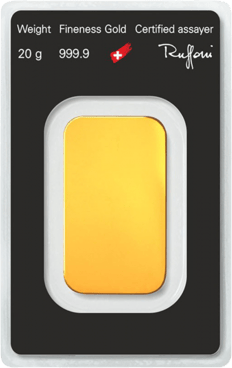
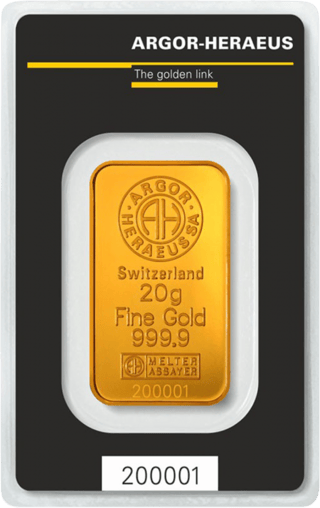
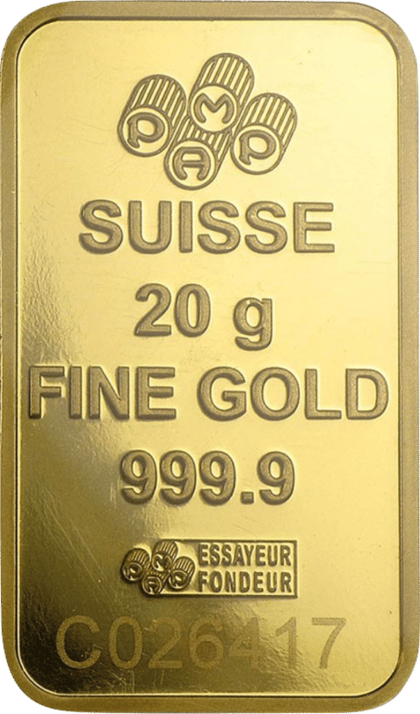
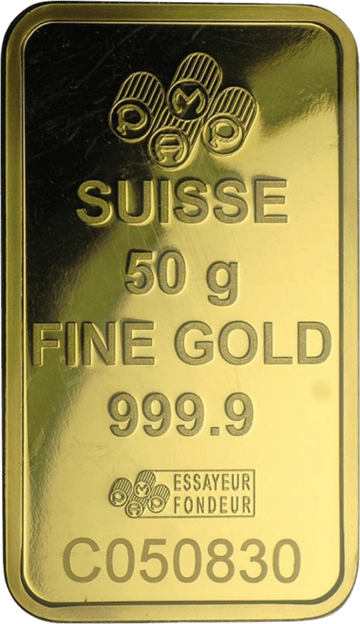
The front carries what a bar must say: who made it, how heavy it is, how fine its gold is and who assayed it. Today a number is usually added. The back may carry a picture.
“Obverse and reverse bar design can be customised according to a client’s wishes, provided that the compulsory marks are ensured …”
Valcambi, website “Minted bars”
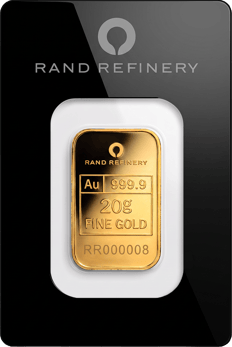
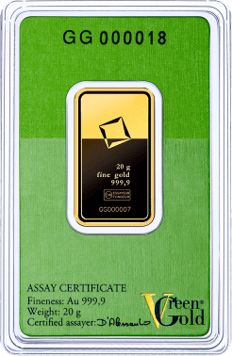
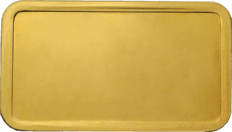
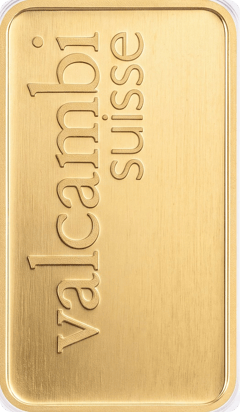
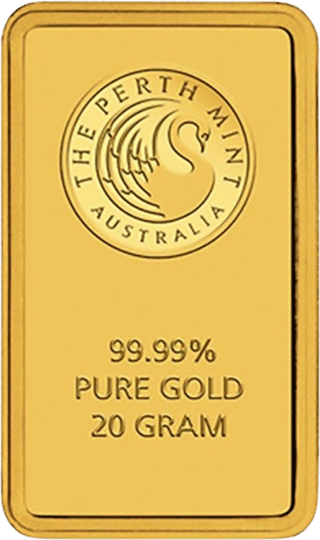
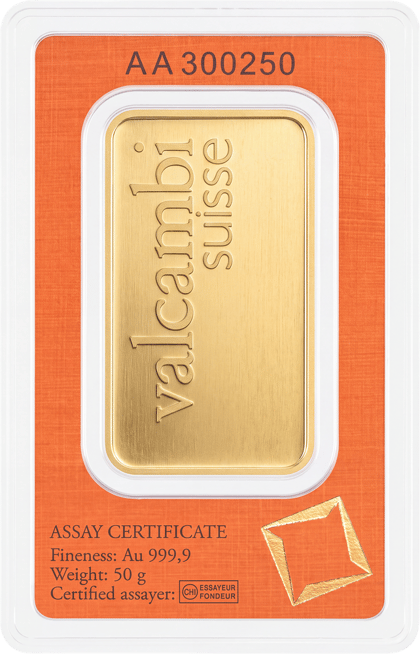
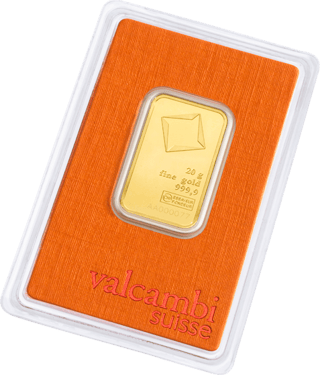
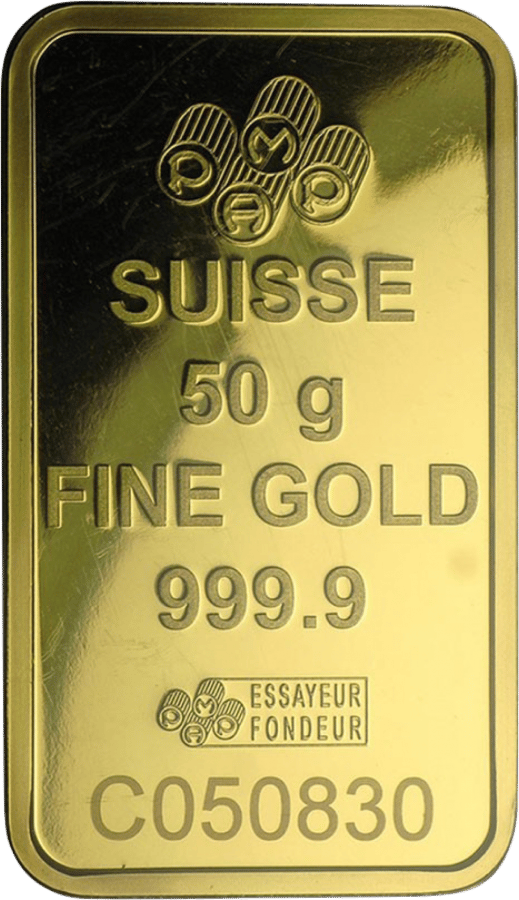
Product photos from the shop: the front of a bar of 20 grams, the backs of bars of 10 grams, for Valcambi the back of a bar of 50 grams in its card. Not at the same scale.
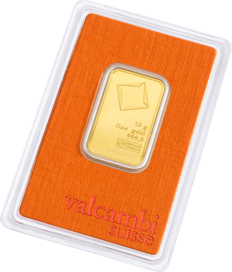
At Valcambi, the front of a standard minted bar shows the logo, the weight, the metal, the fineness, the mark “Essayeur Fondeur” and the bar number. The back reads “Valcambi Suisse”.
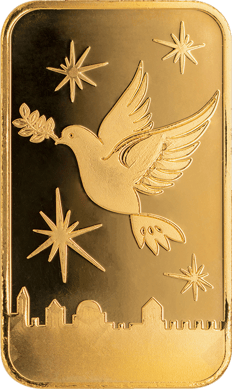
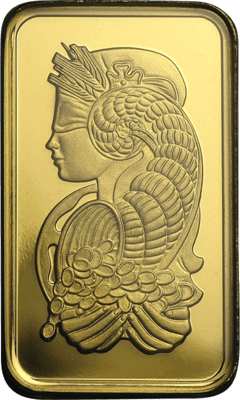
Since 1979, PAMP has struck a motif on the back of its minted bars. The first was Fortuna, a figure from Roman antiquity. By 2014, more than 50 motifs had been added to choose from.
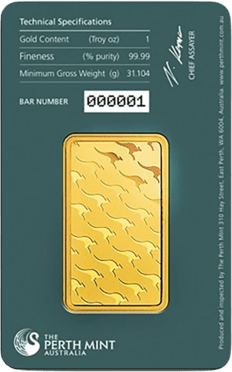
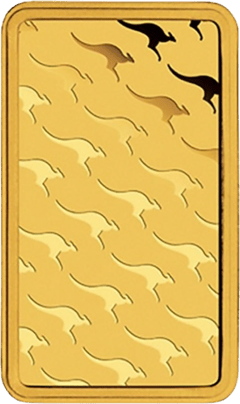
The Perth Mint in Australia showed the figure “Oriana” on its first standard minted bars of 2008. Since 2010, its standard minted bars have carried kangaroos on the back.
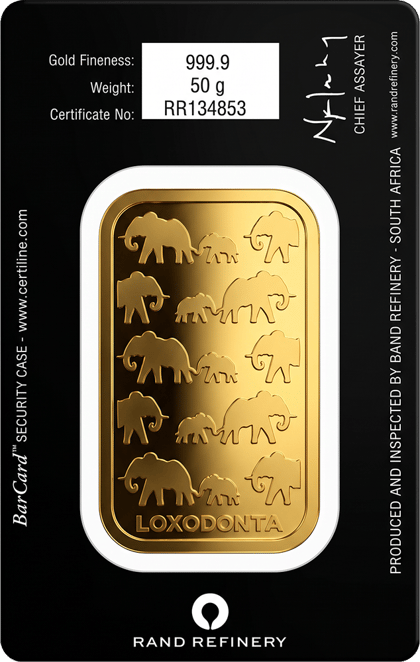
On the shop’s bars from the Rand Refinery in South Africa, elephants walk across the back. Beneath them is LOXODONTA, the genus name of African elephants.
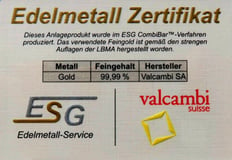
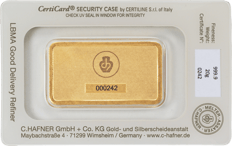
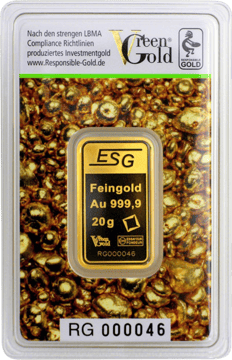
A minted bar between 5 and 50 grams usually sits in a sealed card. On it, the maker confirms what the bar weighs and how fine it is, under a number that usually also appears on the bar.
“Each bar is packed individually in a sealed blister. … 100 g and less: certificates are sealed within the blister.”
Gold Bars Worldwide on Valcambi, 2014
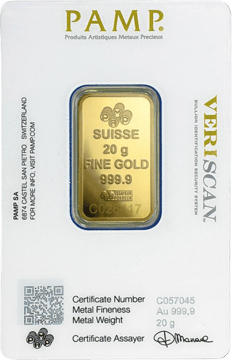
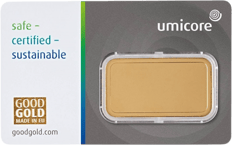
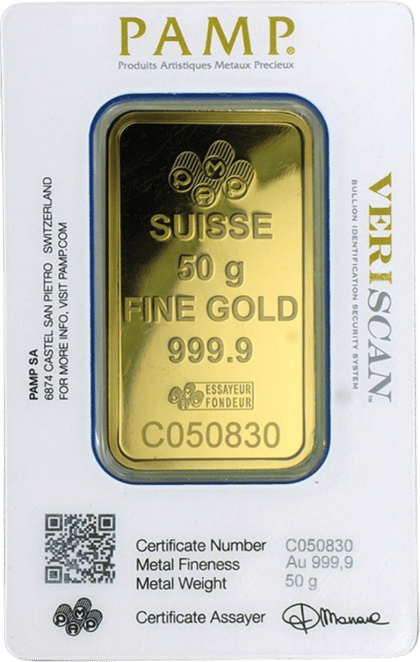
Four details appear on each of these three cards, however different they look: the number, the fineness, the weight and the assayer. The cards of Argor‑Heraeus, the Perth Mint and Umicore show the same four on their product photos in the shop.
At PAMP and at the Rand Refinery, an assayer of the house signs, at the Rand Refinery as “Chief Assayer”. Valcambi needs no signature: there, the licence as assayer and melter is held by the house and not by an individual, the company writes. The card of the bar of 50 grams therefore carries only the assayer’s mark. The cards of 10 and 20 grams and of the ounce still bear a signature on their product photos in the shop.
The card stays with the bar. By its own account, Argor‑Heraeus does not issue a second certificate, and it cannot confirm the authenticity or origin of a bar from a serial number alone.
Product photos from the shop, cards of bars of 50 grams. At the Rand Refinery and at Valcambi, the bar in the window shows its back; its number cannot be seen here.
Under the microscope, the surface of a bar is a fine landscape of peaks and hollows. For bars with the VERISCAN mark, PAMP records this landscape as early as manufacture and stores it in a database.
“VERISCAN is a free mobile app enabling the instant, secure and confidential authentication of any PAMP precious metals product bearing the VERISCAN logo on the product’s packaging or certificate.”
App Store, entry “VERISCAN Bullion Security” by PAMP SA
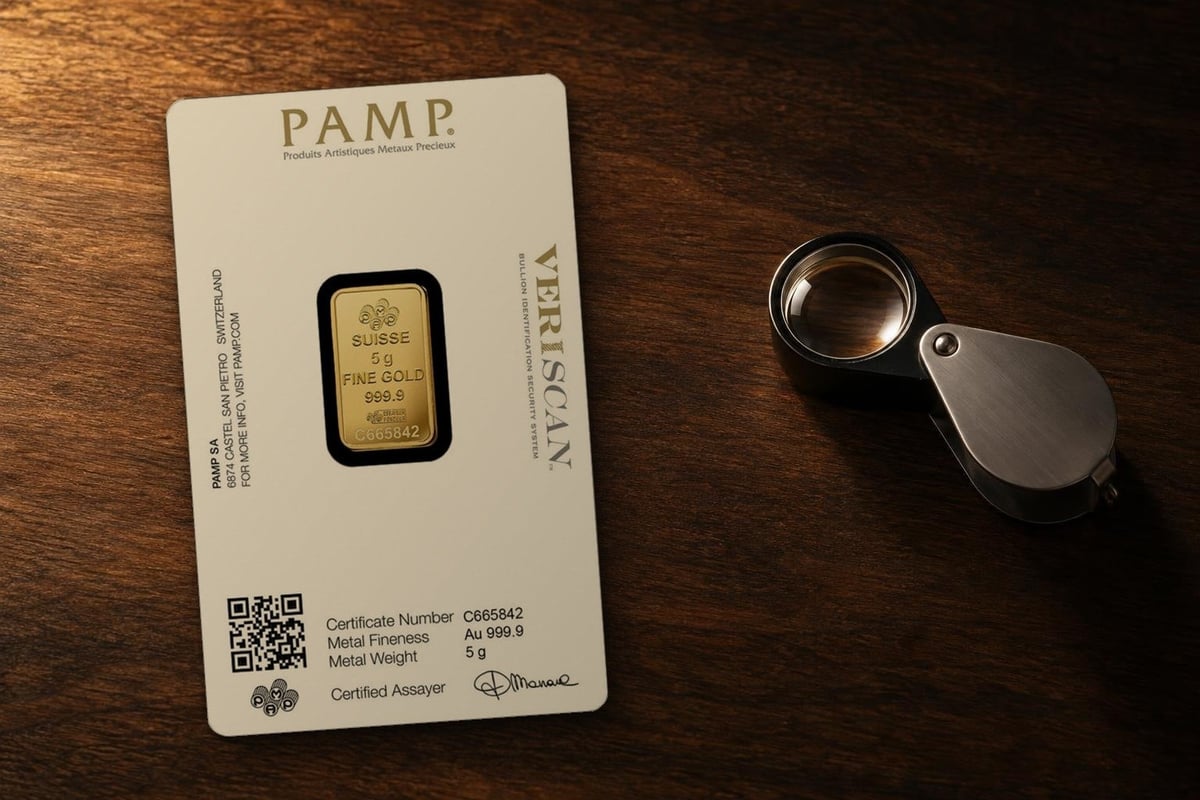
The app compares the surface with the stored data, and the packaging can stay closed while it does so. That is how PAMP itself describes it, in the app’s entry and in an announcement from 2023.
The cards of the PAMP bars of 5, 10, 20 and 50 grams in the shop carry the VERISCAN lettering and a QR code, as their product photos show.
From 1984 to 2012, PAMP regularly stamped serial numbers only into its large bars of 400 and 100 ounces; other bars received them only on request. Since 2012, almost every smaller bar from the house has carried a letter and a serial number. At Valcambi, many standard minted bars bore a rose on the back from 2005 to 2012, and these bars received no serial number.
The contour lines are drawn, not a microscope image. Bar: product photo from the shop, PAMP, 50 grams.
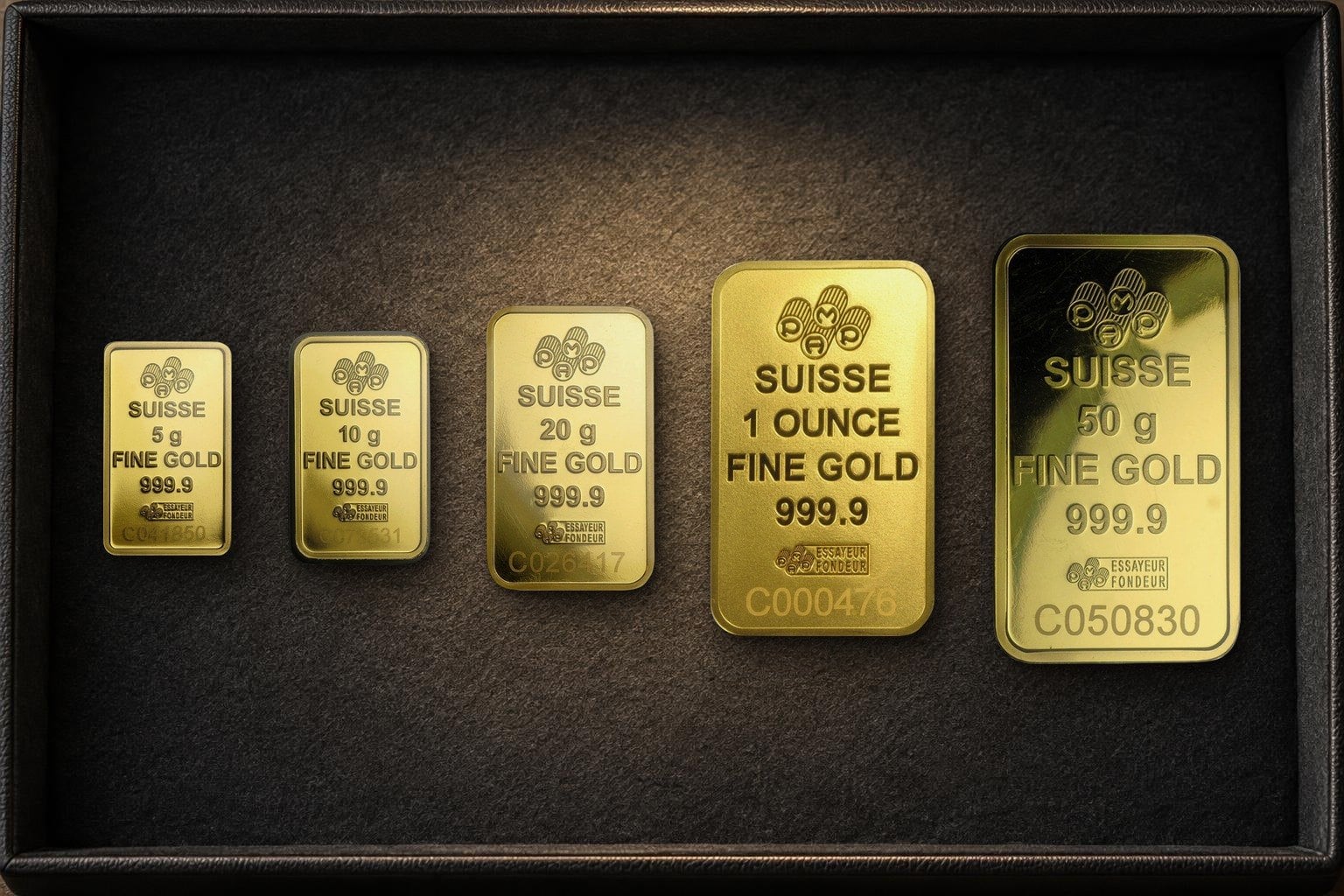
A minted bar is thin. A single PAMP bar of 5 grams is 0.83 millimetres thick, one of 50 grams 2.06 millimetres. By these measurements, it is above all the face that grows with the weight.
Dimensions according to PAMP, product information from 2019: length and thickness at the same scale. The width cannot be seen from the side.
At PAMP, the ounce is thinner than the bar of 20 grams, although it weighs more. It measures 41 by 24 millimetres and is 1.66 millimetres thick. The bar of 20 grams is smaller at 31 by 18 millimetres and thicker at 1.88 millimetres.
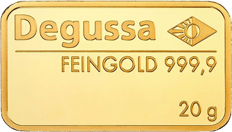
Many houses mint almost the same formats. PAMP, Valcambi and Degussa give the bar of 20 grams as 31 by 18 millimetres, the Perth Mint as at most 31.8 by 18.8. For the ounce, the formats differ: PAMP states 41 by 24 millimetres, Valcambi 38 by 22. The houses name no common standard.
Between 5 and 50 grams, a gold bar is usually minted, sealed and precisely described: a small piece with two sides, a card and a number.
The 20 g gold bar hits a nerve: heavy enough to carry noticeable weight in a portfolio, yet handy enough to remain flexible. Anyone who values physical gold as a tangible asset finds in this denomination a balanced compromise of low premium, value density and everyday practicality. The following sections cover production, manufacturers, fineness, authenticity features, tax treatment, storage and the question of who benefits most from the 20-gram bar.

A 20 g gold bar contains exactly 20 grams of fine gold with a fineness of 999.9/1,000, which is to say, virtually pure gold. This size thus takes its place among the classic investment denominations between the 10 g gold bar and the 50 g gold bar. The appeal lies in the ratio of minting premium to material value: the larger a bar, the lower the percentage premium over the pure gold value. The 20-gram bar is considered a sensible middle ground here, suitable for beginners and experienced investors alike.
Unlike comparably heavy gold coins, bars of this size typically carry an individual serial number and are supplied with a certificate of authenticity. Anyone who regards physical gold as a solid building block of wealth protection appreciates precisely this combination of documented provenance and compact value density: 20 grams of gold fit into the palm of your hand yet still represent a considerable counter-value.
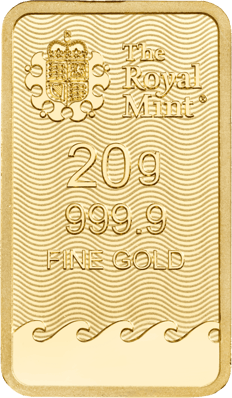
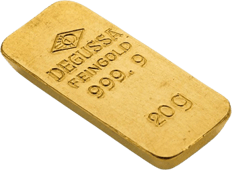
20 g gold bars share one technical feature: they are minted, not cast. For a classic cast bar, this size is simply too small. Instead, the bars are punched and stamped from rolled gold sheets, resulting in clean edges, a fine lustre and a precisely raised design featuring the manufacturer's logo, weight and fineness.
The classic, rectangular minted bar is the most common form. It is usually supplied in a sealed blister card that permanently protects it from scratches, moisture and handling. This packaging preserves its Brilliant Uncirculated (BU) condition for years, an important aspect for later resale.
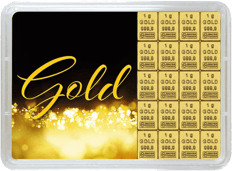
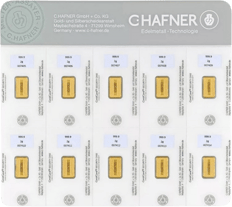
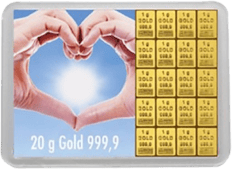
A practical special form is the CombiBar: it consists of 20 individual 1-gram bars that can be neatly separated along pre-stamped break lines, similar to a bar of chocolate. This makes it possible to detach and sell a single gram whenever needed, without having to redeem the entire bar. This flexibility makes CombiBars a popular building block for crisis protection. Anyone specifically interested in this variant will find gold CombiBars in various combinations in our range.
The quality of a gold bar depends entirely on its manufacturer. Renowned refineries such as Heraeus, Valcambi, Heimerle + Meule, PAMP Suisse, C. Hafner, Degussa and Umicore mint 20-gram bars, as do state mints such as the Perth Mint or the British Royal Mint. A look at the manufacturer overview reveals the full range of brands.
The decisive factor is the seal of the LBMA (London Bullion Market Association): bars from LBMA-certified manufacturers are recognised worldwide as standard market products and are accepted without further testing. This makes resale considerably easier. All 20 g gold bars offered in our range come from such certified mints, a quality promise that goes beyond pure gold value.
Physical gold is a sensitive asset, which makes reliable authenticity features all the more important. A modern 20 g gold bar offers several layers of security that make counterfeiting more difficult and help preserve its value.
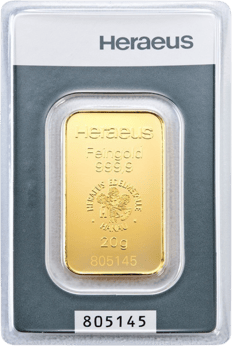
The Kinebar from Heraeus stands out in particular: its reverse features a multicoloured, kinematic hologram that is virtually impossible to replicate technically and changes colour depending on the angle of light. In addition, the individual serial number, the enclosed certificate of authenticity and the sealed blister packaging ensure that origin and fineness are documented without gaps.
Tip on authenticity verification
The bar should remain in its original blister pack until a sale is planned. An intact seal and a matching serial number on the certificate are the most important signal of trust for buyers. At Kettner Edelmetalle, every bar additionally undergoes an ISO-compliant authenticity verification.
A key advantage over other precious metals: in Germany, investment gold is exempt from VAT pursuant to §25c UStG. A 20 g gold bar with a fineness of at least 995/1,000 meets the legal criteria for tax-free investment gold and is sold without VAT. This means that practically the entire purchase price flows into the material value, unlike, for example, silver bars or silver coins, which are subject to the margin scheme and are therefore noticeably more expensive relative to their pure metal value at the time of purchase.
Gold also shows its tax-friendly side upon later sale: if the bar is sold after a holding period of more than twelve months, any profit is currently exempt from income tax under the applicable legal provisions. These rules make gold one of the most attractive physical tangible assets, which is one reason it is a firm component of many strategies for inflation hedge and retirement provision.
A 20 g gold bar is compact, which makes storage pleasantly straightforward. Several options are available for secure safekeeping, and they can also be combined.
It is important to touch the bar as little as possible and to leave it in its original packaging. Fingerprints and scratches do not reduce the gold value, but they can affect its visual condition and thus its emotional and sentimental value.
The 20-gram bar is an all-rounder. It appeals to anyone who wants to acquire a substantial gold value without going straight for a 100 g gold bar or a 1 kg gold bar. This medium denomination is exactly where its charm lies: affordable, value-dense and, if in doubt, easier to sell than a very large bar.
A gold bar is stored purchasing power in its purest form, independent of banks, systems and the tides of time.
Anyone wishing to invest smaller amounts on a regular basis often combines the 20-gram bar with other sizes from the gold bar range or uses structured savings plan products to build a foundation over time. As a classic alternative to the bar, well-known bullion coins such as the Krugerrand or the Maple Leaf also present themselves, both combining investment and collector appeal.
Investment gold with a fineness of at least 995/1,000 is exempt from VAT in Germany and the EU. A 20 g gold bar with a fineness of 999.9 meets this requirement and is therefore traded without VAT. The purchase price is thus based almost entirely on the current gold value plus a small minting premium.
Minted bars are produced by punching and stamping rolled gold sheets and have a fine, clearly defined design. Cast bars are poured from liquid gold into moulds and look more rustic. At 20 grams, practically all bars are minted, as this size is too small for the classic casting process.
A CombiBar consists of several small individual bars, typically 20 separate 1-gram bars in the case of a 20-gram unit, which can be separated along pre-stamped lines. This makes it possible to detach and sell a partial amount whenever needed, without having to redeem the entire bar. This makes this form particularly flexible.
Genuine bars carry an individual serial number, an indication of weight and fineness, and the manufacturer's logo. Models such as the Kinebar from Heraeus additionally feature a counterfeit-proof hologram. The enclosed certificate of authenticity and the sealed blister packaging document the origin without any gaps. Bars from LBMA-certified manufacturers are considered trustworthy worldwide.
Larger bars have a lower percentage minting premium than many small bars, so a 20-gram bar is more cost-effective in terms of material ratio than twenty individual 1-gram bars. Smaller denominations, however, offer more flexibility for partial sale. The 20-gram bar is considered a good middle ground. Anyone wanting maximum divisibility should opt for a CombiBar.
Ideally, the bar should be stored in its original packaging, such as the sealed blister pack, inside a certified safe at home or in a bank safe deposit box. It should not be touched with bare hands if possible, in order to preserve its Brilliant Uncirculated (BU) condition. Suitable accessories such as coin cassettes help keep several bars safely stored.
 20 g Gold Bars
Stay informed with product launches, financial news and exclusive offers. Sign up for our free newsletter today.
By entering your email address and clicking the "Submit" button, you give the following consent: "I agree to be informed by email about new products, financial news and exclusive offers, and therefore consent to the processing of my email address for the purpose of sending the newsletter. I can revoke this consent at any time without giving reasons, with effect for the future. The lawfulness of processing carried out prior to revocation remains unaffected."