Only 2 left to order
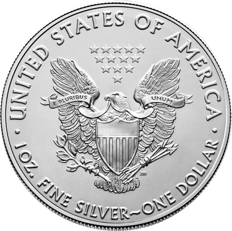
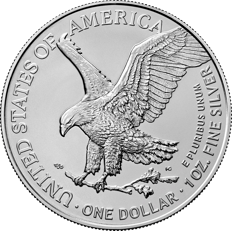
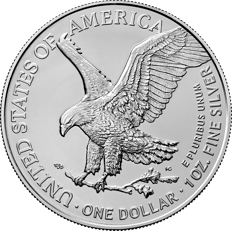
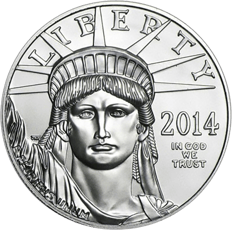
1 oz Platinum American Eagle
€2,017.75
incl. VAT and excl. shipping
Available in 2–3 business days

 More than 310,000
 Over 30 years
 Secure shipping
 Google: 4.9/5


The US Mint is an important institution that continues to produce coins for circulation, collector's coins and commemorative coins, making a significant contribution to American numismatics. The US Mint was founded on April 2, 1792 by President George Washington. Philadelphia was selected as the location for the first mint, and David Rittenhouse, a renowned astronomer and scientist, was appointed as the first Director of the Mint.


Authenticity
Every piece bears the mark of the United States Mint. Before it goes out to you, we check it ourselves.
Every bullion coin bears the design of its mint and the year it was struck, and almost every one its weight and fineness.
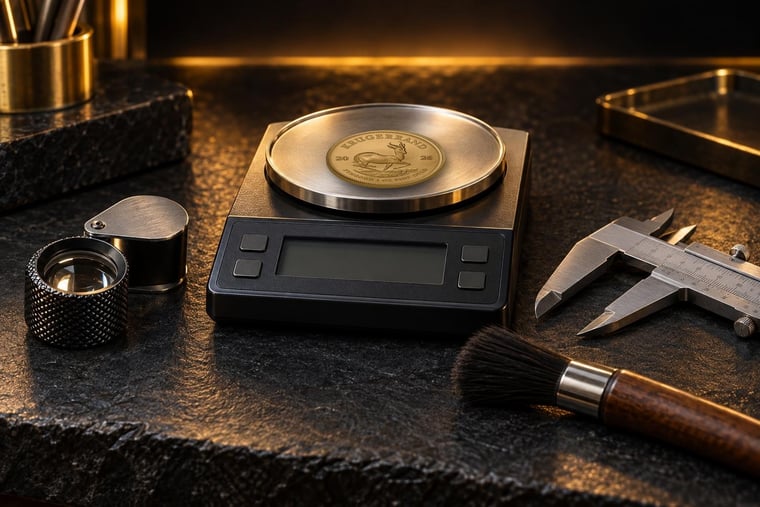
In our CCTV-monitored high-security area, two specialists check every order following the four-eyes principle, including its weight and, by X-ray, its authenticity.
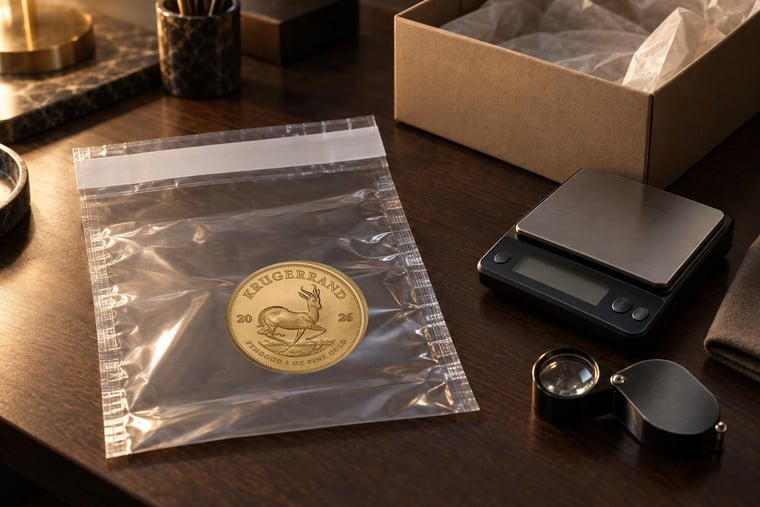
We then seal your order in a security bag that can only be opened once. You will be the first to open it.
Our testing methods
The house
The United States Mint was founded by Congress in 1792 and is part of the US Department of the Treasury. Its coins are struck in Philadelphia, Denver, San Francisco and West Point. West Point produces the American Eagles in gold and silver, issued since 1986, and since 2006 also the Buffalo in 999.9 fine gold.
Sources: manufacturer’s details, as of 14 November 2026
The United States Mint is the official coin-producing authority of the United States and ranks among the most important mints in the world. Founded in 1792 under the Coinage Act, it remains responsible to this day for the United States' circulating coinage as well as for bullion and collector's coins in global demand, such as the American Eagle and the American Buffalo. This guide examines the history, mints, the most important coin series in gold, silver and platinum, finenesses and denominations, authenticity features, and the tax treatment in Germany.
After gaining independence from Great Britain, the young United States needed its own, unified currency. With the Coinage Act of 1792, Congress authorised the establishment of the United States Mint and at the same time set the official monetary unit as well as the coin specifications. Philadelphia, at the time the capital of the USA, was chosen as the first location. The renowned astronomer and scientist David Rittenhouse was appointed as the first director.
The Mint's first silver dollar was the Flowing Hair Dollar. As demand grew, further mints were established throughout the country. As a federal agency, the Mint falls under the US Department of the Treasury and to this day fulfils a dual task: supplying the economy with circulating coins and producing numismatically valuable editions. Anyone interested in the classic bullion coinage of other state mints will find comparable traditions, for instance, at the Royal Canadian Mint or the British Royal Mint.
Over the centuries, the Mint has operated numerous locations. Each minting location can be identified by its mint mark, which represents an important identifying feature for collectors.
| Location | Mint mark | Status |
|---|---|---|
| Philadelphia | P | active since 1792 |
| Denver | D | active |
| San Francisco | S | active (mainly Proof) |
| West Point | W | active (precious metals) |
| Carson City | CC | 1870-1893 |
| New Orleans | O | historical |
| Fort Knox | - | gold reserve (storage) |
For bullion coins made of precious metals, West Point plays a central role above all: this is where the American Eagle coins in gold, silver and platinum are produced. Fort Knox serves exclusively as a storage facility for the US gold reserves and does not mint any coins itself.
The American Eagle is the best-known bullion coin of the United States Mint and ranks among the most widely traded bullion coins in the world. The American Gold Eagle was first issued in 1986, after Congress had passed the Gold Bullion Coin Act the year before. Today the series is available in several precious metals: as the Gold American Eagle, the Silver American Eagle, and the Platinum American Eagle.
The Gold Eagle has a fineness of 91.67% (22 karat). The alloy of gold, silver and copper gives the coin particular scratch resistance and durability, a concept first popularised by the Krugerrand and one that distinguishes the Eagle from 999.9/1,000 coins such as the Maple Leaf. The Silver American Eagle, by contrast, is made of 999/1,000 fine silver and weighs a full troy ounce.
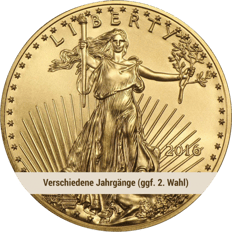
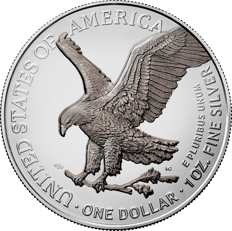
The obverse of the Gold Eagle shows the classic Liberty design by Augustus Saint-Gaudens: an allegorical figure of liberty striding towards the morning sun with a torch and an olive branch. The reverse bears a bald eagle, the heraldic animal of the USA. The Silver Eagle takes up the Walking Liberty design and was modernised in 2021 with a newly designed eagle reverse.

The Gold Eagle is minted in four standard sizes, allowing for flexible entry amounts:
Smaller denominations are somewhat more expensive per gram, but offer more flexibility when selling later. Anyone who prefers physical precious metal in bar form will find an alternative in the 1 oz gold bars or gram bars.
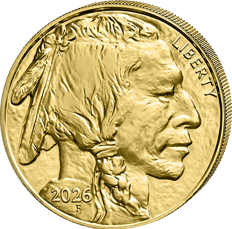
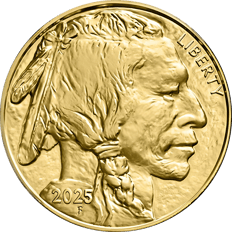
Alongside the Eagle, the United States Mint has minted the American Buffalo since 2006, the first US gold coin made of 999.9/1,000 fine gold (24 karat). The design is based on the historic Buffalo Nickel by James Earle Fraser: the obverse shows the portrait of a Native American, while the reverse depicts an American bison. The American Buffalo appeals to investors who prefer pure fine gold without any copper admixture. Anyone who would like to compare this high purity with other classics will find it equally in the Vienna Philharmonic.
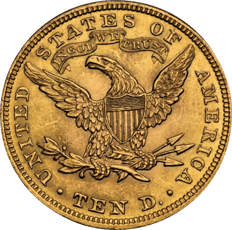
The United States Mint looks back on a rich tradition of circulating gold coins that are sought after today as collector's and investment items. The 20-dollar Double Eagle, particularly the iconic Saint-Gaudens design of 1907, is regarded as one of the most beautiful US coins ever minted. The Liberty Head series, in denominations of 10 and 20 dollars, is likewise a classic of American numismatics.
These historic issues are typically made of 900/1,000 gold (21.6 karat) and combine material value with numismatic appeal. Collector's items of this kind can be found in the range of further gold coins as well as in the collector's coins category. Anyone generally enthusiastic about historically significant coinage will discover comparable pieces among the gold coins of the German Empire.
A large part of the programme is devoted to commemorative and collector's coins, which honour historic events, anniversaries and American culture. These include issues relating to sport, space travel and national institutions, often in limited mintage and in Proof quality or as domed special shapes.
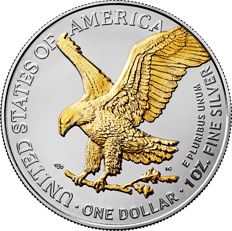
These editions are aimed more at collectors than at pure investors. Colour-enhanced and partially gilded variants of the Eagle can be found among the coloured silver coins. A wide selection of thematic issues is also offered in the overview of further silver coins.
The United States Mint uses state-of-the-art hydraulic and mechanical coin presses to strike blanks with high precision and consistent quality. Techniques such as relief and deep striking as well as laser engraving create fine details and three-dimensional effects. Many coins additionally incorporate security features to make counterfeiting more difficult.

As a specialist dealer, Kettner Edelmetalle carries out an ISO-compliant authenticity verification, so that only verified goods are shipped. For secure storage, suitable coin capsules protect coins from scratches and environmental influences.
For the tax classification of US coins, the same rules apply in Germany as for other precious metals. Investment gold, that is, gold coins such as the Eagle or Buffalo that meet the statutory criteria, is exempt from VAT upon purchase. Silver coins, on the other hand, are subject to VAT, in the case of imported bullion coins often in the form of the margin scheme.
Tax note
Investment gold is exempt from VAT in Germany under the applicable regulations. Profits from the sale of physical precious metals can be tax-free after a holding period of twelve months. This is general information and not tax or investment advice; in individual cases, we recommend consulting a tax advisor.
Anyone primarily looking for tax-free investment gold will find an overview in the ranges for gold bullion coins and silver bullion coins.
Physical coins should be stored in a dry place, at a stable temperature, and protected from contact with bare fingers, as skin oils can leave marks. Capsules, coin cases and safes are suitable for home storage; alternatively, bank safe deposit boxes offer additional protection. For collector's items in Proof quality, the original condition is particularly decisive for value.
Investors wishing to continuously build up their holdings often combine bullion coins with bars or a regular savings approach; the savings plan products offer a starting point for this. For positioning within a broader precious metals portfolio, it is worth taking a look at the topic of inflation hedging.
The United States Mint was founded in 1792 under the Coinage Act. The first location was Philadelphia, at the time the capital of the USA, and the first director was the scientist David Rittenhouse.
The most important bullion coins are the American Eagle in gold, silver and platinum, as well as the American Buffalo made of 999.9/1,000 fine gold. The Gold Eagle is 22 karat, while the Buffalo is made of pure 24-karat gold.
The Gold Eagle has a fineness of 91.67% (22 karat), with a copper and silver content for additional hardness. The Buffalo is made of 999.9/1,000 fine gold and is therefore purer, but more susceptible to scratches.
The letters stand for the mint: P for Philadelphia, D for Denver, S for San Francisco and W for West Point. Precious metal bullion coins such as the American Eagle are mostly minted in West Point.
Gold coins that qualify as investment gold are exempt from VAT upon purchase. Silver coins are subject to VAT, often under the margin scheme in the case of imported goods. For individual cases, tax advice is recommended.
Proof denotes the highest minting quality, with a mirrored background and matte relief. These coins are aimed primarily at collectors and are usually issued in limited mintages.
 United States Mint

Personal advice
Our client advisers know the range of the United States Mint and help you choose, by phone or at an appointment that suits you.
Monday to Friday, 8 am to 8 pm
If you decide to sell later, we will buy your bars and coins from you. Sell to us
Stay informed with product launches, financial news and exclusive offers. Sign up for our free newsletter today.
By entering your email address and clicking the "Submit" button, you give the following consent: "I agree to be informed by email about new products, financial news and exclusive offers, and therefore consent to the processing of my email address for the purpose of sending the newsletter. I can revoke this consent at any time without giving reasons, with effect for the future. The lawfulness of processing carried out prior to revocation remains unaffected."