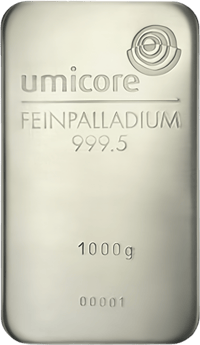
1kg Palladium Bar Umicore, Heraeus, Degussa, PAMP, UBS
€37,873.14
incl. VAT and excl. shipping
Available in 2–3 business days

 More than 310,000
 Over 30 years
 Secure shipping
 Google: 4.9/5
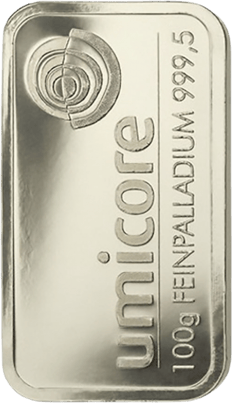
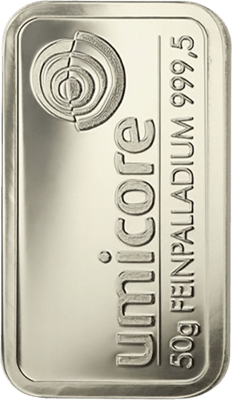
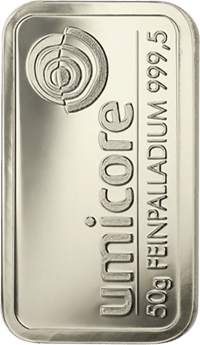
Experts believe that palladium has the potential to reach new record highs in the future as well. We offer a large portfolio of palladium coins, bars, and special bars here. Find, for example, the 50 g palladium bar or the 100 g palladium bar.


Platinum and palladium are two of the six platinum-group metals. All six have “similar physical and chemical properties and tend to occur together in nature”, writes the U.S. Geological Survey.
Atomic number, symbol and name. The metal of this page is highlighted.
They come together in magma. When it becomes saturated with sulphur, a sulphide melt separates out, and the platinum-group metals preferentially concentrate in it. Deposits of this kind provide almost everything that is mined.
The upper crust contains, on average, half a milligram of platinum per tonne. Ores mined for platinum-group metals contain 5 to 15 grams of all six combined per tonne. Our own calculation: around 10,000 to 30,000 times as much.
Palladium can even hide in another mineral: in pentlandite, it takes the place of nickel.
“Most geologists can spend a lifetime working on rocks enriched in PGEs and never see a platinum-group mineral in a hand specimen.”
U.S. Geological Survey, 2017
In June 1924, A. F. Lombaard panned gravel from a dry river bed on the farm Maandagshoek in South Africa. He found “a few specks of heavy white metal” and immediately suspected platinum. His concentrate was sent to Hans Merensky on 7 June; on 12 August, Merensky joined him in the field.
The most important discovery followed in the first half of September: the rock layer now known as the Merensky Reef. The reports of 1925 do not say who took the first sample, and no one recorded the exact day.
This reef contains palladium as well as platinum.
A reef like this is usually a rock layer centimetres to metres thick, extending over tens to hundreds of kilometres. The Merensky Reef can be traced throughout the eastern and western parts of the Bushveld Complex.
The complex is around 2.05 billion years old and underlies an area of around 69,000 km². According to the U.S. Geological Survey (as of 2017), 7,200 tonnes of platinum-group metals have been mined there since the 1920s.
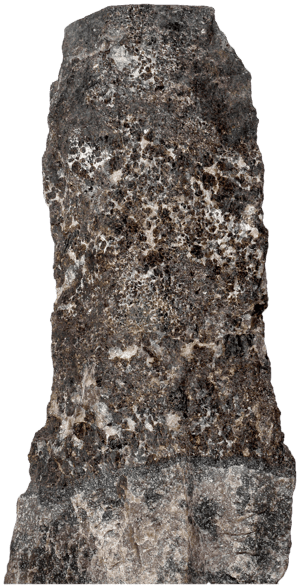
Diagram, not to scale: the band is drawn much thicker than it would be in proportion.
Six stages lie between the ore and the metal. At the refinery, the other metals are separated out first, then the six platinum-group metals from one another, until each is more than 99.99 per cent pure. They are supplied as bars, granules or a fine powder called “sponge”.
After the U.S. Geological Survey, 2017.
For wholesale trade in London and Zurich, the London Platinum and Palladium Market specifies what a bar must be like: 1 to 6 kilograms in weight, at least 999.5/1,000 fine, with edges that are not sharp.
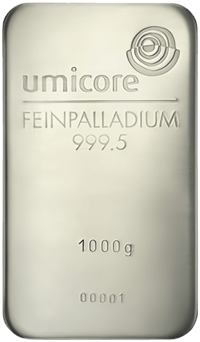
Diagram of the larger surface after the Good Delivery Rules, without real marks. Alongside it, a kilo bar from the shop.
In the ore, palladium usually occurs alongside platinum and the other four platinum-group metals; only the refinery separates them. The platinum page tells how people learnt to shape platinum.
Palladium is the silent heavyweight among precious metals: rarer than gold, indispensable for industry, and long overlooked by investors. Anyone buying palladium bars is backing a physical precious metal whose price is closely tied to real demand from the automotive and technology sectors. The following sections cover the metal's origin and uses, the available denominations, fineness and production, tax treatment, proper storage, and the difference between bars and coins.
Hardly any other precious metal divides opinion as much as palladium. It lacks the tradition of gold and the popularity of silver, and yet it is indispensable to modern everyday life. The bulk of global production flows into industry, above all into the catalytic converters of petrol vehicles, where palladium converts harmful exhaust gases into non-toxic compounds. Further applications include electronics, dental technology and the chemical industry.
It is precisely this industrial dependence that makes palladium a distinct building block for diversifying wealth. While gold has established itself as a classic hedge in times of crisis, the palladium price follows economic cycles more closely. For investors who want to broaden their portfolio beyond gold and silver, a physical palladium bar can be a sensible addition. Anyone interested in the metal in all its facets will find the entire range at a glance in the palladium category.

Palladium belongs to the platinum group metals and is among the rarest precious metals of all. It is mined in only a few places worldwide, usually not directly but as a by-product of nickel and copper ore mining. Russia and South Africa dominate global production, which makes the market vulnerable to political and logistical disruptions.
The palladium price is formed internationally on trading venues such as the London Platinum and Palladium Market (LPPM), the COMEX in New York and the Shanghai Futures Exchange, and is quoted in troy ounces. As with all physical commodities, the relationship between supply and demand chiefly determines the price.
Because supply is tight, individual events alone can trigger noticeable swings: if a major mine goes offline or emissions standards are tightened, the price often reacts immediately. Historically, palladium reached an all-time high of around 2,500 US dollars per troy ounce in 2021, an impressive demonstration of how sharply the metal can move when supply is scarce.
The palladium price is formed internationally on trading venues such as the London Platinum and Palladium Market (LPPM), the COMEX in New York and the Shanghai Futures Exchange, and is quoted in troy ounces. As with all physical commodities, the relationship between supply and demand chiefly determines the price, and a look at the entire palladium range shows how this dynamic is reflected in prices.
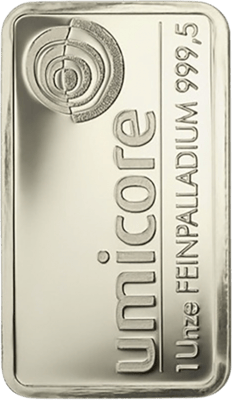
Small units stay flexible and can be sold individually if needed, while larger ones score with a better price per gram. The following denominations are available depending on the manufacturer:
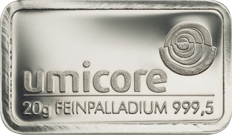
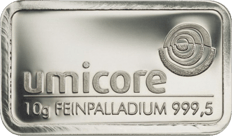
Those who prefer to start with smaller steps will also find finer units such as 10 g and 20 g bars. A direct price comparison between the sizes is always worthwhile, as the percentage premium drops noticeably with increasing weight.
Alongside the classic forms, special shapes appear time and again. Well known are the so-called CombiBars: here, many small 1 g units are joined into a single sheet that can be broken into individual pieces without loss. This creates flexibility when only part of the holding is to be sold. Palladium CombiBars are offered with up to 100 × 1 g of fine palladium. It should be borne in mind, however, that the small-unit denomination is proportionally more expensive than buying a closed bar.
Bullion palladium bars have the typical fineness of 999.5/1,000, meaning they consist of almost pure fine palladium. This figure, together with weight, manufacturer name and an individual serial number, is stamped on the bar and makes the product clearly identifiable.
Two processes are distinguished in production. Smaller denominations are usually minted, which produces a particularly clean, detailed surface. Larger bars from around 250 g upwards are often cast; this results in slight unevenness, which, however, says nothing about quality. Since minting is more labour intensive, it is usually reflected in a slightly higher premium, a pure cost matter, not a quality difference.
A decisive purchasing criterion is origin from a recognised manufacturer. Bars from well known refineries such as Heraeus, Umicore, Degussa, Valcambi or PAMP enjoy trust worldwide. Many of these producers are listed on the Good Delivery List of the London Bullion Market Association (LBMA), which guarantees binding standards for purity and weight.
Resale tip
Bars in their original sealed packaging with a legible serial number and, where available, a certificate, can be resold more easily and often on better terms later on. Authenticity verification is then usually unnecessary.
One point that distinguishes palladium from investment gold: unlike gold bars, which as investment gold are exempt from VAT, palladium is subject to full VAT upon purchase. For tax purposes, palladium is treated as an industrial metal and enjoys no special status. The same applies to platinum bars, while for silver bars the margin scheme may apply depending on origin.
This tax starting point should be factored into the calculation, as it noticeably increases the effective purchase price. On a later sale, private investors in Germany benefit from the one-year holding period: if the metal is held for more than one year, capital gains are generally tax free. The specific tax assessment depends on the individual case; this does not constitute tax advice.
Physical precious metal needs to be kept safe. Palladium bars combine high value in a very small space, which is why storage deserves particular attention. In principle, three options are available:
Anyone storing at home should note that insurers set specific requirements for the safe's security rating; if these are not met, cover may lapse in the event of a claim. Suitable accessories such as capsule safes or protective coin capsules help protect the sensitive surface from scratches and tarnishing. A calm, dry environment is ideal: although palladium is corrosion resistant, a flawless surface is considered a valuable asset on resale.
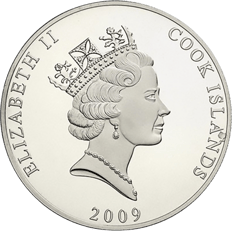
Anyone wanting to invest in palladium has a choice between bars and coins. The range of palladium coins, however, is considerably more limited: although classics such as the Maple Leaf also exist in palladium, mintages are low and the coins are not yet well established among pure collectors.
Bars play to their strengths in pure material investment: they are available in more weight classes and, thanks to lower premiums, often offer the better value for money. Coins, in turn, can develop collector value alongside their metal value and, thanks to their official face value, are easily recognisable internationally. For long-term wealth building, many investors therefore reach for bars, while enthusiasts favour the coin. It is foreseeable that as the metal's popularity grows, the range of bullion and collector's coins will increase as well.
Bullion palladium bars usually have a fineness of 999.5/1,000 and therefore consist of almost pure fine palladium. Fineness, weight, manufacturer and an individual serial number are stamped on the bar.
Yes. Unlike investment gold, which is VAT exempt, palladium is treated for tax purposes as an industrial metal. Full VAT is therefore charged on purchase. For private capital gains, the one-year holding period applies in Germany. This does not replace individual tax advice.
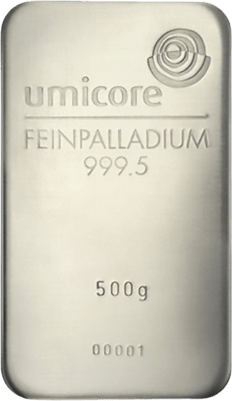
That depends on budget and goal. Larger bars such as the 500 g palladium bar offer the lowest premium per gram, while smaller units such as the 50 g palladium bar are more flexibly divisible and easier to sell on.
Palladium bars come from renowned refineries such as Heraeus, Umicore, Degussa, Valcambi or PAMP. Many of these are listed on the LBMA's Good Delivery List, which guarantees reliable standards for purity and weight.
Palladium is used predominantly for industrial purposes, above all in vehicle catalytic converters. Because supply is tight and heavily dependent on a few producing countries such as Russia and South Africa, changes in demand and supply disruptions have an immediate effect on the price.
Bars are available in more weight classes and usually with a lower premium, ideal for pure material investment. Palladium coins carry an official face value and can develop collector value, but are only available in a small selection in palladium.
Stay informed with product launches, financial news and exclusive offers. Sign up for our free newsletter today.
By entering your email address and clicking the "Submit" button, you give the following consent: "I agree to be informed by email about new products, financial news and exclusive offers, and therefore consent to the processing of my email address for the purpose of sending the newsletter. I can revoke this consent at any time without giving reasons, with effect for the future. The lawfulness of processing carried out prior to revocation remains unaffected."