Sold out

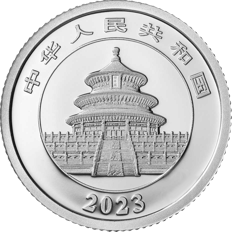
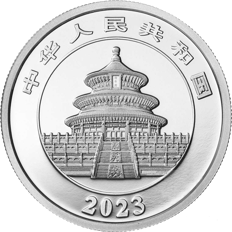
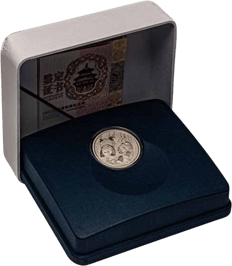
3g Platinum China Panda 2023 PP (Mintage: 30,000 | Proof)
€173.99
incl. VAT and excl. shipping
currently not available

 More than 310,000
 Over 30 years
 Secure shipping
 Google: 4.9/5


Hardly any coin tells so much history in such a small space as the Cook Islands Bounty in platinum. On its design side, the most famous mutiny ship in maritime history sails across a mirror-bright surface of the purest platinum, a precious metal that is rarer and more sought after industrially than gold. Issued by a tiny island state in the South Pacific, yet minted in the heart of Germany, this bullion coin combines historical fascination with the lasting value of one of the rarest precious metals in the world. This guide sheds light on the origin, design, technical data, tax particularities and the question of why platinum coins with the Bounty design are so popular among collectors.
The Cook Islands Bounty is one of the few bullion coins issued in all four classic precious metals, gold, silver, platinum and palladium. It shares this completeness with only a very small number of other coin series worldwide. The coin takes its name from the small island nation of the Cook Islands, a group of 16 islands in the South Pacific, located northwest of New Zealand. The state is closely linked to New Zealand and issues the coins as official legal tender without operating a mint of its own.
This gives rise to a particular feature that, for many collectors, is part of the appeal: the Platinum Bounty is a so-called agency coin. The right to mint the coin lies with the Cook Islands, but the actual production takes place at a German mint. This gives the coin the quality seal Made in Germany, a detail that explains its high minting quality. Those interested in further coins of exotic origin will find numerous comparable classics in our range of platinum coins.
On its design side, the coin shows the three-masted sailing ship Bounty, the British ship whose mutiny in 1789 ranks among the most famous events in maritime history and has been made into a film several times. Alongside the finely detailed depiction of the ship, this side also bears the weight and fineness of the platinum as well as the face value. The design has remained largely unchanged over the years of issue, making the Bounty instantly recognisable.
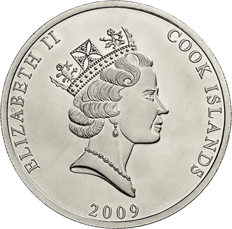
The reverse portrays the British monarch, for many years Queen Elizabeth II as head of state of the Cook Islands. The portrait is framed by the year of minting and the inscription "COOK ISLANDS", and the edge of the coin is reeded. The same design can also be found on the gold and silver issues of the Cook Islands as well as on the palladium version, making this a great choice for anyone wishing to collect an entire design family across several precious metals.
The Platinum Bounty is traditionally issued in the 1 oz denomination, making it a compact, easily tradeable bullion coin. Unlike many other series, there is no wide range of fractional denominations here; the 1 oz coin is the centrepiece, supplemented by rarer, smaller issues in certain years. The key specifications at a glance:
The high fineness of 999.5 is typical for platinum coins and makes the Bounty a genuine fine platinum bullion coin. The fine weight of one troy ounce matches the standard also found in the Vienna Philharmonic in platinum or the Platinum Maple Leaf, an advantage when it comes to later comparison and resale.
Platinum is an exceptionally rare precious metal, with global mining output far below that of gold. Besides its role as an investment and jewellery metal, platinum is in particular demand in industry, for example in catalytic converter technology and chemical processing. This dual demand from investment and industry fundamentally sets platinum apart from pure investment metals and gives it its own independent price formation.
For coin collectors, the decisive point is this: platinum is minted into bullion coins considerably less often than gold or silver. It is precisely this scarcity that gives platinum issues such as the Cook Islands Bounty an additional collector's value that goes beyond the pure material value. Anyone wishing to diversify their precious metals portfolio more broadly can consider platinum as a complementary building block alongside gold coins and silver coins.
Platinum unites two worlds: the lasting value of a precious metal and the real industrial demand of a sought-after raw material.
The Platinum Cook Islands is a typical bullion coin, prized equally by collectors and investors. Because the Bounty design is minted in platinum only in comparatively low mintages, the coin is correspondingly sought after. This low availability, and the collector appeal it creates, ensures consistently strong demand.
As a fine platinum coin, the Bounty first and foremost covers the classic investment idea, a physical tangible asset you can hold in your hand. At the same time, its rare minting in platinum makes it an object of interest for collectors looking to build a complete design family across several metals. It is this combination of investment and collector character that makes the Bounty series so special. Similarly popular among platinum enthusiasts are, for example, the Krugerrand in platinum or the Platinum Britannia.
Important purchasing criteria include the condition, the completeness of a capsule or packaging and, in the case of proof coins, any accompanying certificate. Many Bounty issues are supplied individually capsuled, which prevents scratches and fingerprints. For safe storage, suitable coin capsules or a coin box are recommended, in which an entire collection can be kept neatly organised.
Tax Information
Unlike investment gold, which is exempt from VAT in Germany, platinum coins are generally subject to VAT. At the time of purchase, the margin scheme taxation under §25a UStG is frequently applied. In addition, a one-year holding period applies to precious metals held as private assets; if the coin is held for longer than twelve months, any gain on disposal is tax-free. This is general information and does not replace professional tax advice.
As an alternative to coins, platinum can also be purchased in bar form. Both forms have their merits, and the choice depends on the individual goal. Bars are easy to stack and, in small denominations, can be flexibly traded again, with our range of platinum bars spanning everything from gram bars to kilo bars.
Coins, on the other hand, offer an additional collector's aspect alongside the material value that bars do not have. Those who value design, history and limited mintage are better served with a coin such as the Bounty. For investors who simply want to build up platinum weight, bars in medium sizes are often the more practical choice. An overview of all forms is available in the platinum category.
Although the coin is officially issued by the Cook Islands in the South Pacific, minting takes place at a German mint. This is what is known as an agency coin bearing the quality mark "Made in Germany", which explains its high minting quality.
The 1 oz platinum coin has a fine platinum content of 999.5 (99.95%) and weighs one troy ounce, that is 31.1035 g. The diameter is about 33 mm, the face value is 100 Cook Islands dollars and the edge is reeded.
The Bounty is one of the very few series issued in all four classic precious metals: gold, silver, platinum and palladium. The sailing ship design remains the same across all variants, making it possible to build up a complete design collection.
Platinum is mined in significantly smaller quantities worldwide than gold and is a metal with strong industrial demand. As a result, comparatively few bullion coins are minted from platinum. This scarcity gives platinum issues such as the Cook Islands Bounty extra appeal for collectors.
Unlike investment gold, platinum coins are not exempt from VAT in Germany; the margin scheme is frequently applied. In addition, a one-year holding period applies to precious metals held as private assets. For a binding assessment, a tax advisor should be consulted.
The HMS Bounty was a British sailing ship whose crew mutinied in 1789, an event that ranks among the most famous in maritime history and has been made into a film several times. The three-masted ship has adorned the design side of the Cook Islands bullion coins ever since, making them instantly distinctive.
 Cook Islands
Stay informed with product launches, financial news and exclusive offers. Sign up for our free newsletter today.
By entering your email address and clicking the "Submit" button, you give the following consent: "I agree to be informed by email about new products, financial news and exclusive offers, and therefore consent to the processing of my email address for the purpose of sending the newsletter. I can revoke this consent at any time without giving reasons, with effect for the future. The lawfulness of processing carried out prior to revocation remains unaffected."