
4 Gold Ducats New Minting
€1,966.02
VAT-free and excl. shipping
Available in 2–3 business days

 More than 300,000
 Over 30 years
 Secure shipping
 Google: 4.9/5
A name in gold since 1284.
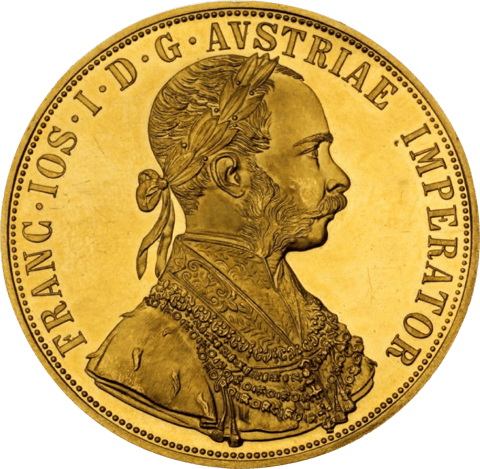
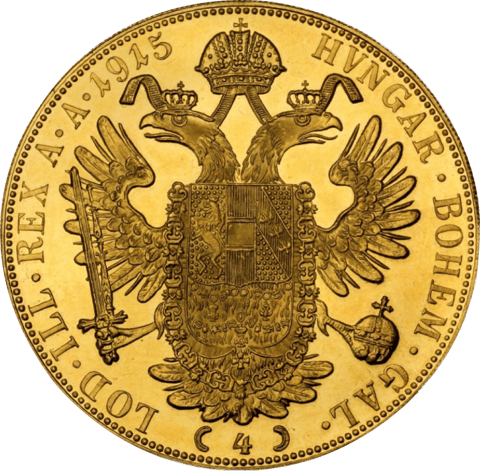
Venice struck the first gold ducat. Today the Austrian Mint restrikes it, with Franz Joseph I.

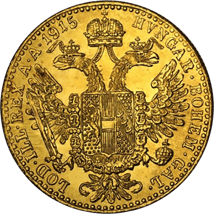
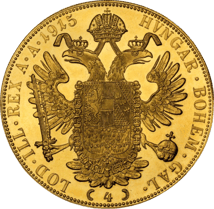
For decades, gold ducats were among the most important trade coins in the world. Today, the gold ducats of the Austrian Empire with a fineness of 986/1,000 are particularly popular bullion coins and collector's items. Current restrikes by the Austrian Mint bear the last official minting year 1915, as well as the insignia of the Habsburg imperial house. Available are restrikes of the 1 Ducat and the 4 Ducat coin.


Venice, 30 October 1284
Venice resolved to strike a gold coin “as good and fine in gold as the florin, or better”. A Latin dedication ran around the figure of Christ giving his blessing, and its last word is the name of the coin.
Sit tibi, Christe, datus, quem tu regis, iste ducatus
As far as the Levant
From 1857/58 the ducat was no longer legal tender in Austria. It was struck all the same, as a trade coin that was readily accepted above all in Africa, the Levant and Asia.
Sewn onto bonnets
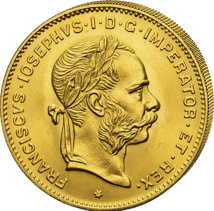
In Dalmatia, Bosnia, Serbia, Bulgaria and Greece, four ducat coins bearing Franz Joseph’s portrait were worn as jewellery, sewn onto bonnets or hung from long chest pendants.
A hundred for Mozart
For his opera “The Abduction from the Seraglio”, Wolfgang Amadeus Mozart received one hundred imperial ducats.
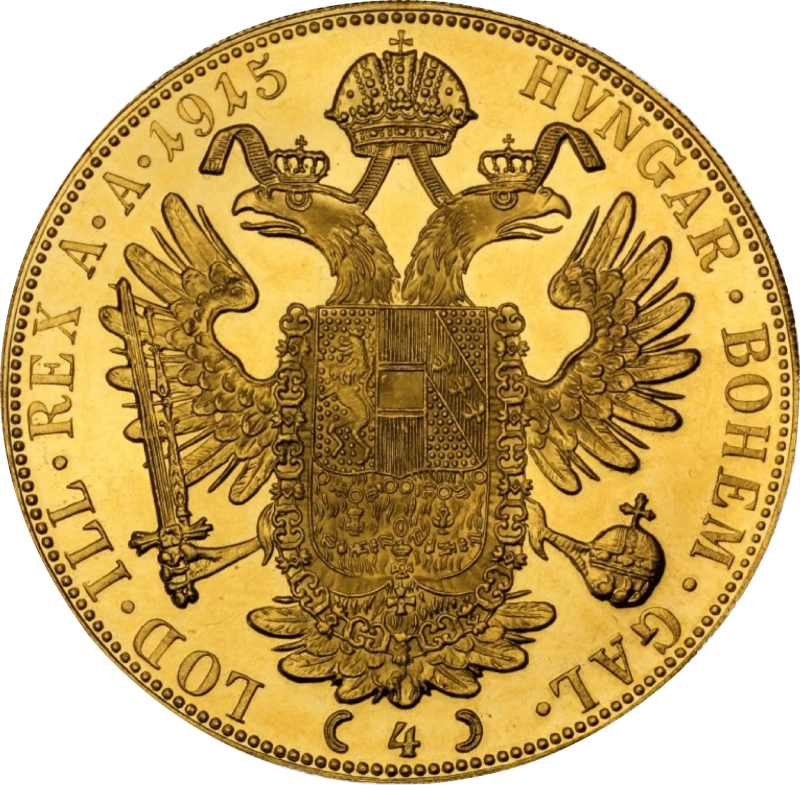
The legend is abbreviated Latin, on the single ducat as on the four ducat. Choose a side: below, every abbreviation is written out and translated.
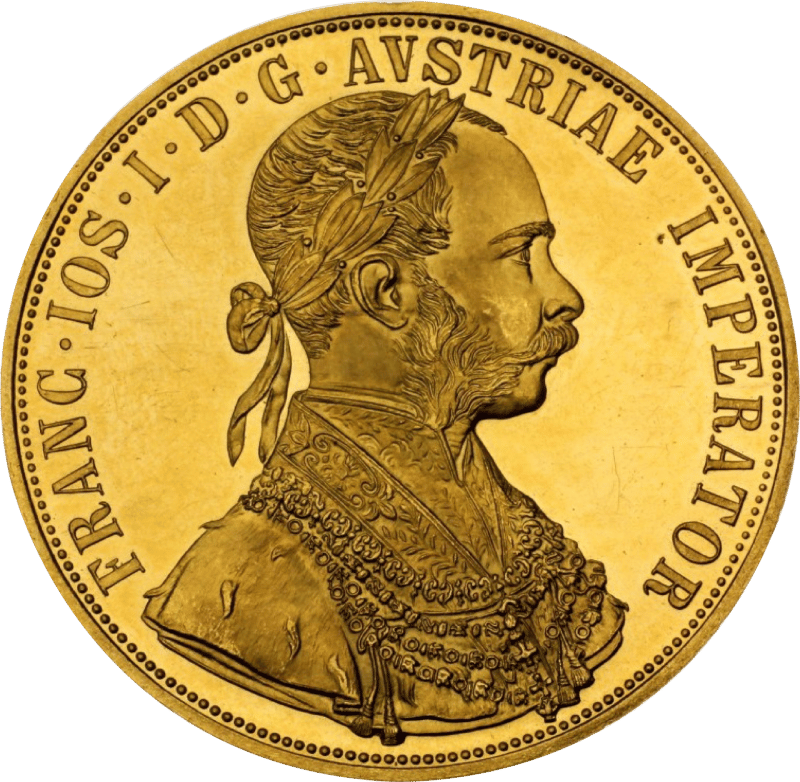
FRANC · IOS · I
Franciscus Iosephus I
Franz Joseph I
D · G
Dei Gratia
by the grace of God
AVSTRIAE IMPERATOR
Austriae Imperator
Emperor of Austria
The coin design dates from 1872. Franz Joseph reigned for almost 68 years, from 1848 to 1916, and his portrait is still struck on the ducat today, more than a hundred years after his death.
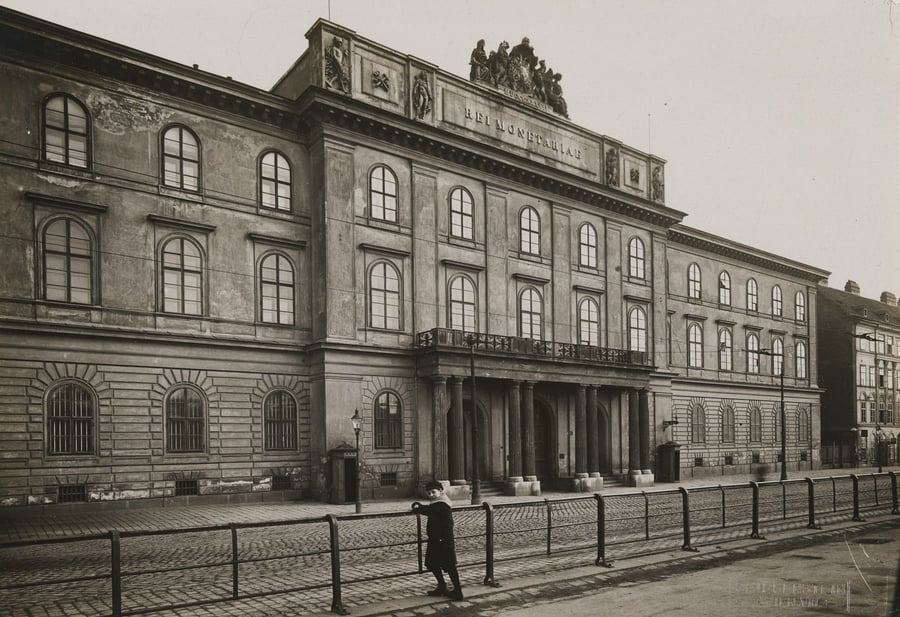
The ducats are made in Vienna, in the Austrian Mint’s building on the Heumarkt. It was built from 1835 as the Hauptmünzamt, the main mint, and coins are still struck there today.
“Newly struck trade coins … must correspond in the composition of their alloy, their dimensions and their appearance to the legal provisions that applied when they were originally struck; …”
Austrian Coinage Act 1988 (Scheidemünzengesetz), § 16
The law also requires a date from the time of the originals. The restrikes bear 1915. According to the Austrian Mint, the date recalls that the First World War brought gold coinage to an end that year, for the time being.
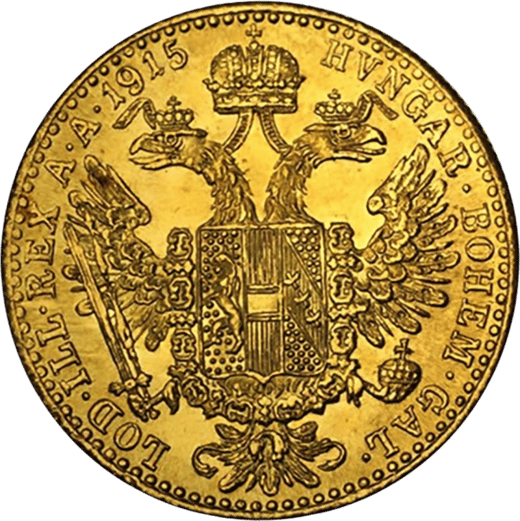
To give
The ducat: Franz Joseph with a laurel wreath, the crowned double eagle on the reverse.
View the 1 ducat
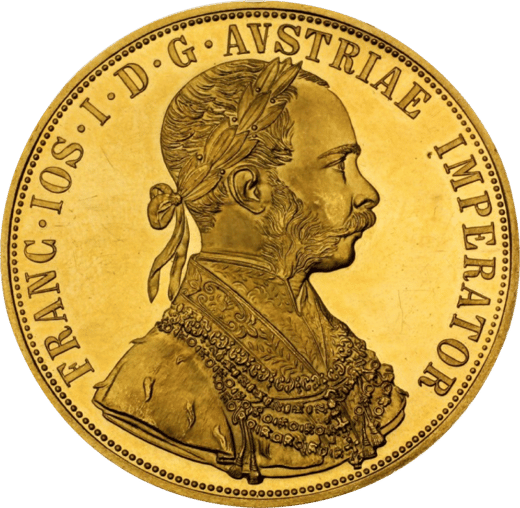
To collect
The four ducat with the emperor’s bust, the piece that once gleamed on traditional bonnets.
View the 4 ducats
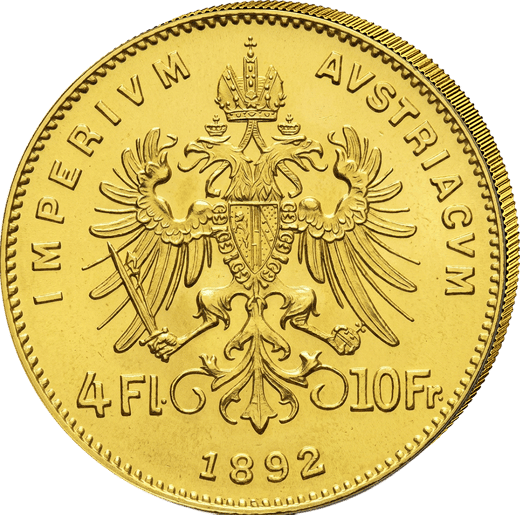
For connoisseurs
The gold florin dated 1892, which states its value in both florins and francs.
View the gold florin
Venice 1284. Vienna 1872. Still in gold today.
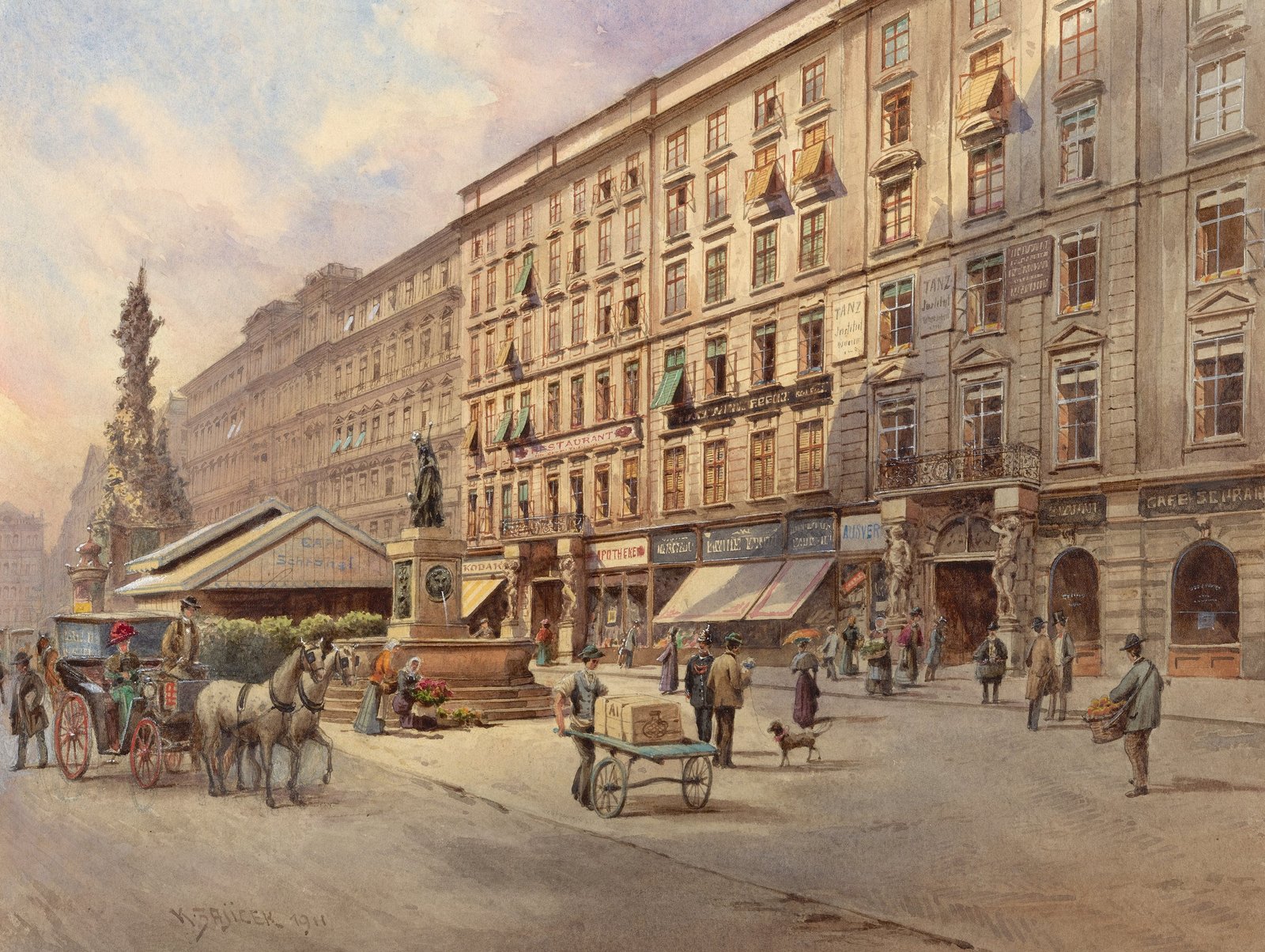
Historical details based on the Treccani encyclopaedia, the Deutsche Bundesbank, the Duden, the DWDS, the Online Etymology Dictionary, the MGM coin encyclopaedia, the Austrian Coinage Act 1988, the Austrian Mint, the Wien Geschichte Wiki, the Austrian National Library, the Mozarteum Foundation Salzburg and MünzenWoche. Images: Karl Wenzel Zajicek, the Graben with the Trattnerhof, watercolour 1911, and Bruno Reiffenstein, the Hauptmünzamt on the Heumarkt, around 1910, both Wien Museum.
 Ducats
Stay informed with product launches, financial news and exclusive offers. Sign up for our free newsletter today.
By entering your email address and clicking the "Submit" button, you give the following consent: "I agree to be informed by email about new products, financial news and exclusive offers, and therefore consent to the processing of my email address for the purpose of sending the newsletter. I can revoke this consent at any time without giving reasons, with effect for the future. The lawfulness of processing carried out prior to revocation remains unaffected."