Only 4 left to order
1 oz Platinum Purest Maple Leaf 2026 (Mintage: 425 | Reverse Proof)
€5,250.00
excl. shipping *
Available in 2–3 business days

 More than 310,000
 Over 30 years
 Secure shipping
 Google: 4.9/5


Platinum is considered the rarest of the classic precious investment metals, and the Platinum Maple Leaf from Canada is one of the few ways to own this special metal in the form of a state-minted bullion coin. Since 1988, the Royal Canadian Mint has issued the Canadian maple leaf in purest platinum, combining a world-famous design with a precious metal that is indispensable to industry and a rarity for collectors. The following sections cover the coin's history, its fineness and denominations, the design, authenticity features, the tax particulars of platinum, and proper storage.
The Platinum Maple Leaf belongs to the famous Maple Leaf family of the Royal Canadian Mint in Ottawa, which started out in 1979 as a gold coin. Nine years later, in 1988, a platinum edition was added alongside silver for the first time. This placed Canada among a small group of mints that offered platinum as a bullion coin at all, alongside issues such as the Vienna Philharmonic in platinum or the American Eagle.
What makes the platinum edition special is its combination of familiar design and extraordinary material. Anyone holding such a coin immediately notices the greater weight compared with silver and the cool, silvery-white lustre of platinum. Within the platinum range, the Maple Leaf stands on a par with other sought-after series such as the Vienna Philharmonic in platinum or the American Eagle. A broad overview of the full range is provided by the category Platinum coins. You can find all Maple Leaf coins in gold, silver and platinum under Buy Maple Leaf.
The Platinum Maple Leaf was initially minted from 1988 to 1999. Production then paused before the Royal Canadian Mint resumed the series from 2009 onward. This break in minting makes certain years particularly interesting for collectors today, since platinum coins from the 1990s are considerably rarer on the market than the modern issues. The current years of issue mostly appear in small mintages and are often elaborately designed Reverse Proof strikes.
Platinum is roughly thirty times rarer than gold and is used predominantly for industrial purposes, for example in catalytic converters, medical technology and the chemical industry. This dual role as an industrial metal and store of value sets the Platinum Maple Leaf fundamentally apart from pure investment classics such as the Krugerrand. Anyone looking to diversify their precious metals portfolio will find platinum to be a distinct complement to gold and silver.
The Platinum Maple Leaf is made of 999.5/1,000 fine platinum, a degree of purity that makes the coin one of the purest platinum bullion coins in the world. The obverse bears the stylised sugar maple leaf, framed by the inscriptions CANADA, the fineness 9995, and the markings FINE PLATINUM and 1 OZ PLATINE PUR.
One detail few people know is interesting: the Canadian maple leaf on the flag is deliberately designed with eleven points and therefore does not match the natural, far more jagged shape of the sugar maple leaf. The reason is purely aesthetic: eleven points look the calmest when the flag moves in the wind. Since 15 February 1965, this leaf has been part of the Canadian national flag and stands for tolerance, unity and peace.
Hardly any other symbol embodies an entire country as immediately as Canada's maple leaf; cast in platinum, it becomes a tangible piece of lasting value.
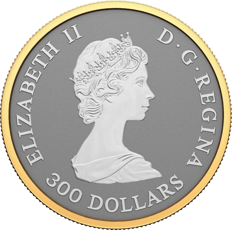
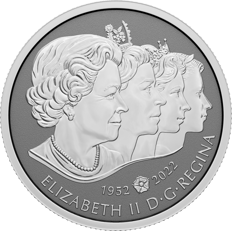
The reverse traditionally shows the portrait of the British Queen Elizabeth II, along with the face value and year of minting. The coin thus continues to carry a combination of British minting tradition and distinct Canadian identity. Related designs and country series can also be discovered with the Britannia or in the category Queen's Beasts.

Historically, the Platinum Maple Leaf was available in a remarkably wide range of sizes. Alongside the classic 1 oz coin, there were fractional denominations of 1/2 oz, 1/4 oz and 1/10 oz, plus the very small formats of 1/20 oz (1993 to 1999) and even a 1/15 oz in 1994. Modern issues from 2009 onward focus predominantly on the 1 oz coin.
The 1 oz platinum coin measures 30 mm in diameter, has a thickness of 2.87 mm and weighs 31.10 g. Anyone wishing to compare the dimensions with the better-known gold issues will find them listed in the overview of Gold Maple Leaf denominations below: the platinum coin largely matches the dimensions of the 1 oz gold coin:
| Denomination | Diameter | Fine weight | Face value |
|---|---|---|---|
| 1/20 oz | 14.0 mm | 1.555 g | 1 CAD |
| 1/10 oz | 16.0 mm | 3.110 g | 5 CAD |
| 1/4 oz | 20.0 mm | 7.776 g | 10 CAD |
| 1/2 oz | 25.0 mm | 15.552 g | 20 CAD |
| 1 oz | 30.0 mm | 31.103 g | 50 CAD |
The 1 oz coin is the standard for anyone focused on pure material value, as the percentage premium is lowest here. Smaller formats are more expensive per gram but are more finely divisible. With modern Platinum Maple Leaf issues, the collector aspect often plays the main role anyway, since many years of issue appear in only small mintages. The currently available issues can be found directly in the range further up the page; anyone who prefers to add platinum in bar form will find what they need among the platinum bars.
Platinum coins can be reliably checked using several features. The fixed physical parameters, diameter, thickness and exact weight, provide a first, simple point of reference: a genuine 1 oz Platinum Maple Leaf weighs exactly 31.10 g. Because platinum has a very high density, counterfeits made from base metals can already be detected from the ratio of size to weight.
As a family business with an ISO-compliant authenticity verification process, Kettner Edelmetalle relies on verified goods and 100% insured shipping. For long-term storage, suitable coin capsules accessories are recommended, protecting the sensitive surface from scratches. Further products related to the series can also be found in the category Other platinum coins.
An important difference from gold: while investment gold is exempt from VAT in Germany, platinum is generally subject to VAT. However, when buying platinum coins, the so-called margin scheme taxation may apply, under which tax is charged only on the trading margin rather than on the full value of the goods. This can noticeably reduce the effective surcharge compared with standard taxation.
Tax note
Unlike investment gold, platinum is not exempt from VAT. For private sales, any gain may be tax-free once the one-year holding period has elapsed. This is general information and does not replace tax advice.
When it comes to storage, the same applies to platinum as to other precious metals: dry, secure and handled as little as possible. For smaller holdings, a home safe or a bank safe-deposit box is suitable; for sorting several pieces, coin cases are a good option. Anyone wishing to keep building their holdings regularly can do so via the savings plan products and expand their portfolio step by step.
The Maple Leaf series is the only bullion coin available in all four classic precious metals. This makes it an ideal entry point for combining different metals within a familiar design line. The Gold Maple Leaf is the liquid classic for wealth building, the Silver Maple Leaf the affordable entry point, and the platinum edition the rare addition for anyone looking to diversify more deliberately.
The Palladium Maple Leaf also belongs to this family and rounds off the series of precious metals. The great appeal of platinum lies in its rarity: the annual quantity mined worldwide is many times smaller than that of gold, which makes the metal a distinct and comparatively little-noticed asset class.
The Royal Canadian Mint first struck the Platinum Maple Leaf in 1988. After a pause between 1999 and 2009, the series has been issued again ever since, predominantly in the 1 oz size and in limited editions.
The coin is made of 999.5/1,000 fine platinum, making it one of the purest platinum bullion coins in the world. The fineness mark 9995 is struck directly into the obverse.
No. Unlike investment gold, platinum is not exempt from VAT. In trading, however, the margin scheme often applies, meaning that tax is charged only on the trading margin. Specific cases should be discussed with a tax advisor.
Platinum is roughly thirty times rarer than gold and is largely used for industrial purposes. As a result, the platinum price reacts more strongly to economic conditions and industrial demand, while gold is seen more as a pure store of value. Both complement each other in a broadly diversified precious metals portfolio.
The obverse shows the eleven-pointed sugar maple leaf that also adorns the Canadian flag, framed by the fineness and metal markings. The reverse traditionally bears the portrait of the Queen, the face value and the year of minting.
Historically, the range extended from 1/20 oz through 1/10, 1/4 and 1/2 oz up to the full ounce, supplemented by a rare 1/15 oz from 1994. Modern years of issue are predominantly minted as the 1 oz coin.
 Maple Leaf
Stay informed with product launches, financial news and exclusive offers. Sign up for our free newsletter today.
By entering your email address and clicking the "Submit" button, you give the following consent: "I agree to be informed by email about new products, financial news and exclusive offers, and therefore consent to the processing of my email address for the purpose of sending the newsletter. I can revoke this consent at any time without giving reasons, with effect for the future. The lawfulness of processing carried out prior to revocation remains unaffected."