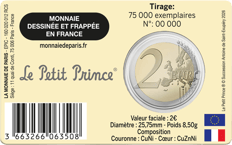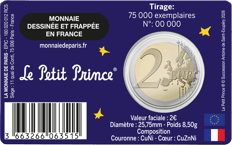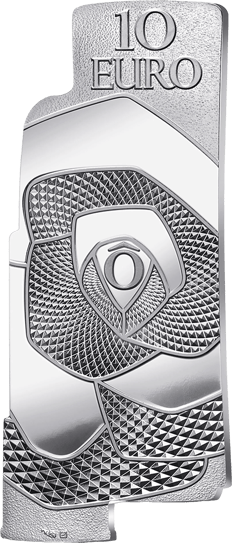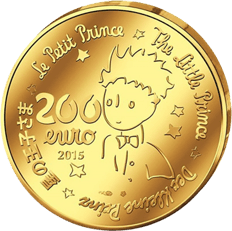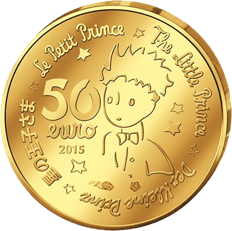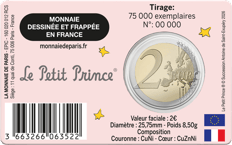
2 Euro 80 Years The Little Prince Book 2026 (Mintage: 75,000)
€24.90
incl. VAT and excl. shipping
Available in 2–3 business days

 More than 310,000
 Over 30 years
 Secure shipping
 Google: 4.9/5


Authenticity
Every piece bears the mark of the Monnaie de Paris. Before it goes out to you, we check it ourselves.
 France
Every bullion coin bears the design of its mint and the year it was struck, and almost every one its weight and fineness.
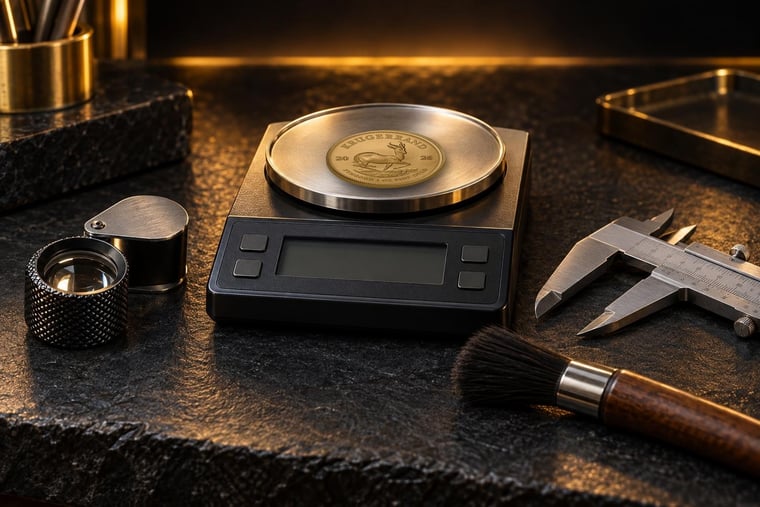
In our CCTV-monitored high-security area, two specialists check every order following the four-eyes principle, including its weight and, by X-ray, its authenticity.
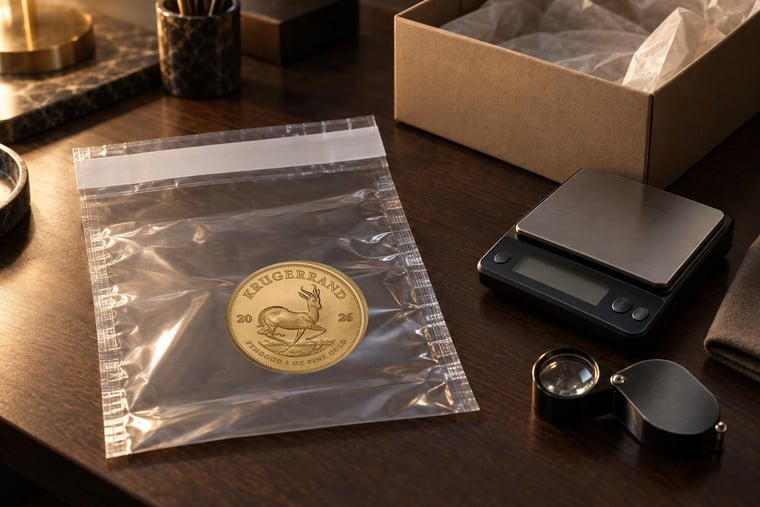
We then seal your order in a security bag that can only be opened once. You will be the first to open it.
Our testing methods
The house
The Monnaie de Paris was founded in 864 under Charles the Bald and is owned by the French state. Its headquarters and museum are on the Quai de Conti in Paris, while circulating euro coins have been made at its Pessac plant near Bordeaux since 1998.

Sources: manufacturer’s details, as of 14 November 2026
Hardly any mint combines as much history with as much artistic freedom as the Monnaie de Paris. Its roots go back to the year 864, when Charles the Bald centralised French coinage at the royal court. This makes it one of France's oldest continuously operating institutions and one of the world's most tradition-rich mints. This guide sheds light on the history of the house, its famous collector coins in gold and silver, the typical design worlds, the quality grades, and the special features that make coins from Paris equally appealing to collectors and investors.
The Monnaie de Paris is the state French mint and the only house legally authorised to produce France's circulating euro coins. Since 1879, the right to mint coins has rested exclusively with the French state. Today, the institution is legally organised as an EPIC, a public enterprise of an industrial and commercial nature, comparable to a German public-law institution. Alongside its sovereign duties, it also operates commercially as a producer of collector coins, medals and art objects, a balancing act between state monopoly and creative brand house that defines its distinctive character.
Anyone interested in the great international mints will find further state and private mints in Kettner Edelmetalle's extensive mint overview, whose histories read in much the same way. The Monnaie de Paris holds a special position among them, as it combines tradition and avant-garde coin design more consistently than almost any other house.
The magnificent Hôtel de la Monnaie on the Quai de Conti in Paris, completed in 1775, remains the institution's representative heart to this day. It is also home to the Musée de la Monnaie de Paris, which houses an extensive numismatic collection and reopened to the public in 2017 following comprehensive renovation. The actual production of coins has taken place since 1973 at the plant in Pessac in south-west France, in the Gironde, where euro coins have also been struck since 1998. This separation of tradition and modern production is emblematic of the mint's self-image.
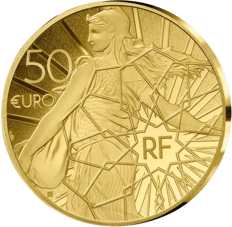
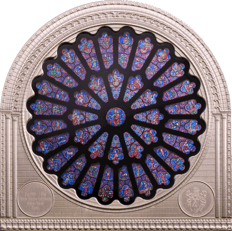
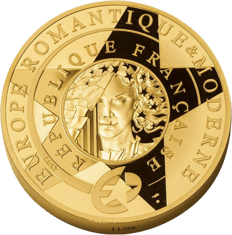
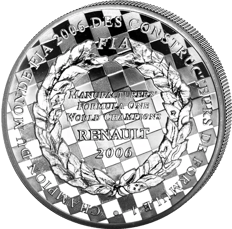
Since the introduction of the euro, the Monnaie de Paris has made a name for itself as an exceptionally prolific issuer of collector coins: by 2021, well over 1,500 different issues had appeared. Most of these are struck in silver or gold, many in strictly limited mintages and the highest minting quality. Unlike pure investment products, these coins aim at aesthetic and thematic appeal, they are works of art with a face value.
Anyone who puts the collecting aspect first will find a wide range of collector coins from the most diverse mints at Kettner Edelmetalle. Those seeking a classic investment, on the other hand, tend to look to established gold bullion coins with a transparent precious metal reference. The Paris issues often sit precisely in between: containing precious metal while also being artistically high-quality.
For the safe storage of these delicate strikes, suitable accessories such as coin capsules are recommended, protecting the polished surfaces from scratches and fingerprints.
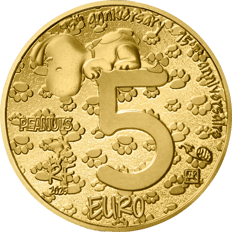
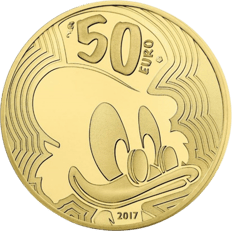
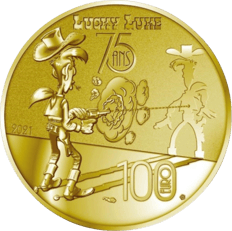
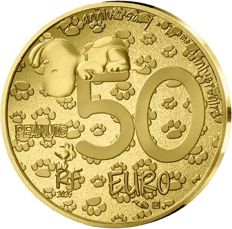
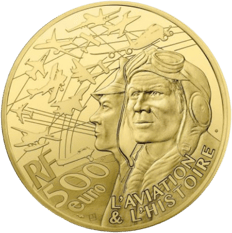
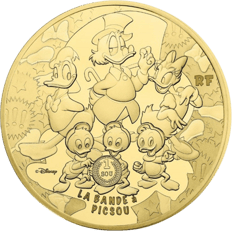
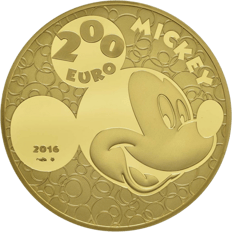
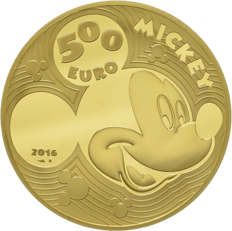
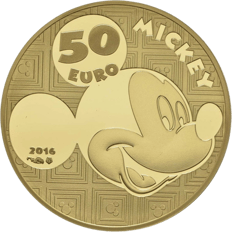
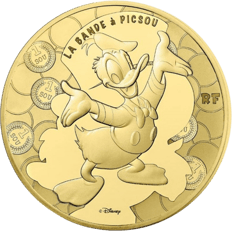
The thematic range of the Monnaie de Paris is extraordinary. Classic series are devoted to French history, important figures, the art of the great Parisian museums or Olympic disciplines. In addition, the house opened up early to licensed themes and mints designs from internationally known brands and fictional worlds, one reason why its issues attract enthusiastic collectors even beyond classic numismatics.
Anyone who is enthusiastic about design-driven coins will discover related worlds in the extensive themes section, ranging from art and culture to personalities and popular TV and comic designs. It is precisely this mix of museum-grade ambition and pop-culture playfulness that makes the house's signature style unmistakable.
A coin from Paris rarely tells only of its metal value, it tells of an idea, an artist and a moment in history.
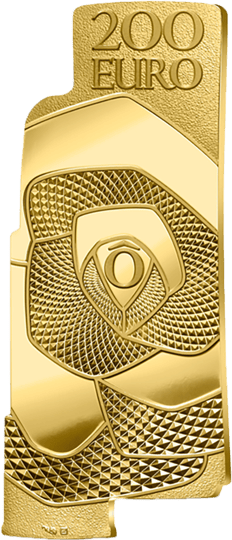
A distinctive feature of the Paris collector coins is their sometimes unusual denominations. Alongside common values, coins appear with odd face values such as 1½ euro or ¼ euro, as well as spectacular top pieces with a face value of 2,500, 5,000 or even 10,000 euro. These high denominations reflect the precious metal content of large gold or silver strikes and are aimed at a discerning collector audience.
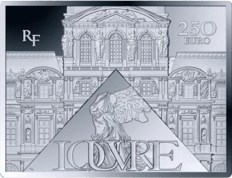
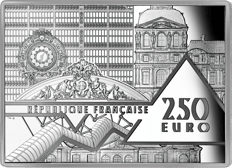
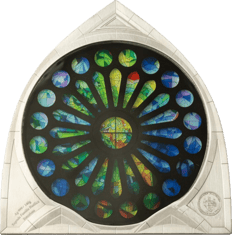
The house also goes its own way with shapes: there are rectangular strikes, coins shaped like owls or bows, and even issues modelled on the silhouette of the Berlin Wall. Such formats are numismatically appealing but require particular care in handling and storage, here it is worth looking at suitable coin cassettes from the accessories range to permanently protect sets and special formats.
Tax treatment plays an important role for coins made of precious metal. Investment gold is in principle exempt from VAT in Germany under § 25c UStG, provided the statutory requirements are met. Silver coins, on the other hand, are regularly subject to VAT, often under the so-called margin scheme. As the Monnaie de Paris predominantly issues collector coins, a distinction should be made before purchase between collector value and pure precious metal value.
Note on Collector Value
Collector coins are often issued at a multiple of their face value. Their value is derived from precious metal content, mintage size, condition and demand, not solely from the denomination stamped on them. A careful look at each individual issue is therefore advisable.
Anyone who regards precious metal primarily as a building block of wealth will usually find narrow trading margins with classic gold coins and silver coins that enjoy a high level of recognition. Collector-oriented Paris issues, on the other hand, are more suited to enthusiasts who take pleasure in the design, mintage and minting artistry.
Monnaie de Paris coins frequently appear in clearly defined, limited mintages and are delivered with a certificate and case, important evidence of authenticity and condition. As many issues are only available in limited quantities in Germany, a trustworthy source is essential. Kettner Edelmetalle verifies precious metal products using ISO-compliant procedures and ships with 100% insurance, so that delicate strikes reach the buyer safely.
International comparison pieces are provided by other state mints: the Münze Österreich, the British Royal Mint or the Royal Canadian Mint. A direct comparison reveals the distinctive style of the Paris strikes, a combination of French elegance, artistic courage and long tradition.
The Monnaie de Paris is the state French mint, with roots dating back to the year 864. It strikes France's circulating euro coins and also issues numerous collector coins, medals and art objects.
The representative Hôtel de la Monnaie on the Quai de Conti in Paris houses the administration and the museum. Actual minting has taken place since 1973 at the plant in Pessac in the Gironde, where euro coins have also been produced since 1998.
Most issues are collector coins, whose value is made up of precious metal content, mintage and collector demand. For a pure investment, more heavily traded bullion coins are often better suited. However, those who take pleasure in design and minting artistry will still find attractive, precious-metal-bearing pieces here. This does not constitute investment advice.
The Monnaie de Paris deliberately issues coins with odd or very high denominations, such as 1½ euro or up to 10,000 euro. High face values reflect the precious metal content of large gold or silver strikes; the actual selling price is usually well above the stamped value.
Delicate Proof strikes should, where possible, not be touched with bare fingers and should be stored in suitable coin capsules or coin cassettes. The original case and certificate preserve the collector value and provide evidence of authenticity and condition.
Mint State refers to the normal, evenly lustrous minting quality. Proof is the highest grade: it displays mirror-like fields and frosted, contrasting designs, and is reserved for limited collector issues.
 Monnaie de Paris

Personal advice
Our client advisers know the range of the Monnaie de Paris and help you choose, by phone or at an appointment that suits you.
Monday to Friday, 8 am to 8 pm
If you decide to sell later, we will buy your bars and coins from you. Sell to us
Stay informed with product launches, financial news and exclusive offers. Sign up for our free newsletter today.
By entering your email address and clicking the "Submit" button, you give the following consent: "I agree to be informed by email about new products, financial news and exclusive offers, and therefore consent to the processing of my email address for the purpose of sending the newsletter. I can revoke this consent at any time without giving reasons, with effect for the future. The lawfulness of processing carried out prior to revocation remains unaffected."