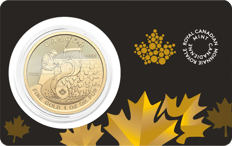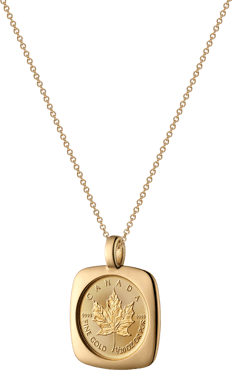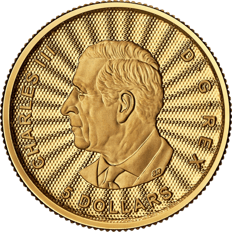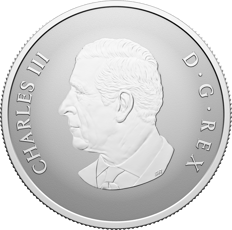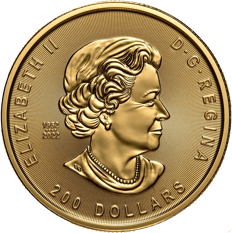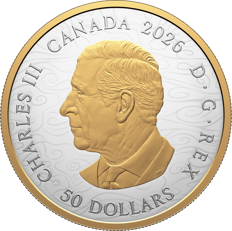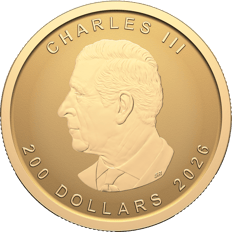


1 Ounce Gold Maple Leaf 2026
€3,454.85
VAT-free and excl. shipping
Available in 2–3 business days

 More than 310,000
 Over 30 years
 Secure shipping
 Google: 4.9/5
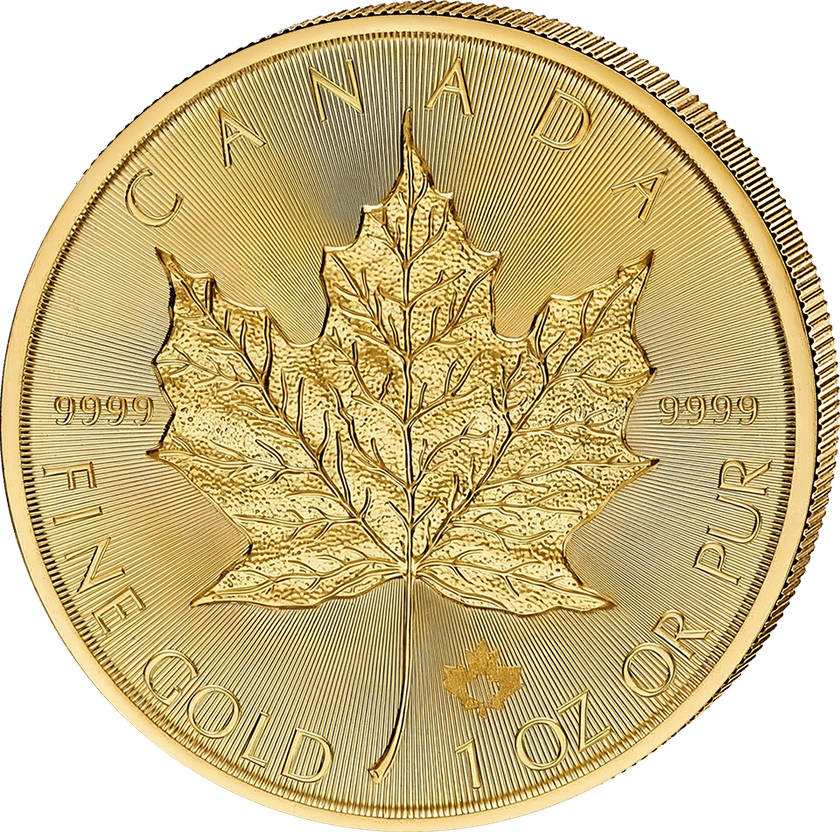
The Royal Canadian Mint has been striking the Maple Leaf in gold since 1979, and since 1982 as the world’s first bullion coin in 999.9 fine gold. It is owned by the Government of Canada.


The Royal Canadian Mint produces more than 15 million coins per day at its sole mint in Winnipeg. The Mint plays a central role in Canada's monetary system, striking both circulation and collector's coins, and is a major player in the international bullion coin market. Its most well-known coin is the globally recognised Maple Leaf. In addition, the Royal Canadian Mint also offers high-quality and exclusive jewellery and accessories, such as watches and earrings.


Authenticity
Every piece bears the mark of the Royal Canadian Mint. Before it goes out to you, we check it ourselves.
Every bullion coin bears the design of its mint and the year it was struck, and almost every one its weight and fineness.
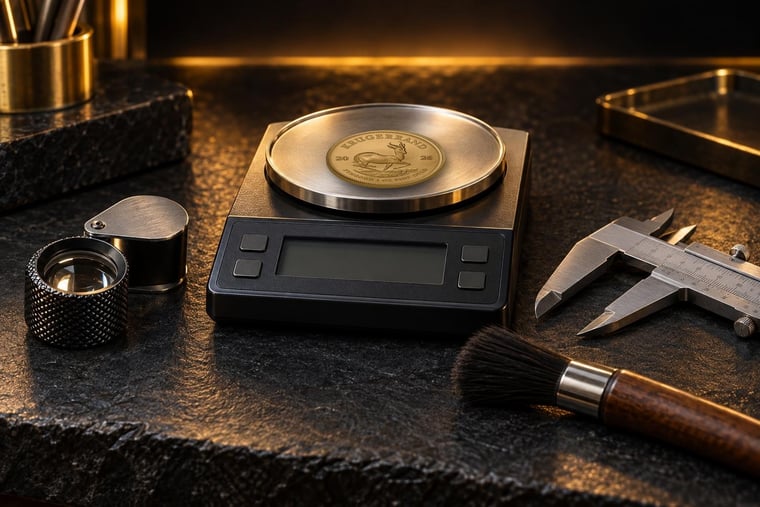
In our CCTV-monitored high-security area, two specialists check every order following the four-eyes principle, including its weight and, by X-ray, its authenticity.
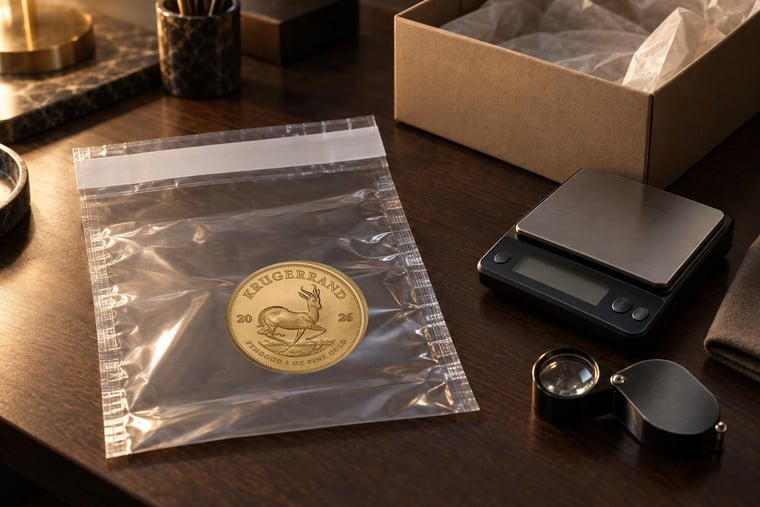
We then seal your order in a security bag that can only be opened once. You will be the first to open it.
Our testing methods
The house
The 2026 gold Maple Leaf carries fine radial lines and a micro-engraved maple leaf. With Bullion DNA, registered dealers can check whether a coin comes from Ottawa. The mint was founded in 1908, and its refinery has been operating since 1911.

Sources: manufacturer’s details, LBMA lists, as of 14 November 2026
The Royal Canadian Mint is one of the world's best-known minting institutions, striking several million coins every day at its facility in Winnipeg. Worldwide, the name of the Canadian mint stands above all for one series: the Maple Leaf with its distinctive maple leaf design, regarded as one of the purest bullion coins of all. This guide sheds light on the history, business divisions, the most important coin series, finenesses, security features, as well as tax and practical aspects surrounding the products from Canada.
The Royal Canadian Mint was opened on 2 January 1908 as a branch of the British Royal Mint in Ottawa. Its first strike was a silver 50-cent piece depicting King Edward VII. In 1931, the mint became an independent Canadian institution and thereafter took on responsibility for the nation's coinage. In its early years, production focused mainly on silver coins, circulation coins made from base metals, and the British Sovereign, one of the classic gold coins of the Commonwealth.
In 1935 the Mint issued its first silver dollars, which remained in circulation until 1967. Due to growing capacity constraints in Ottawa, a second mint opened in Winnipeg, Manitoba, in 1976, which today produces Canada's circulation coins. The first Gold Maple Leaf followed in 1979, and in 1987 came the famous one-dollar coin known as the Loonie, which replaced the one-dollar banknote. In 2007, the mint set a widely noted record with a 100-kilogram gold coin, at the time the largest and heaviest gold coin in the world.
The path from British branch to an independent global player reflects the development of Canada itself. While many historic European coins such as the Sovereign or the Vreneli have their roots in the 19th century, the Canadian Mint positioned itself early on as a pioneer of exceptionally high finenesses and modern security technology.
In addition to its own circulation, bullion and collector's coins, the Royal Canadian Mint also strikes coins in numerous foreign currencies on behalf of other states. Added to this is a broad spectrum of individual issues and series in gold, silver, platinum and palladium. Its activities can be divided into four core areas:
This combination of mass production and high-quality numismatics makes the mint one of the most versatile houses in the industry. Anyone interested in bullion coins from different countries will find a particularly wide range of standard and special issues from Canada.
Arguably the most famous and popular series from the Royal Canadian Mint worldwide is the Maple Leaf, named after the maple leaf motif. It has been struck in gold since 1979, in silver and platinum since 1988, and in palladium since 2005. With a fineness of 999.9/1,000, the Silver Maple Leaf is one of the purest regularly minted silver coins and one of the most actively traded silver bullion coins of all. Its face value is 5 Canadian dollars.
The Gold Maple Leaf was originally struck with a fineness of 999/1,000 and was raised to an impressive 999.9/1,000 (24 carat) in November 1982. Since the introduction of micro-engraving technology in 2013, it has been protected against counterfeiting with modern security features. The face value of the one-ounce issue is 50 Canadian dollars.
The Gold Maple Leaf is available in several weight classes, making it attractive both for beginners and for larger investment amounts:
Smaller denominations offer more flexibility when selling later, but carry a higher percentage premium. Those looking to buy as close as possible to the pure metal value usually choose the one-ounce issue. As an alternative, it is worth comparing it with the Krugerrand, which uses a copper alloy while containing the same amount of fine gold.
Particularly sought after among collectors are special issues with an additional privy mark: a small secondary symbol marking certain years of issue or occasions. From limited series to one-off pieces, the Canadian mint covers a broad spectrum of collector's coins.
Beyond coin production, the mint also manufactures bars in gold and silver. These are aimed both at private investors and at institutional trading, where large-format bars with LBMA certification are in demand.
Bars are particularly suitable when the aim is to acquire as much metal value per euro as possible, since they generally carry a lower premium than coins. Those wishing to combine coins and bars will find a wide selection of different manufacturers under gold bars and silver bars.
A hallmark of the Canadian mint is its exceptionally high fineness. While many bullion coins range from 900 to 999 parts per thousand, the Gold Maple Leaf reaches one of the highest purity levels on the market at 999.9/1,000. This purity brings both an advantage and a disadvantage: pure gold is softer and therefore more susceptible to scratches, so careful storage is recommended.
To ensure protection against counterfeiting, the Mint relies on technical innovations. These include micro-engraving in the form of a laser-engraved maple leaf with an embossed year, as well as precise radial lines on the coin's surface that refract light in a characteristic way. These features can be checked with the naked eye or under magnification. At Kettner Edelmetalle, every coin additionally undergoes an ISO-compliant authenticity verification before leaving the logistics centre.
For investors in Germany, tax classification is an important point. Investment gold, which includes the Gold Maple Leaf, is exempt from VAT under the applicable regulations. Silver coins such as the Silver Maple Leaf, on the other hand, are subject to VAT or to the margin scheme, which is reflected in the selling price.
Tax notice
Investment gold is exempt from VAT in Germany. After a holding period of more than one year, any capital gain from the sale of physical gold and silver is free of income tax for private individuals. This is general information, not tax advice; expert advice should be sought in individual cases.
Several options are available for storage: storing at home in your own safe, a bank safe deposit box, or external custody solutions. Sensitive coins with a high fineness benefit from protected storage in coin capsules or coin cases, which keep scratches and environmental influences away. For larger holdings, master boxes are a good option, in which the mint ships its tubes directly from the factory.
The Royal Canadian Mint is one of the world's leading mints and holds several internationally recognised certifications that attest to its standards in quality, safety and environmental management:
Good Delivery status with the LBMA and COMEX means that the mint's bars are accepted in international wholesale trade without further inspection: an important quality signal for investors who value high tradability.
On the international market, the Canadian mint stands alongside other renowned houses. Each mint has its own classics and areas of focus, which makes the comparison interesting for investors and collectors alike.
The Maple Leaf stands out for its extremely high fineness, while the Krugerrand scores with its robust alloy, and the Vienna Philharmonic is considered Europe's most popular bullion coin. An overview of all mints is available in the Manufacturers category.
By far the most famous series is the Maple Leaf with its maple leaf design. It is struck in gold, silver, platinum and palladium and is among the most actively traded bullion coins in the world. Details on the individual issues can be found in the categories Gold Maple Leaf and Silver Maple Leaf.
The Gold Maple Leaf has had a fineness of 999.9/1,000 since 1982, making it one of the purest regularly minted gold coins. Because pure gold is soft, protected storage is recommended, for example in coin capsules.
Yes, as investment gold, the Gold Maple Leaf is exempt from VAT in Germany. Silver coins such as the Silver Maple Leaf, on the other hand, are subject to VAT or to the margin scheme. A selection of VAT-exempt products can be found under gold bullion coins.
The Gold Maple Leaf is available in sizes of 1 oz, 1/2, 1/4, 1/10 and 1/20 oz. Smaller denominations offer more flexibility when selling, but carry a higher percentage premium. Those wishing to buy close to the metal value usually choose the one-ounce issue from the Maple Leaf gold coins range.
Since 2013, modern issues have carried a micro-engraving featuring a laser-engraved maple leaf and year of issue, as well as precise radial lines that refract light in a characteristic way. These features make counterfeiting considerably more difficult. When buying through a reputable dealer such as Kettner Edelmetalle, every coin also undergoes an authenticity verification.
The Maple Leaf consists of almost pure gold (999.9/1,000), while the Krugerrand uses a more resilient copper alloy with a fineness of 916.7/1,000, for the same fine gold content of one ounce. A direct comparison is worthwhile via the categories Maple Leaf and Krugerrand.
 Royal Canadian Mint

Personal advice
Our client advisers know the range of the Royal Canadian Mint and help you choose, by phone or at an appointment that suits you.
Monday to Friday, 8 am to 8 pm
If you decide to sell later, we will buy your bars and coins from you. Sell to us
Stay informed with product launches, financial news and exclusive offers. Sign up for our free newsletter today.
By entering your email address and clicking the "Submit" button, you give the following consent: "I agree to be informed by email about new products, financial news and exclusive offers, and therefore consent to the processing of my email address for the purpose of sending the newsletter. I can revoke this consent at any time without giving reasons, with effect for the future. The lawfulness of processing carried out prior to revocation remains unaffected."