Only 3 left to order
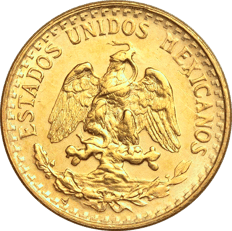
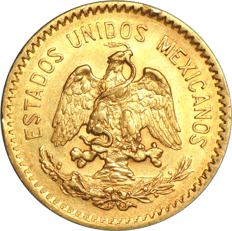
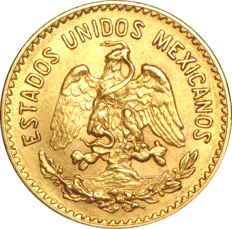
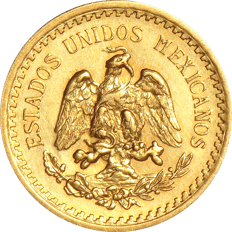
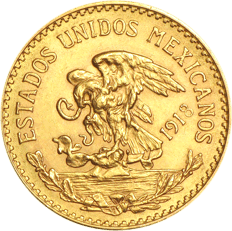
20 Mexican Peso Centenario Gold
€2,271.91
VAT-free and excl. shipping
Available in 2–3 business days

 More than 310,000
 Over 30 years
 Secure shipping
 Google: 4.9/5


The Casa de Moneda is the oldest documented mint on the American continent. Even today, its products remain highly sought after by collectors, enthusiasts, and investors, and are popular items. For more than three centuries, the coins of the "Casa de Moneda de México" formed the foundation of the gold and silver coin system of the Central American country. The entire monetary system was based on this.


Authenticity
Every piece bears the mark of Casa de Moneda de México. Before it goes out to you, we check it ourselves.
Every bullion coin bears the design of its mint and the year it was struck, and almost every one its weight and fineness.
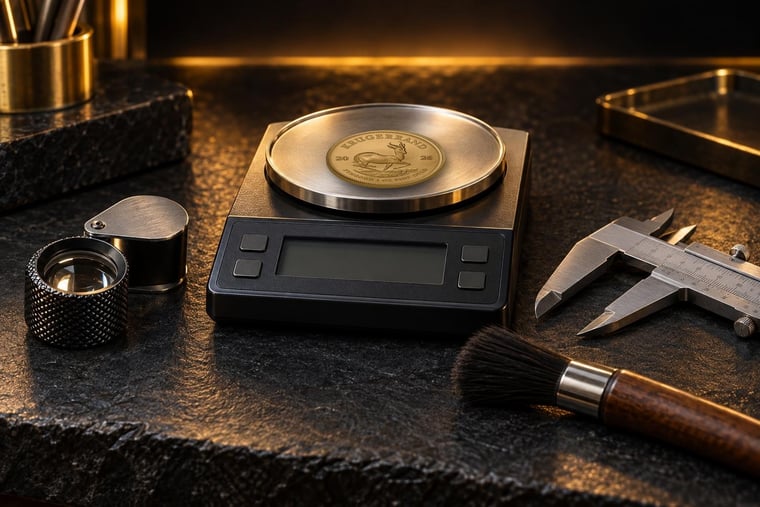
In our CCTV-monitored high-security area, two specialists check every order following the four-eyes principle, including its weight and, by X-ray, its authenticity.
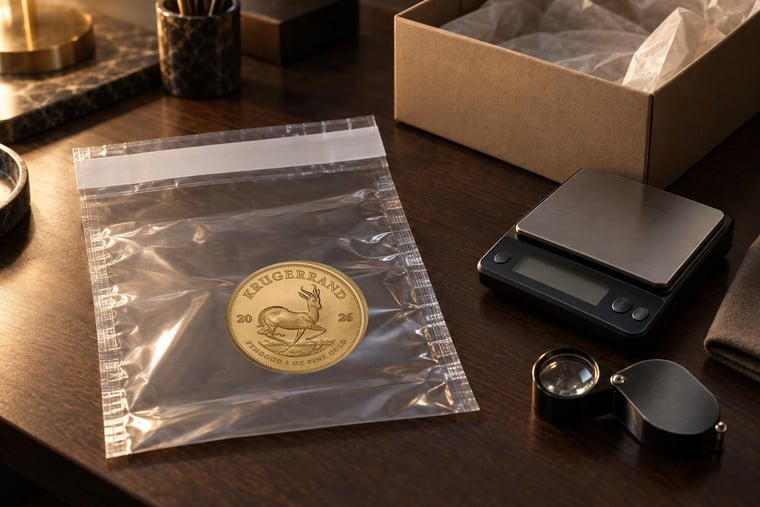
We then seal your order in a security bag that can only be opened once. You will be the first to open it.
Our testing methods
The house
Casa de Moneda de México was founded in 1535. Since 1983 it has struck its coins at a plant in San Luis Potosí. It is known for the Libertad with the Angel of Independence, in gold since 1981 and in silver since 1982.
Sources: manufacturer’s details, as of 14 November 2026
The Casa de Moneda de México is considered the oldest documented mint on the American continent. Founded in 1535, it minted the entire gold and silver coinage of Mexico for over three centuries and, with its silver coins, laid a foundation for monetary systems far beyond the Americas. This guide sheds light on the mint's history, its best known coins such as the Libertad and the Centenario, the available denominations, as well as tax and practical aspects for collectors and investors.
The Casa de Moneda was founded on 11 May 1535 by the Spanish viceroy Antonio de Mendoza, following a decree of the Spanish crown. It was built on the remains of the Casa Denegrida, the so-called black house, where the Aztec ruler Moctezuma used to meditate. The mint thus stands symbolically at the crossroads between pre-Columbian high culture and the Spanish colonial era, a legacy that is still reflected today in the designs of many Mexican coins.
The mint became famous above all for its silver coins, in particular the Eight Reales coins and their successor, the silver peso. These circulated well into the 19th century across the Americas and Asia and influenced the emergence of modern currencies such as the US dollar, the Japanese yen and the Chinese yuan. Anyone interested in the historical dimension of Mexican coinage will find numerous items of comparable numismatic depth among the collector's coins.
Since 1983, actual coin production has taken place at the plant in San Luis Potosí. The old headquarters in Mexico City now serve as the Museo Nacional de las Culturas. The mint's main customer is the Banco de México, which controls the circulation of the official national currency. In the 20th century, the Casa de Moneda significantly expanded its range to include circulation, bullion and collector's coins, positioning itself internationally as a supplier of sought-after precious metal coinage.
The Libertad is the best known modern bullion and collector's coin from the Casa de Moneda. First issued in 1981, it is minted in both gold and silver and achieves a fineness of 999/1,000. A numismatic peculiarity: the Libertad carries no face value, its value being determined solely by the current market price of the precious metal it contains and, for limited editions, by a collector's premium.
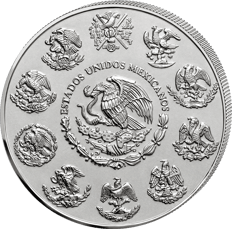
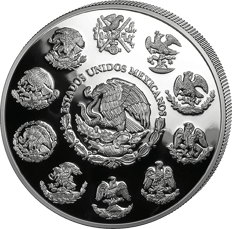
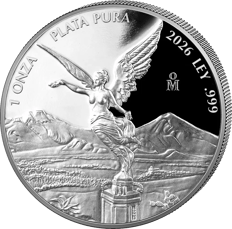
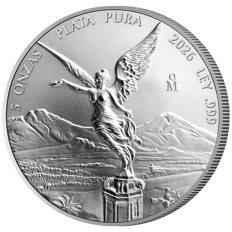
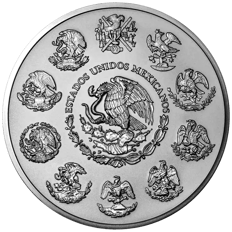
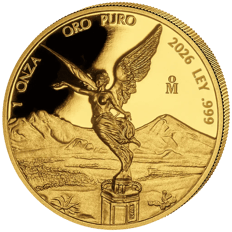
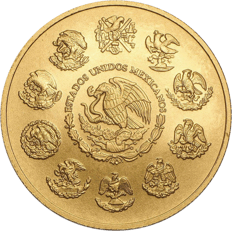
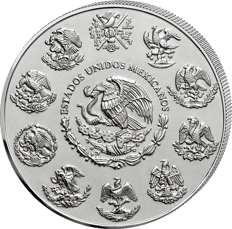
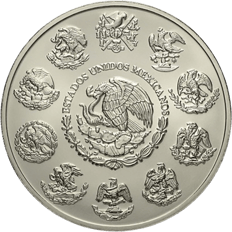
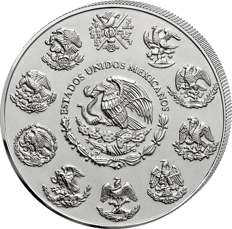
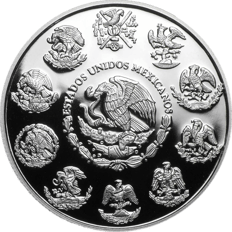
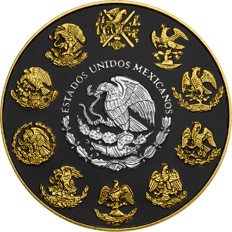
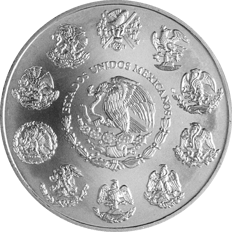
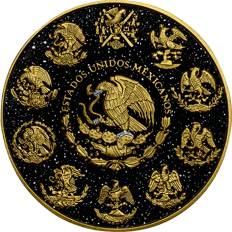
The design ranks among the most detailed in the international bullion coin world. The reverse depicts the winged victory goddess El Ángel de la Independencia, enthroned atop the Independence Column in Mexico City. The obverse shows the Mexican coat of arms with the eagle on the cactus, surrounded by historical coats of arms from earlier eras. Anyone wishing to compare the series with other classics will find the most obvious alternatives among the Maple Leaf silver coins and the Vienna Philharmonic.

The Libertad is available in an exceptionally wide range of sizes, from fractional coins to kilogram bar format. This makes it attractive both for beginners with a small budget and for investors with larger sums:
In particular, the large silver Libertads with a fine weight of 1 kilogram are highly sought after by collectors, as they are often issued in limited Prooflike quality and with a presentation case. Suitable coin capsules are recommended for the secure storage of such large coins.
The Centenario was first minted in 1921 to celebrate the 100th anniversary of Mexican independence from Spain. The coin consists of 90% gold and 10% copper, which gives it greater scratch resistance than pure fine gold coins. The original face value was 50 pesos, but the actual market value is significantly higher and depends on gold content and collector demand. The current range can be found in the Centenario gold coins category.
Besides the well known 50 peso issue, there is an entire family of smaller peso denominations that were minted in the millions and remain highly popular to this day. This alloy of gold and copper corresponds to the historical standard of many circulation gold coins and makes the Centenario a robust classic. Investors who appreciate classic gold coins with a copper content may also wish to take a look at the Krugerrand.

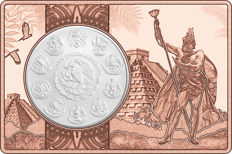
Beyond the Libertad and the Centenario, the Casa de Moneda has regularly issued series with designs relating to Mexico's pre-Columbian culture. Particularly prized are the large format silver Aztec Calendar editions, which replicate the Aztecs' stone calendar relief and are often issued in small mintages in Prooflike quality. Such motif coins occupy the intersection of investment and collectible.
The mint's business areas today cover a broad spectrum:
Those who prefer to invest in bar form will find suitable complements under gold bars and silver bars. Collector-oriented buyers, on the other hand, enjoy browsing the themed collector's coins.
The modern Libertad impresses with a high fineness of 999/1,000 in both gold and silver, while the historic Centenario follows the classic 900 gold standard. Several features serve to assess authenticity and should be checked on every Mexican coin:
Kettner Edelmetalle relies on ISO-compliant authenticity verification and a fully automated high-security logistics centre, so that every coin is checked before shipping. Limited editions with a presentation case and certificate are particularly well documented; for their protected storage, coin cassettes or a coin case are suitable.
A Mexican silver coin always tells two stories at once: that of the precious metal and that of a centuries-old minting tradition.
The tax framework is relevant to the purchasing decision. In Germany, the principle applies that investment gold is exempt from VAT, while silver coins are generally subject to the margin scheme.
Tax note
Investment gold is exempt from VAT in Germany pursuant to § 25c UStG, which applies both to the Gold Libertad and the Centenario. Silver coins such as the Silver Libertad, on the other hand, are usually subject to the margin scheme. This information does not replace individual tax advice.
Several storage options are available: keeping them at home in a safe, a bank safe deposit box, or specialised storage solutions. Protection against mechanical damage is important, as scratches reduce collector value, especially for Prooflike coins. Individual coins can be protected with coin capsules, larger collections with coin cassettes. Those who view the purchase of Mexican coins as part of a broader strategy will find suitable bundles among the Gold-Silver Mix packages.
The Casa de Moneda ranks among the world's great mints. While the South African Mint produces the classic among bullion coins with the Krugerrand, and the Perth Mint Australia is known for changing animal designs, the Mexican mint scores points with its exceptional historical depth and the striking design of the victory goddess.
Investors who combine various bullion coins appreciate the Libertad for its high fineness and wide range of denominations. It is worth taking a look at other international coinages too: for instance the China Panda with its annually changing design, or the coins of the Royal Canadian Mint. An overview of all mints is provided by the manufacturers category.
The Casa de Moneda de México is Mexico's mint, founded in 1535, and is considered the oldest documented mint on the American continent. Today it mints, among other things, the Libertad bullion coin and the historic Centenario.
The modern gold and silver Libertad is minted with a fineness of 999/1,000. The historic Centenario, by contrast, consists of 90% gold and 10% copper, thus following the classic 900 gold standard.
The Libertad is a pure bullion coin, whose value is based on the current market price of the precious metal it contains. A fixed face value would only artificially limit this flexible metal value, which is why it is deliberately omitted.
The Gold Libertad comes as 1, 1/2, 1/4, 1/10 and 1/20 oz. The Silver Libertad is additionally available in large format 2 and 5 oz editions, as well as a 1 kilogram coin, which makes it attractive for a wide range of budgets.
Yes, as investment gold the Gold Libertad is exempt from VAT in Germany pursuant to § 25c UStG. The Silver Libertad, on the other hand, is generally subject to the margin scheme. This information does not replace individual tax advice.
The Libertad is a bullion coin minted since 1981, with no face value and a fineness of 999 in gold and silver. The Centenario is a historic gold coin from 1921 with a gold content of 90% and a face value of 50 pesos, commemorating Mexican independence.
 Casa de Moneda Mexico

Personal advice
Our client advisers know the range of Casa de Moneda de México and help you choose, by phone or at an appointment that suits you.
Monday to Friday, 8 am to 8 pm
If you decide to sell later, we will buy your bars and coins from you. Sell to us
Stay informed with product launches, financial news and exclusive offers. Sign up for our free newsletter today.
By entering your email address and clicking the "Submit" button, you give the following consent: "I agree to be informed by email about new products, financial news and exclusive offers, and therefore consent to the processing of my email address for the purpose of sending the newsletter. I can revoke this consent at any time without giving reasons, with effect for the future. The lawfulness of processing carried out prior to revocation remains unaffected."