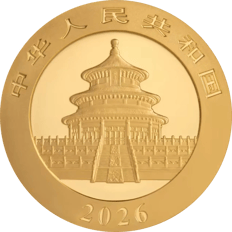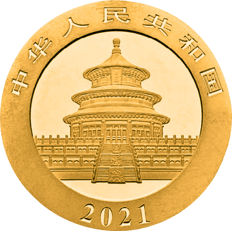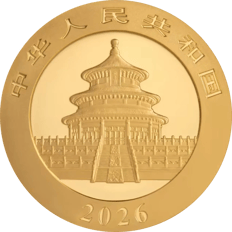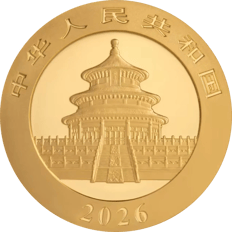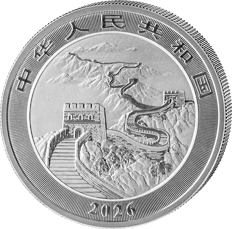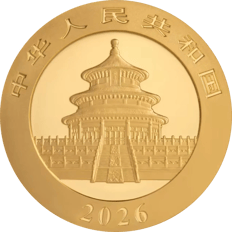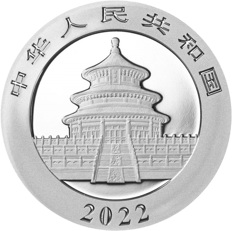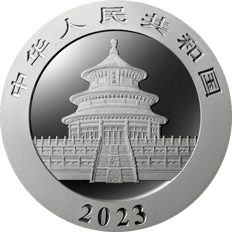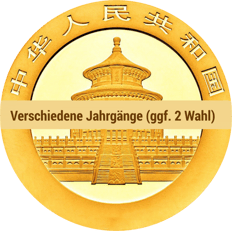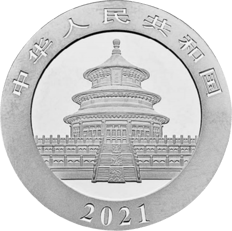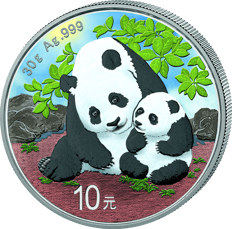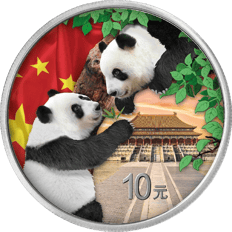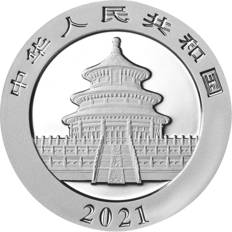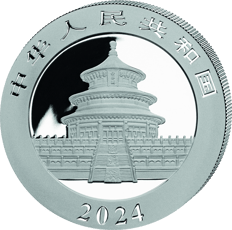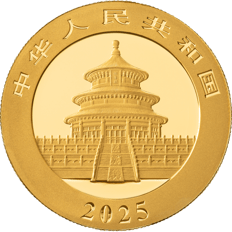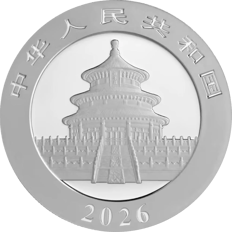
30g Silver China Panda 2026
€77.40
incl. VAT and excl. shipping
Available in 2–3 business days

 More than 310,000
 Over 30 years
 Secure shipping
 Google: 4.9/5


The state-owned Chinese mint China Mint is operated by the People's Bank of China. Due to their very finely crafted designs and numerous technical innovations, the gold and silver coins from the Middle Kingdom are extremely popular worldwide. The China Mint has twenty-two branches distributed throughout the country and a technical centre. The coins produced there are officially issued by the People's Republic of China.


Authenticity
Every piece bears the mark of the China Mint. Before it goes out to you, we check it ourselves.
Every bullion coin bears the design of its mint and the year it was struck, and almost every one its weight and fineness.
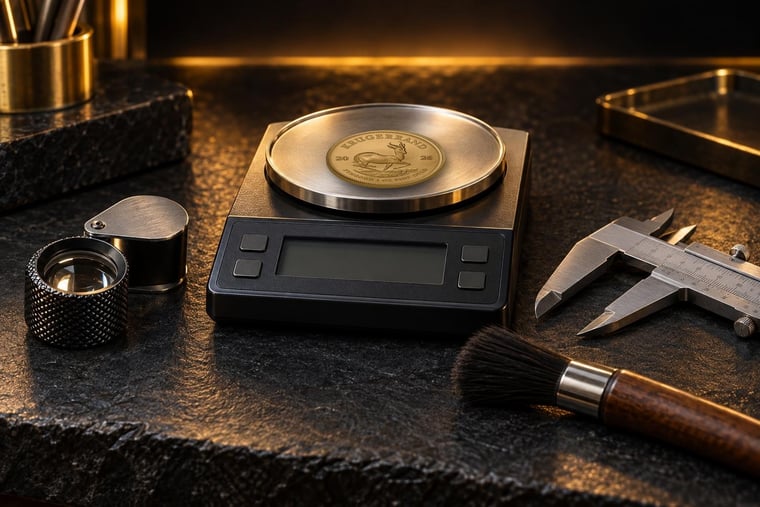
In our CCTV-monitored high-security area, two specialists check every order following the four-eyes principle, including its weight and, by X-ray, its authenticity.
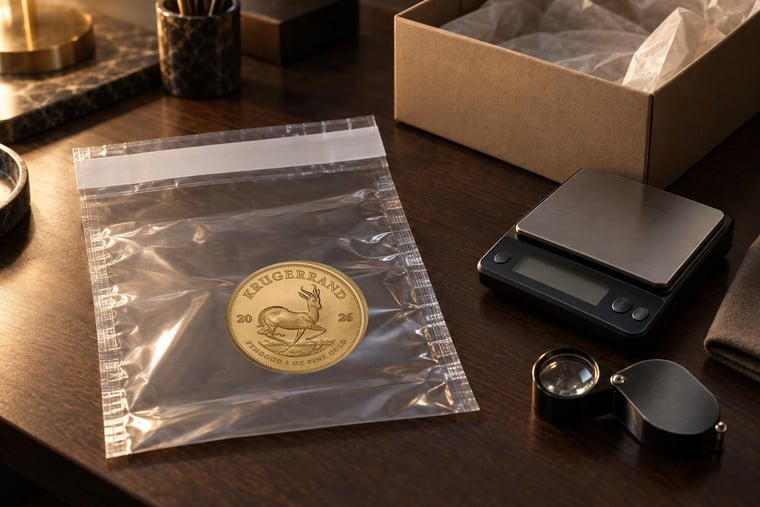
We then seal your order in a security bag that can only be opened once. You will be the first to open it.
Our testing methods
The house
Behind the Panda is the China Gold Coin Group in Beijing, a state enterprise of the People’s Bank of China. The Panda has been issued in gold since 1982 and in silver since 1983, and its design changes almost every year. Since 2016 its weight has been given in grams: 30 grams instead of one ounce.
Sources: manufacturer’s details, as of 14 November 2026
The China Mint is one of the world's most significant state mints and is renowned above all for the world-famous China Panda. Operated by the People’s Bank of China, the mint combines centuries-old cultural symbolism with state-of-the-art minting technology. This guide sheds light on the history and structure of the China Mint, the most important gold and silver coin series, the available denominations, authenticity features, and the tax and practical aspects surrounding Chinese bullion and collector coins.
The China Mint, also officially known as the China Gold Coin Incorporation, is the state institution responsible for issuing the People's Republic's official bullion and collector coins. It is subordinate to the country's central bank and issues coins that are legal tender. This places it alongside other major state mints such as the South African Mint or the Royal Canadian Mint.
The organisation has a network of twenty-two branches across the country as well as its own technical centre, where minting dies and new processes are developed. Actual production takes place at several mints, including Shenyang, Shanghai and Shenzhen. This decentralised structure explains why one and the same annual issue of the China Panda can be produced at different mints.
The China Mint is regarded as a pioneer in technical innovation. From holographic effects to colouring to partially gilded designs, the mint has repeatedly introduced techniques that have attracted international attention. The very finely crafted designs and the high quality of relief make the Chinese coins sought after by both investors and collectors. Anyone interested in comparable technical masterpieces will also find exciting examples among the coloured silver coins of other mints.
The China Panda is the flagship coin of the China Mint and one of the most widely collected bullion coins of all. The gold Panda series launched in 1982 both as a bullion coin and in a Proof version. The silver Pandas in Proof quality followed in 1983, and the one-ounce bullion series began in 1989. A new issue has appeared every year since.
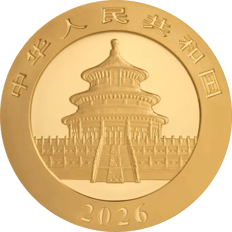
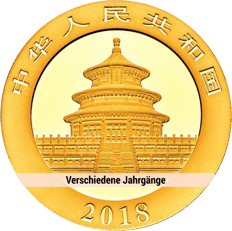
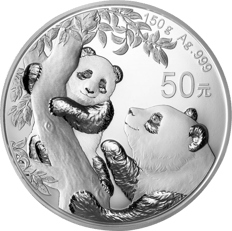
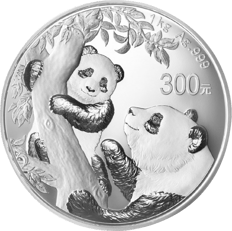
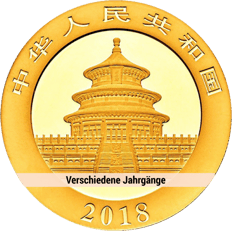
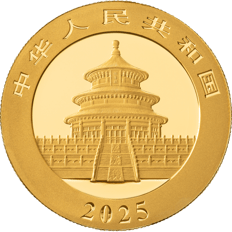
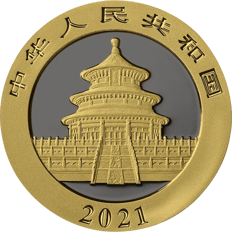
What makes it special: the panda design changes every year. Only once in the history of the series has a reverse design been repeated. Each issue offers a new, unique view of the good-natured giant panda, China's unofficial national animal. The obverse always depicts the Hall of Prayer for Good Harvests at the Temple of Heaven in Beijing. Both the gold and silver versions have a fineness of 999/1,000 and have carried a face value in yuan since 1983. Collectors of the silver version should take a look at the dedicated range of China Panda silver coins, while gold buyers will find the China Panda gold coins.

Until 2015, the fine weight of the Pandas was traditionally stated in the old imperial unit of ounce (oz). In 2016, the China Mint surprisingly switched to the metric system. Since then, the Pandas have been minted in grams: the classic one-ounce coin was replaced by a 30-gram coin, with the smaller denominations adjusted accordingly. This change is an important distinguishing feature for correctly classifying the different years of issue.
The China Panda is offered in a wide range of weights, making it attractive both for beginners and for high-net-worth investors. Small denominations are suitable as an affordable entry point, while larger units reduce the percentage premium above material value.
In addition to the classic bullion issues in Mint State (MS) quality, there are numerous special versions: coloured Pandas, partially gilded silver coins, as well as editions in Proof (PP) quality with mirrored surfaces and strictly limited mintages. Anyone wishing to compare the smaller gold units with other world bullion coins will find interesting alternatives with different finenesses in the Krugerrand or the Maple Leaf.
Fineness Note
Unlike the Krugerrand (916.7/1,000) or the American Eagle, the China Panda is minted in gold and silver with a fineness of 999/1,000. This places it among the fine gold and fine silver coins and makes it readily comparable to the Maple Leaf.
In addition to the Panda, the China Mint also mints its own Lunar series for Chinese New Year. In a twelve-year cycle, the design side shows yearly changing depictions of the animals from the astrological lunar calendar, from the rat and ox to the tiger and rabbit through to the dragon and snake. According to Chinese belief, each animal represents certain human characteristics.
The designs are often coloured or show particularly detailed, artistic interpretations of the animals. The design side also features the name of the depicted animal in Chinese characters as well as the face value of the coin in yuan. The other side bears the Chinese national emblem, framed by ornamentation, with the Gate of Heavenly Peace in Beijing, one large and four smaller stars, as well as a ribbon, a gear wheel and a wreath of grain ears at the bottom.
Due to the higher premium, the gold issues of the Lunar series in particular are mainly purchased by collectors and enthusiasts of Chinese coins. Anyone interested in the lunar zodiac theme from other mints will find parallels in the Australian Lunar Series III or the Lunar Series II in gold.
Among the most striking new releases from the China Mint are the Moon Festival Pandas. The first coin of this type appeared in 2015 as an exclusive 1-kilo silver Moon Panda. Its moon, which stands high in the sky, is made of 1/10 oz of space gold (fineness 999/1,000). This gold was taken into space aboard a Space Shuttle in the mid-1980s, tested there for durability, and returned to Earth in 1990, an unusual story that makes this issue unique.
The 2017 Moon Festival Panda broke new ground in coinage with a holographic effect: the design shows a giant panda lowering its head into water that appears to shimmer in the moonlight. Such technical details underscore the China Mint's reputation as an innovative mint and make the Moon Festival series a sought-after area for collectors. Suitable accessories for presenting such individual pieces can be found under coin capsules and coin cassettes.
The China Mint combines the latest minting techniques with one of the oldest civilisations in the world: every new issue tells a piece of Chinese culture.
Coins from the China Mint are considered highly resistant to counterfeiting, as they are technically demanding to produce. Nevertheless, a few features should be noted when buying. With genuine Pandas, the weight, diameter and fineness match the official specifications exactly. The fine relief, the sharp contours of the panda's fur and, in the case of Proof issues, the mirrored surface are difficult to imitate.
A reputable dealer documents the origin and condition of the coins. Kettner Edelmetalle relies on ISO-compliant authenticity verification and a fully automated high-security logistics centre for this purpose. Anyone wishing to delve deeper into the subject will find further ranges in the collector's coins category.
The same basic tax rules apply to Chinese coins as to other precious metals. Investment gold, and therefore also the gold Panda, is exempt from VAT in Germany under the applicable regulations. Silver coins, on the other hand, are subject to VAT, and the margin scheme is often applied to imported silver coins.
Note on the Speculation Period
The sale of physical precious metals can be tax-free after a holding period of one year has elapsed. This is general information and does not replace individual tax advice.
For secure storage, can safes are suitable for storage at home, as is a bank safe deposit box for larger holdings. Sensitive Proof issues should always be kept in coin capsules to protect the mirrored surface from scratches and fingerprints. Larger collections can be organised clearly in coin cases.

The China Panda occupies a special position among international bullion coins. While classics such as the Krugerrand or the Vienna Philharmonic carry a fixed design that remains unchanged year after year, the Panda scores with its design that changes annually. This makes it particularly appealing to collectors and can lead to collector premiums for individual years of issue.
Unlike the Maple Leaf, which has a fineness of 999.9/1,000, the Panda combines a pure investment function with strong cultural and aesthetic value. Anyone wishing to diversify broadly often combines pure bullion coins such as the Krugerrand with design-driven issues from the China Mint. Gold bars and silver bars are also a common addition to coin collections when the focus is primarily on material value.
The China Mint is the state mint of the People's Republic of China and is operated by the People’s Bank of China. It issues official bullion and collector coins that are legal tender, and has twenty-two branches as well as several mints throughout the country.
Since the series launched in 1982, every annual issue has featured a new panda design. Only once has a reverse design been repeated. This annual change distinguishes the Panda from many other bullion coins and makes it particularly popular among collectors.
Both the gold and silver Pandas are minted with a fineness of 999/1,000. This places them among the fine gold and fine silver coins and makes them readily comparable to the Maple Leaf in this respect.
Until 2015, the China Mint stated the weight of the Pandas in ounces. Since 2016, the metric system has been used: the classic one-ounce coin was replaced by a 30-gram coin, and the smaller denominations were adjusted accordingly. This is an important feature for classifying the different years of issue.
Yes. As investment gold, the gold Panda is exempt from VAT in Germany. Silver Pandas, on the other hand, are subject to VAT; the margin scheme is often applied to imported silver coins. For a binding tax classification, individual advice is recommended.
The Moon Festival Pandas are technically particularly elaborate special editions. The first issue from 2015 contained so-called space gold, which had previously been tested in space. Later issues introduced innovations such as holographic effects and are considered sought-after collector's items.
 China Mint

Personal advice
Our client advisers know the range of the China Mint and help you choose, by phone or at an appointment that suits you.
Monday to Friday, 8 am to 8 pm
If you decide to sell later, we will buy your bars and coins from you. Sell to us
Stay informed with product launches, financial news and exclusive offers. Sign up for our free newsletter today.
By entering your email address and clicking the "Submit" button, you give the following consent: "I agree to be informed by email about new products, financial news and exclusive offers, and therefore consent to the processing of my email address for the purpose of sending the newsletter. I can revoke this consent at any time without giving reasons, with effect for the future. The lawfulness of processing carried out prior to revocation remains unaffected."