Only 3 left to order
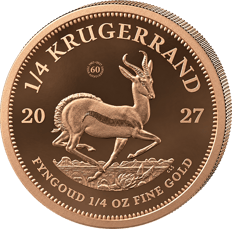
Krugerrand 3 Gold Coins Fractional Set 60-Year Anniversary 2027 Proof (Mintage: 660 | Privy Mark | Proof)
€1,690.00€1,990.00
VAT-free and excl. shipping
Ships from 25/03/2027
 More than 310,000
 Over 30 years
 Secure shipping
 Google: 4.9/5
Collector's coins typically include limited gold and silver coins with regularly changing designs. Coin collectors appreciate their beauty and the potential for increasing collector's value.


Old coins became collections, and collections became a science.

The poet Petrarch gives Charles IV some ancient gold coins and tells him about the Caesars.
Petrarch, French school, 17th century, Versailles, Musée du Château
In 1649, the holdings of the Electors’ Kunstkammer in Berlin comprise around 5,000 mostly ancient coins.
Each dot is one coin, each band 1,000: around 5,000 in Berlin, 1649.
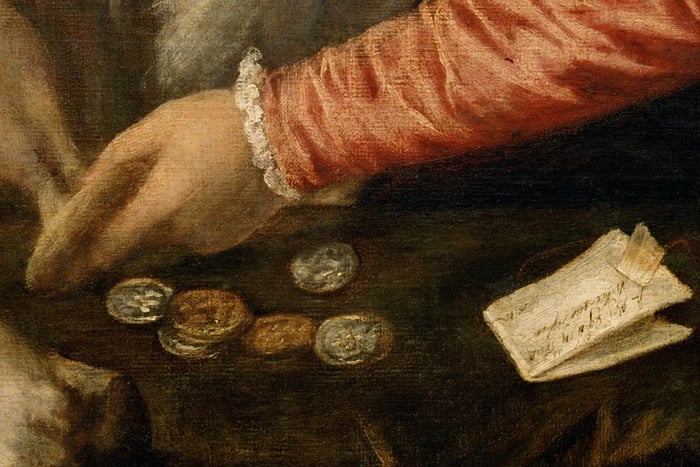
Detail: the coins on the table
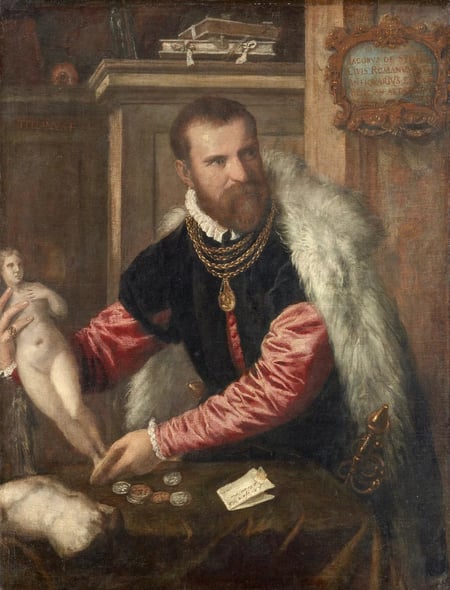
Around 1567/68, Titian paints Jacopo Strada, according to the museum above all an antiquities dealer working internationally. Coins lie in front of him.
Titian, Jacopo Strada, around 1567/68, Kunsthistorisches Museum Vienna
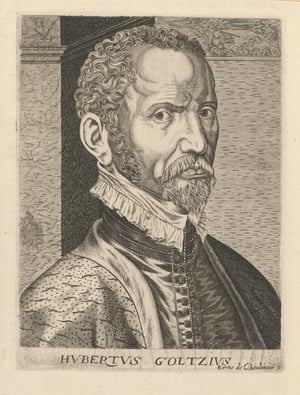
In 1557, Hubert Goltzius publishes a book with portraits of almost all the emperors, based on their coins.
Vivae omnium fere imperatorum imagines
Hubert Goltzius, copperplate engraving by Edme de Boulonois, Brussels 1682, Rijksmuseum Amsterdam
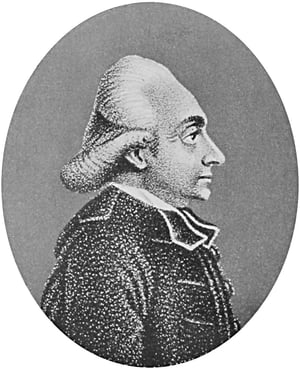
Joseph Hilarius Eckhel arranges the coins by place and date. He is regarded as the founder of scientific numismatics, the study of coins.
Doctrina numorum veterum, 1792 to 1798
Joseph Hilarius Eckhel, anonymous engraving, from Alfred Gudeman, Imagines philologorum, 1911

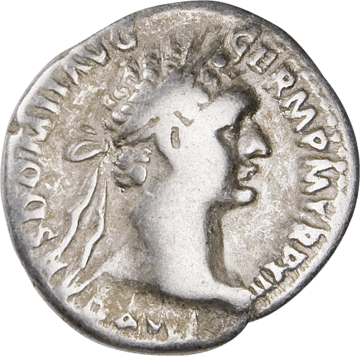
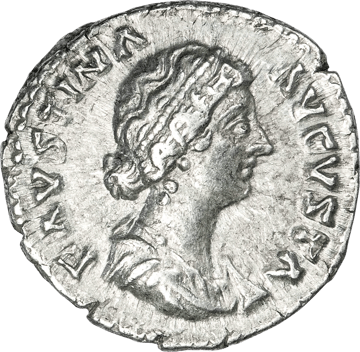
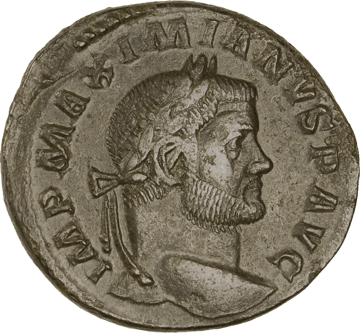
Both coins name the country that issues them and the face value, the amount of money struck on the coin. The issuing country and the maker can be the same, but they need not be.
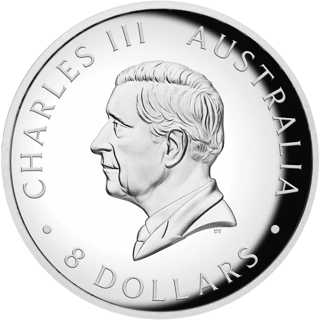
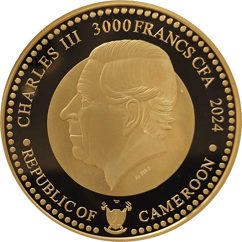
For the euro countries, a regulation of the European Union governs collector coins. It states:
“Collector coins shall have the status of legal tender only in the issuing Member State.”
Regulation (EU) No 651/2012, Article 5(1)
In Germany, nobody has to accept more than 200 euros per payment in such coins, and the Bundesbank exchanges them. The face value is set by the state that issues the coin; according to the Bundesbank, it sets it anew for each issue and on its own responsibility.
A coin begins as a drawing. It is struck with dies, the tools that press its image into the metal.
For the 5‑euro coin Ariane 6, the 2026 annual programme of German collector coins gives two names: Sascha Morawetz designed the picture side, Till Mainz the value side.
A metal copy of the large model, the electrotype, goes onto the reducing machine. It transfers the image at a smaller size onto a tool the size of a coin.
This is how long work on a Janvier reducing machine usually took at the Royal Mint:
The Chief Engraver, the most senior engraver at the Royal Mint, approved the tool.
Only he could declare it ready for use in the next stage of production.
Royal Mint Museum, Janvier reducing machine
Today, computerised machines no longer need electrotypes.
Coins by Münze Österreich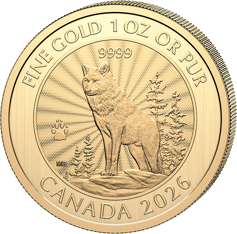
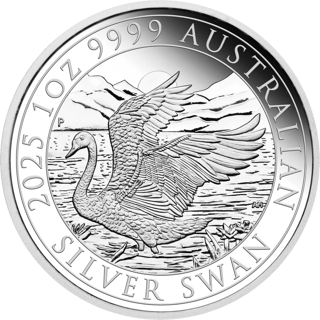
Coins are struck on the flan, the coin blank. Three plates from the Encyclopédie show the work in the 18th century.
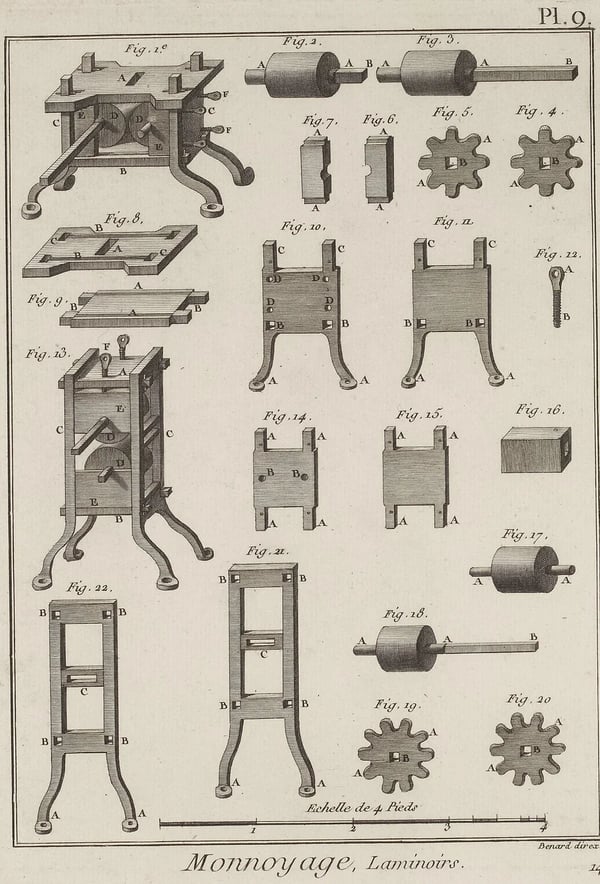
Rolling: the rolling mill presses the metal into flat strips.
Monnoyage, Laminoirs.
Coining, rolling mills
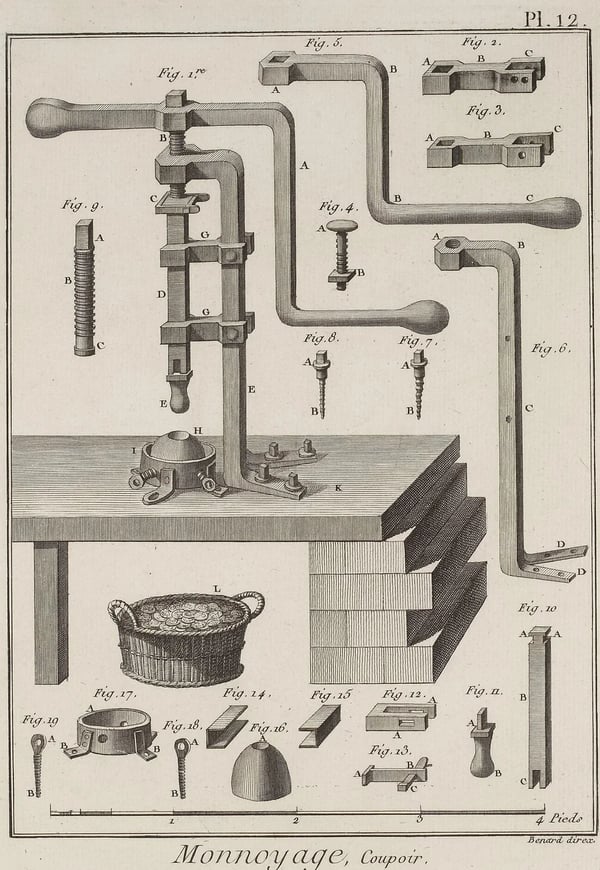
Cutting: a cutting press cuts the round blanks out of the strips.
Monnoyage, Coupoir.
Coining, cutting press
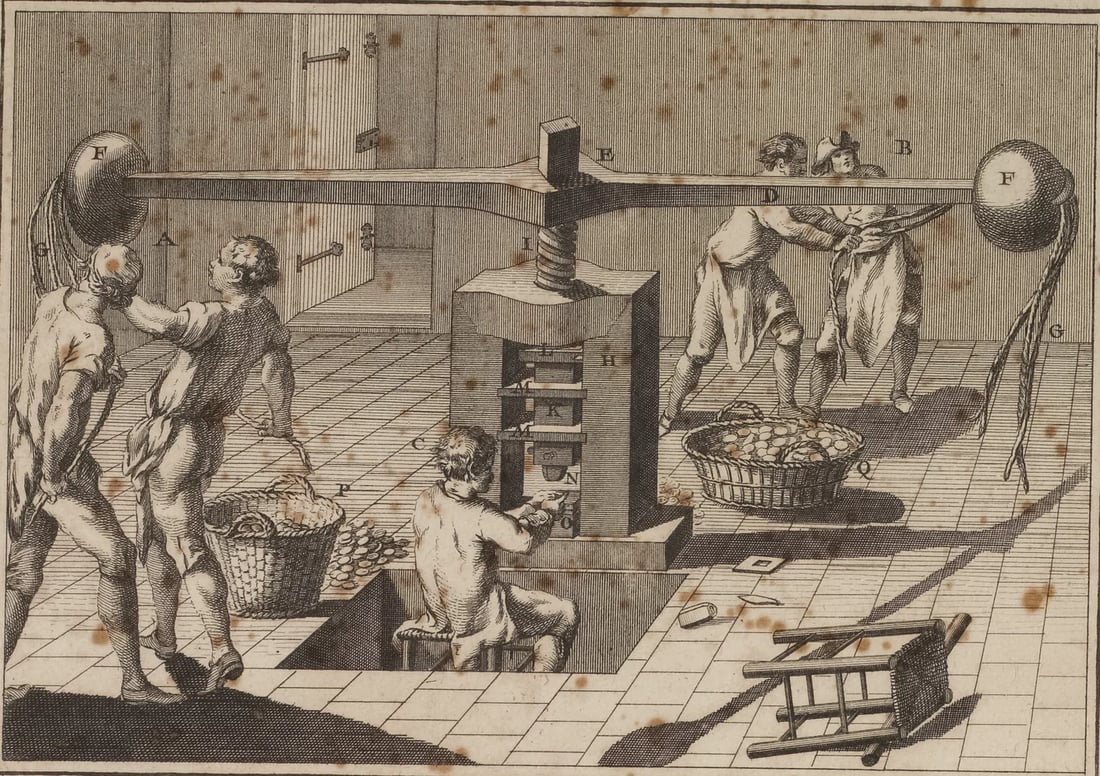
Striking: four men pull the swinging arm round, and a man in the pit feeds in the blanks.
Monnoyage, Balancier.
Coining, screw press (Detail)
Robert Bénard, Encyclopédie, 18th century, Musée Carnavalet
Striking by hand took place between two dies. The upper one was held in the hand or with tongs.
From the middle of the 16th century, machines took over step by step. This is how many coins a machine strikes in one minute:
The edge is given a form too: plain, milled or with lettering. The plate “Castaing” shows a machine that strikes lettering onto the edge.
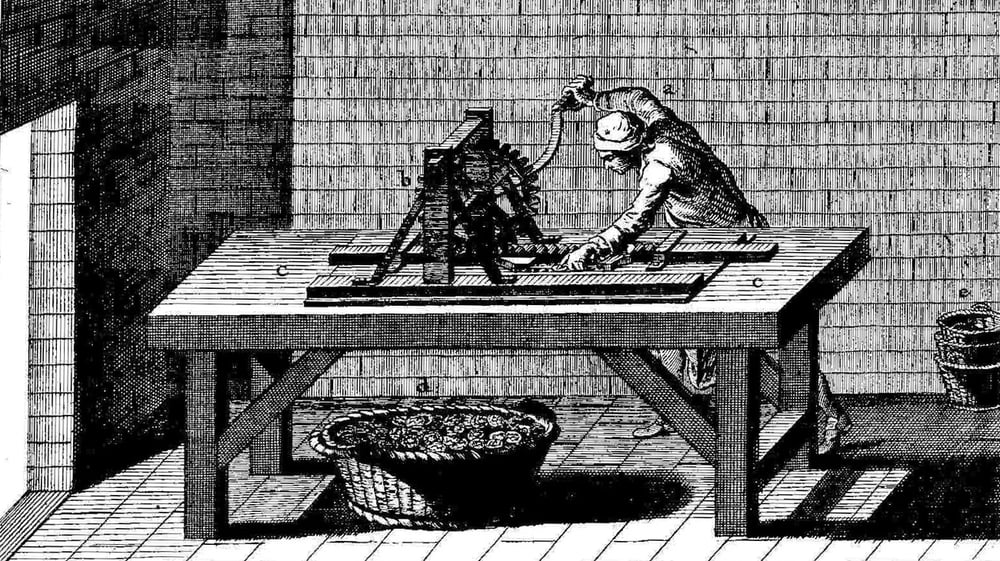
Castaing
Machine for edge lettering
Robert Bénard, Encyclopédie, 18th century
Collector coins of the euro countries must be easy to tell apart from circulation coins. This is why the following applies:
… they must not have a shaped edge with fine scallops or a “Spanish flower” shape.
Regulation (EU) No 651/2012, Article 5(2)(d)The edge of the 10‑ and 50‑cent coins has the fine scallops, and the “Spanish flower” is the shape of the 20‑cent coin.
50 euro, fine silver
20, 50 and 100 euro, gold
5 euro
ERFORSCHUNG DES WELTRAUMS ✦
10 euro
IM DIENST DER GESELLSCHAFT ∙
35 euro
VOHWINKEL BIS OBERBARMEN BIS
Diagram, not to scale. Edges and edge lettering per the 2026 annual programme.
These two coins have a milled edge too.
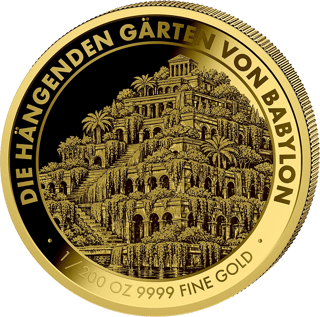 Hanging Gardens of Babylon 2026Gardens of Babylon 2026Gold, 1/200 ounce (0.16 g)Gold, 1/200 ounce
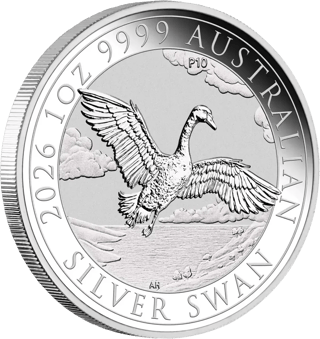 Swan 10th Anniversary 2026Swan 10th AnniversarySilver, 1 ounce (31.1 g)Silver, 1 ounce
Eckhel arranged the coins by place and date. Country and year are still two of the ways to build a collection today. There are three more.
Collector's coins combine gold and silver with design, history and rarity. Each issue tells a story: of an animal from the African savannah, a sign of the Chinese lunar calendar, or an anniversary of German history. Whether you are starting a coin collection or adding to an existing one in a targeted way: here you will learn what makes a collector's coin special, which series are in demand, and what matters when buying, storing and selling.
In our shop you will find limited gold and silver coins in Proof and Reverse Proof, special editions with privy marks, and sets of entire series. German issues and euro commemorative coins are just as much a part of this as the collector's versions of well-known classics among the gold coins and silver coins. Every delivery is 100% insured, and Kettner Edelmetalle is the official German partner of the South African Mint.
The essentials at a glance
Collector's coins carry special designs, inscriptions or finishes, setting them apart from pure bullion coins. Their designs commemorate events, depict animals, buildings or personalities, and are often part of a series continued over many years. A bullion coin such as the Krugerrand or the Maple Leaf is minted in large numbers and primarily represents the precious metal itself. A collector's coin combines two values: the metal value and a collector's value arising from design, limitation and condition.
Many collector's editions are issued in only a few hundred or thousand pieces, while bullion coins are produced in the millions. This scarcity is part of their appeal, and completing a series over the years is the real goal for many collectors.
The most important quality level for collectors is Proof, also known as mirror finish. The blanks are polished to a high gloss and the dies are elaborately prepared: their field is polished, the relief and lettering are frosted, and each piece is struck several times. This creates the contrast between the mirrored field and the frosted relief that makes a Proof coin a real eye-catcher. The standard minting quality is called Mint State. With Reverse Proof, it is the other way round: the field remains frosted while the design shines.
There are also finishes that make an edition special: partially gilded editions, coloured silver coins, high relief with an especially pronounced relief, antique finish, or rhodium and ruthenium plating. Such editions are usually issued in even smaller numbers.
Many collectors focus on one specific collecting area, a principle followed by experienced numismatists. Three areas are especially in demand.
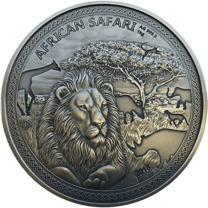
The Big Five series from South Africa depicts the elephant, lion, rhinoceros, buffalo and leopard. The Somalia Elephant features a new design every year, and the Ocean Five series is dedicated to the creatures of the sea. The African Safari is available, among other options, in 1 oz and 5 oz in Proof.
The Lunar series from the Perth Mint follow the twelve signs of the Chinese lunar calendar, with a new animal every year. The ongoing Lunar III series is available as gold coins and silver coins, while the completed Lunar II series remains popular among collectors.
Many mints additionally issue their well-known bullion coins every year as a limited special edition. The silver Krugerrand is available with a privy mark and in Proof, as are special editions of the American Eagle and Kookaburra. The silver China Panda and the gold China Panda feature a new panda scene every year. These editions are a good starting point, as they combine a globally known classic with the appeal of a limited mintage.
German collector's coins are issued by the Federal Ministry of Finance. Every year, ten to twelve issues appear dedicated to personalities and themes from science, culture, history and sport. They are euro coins with face values ranging from 5 to 100 euros, legal tender in Germany. Particularly popular are the 5 euro collector's coins, such as the "Climate Zones of the Earth" series with a coloured polymer ring. There are also 2 euro commemorative coins, which are valid as circulating coins throughout the eurozone, as well as the gold euro editions.
You can identify the mint by its mint mark: A stands for Berlin, D for Munich, F for Stuttgart, G for Karlsruhe and J for Hamburg. Historical German gold coins from the imperial era, on the other hand, are sought after for their age, rarity and gold content. Issues for other occasions can be found in the commemorative coins category.
Good to know
Most issues in Mint State are sold by the Deutsche Bundesbank at face value. The gold coins and the Proof editions are sold above face value: the gold coins because of their gold content, the Proof editions because of their elaborate production.
Whether an inherited collection or a targeted purchase: the starting point is precise identification. Most characteristics are stamped directly on the coin.
With this information, a current coin catalogue and the offers of specialist dealers can help with classification. For extensive or very rare holdings, it is worth getting an expert's assessment. A gold coin without any particular collector's value always retains its metal value, in which case it is valued according to its gold content and weight.
Tax note
Gold coins are investment gold under § 25c UStG and therefore VAT-free if they have a fineness of at least 900/1,000, were minted after 1800, are or were legal tender in their country of origin, and are usually sold at no more than 180% of the value of their gold content. Collector's editions in Proof can exceed this and are then sold with VAT; silver coins are taxed under the standard scheme or the margin scheme. The applicable tax rate is stated for each item. This information does not replace tax advice.
When buying, the principles of numismatics apply: buy from a specialist dealer and pay attention to authenticity and good condition. Kettner Edelmetalle checks every collector's edition for authenticity before shipping, among other methods using X-ray fluorescence analysis, and delivers with 100% insurance.
With collector's coins, condition also plays a decisive role in the collector's value; even a single fingerprint can affect a Proof coin. So leave your coins in their original packaging or in suitable coin capsules and touch them as little as possible. Organise larger holdings in coin boxes or a coin case; further accessories are available in the collector accessories section. Valuable pieces belong in a safe or a bank safe deposit box.
Before selling, it is worth asking whether a coin has a collector's value beyond its metal content. Through Kettner Edelmetalle's buy-back service, you compile a buy-back list and usually receive an offer within a few hours on business days. You send in the coins using an insured shipping label; our experts check authenticity, completeness and condition, after which we transfer the amount to your account.
Collector's coins combine the pleasure of owning a beautiful object with a real precious metal value. A good way to start is with a limited-edition 1 oz silver coin; rare 5 oz gold editions are sometimes issued in only a few dozen pieces. You will find several coins put together in the precious metal sets. A coin collection often grows over many years and also makes a lovely gift for a birth, christening or anniversary. For information purposes only, and not as investment advice: performance depends on demand, rarity and condition, and cannot be guaranteed.
Bullion coins are minted in large numbers and are based on the precious metal price. Collector's coins are limited, elaborately designed and often enhanced. In addition to the metal value, there is a collector's value that depends on design, rarity and condition.
Proof, also known as mirror finish, is the highest minting quality. The blanks are polished, the dies have a polished field and a frosted relief, and each piece is struck several times. This creates the contrast between the mirrored field and the frosted relief.
By its elaborate designs, often coloured, partially gilded or with a special relief. For precise identification, the country of issue, face value, mint, year of minting and series are relevant. Most of this information is stamped directly on the coin.
Editions with a small mintage and in Proof, as well as popular series such as the Big Five, the Lunar series from Australia, or the German gold euro editions. Besides the collector's value, the metal value always remains an important factor.
The safest option is from a specialist dealer. At Kettner Edelmetalle you can buy gold and silver collector's coins online, with verified authenticity and 100% insured shipping.
In their original packaging or in coin capsules, touching them as little as possible. Organise larger holdings in coin boxes; valuable pieces belong in a safe or a bank safe deposit box. Clarify your insurance cover beforehand.
Many are. The euro collector's coins of the Federal Republic, for example, are recognised as legal tender in Germany. Hardly anyone pays with them in everyday life, because the coins are collected instead. In the case of gold coins, the metal value is also far above the face value.
Stay informed with product launches, financial news and exclusive offers. Sign up for our free newsletter today.
By entering your email address and clicking the “Submit” button, you give the following consent: “I agree to be informed by email about new products, financial news and exclusive offers, and therefore consent to the processing of my email address for the purpose of sending the newsletter. I can revoke this consent at any time without giving reasons, with effect for the future. The lawfulness of processing carried out prior to revocation remains unaffected.”