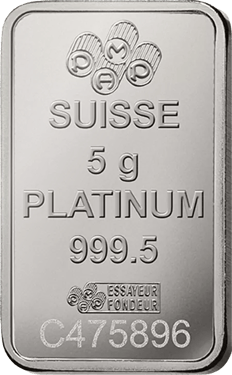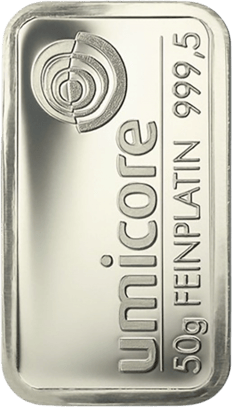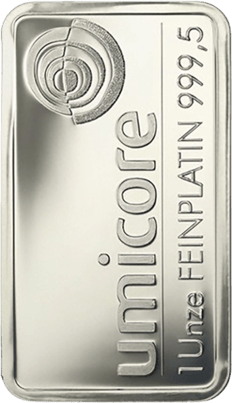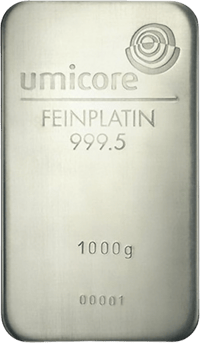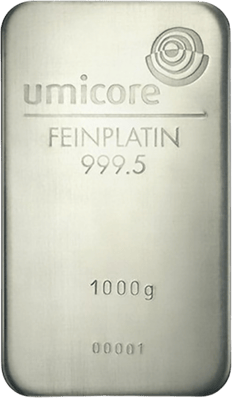
1kg Platinum Bar Umicore, Heraeus, Degussa, PAMP, UBS
€57,265.91
incl. VAT and excl. shipping
Available in 2–3 business days

 More than 310,000
 Over 30 years
 Secure shipping
 Google: 4.9/5
The significance of platinum coins and platinum bars is growing. For investors, platinum can be a suitable addition as a complement for diversification of their own portfolio.


Platinum and palladium are two of the six platinum-group metals. All six have “similar physical and chemical properties and tend to occur together in nature”, writes the U.S. Geological Survey.
Atomic number, symbol and name. The metal of this page is highlighted.
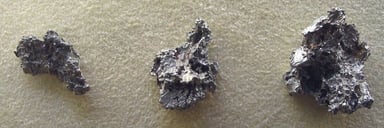
They come together in magma. When it becomes saturated with sulphur, a sulphide melt separates out, and the platinum-group metals preferentially concentrate in it. Deposits of this kind provide almost everything that is mined.
The upper crust contains, on average, half a milligram of platinum per tonne. Ores mined for platinum-group metals contain 5 to 15 grams of all six combined per tonne. Our own calculation: around 10,000 to 30,000 times as much.
Platinum ends up mainly in minerals of its own. In most rocks they are tiny: from less than a thousandth to a few tenths of a millimetre.
“Most geologists can spend a lifetime working on rocks enriched in PGEs and never see a platinum-group mineral in a hand specimen.”
U.S. Geological Survey, 2017
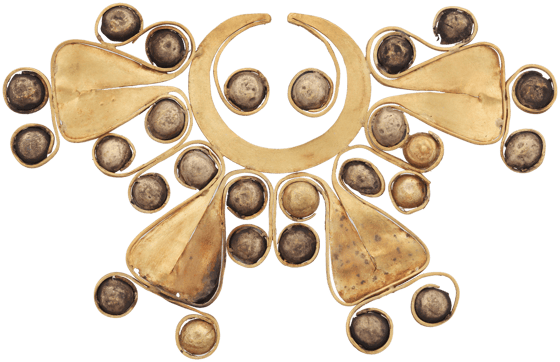
On the coast along what is now the border between Colombia and Ecuador, the La‑Tolita‑Tumaco culture knew platinum some centuries before Christ. Its goldsmiths combined it with gold: they sintered both into alloys, coated gold with platinum and plated objects with foil made of both metals. The sophistication of their metalworking was “in some cases, unique in the world”, writes David A. Scott.
Many centuries later, in 1786, Pierre François Chabaneau succeeded in producing malleable platinum in Madrid, aided by Fausto de Elhuyar. A royal decree of 1787 kept the process secret. The laboratory in Calle Hortaleza was called “Casa de la Platina”. There and in a second laboratory, 435 to 560 kilograms of platinum were produced.
The steps after the study in Mineralogical Magazine, 2020.
“the ingots, all too often cracked and sometimes even crumbled away under the hammer, all for no apparent reason”
Chaston, 1980, quoted in Mineralogical Magazine, 2020
A study from 2020 sees the cause here: the platinum still contained the other platinum-group metals.
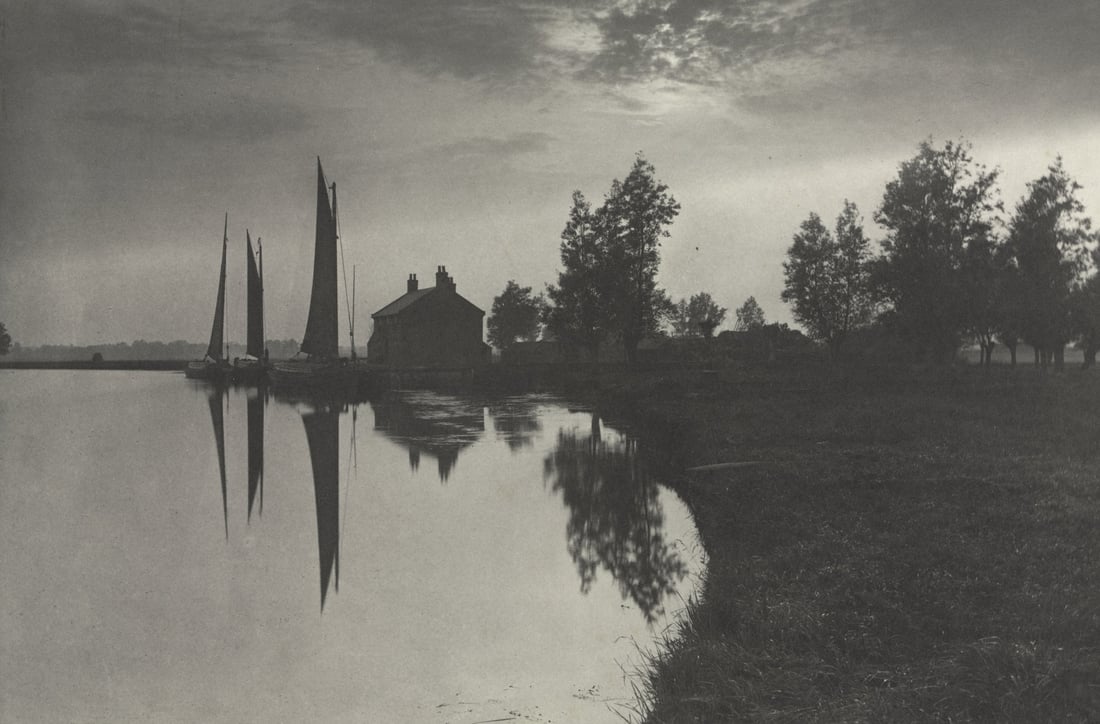
William Willis invented platinum printing in 1873. The image first forms from light-sensitive iron salts. During development, these are dissolved out and replaced by platinum, as the Victoria and Albert Museum describes it. In the end, the image consists of platinum.
The prints were prized for their wealth of subtle tonal gradations, mostly silvery greys, and for their permanence. Today, platinum printing is enjoying a return in fine-art photography.
In 1886, Peter Henry Emerson shows cargo sailing boats near Cantley in Norfolk, waiting for the turn of the tide. The print is Plate XXIV of the book “Life and Landscape on the Norfolk Broads”.
In June 1924, A. F. Lombaard panned gravel from a dry river bed on the farm Maandagshoek in South Africa. He found “a few specks of heavy white metal” and immediately suspected platinum. His concentrate was sent to Hans Merensky on 7 June; on 12 August, Merensky joined him in the field.
The most important discovery followed in the first half of September: the rock layer now known as the Merensky Reef. The reports of 1925 do not say who took the first sample, and no one recorded the exact day.
A reef like this is usually a rock layer centimetres to metres thick, extending over tens to hundreds of kilometres. The Merensky Reef can be traced throughout the eastern and western parts of the Bushveld Complex.
The complex is around 2.05 billion years old and underlies an area of around 69,000 km². According to the U.S. Geological Survey (as of 2017), 7,200 tonnes of platinum-group metals have been mined there since the 1920s.
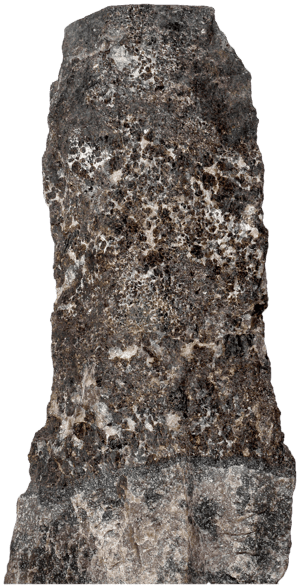
Diagram, not to scale: the band is drawn much thicker than it would be in proportion.
Six stages lie between the ore and the metal. At the refinery, the other metals are separated out first, then the six platinum-group metals from one another, until each is more than 99.99 per cent pure. They are supplied as bars, granules or a fine powder called “sponge”.
After the U.S. Geological Survey, 2017.
For wholesale trade in London and Zurich, the London Platinum and Palladium Market specifies what a bar must be like: 1 to 6 kilograms in weight, at least 999.5/1,000 fine, with edges that are not sharp.
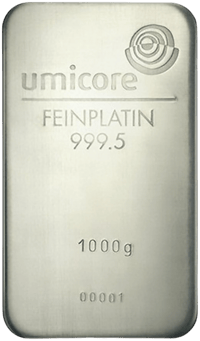
Diagram of the larger surface after the Good Delivery Rules, without real marks. Alongside it, a kilo bar from the shop.
In the ore, platinum usually occurs alongside palladium and the other four platinum-group metals; only the refinery separates them. The palladium page tells how the palladium coin of 2017 came into being.
Platinum is the quiet, rare heavyweight among precious metals: around 30 times rarer than gold, indispensable in industry and medicine, and for a long time even more valuable than the yellow metal. Anyone wishing to buy platinum moves away from the mainstream, into a market with a modest selection, strong price fluctuations and a special appeal for all who want to broaden their precious metals portfolio. This guide highlights the most important properties, denominations, tax particulars, authenticity features and market factors of platinum bars and platinum coins.
Platinum carries the element symbol Pt and the atomic number 78 in the periodic table. It belongs to the platinum group metals, which also include palladium, rhodium, ruthenium, osmium and iridium. Chemically, platinum is considered extremely corrosion-resistant, ductile and malleable, and it has a very high melting point of around 1,768 degrees Celsius. This combination of robustness and durability makes the metal practically irreplaceable in many technical applications.
Its probably most important use is its catalytic effect: in vehicle catalytic converters, platinum converts pollutants into less harmful compounds. There are also applications in medical technology, as almost every pacemaker contains some platinum, as well as in the jewellery and chemical industries. This high industrial share fundamentally distinguishes platinum from gold, whose demand is driven more by investment and jewellery motives.
A large share of the world's platinum deposits comes from South Africa, supplemented by Russia, Zimbabwe, Canada and the USA. Historically, platinum often emerged as a by-product of gold prospecting; in Russia it was even once minted into the legendary platinum rouble. Because mining is heavily concentrated in a few regions, the market reacts sensitively to production shortfalls. Recycling is becoming increasingly important, whereby scrap material is dissolved in aqua regia and the metal is recovered. Alongside pure platinum, numerous alloys exist, such as the setting platinum used in jewellery making, with around 96 percent platinum and 4 percent palladium content.
Anyone wishing to acquire physical platinum essentially has two options: the functional platinum bar or the design-rich platinum coin. Both variants are traded according to the current daily price per troy ounce and usually bear the manufacturer's name. Unlike with gold and silver, the range of platinum products is significantly smaller, and this is precisely where the special appeal lies for some collectors and investors.
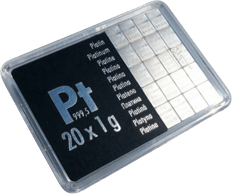
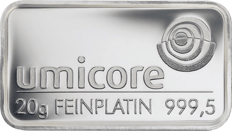
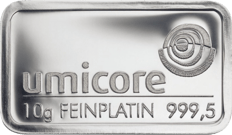
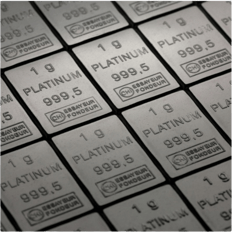
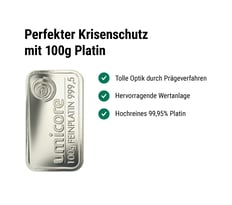
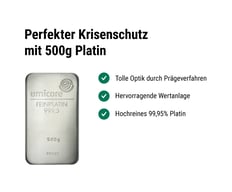
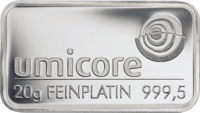
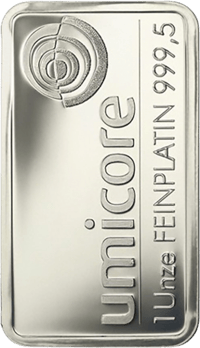
Platinum bars are still considered a niche product alongside gold bars and silver bars. They typically achieve a fineness of 999.5 and come from renowned refineries such as Umicore, Heraeus and Degussa. The common denominations range from small 5 and 10 gram units up to the 1 kilogram bar. Small weights offer flexibility for a later sale, while larger bars score with a lower premium per gram.
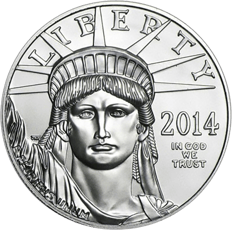
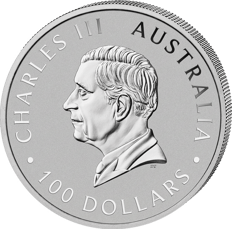
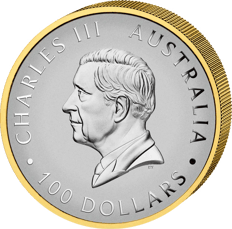
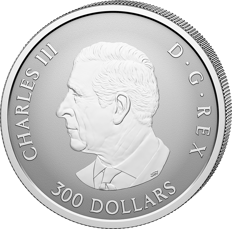
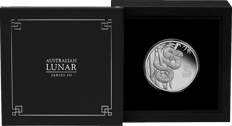
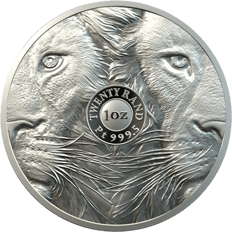
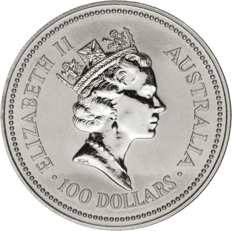
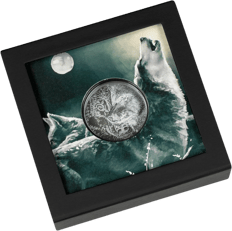
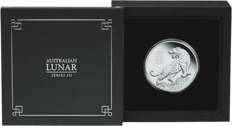
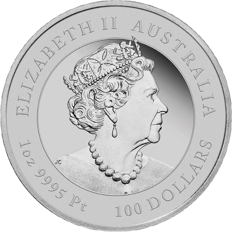
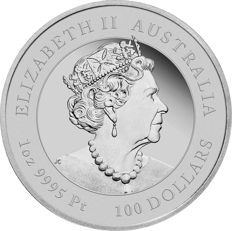
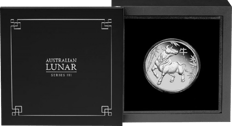
Platinum coins usually achieve a fineness of 999.5 and frequently appear as a platinum variant of well-known classics. The Vienna Philharmonic and the Maple Leaf also exist in platinum in their familiar design. Also popular are the Cook Islands coin with the famous sailing ship Bounty, the American Eagle, the Britannia as well as the Australian Kangaroo Nugget. Because mintages and the number of designs are low, many platinum coins carry a pronounced collector's character, which can hold potential for value appreciation, but also makes price formation less transparent than with pure investment products.
A key difference to investment gold: while physical investment gold is exempt from VAT in Germany, platinum is in principle subject to VAT. This makes its tax treatment more similar to that of silver. For investors this point is crucial when calculating the entry price, since the tax noticeably affects the acquisition cost.
Tax notice
Unlike investment gold, platinum is not considered exempt from VAT in Germany. For certain platinum coins, the margin scheme may apply. The specific tax treatment depends on the individual case; this notice does not replace tax advice from a professional.
As with other precious metals, the one-year holding period also applies to private sales: if physical platinum is held for longer than twelve months, any capital gains are generally tax-free for private individuals. Anyone familiar with the tax framework can classify platinum as a deliberate addition for diversification within a broadly positioned portfolio.
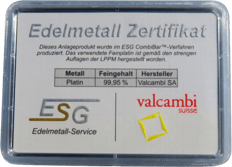
Reputable platinum products carry clear information on manufacturer, fine weight and fineness. Bars from renowned refineries are often fitted with a minting number and certificate and approved for international OTC trading, which facilitates worldwide tradability. When buying, it is worth looking at a few key features:
At Kettner Edelmetalle, every product undergoes an ISO-compliant authenticity verification before it leaves the high-security logistics centre. For safe storage at home, suitable coin capsules and coin cassettes are available, protecting the sensitive minted image from scratches and environmental influences.
The platinum price is determined by an interplay of industrial demand, mining output and investment interest. For long stretches, platinum lagged behind gold and palladium, because the automotive industry increasingly used palladium in catalytic converters. However, if the palladium price rises, a return to platinum becomes more attractive for industry again, a factor that can support demand in the future.
Platinum is characterised by its pronounced price fluctuations. The high industrial share means that economic developments and supply bottlenecks have a stronger impact than with pure investment metals. This volatility can mean both opportunities and risks; no performance can be derived from it. This is precisely why many investors see platinum not as a replacement, but as a complement to classic bullion coins made of gold and silver.
A metal that surpasses gold in rarity and yet is traded away from the spotlight, this is the real fascination of platinum.
Anyone wishing to sell platinum again should keep an eye on the current daily price, as platinum bars and platinum coins are always traded at the current daily rate. Before selling, it is worth comparing several providers, as buy-back prices and fees vary. Well-preserved goods in original packaging and with a certificate can generally be realised better than damaged pieces.
Whether as a long-term addition or as a special gift with lasting value, platinum combines the sober character of an industrial metal with the emotional appeal of rarity. Beginners are advised to start with small denominations, while experienced investors deliberately integrate platinum into a broadly diversified strategy alongside silver coins and gold classics.
Yes. Platinum occurs significantly more rarely in the earth's crust than gold and is mined in far smaller quantities each year. Deposits are also concentrated in a few regions, above all South Africa, which makes the market more susceptible to supply fluctuations.
In principle, yes. Unlike investment gold, platinum is not exempt from VAT in Germany. For certain platinum coins, the margin scheme may apply. The exact treatment depends on the individual case and should, in case of doubt, be clarified with a tax advisor.
Investment products made of platinum usually have a fineness of 999.5. Bars often come from refineries such as Umicore, Heraeus or Degussa, while platinum coins are issued by state mints.
Sought-after designs include the Vienna Philharmonic, the Canadian Maple Leaf, the Cook Islands coin with the sailing ship Bounty, the American Eagle, the Britannia and the Australian Kangaroo Nugget. Many appear in the same design as their well-known gold and silver counterparts.
Platinum has a high industrial share, especially in automotive and medical technology. Economic developments, mining output and the price gap to palladium therefore have a direct impact on the price, leading to pronounced price fluctuations.
Platinum is used by many investors as an addition to broaden a precious metals portfolio beyond gold and silver. Due to its volatility and industrial relevance, it should be seen as a complement and not as the sole building block. An individual investment decision always depends on personal goals.
Stay informed with product launches, financial news and exclusive offers. Sign up for our free newsletter today.
By entering your email address and clicking the "Submit" button, you give the following consent: "I agree to be informed by email about new products, financial news and exclusive offers, and therefore consent to the processing of my email address for the purpose of sending the newsletter. I can revoke this consent at any time without giving reasons, with effect for the future. The lawfulness of processing carried out prior to revocation remains unaffected."