


Only 3 left to order
Krugerrand 3 Gold Coins Fractional Set 60-Year Anniversary 2027 Proof (Mintage: 660 | Privy Mark | Proof)
€1,490.00€1,990.00
VAT-free and excl. shipping
Ships from 05/03/2027

 More than 310,000
 Over 30 years
 Secure shipping
 Google: 4.9/5


A collector's coin is rarely just precious metal in round form. It captures a moment: an anniversary, an animal, a legend, a year of issue that never returns. This is precisely the appeal of a collector's coin promotion: strictly limited mintages in proof, gilded, coloured or with high relief are offered at reduced prices for a limited period, often in mintages of just a few hundred pieces. The following sections show what lies behind such promotions, how the value of a collector's coin is composed, which series are particularly sought after, and what matters when buying.
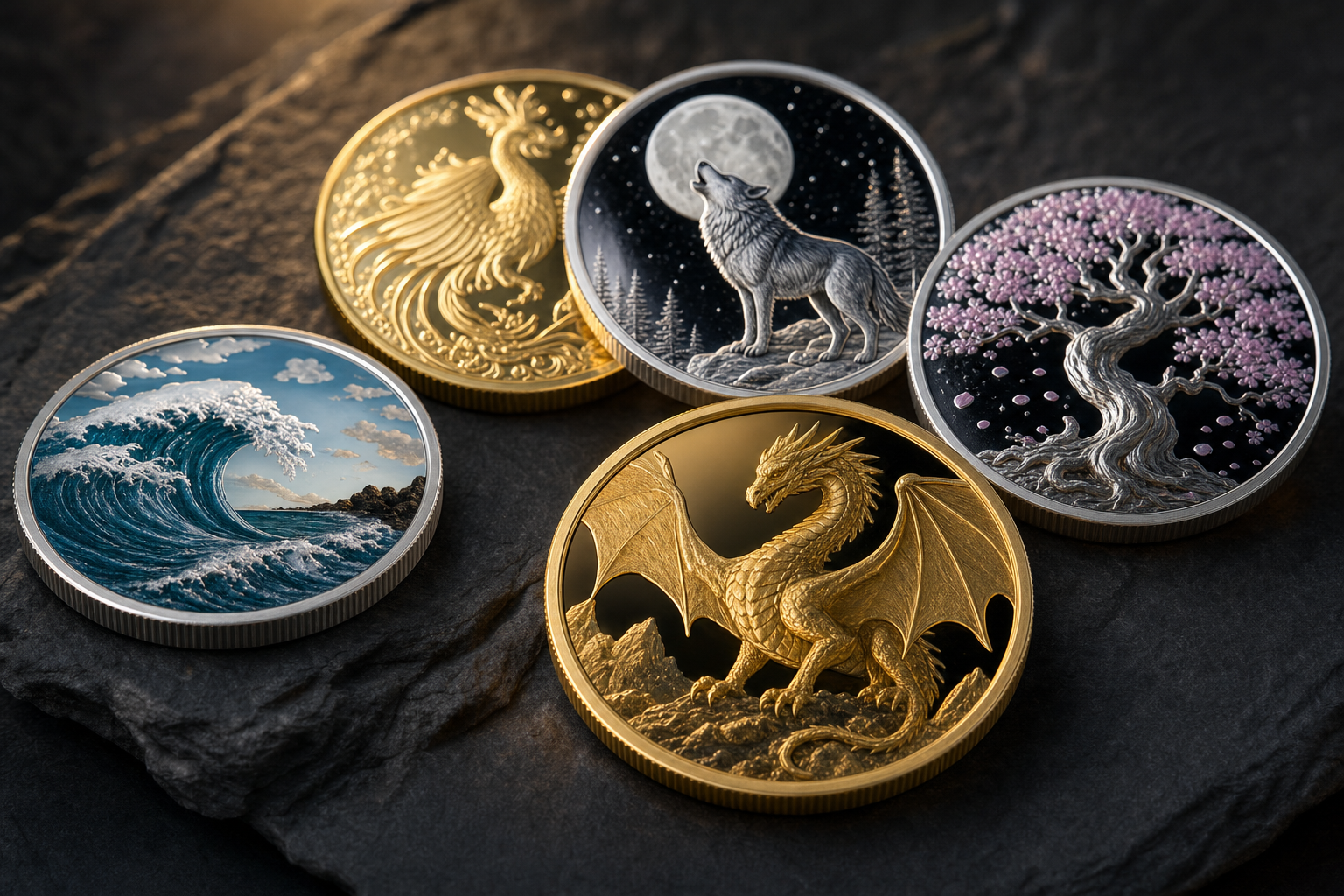
The term describes a time-limited offer from the field of collector's coins, that is, numismatic mintages whose price is not determined solely by precious metal content, but by mintage, minting quality, design and demand. While a classic bullion coin is traded as close as possible to its material value, a collector's coin carries a numismatic premium. If this premium falls as part of a promotion, an entry window opens for collectors that closes again once the promotion ends.
Such promotions are typically a mix: silver coins in the three-digit price range stand alongside gold mintages and complete precious metal sets, modern animal designs alongside historical themes, individual pieces alongside series with a continuous sequence of years. Anyone wanting to understand the difference from a pure material purchase will find the counterpart in bullion coins, where weight counts, whereas here the idea behind the coin counts.
Reduced prices for collector's mintages usually have sober, trade-related reasons, not quality defects:
The distinction is important: a promotional price does not change the mintage, the minting quality or the certificate. It only changes the point in time at which a coin is accessible.
Hardly any aspect separates the collector's world from the bullion world as clearly as minting quality. It determines appearance, effort and collector interest, and it appears in every product description.
Finishes are created in a second work step after minting and turn a standard coin into a unique piece within the series. A partial gilding highlights individual parts of the design and creates depth; ranges such as partially gilded silver coins show just how strong this effect is. For coloured mintages, colour is applied in several passes; the coloured silver coins form their own category for this. High relief, finally, refers to a raised relief that is only possible with multiple striking and higher pressure, making designs appear almost three-dimensional.
Such enhanced editions are the reason why one and the same design exists in completely different price ranges. Those seeking the extreme form will find it among the limited enhanced sets and the exclusive products.
The mintage figure is the hardest currency in numismatics. It is fixed at the start of a minting project and cannot be increased later. Mintages of 50 to 1,000 pieces worldwide are not uncommon for modern collector's mintages; by comparison, millions of pieces of common bullion coins such as the gold Krugerrand are produced per year.
Three pieces of information are therefore always worth a second look:
With particularly scarce mintages, the line between a collector's item and a rarity blurs; a look at the limited mintages shows just how small mintages can actually become.
A mintage of 100 pieces means: even if every collector in the world wanted one, there cannot be a 101st.
Collecting needs a theme. Some follow a series for years, others buy a single design because it touches them personally: a zodiac sign, a heraldic animal, a film character from childhood.
Series with a fixed rhythm have the largest circle of collectors, because every gap remains visible. The Lunar Series III with its twelve zodiac signs is the best example of this: twelve years, twelve designs, one clear goal. The Big Five with lion, elephant, rhino, buffalo and leopard work similarly, as do the South African special mintages from the silver Krugerrand range, which appear as proof editions with a privy mark. Such series are struck by established houses such as the South African Mint or the Perth Mint.
Thematic mintages are designed much more freely. They range from animal designs to prehistoric designs and zodiac signs through to licensed series around Disney characters or well-known personalities. Those who collect historically are more likely to find what they are looking for among historical coins or the euro commemorative coins, where condition and year of issue matter more than finish.
The official German issues form their own world. They carry a stamped face value and are legal tender; their collector's value, however, is almost always above that. The designs are decided by the Federal Government on the recommendation of an advisory board, they are issued via Münze Deutschland and struck at several state mints, including the Bavarian Main Mint. Classics include the 20 euro silver commemorative coins, the 5 euro collector's coin with a coloured polymer ring, and the 10 euro collector's coin, each available in Brilliant Uncirculated for beginners and in proof for collectors. The individual denominations are sorted by face value among the 20 euro commemorative coins and other issues; those wanting to go further back in time will also find silver coins with a face value from the German Empire.
The price of a collector's mintage is made up of several layers. Knowing this structure helps in assessing every promotional price:
| Component | What lies behind it |
|---|---|
| Material value | Fine weight in gold, silver or platinum at the current price |
| Minting effort | Proof, high relief, colouring, gilding, multiple striking |
| Mintage | Worldwide number of pieces, the strongest lever for rarity |
| Collector demand | Popularity of series, design and country of issue |
| Condition | State, capsule, case, certificate, scratches or patina |
The numismatic share can significantly exceed the material value, but it also responds differently. While the material value follows market prices, the collector's value depends on people, trends and the desire for completeness. Both are value statements without guarantee: anyone focused primarily on predictable precious metal coverage is closer to the material price with gold bars or common silver coins. Collector's items additionally pay for what cannot be weighed.
A different logic applies to collector's coins than to pure investment gold; this is one of the most common misunderstandings when talking to beginners.
Tax note
Investment gold is exempt from VAT in Germany under § 25c UStG; this also applies to many gold collector's coins, provided they meet the criteria for investment gold. Silver, platinum and palladium mintages, on the other hand, are subject to VAT or taxed under the margin scheme. Private disposal transactions are also subject to the one-year holding period under § 23 EStG. This information is general in nature and does not replace tax advice.
In practice this means: two visually similar mintages can be treated completely differently for tax purposes, depending on the metal and classification as an investment or collector's product. In the gold range, VAT exemption is the rule, while for silver it is the exception. The respective treatment is stated on each product page.
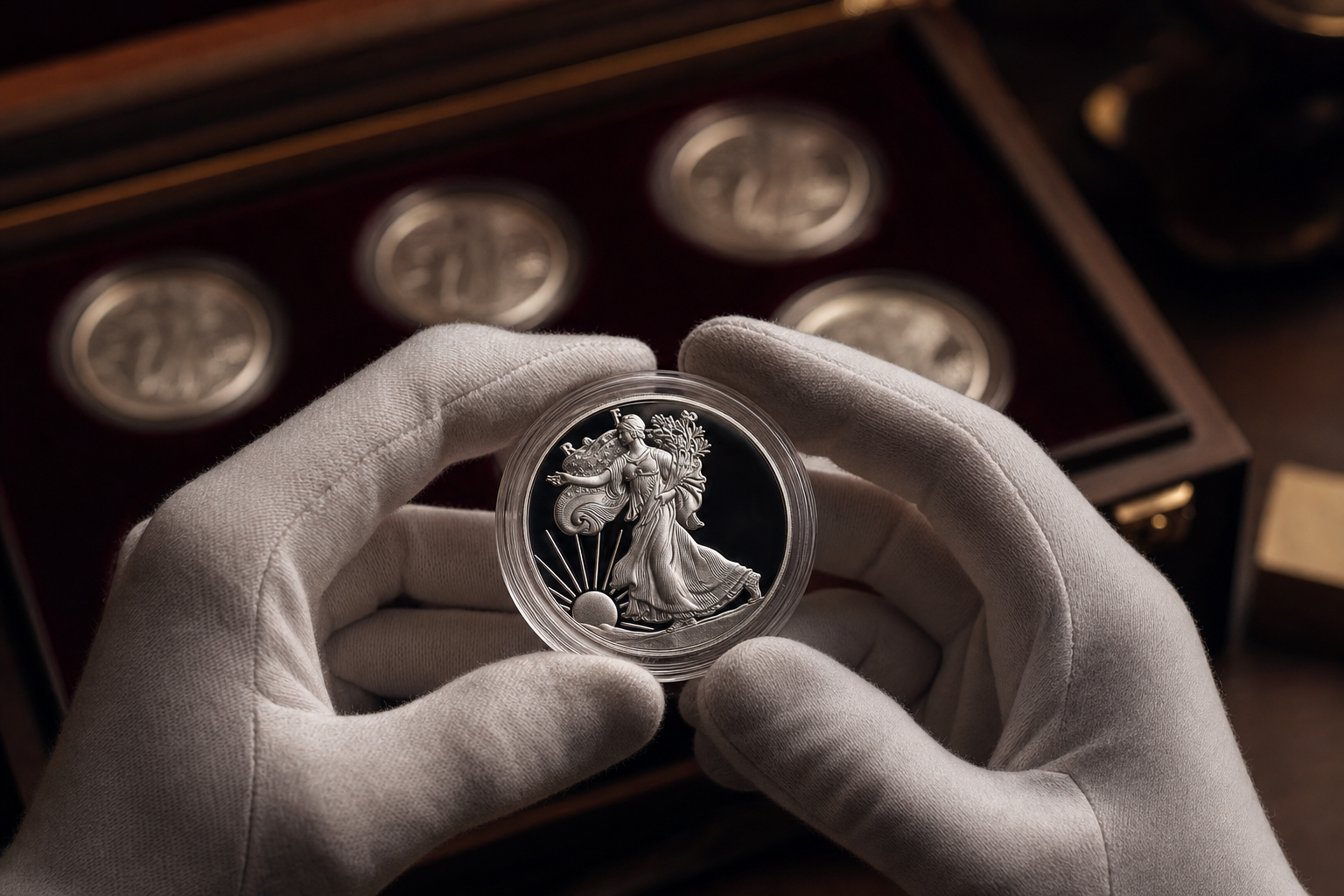
With collector's coins, condition is a genuine value factor, and a single fingerprint on a proof coin is practically irreversible. The grease and acid on skin attack the mirrored surface, and polishing destroys the minting structure permanently.
For larger collections, a bank safe deposit box or a certified security cabinet are additional options. In both cases, documentation with photos, certificate numbers and proof of purchase is important, also for insurance purposes.
Promotional periods create urgency, and urgency is a poor companion when collecting. These points separate a considered purchase from an impulse buy:
Viewed soberly, a collector's coin promotion is above all a question of timing. The object remains the same: limited, carefully struck, with a story. Anyone already following a series will find in such periods the cheaper opportunity for a piece that no one will ever strike again later. Newly issued designs appear continuously under new coins and bars, while individual remaining pieces are listed in the individual pieces promotion and under last chance.
As a German family business based in Villingen-Schwenningen, Kettner Edelmetalle has been supporting collectors and investors since 2011; every mintage undergoes an ISO-compliant authenticity verification and is shipped 100 % insured.
Bullion coins are struck in high mintages and traded as close as possible to the precious metal price. Collector's coins are issued in limited numbers, often in proof, sometimes with a finish, and carry a numismatic premium arising from mintage, design and minting effort.
No. Mintage, minting quality, fineness and certificate are fixed and unchangeable. Reduced prices arise from a change of year of issue, remaining stock or limited-time promotions, not from compromises on the product.
Proof (also PP) refers to the highest minting quality: mirror-bright surfaces, matte relief, created by hand-polished dies and multiple striking. These coins are extremely sensitive to touch and should remain in the capsule.
As a rule, yes: silver mintages are sold with VAT or taxed under the margin scheme, while investment gold is exempt from VAT under § 25c UStG. The respective treatment is stated on every product page. For individual cases, tax advice is recommended.
Very important. For limited mintages, the original case, capsule and numbered certificate of authenticity are part of the collector's item. Missing components noticeably reduce demand on the secondary market, even if the coin itself is flawless.
Yes, especially designs with a personal connection such as zodiac signs, animals or anniversary years are often given as gifts for births, weddings or company anniversaries. Small gold mintages and sets in a case are particularly popular for this.
Promotions are time-limited and additionally restricted by remaining stock. With mintages of only a few hundred pieces, an offer often ends before the calendar date, simply because the number of pieces has run out.
Stay informed with product launches, financial news and exclusive offers. Sign up for our free newsletter today.
By entering your email address and clicking the “Submit” button, you give the following consent: “I agree to be informed by email about new products, financial news and exclusive offers, and therefore consent to the processing of my email address for the purpose of sending the newsletter. I can revoke this consent at any time without giving reasons, with effect for the future. The lawfulness of processing carried out prior to revocation remains unaffected.”
