Only 8 left to order
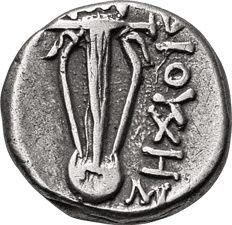
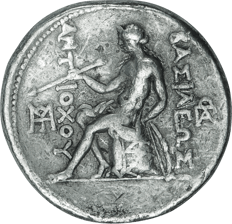
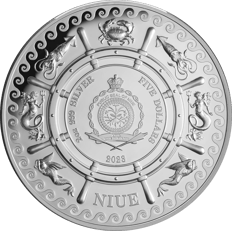
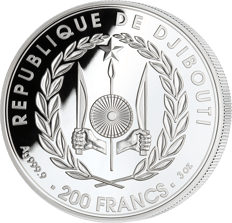
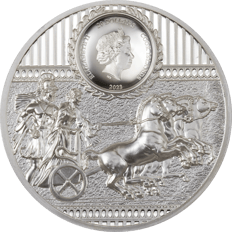
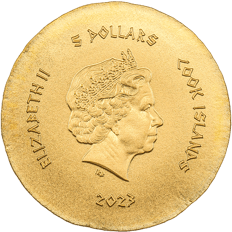
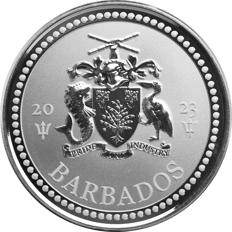
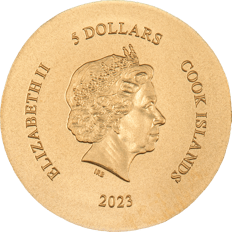
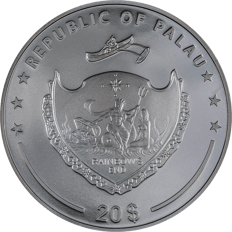
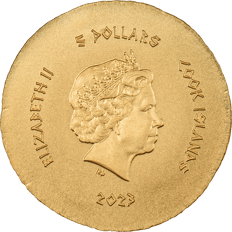
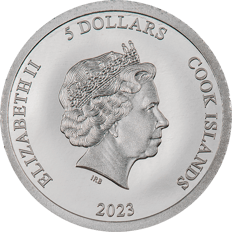
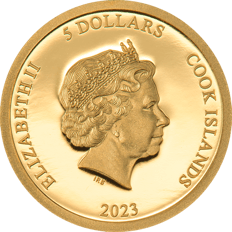
Odyssey Silver Set 2026 (Mintage: 50 | partially gilded)
€899.00€1,549.00
incl. VAT and excl. shipping
Available in 2–3 business days

 More than 300,000
 Over 30 years
 Secure shipping
 Google: 4.9/5


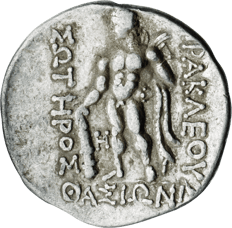
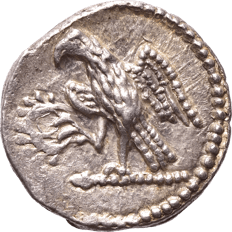
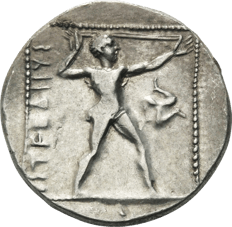
Hardly any culture has shaped coinage as profoundly as ancient Greece. Between the owl of Athens, the winged Pegasus of Corinth and the masterpieces of the die-cutters of Syracuse, a visual language emerged around 2,500 years ago that still resonates today. This category brings together two worlds: original ancient Greek coins made of silver, gold and bronze, as well as modern collector's issues that translate Greek mythology, gods and the wonders of the ancient world into contemporary precious metal editions. The following sections classify eras, designs, denominations and collecting criteria, and show what beginners should look out for.
Greek coins are far more than ancient currency. They are history pressed into metal from an age in which trade, philosophy and art flourished in a way that shaped Europe for millennia. Their origins date back to the 7th century BC, when the first coins made of electrum, a natural alloy of gold and silver, were struck in Asia Minor. From there, the idea of minted money spread rapidly throughout the Greek world.
What makes these pieces so fascinating to this day: every coin was a unique piece. The blanks were heated individually and struck by hand between two dies. Centring, strike sharpness and the patina that has developed over centuries make each specimen different from the next. This places them in a collecting category of their own, fundamentally different from modern silver coins and gold coins, whose price follows the precious metal rate almost entirely.
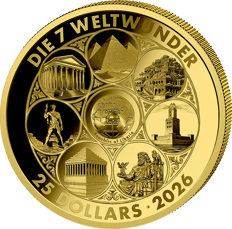
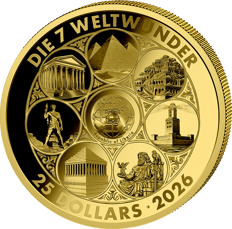
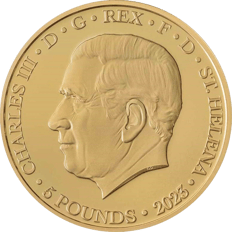
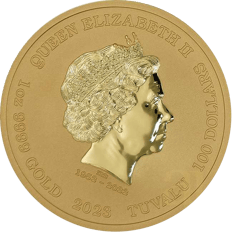
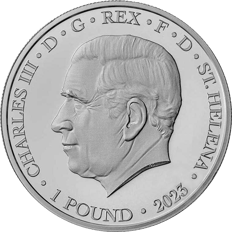
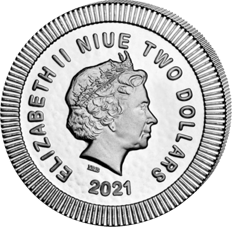
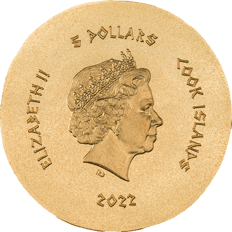
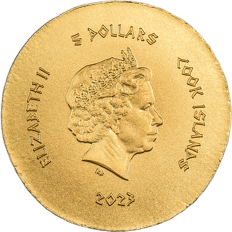
Alongside genuine originals, this category also includes modern-day issues with an ancient theme, such as editions dedicated to the seven wonders of the world, to the gods of Olympus or to the rulers of the Hellenistic period. They draw on Greece's cultural radiance, yet come with a clearly defined fineness, a known mintage and a transparent price.
The history of Greek money can be divided into four major periods. Each shaped its own styles, designs and denominations, and represents its own field of interest for collectors of collector's coins.
This is where coinage began. The early issues were simply designed and often bore only a single symbol, such as the famous tortoise of Aegina, a symbol of the sea god Poseidon and one of the very first silver coins in Greece. The coins of the Lydian king Croesus are among the oldest known coins in the world.
The artistic golden age. Coins from this era display richly detailed depictions of gods, heroes and animals. This period produced the most famous coin of all: the Athenian tetradrachm featuring Athena and her owl. The drachms of Corinth with the winged horse Pegasus also date from this era.
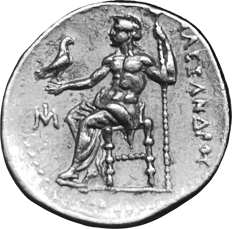
Under Alexander the Great and his successors, the art of minting reached a new dimension. The foundation was laid by his father, King Philip II of Macedon, who shaped the kingdom into the dominant power in Greece and had gold and silver coins struck on a large scale. For the first time, realistic portraits of rulers appeared on coins: a famous example is Alexander's tetradrachm, which shows him wearing the lion skin of Heracles. The Ptolemaic dynasty of Egypt also struck magnificent gold and silver denominations during this period, a connection that can be followed further in the neighbouring category Egypt.
After the Roman conquest, Greek cities were allowed to continue minting coins, which now frequently bore the image of the Roman emperor. Those wishing to explore this transitional period further will find a fitting context in the neighbouring category Romans.
No ancient coin is as popular as the Athenian silver tetradrachm. On one side it shows the head of the goddess Athena wearing an Attic helmet, and on the other her owl, together with an olive branch, a crescent moon and the inscription ΑΘΕ, an abbreviation for \"of the Athenians\". For centuries, this coin was regarded throughout the Mediterranean as one of the most trustworthy currencies, because its silver content remained reliably high.
The owl of Athens stood for wisdom, power and lasting value throughout the ancient Mediterranean world, an ancient equivalent of a reserve currency.
An original Athenian tetradrachm from the Classical period measures roughly 22 to 25 millimetres in diameter and weighs around 17 grams, with a fine weight of about 16.3 grams of silver. Since these are circulated pieces, condition varies considerably from one specimen to another, a factor that should be factored into any purchase decision. Anyone wishing to explore the technical side of genuine silver will find a benchmark for pure material value in the range of modern silver products.
The Greek city-states also used their coins as a kind of calling card: each polis chose its own emblem to express its origin and self-image. This variety of designs is what makes collecting so appealing:
It is precisely the designs of Rhodes that bridge the gap to modern collector's issues: contemporary commemorative coins depicting the wonders of the ancient world, from the Colossus of Rhodes to the statue of Zeus at Olympia, draw on the same visual world and are often struck in small gold denominations in Proof quality. Anyone who appreciates the world of the Olympian gods will find further thematically related issues in the Ancient Mythology category.
Greek coin names were at the same time units of weight and of calculation. Because the city-states minted independently of one another, a drachm could weigh differently depending on the region. The most widespread was the Attic drachm, containing around four grams of silver. As early as 593 BC, the statesman Solon carried out a coinage reform in Athens, during which the tetradrachm was established.
Besides silver, gold and bronze also played a role. The stater was an important gold denomination, while bronze served everyday transactions. The diversity of metals is still reflected in today's range, from gold bars as pure stores of value to copper coins featuring historical designs.
Unlike the silver price, which is quoted on a daily basis, the value of an ancient coin cannot be expressed as a single figure. It results from the interplay of several factors, four of which are decisive:
The grade of preservation is the single most important price driver, since a sharply struck design greatly enhances both historical significance and aesthetic appeal. Provenance has been gaining importance for years, because cultural artefacts are subject to protective regulations and a clean proof of origin provides legal security. A key difference from modern bullion coins: with these, material value dominates, whereas with ancient pieces it is rarity and collector's value.
Note on patina
The patina that has developed over centuries is part of the coin's value and part of assessing its authenticity. Ancient coins should be held by the edge and ideally with gloves. Aggressive cleaning or polishing can significantly reduce collector's value, the patina should never be removed.
Both worlds have their appeal, but they follow different rules. The following overview helps to classify them:
| Criterion | Ancient tetradrachm | Modern commemorative coin |
|---|---|---|
| Price basis | Collector's, rarity and material value | Fineness, mintage and demand for the design |
| Production | Hand-struck, one of a kind | Machine-struck, standardised |
| Availability | Historically limited, irreplaceable | Clearly limited mintage |
| Authenticity risk | Elevated, expert appraisal important | Low, with certificate |
Those seeking historical substance and uniqueness will choose the ancient original as the centrepiece of a collection. Those wishing to combine the cultural connection with a transparent price will find a liquid alternative in modern coins with Greek designs, for instance from the Monarchs theme or as part of modern gold issues. Combining both approaches is often worthwhile.
Getting started with numismatic collector's coins requires more care than buying a standard bullion coin. A few basic rules make it easier:
For gentle storage, coin capsules are ideal, protecting the piece from touch and environmental influences, as are high-quality coin cases for the orderly presentation of a growing collection. Anyone building an entire collection of ancient and modern coins will find the right solutions in the full range of accessories. For long-term wealth building, the widely tradable standard range of gold remains the obvious foundation, complemented by the ancient original as a historical centrepiece.
The best known is the tetradrachm from Athens featuring the owl of the goddess Athena. It was regarded throughout the ancient Mediterranean world as a symbol of wisdom and lasting value, and was valued for centuries as a reliable trading currency.
The most important unit was the drachm. Multiples such as the tetradrachm (four drachms) and the decadrachm (ten drachms), as well as subdivisions such as the obol, were derived from it. These names were at the same time units of weight and of calculation.
This is difficult for laypeople to judge. What matters is a reputable source, a precise description and an expert appraisal or certificate. Weight, diameter, die alignment and the developed patina provide experts with important clues. In the higher-priced segment, independent certification is advisable.
In Germany, trading in ancient coins is generally permitted, provided the pieces have entered the market legally. A clean provenance is important, since cultural artefacts are subject to protective regulations. A documented proof of origin protects against legal problems and at the same time increases value.
No. The patina that has developed over centuries is part of the coin's value and part of assessing its authenticity. Aggressive cleaning or polishing can significantly reduce collector's value. Ancient coins should be held by the edge and ideally with gloves.
These are contemporary collector's and commemorative coins that take up Greek themes, such as gods like Zeus, Ptolemaic rulers or the seven wonders of the ancient world. They combine the cultural connection with a clearly defined fineness, a known mintage and a transparent price, and make a good complement to genuine originals.
This article is for general information purposes only and does not constitute investment advice. Prices of ancient and numismatic coins are subject to fluctuation and depend on individual factors such as condition, rarity and provenance.
Stay informed with product launches, financial news and exclusive offers. Sign up for our free newsletter today.
By entering your email address and clicking the "Submit" button, you give the following consent: "I agree to be informed by email about new products, financial news and exclusive offers, and therefore consent to the processing of my email address for the purpose of sending the newsletter. I can revoke this consent at any time without giving reasons, with effect for the future. The lawfulness of processing carried out prior to revocation remains unaffected."