Only 5 left to order
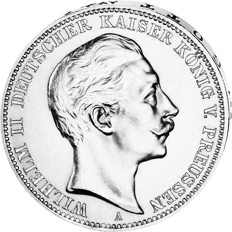
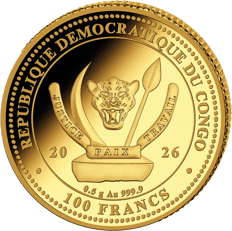
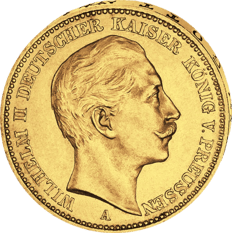
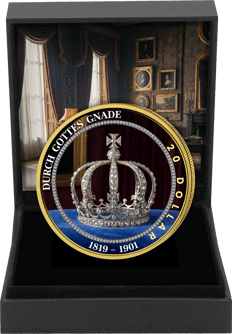
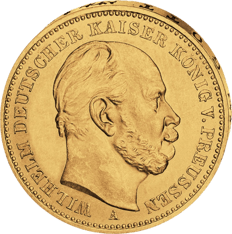
1/4 oz Gold Kaiser Wilhelm I 155 Years of the Gold Standard 2026 (Mintage: 99 | Proof)
€1,990.00€2,490.00
VAT-free and excl. shipping
Ships from 18/12/2026

 More than 300,000
 Over 30 years
 Secure shipping
 Google: 4.9/5


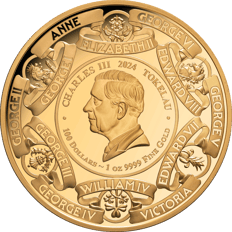
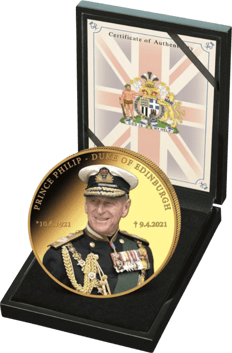
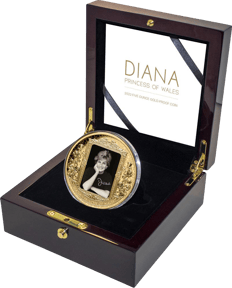
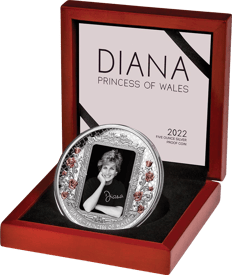
Hardly any design has shaped numismatics as much as the face of crowned heads. Since antiquity, rulers have immortalised their likeness on coins: as a sign of power, as a guarantee of metal value and as a small, portable monument. Modern collector's coins featuring the portrait of Queen Elizabeth II, King Charles III or historical monarchs continue this millennia-old tradition. The following sections shed light on the history of monarch coins, the famous coin portraits and their artists, the tax particularities, and the question of what makes a ruler's coinage so fascinating for collectors and investors.
The ruler's image on a coin is as old as coinage itself. Roman emperors already used coins to carry their likeness into the most remote provinces, long before there were newspapers or photographs. Whoever held a coin in their hand saw the face of the sovereign. This principle has barely changed over the centuries. To this day, reigning heads of state adorn the obverse of countless coins, and the British Royal House in particular has turned this into a living tradition that extends far beyond Great Britain.
What makes this special: coins featuring monarchs tell history. They record who reigned when, how a ruler aged, and which artistic style defined an era. For collectors, this creates an appealing dual character: the coin is simultaneously a work of art, a historical document and a store of value. Anyone interested in further thematic worlds will also find, in the Personalities section, coins dedicated to explorers and historical pioneers.
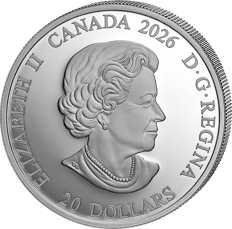
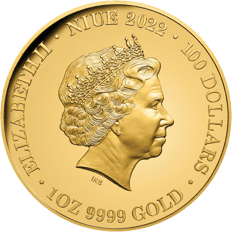
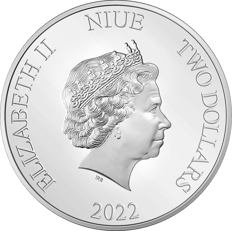
No one was depicted on coins more often in the 20th century than Elizabeth II. She ascended the throne in 1952, and until her death in 2022 her likeness adorned the obverse of coins across the globe. During this time, five official coin portraits were created, each adapted to the queen's age, forming what feels like a numismatic chronicle of her reign. It is precisely this series that makes Elizabeth coins so sought-after among collectors: whoever assembles the five effigies (as the official ruler's portraits on coins are called) holds seven decades of contemporary history in their hands.
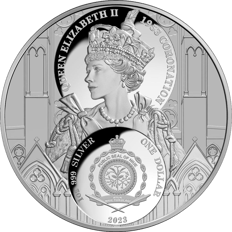
After the queen's death, the Clark portrait lived on in the Memorial Design, complemented by the reign dates 1952-2022. Silver and platinum editions that revisit individual effigies are now among the most sought-after releases in the field of royal design series. Anyone looking for classic bullion coin favourites bearing the queen's likeness will find what they need with the Maple Leaf or the Britannia, whose obverse carried the royal portrait for decades.
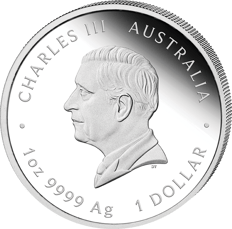
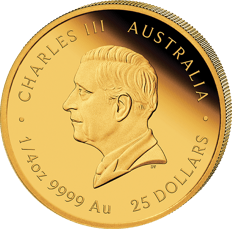
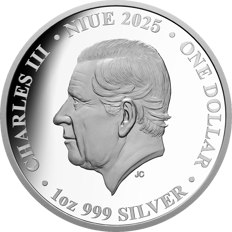
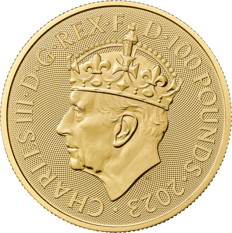
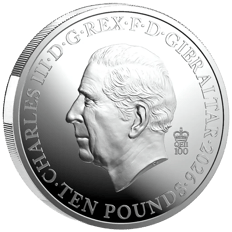
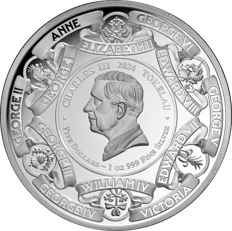
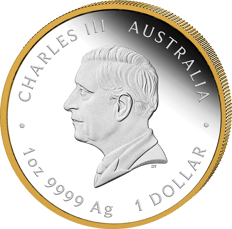
The change of throne in 2022 marked a numismatic turning point. King Charles III was now to adorn the coins, an organisational triumph, since not only British coinage but also that of numerous Commonwealth countries had to be changed over. The years 2022 and 2023 are therefore particularly notable numismatically: in both years, the deceased queen as well as the new king appear on coin obverses.
The king's first official portrait was designed by calligrapher and sculptor Martin Jennings. Charles is depicted plainly, without a crown, with a short side parting. On the occasion of the coronation in May 2023, a second portrait followed, this time with a crown. Collectors wishing to document this transition like to combine issues of both monarchs; suitable storage is provided by coin cassettes and coin capsules, which protect sensitive Proof surfaces.
One of the most charming quirks of British coins is the rule that every new monarch faces the opposite direction to their predecessor. Elizabeth II faced right, Charles III faces left. This tradition dates back to the 17th century: after the republican period under Oliver Cromwell, King Charles II wanted to clearly distinguish himself from his predecessor when the monarchy was restored.
Whoever reads the direction of the gaze reads the line of succession: every turn tells of a change of ruler.
For collectors, this detail is a welcome entry point into numismatics: it makes abstract history tangible through the object. Similarly motif-rich series with historical depth can also be found in the British Royal House section and in the History thematic world.
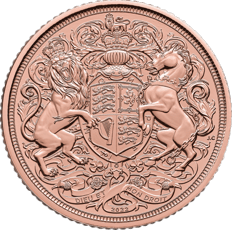
No coin embodies the British monarchy more strongly than the Sovereign. Minted since the early 19th century, its reverse traditionally depicts Saint George battling the dragon, while the obverse carries the reigning head of state. The Sovereign is thus itself a small gallery of coin portraits: from the youthful Gillick portrait to the Memorial Design, changes of ruler and artistic eras can be traced within a single coin series.
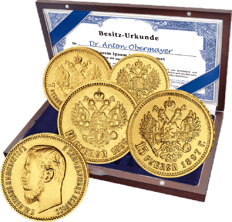
Anyone who appreciates historical gold coins with a royal connection will find related coinage under Sovereign as well as with the Swiss Vreneli and the coinage of the German Empire, which likewise reflect the age of monarchies.
Monarch coins move appealingly between two worlds. As collector's items, they thrive on mintage, condition and design: a Proof coin with a low mintage can mean far more to numismatists than the pure precious-metal weight. As investment objects, on the other hand, it is primarily the material value in gold, silver or platinum that counts. It is also interesting that many of these coins are legal tender in their country of issue, bearing a stamped face value, although the real metal value is usually many times higher than this symbolic value.
The sober distinction is important: bullion coins closely follow the precious metal price, while collector's editions come with a premium for rarity and design. Both approaches are justified; what matters is the expectation with which one collects. A broad range of classic investment products is offered by bullion coins, while limited ruler editions are more at home in the field of collector's coins. Anyone building up holdings regularly can also embed monarch motifs into a broader strategy via savings plan products.
Tax Note
Investment gold is exempt from VAT in Germany pursuant to §25c UStG. Different rules apply to silver, platinum and palladium coins; for silver coins, the margin scheme taxation often applies. This is general information and not tax advice; it is worth checking the current legal situation in individual cases.
Monarch coins appear in all classic precious metals. Silver dominates large-format commemorative issues and multi-ounce coins, gold stands for value density and tradition, and platinum adds noble accents to limited portrait editions. Platinum editions featuring individual effigies of the queen in particular are often issued in especially small mintages.
Because many of these coins are issued in Proof quality, the condition is crucial to the collector's value. Fingerprints, scratches or tarnishing noticeably reduce the value. Sensible protective measures:
Related design series with a similarly high standard of craftsmanship can be found under Queen's Beasts, where royal heraldic beasts take centre stage.
The tradition dates back to the 17th century. After the republican period under Oliver Cromwell, King Charles II wanted to distance himself and chose the opposite direction of gaze. Since then, every new monarch has faced the opposite direction to their predecessor: Elizabeth II to the right, Charles III to the left.
During her reign, five official effigies were created: by Mary Gillick (1953), Arnold Machin (1968), Raphael Maklouf (1985), Ian Rank-Broadley (1998) and Jody Clark (2015). Each portrait was adapted to the queen's age.
Both are possible. Bullion coins closely follow the precious metal price, while limited collector's editions in Proof quality additionally derive value from rarity, design and condition. Which aspect predominates depends on the specific coin and one's own objectives.
In both years, the late Queen Elizabeth II as well as King Charles III appear on coin obverses. The Memorial Design deliberately commemorated the queen, while at the same time the first coins bearing Charles's portrait entered circulation.
Sensitive surfaces such as Proof should only be touched at the edge and protected in airtight coin capsules. The original case and certificate are part of the collector's value. Larger holdings can be stored in an organised manner in coin cases or coin cassettes.
Silver and gold are most common, with platinum increasingly used for limited portrait editions. Silver is suitable for large-format commemorative issues, gold stands for value density and tradition, and platinum for particularly exclusive small mintages.
 PersonalitiesMonarchs
Stay informed with product launches, financial news and exclusive offers. Sign up for our free newsletter today.
By entering your email address and clicking the "Submit" button, you give the following consent: "I agree to be informed by email about new products, financial news and exclusive offers, and therefore consent to the processing of my email address for the purpose of sending the newsletter. I can revoke this consent at any time without giving reasons, with effect for the future. The lawfulness of processing carried out prior to revocation remains unaffected."