Sold out

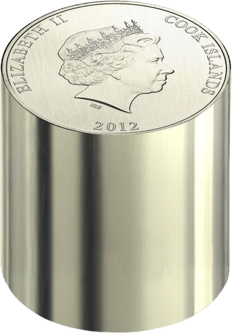
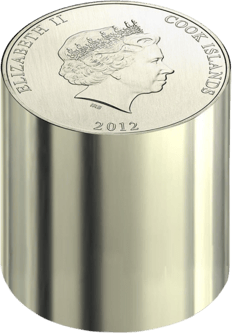
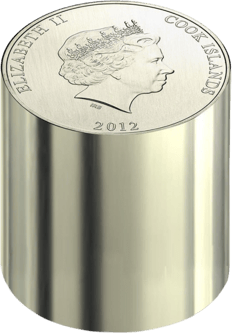
250g Cook Islands Coin Bar (in Can)
€532.41
incl. VAT and excl. shipping
currently not available

 More than 310,000
 Over 30 years
 Secure shipping
 Google: 4.9/5


There are precious metal products you simply have to hold in your hand once: a coin bar made of fine silver is just such a piece. Solid, cylindrical, cool to the touch and noticeably heavier than its compact shape suggests, a silver bar that looks like an oversized coin blank and is, in legal terms, actually a coin. Since 2012, Heimerle + Meule in Pforzheim has minted these unusual bars bearing the Cook Islands' coat of arms. The following sections cover their origin and design, the available denominations, the fineness of 999.9, the tax classification, authenticity verification, storage, and an honest comparison with classic bar formats.
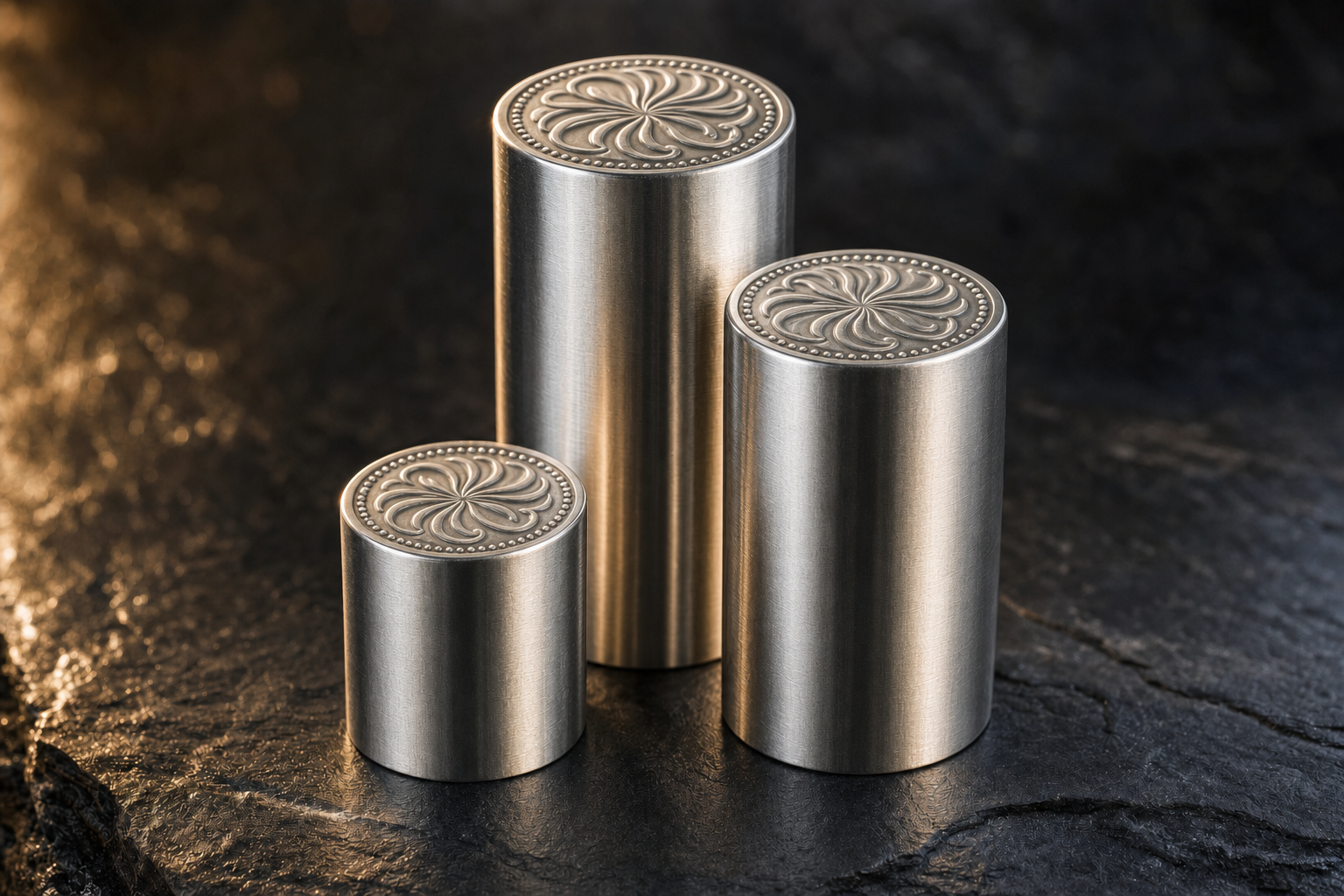
Coin bars are solid silver cylinders bearing a full coin strike on both end faces. This places them exactly at the intersection of two product worlds: in terms of material use and trading logic, they are silver bars; in terms of legal construction, they are officially issued coins with an embossed face value and legal tender status in the issuing country.
The key difference from a classic cast bar lies in the geometry. While a rectangular bar grows in length and width as its weight increases, coin bars keep their diameter of 45 millimetres and simply become taller. A 250-gram bar measures 15 millimetres in height, the 500-gram version 30 millimetres, and the kilogram bar reaches a substantial 60 millimetres. The result is an object that feels like a piece of raw metal straight from the refinery, compact, dense, with a heft that no flat bar of the same weight can convey.
The cylindrical sides remain deliberately smooth and without inscription. This is not design negligence but calculation: every additional production step costs money, and that cost ultimately ends up in the premium. Coin bars were designed for price-conscious buyers who want to pay for grams of silver, not graphic design.
Behind the coin strike lies an idea from the German precious metals trade. As early as 2007, the first silver minted bars came onto the market, bars embossed with a face value from an issuing country so they could be treated as collector's coins for VAT purposes. At the time, such coins were subject to the reduced tax rate, while fine silver bars were taxed at the full rate. The coin bar transfers this principle to a significantly thicker format. The tax advantage has since disappeared, but the design and appeal of the product have remained.
The issuing country is the Cook Islands, a self-governing territory in free association with New Zealand, located in the middle of the South Pacific. The 15 islands together have fewer inhabitants than a small German town, yet they remain a fixed presence on the international precious metals market. Numerous Cook Islands silver coins are produced by European mints on behalf of the islands' government.
The end faces of the bars display the design that made the Cook Islands famous in the bullion segment: the Bounty, the three-masted sailing ship whose 1789 mutiny is one of the most retold stories in maritime history. The mutineers were cast adrift at the time in precisely that region of the Pacific. The value side features, as with many coins from the Commonwealth sphere, the portrait of the British Queen Elizabeth II. The design remains unchanged across the years of issue, which strengthens recognisability and simplifies production.
Each bar carries a face value in Cook Islands Dollars (CID): 7.50 CID for the 250-gram version, 15 CID for the 500-gram version, and 30 CID for the one-kilogram version. The CID is pegged 1:1 to the New Zealand dollar and used exclusively on the islands. Economically, this face value is pure symbolism: it lies many times below the material value and serves solely to classify the piece legally as a coin. Whoever owns a kilogram bar is, in effect, holding 1,000 grams of fine silver in their hands, not pocket change.
Coin bars are minted in three common weight classes, with an unlimited mintage and an unchanging design. The following overview summarises the technical specifications:
| Weight | Fineness | Diameter | Height | Face value |
|---|---|---|---|---|
| 250 g | 999.9/1,000 | 45 mm | 15 mm | 7.50 CID |
| 500 g | 999.9/1,000 | 45 mm | 30 mm | 15 CID |
| 1,000 g | 999.9/1,000 | 45 mm | 60 mm | 30 CID |
Which size makes the most sense depends on your investment goal:
Those looking to build up larger quantities of silver often combine coin bars with standard formats such as 1 kg silver bars, or turn to 5 kg silver bars for the core holding. Mixing different denominations increases flexibility for a later sale.
A fineness of 999.9/1,000 is unusually high for investment silver. Most well-known silver coins are 999 fine silver, with older bullion issues even noticeably lower. This seemingly small difference has a solid practical background: silver of this quality can be processed directly by industry without the need for further refining.
Silver, after all, is not just an investment metal but an industrial raw material. It has the highest electrical conductivity of all metals and is found in photovoltaic cells, contacts, soldering alloys, medical technology and electronics. Anyone selling back to a processor saves a step with 999.9 material, and that step costs money along the recycling chain. This is precisely the point that collectors regularly cite as the true strength of the coin bar.
A format that does not rely on beauty, but on what ultimately matters: pure metal in an easily verifiable form.
For comparison: with gold bars, a fineness of 999.9 has long been the standard, while for silver it remains the exception. Enhanced silver bars, too, tend to play to their strengths in appearance, whereas the coin bar consistently focuses on material quality.
The tax question is one of the most discussed points surrounding this product, and it also explains why coin bars are rarer today than shortly after their introduction. Until the end of 2013, silver coins with legal tender status were subject in Germany to the reduced VAT rate of 7 percent. It was precisely this advantage that formed the business rationale for minted bars and coin bars.
On 1 January 2014, the rule was changed: the reduced rate for silver coins was abolished, and the standard tax rate has applied ever since. For imported goods, many dealers now apply the margin scheme under § 25a UStG, under which VAT is charged only on the trading margin rather than on the full value of the goods. In this case, the tax is not shown separately on the invoice.
Important for context
Unlike investment gold, which is exempt from VAT under § 25c UStG, investment silver is generally subject to VAT. For private individuals, the one-year holding period under § 23 EStG also applies: profits from the sale of physical precious metals are tax-free after a holding period of more than one year. This information is general in nature and does not replace professional tax advice.
In practice, this means silver always starts out with a structural price disadvantage compared with gold. Anyone wishing to keep this markup small should look for large units and low premiums, an argument that favours both the kilogram bar and the 500-gram silver bar.
Thanks to their clear geometry, coin bars are comparatively easy to verify. Anyone who knows the target values can sensibly assess a bar using simple means alone:
For reliable verification without damage, professional dealers rely on non-destructive methods such as ultrasound, conductivity or X-ray fluorescence measurement. Kettner Edelmetalle checks incoming goods using ISO-compliant procedures before they leave the logistics centre, a standard buyers can also expect with other formats such as 100-gram silver bars.
When buying, it is also worth taking a sober look at the premium, that is, the difference between material value and selling price. Coin bars are a niche product: not every dealer carries them, and the spread between the buy-back and selling price can therefore be higher than for mass-market products such as the Maple Leaf or the Vienna Philharmonic. This lower liquidity is the price paid for the distinctiveness.
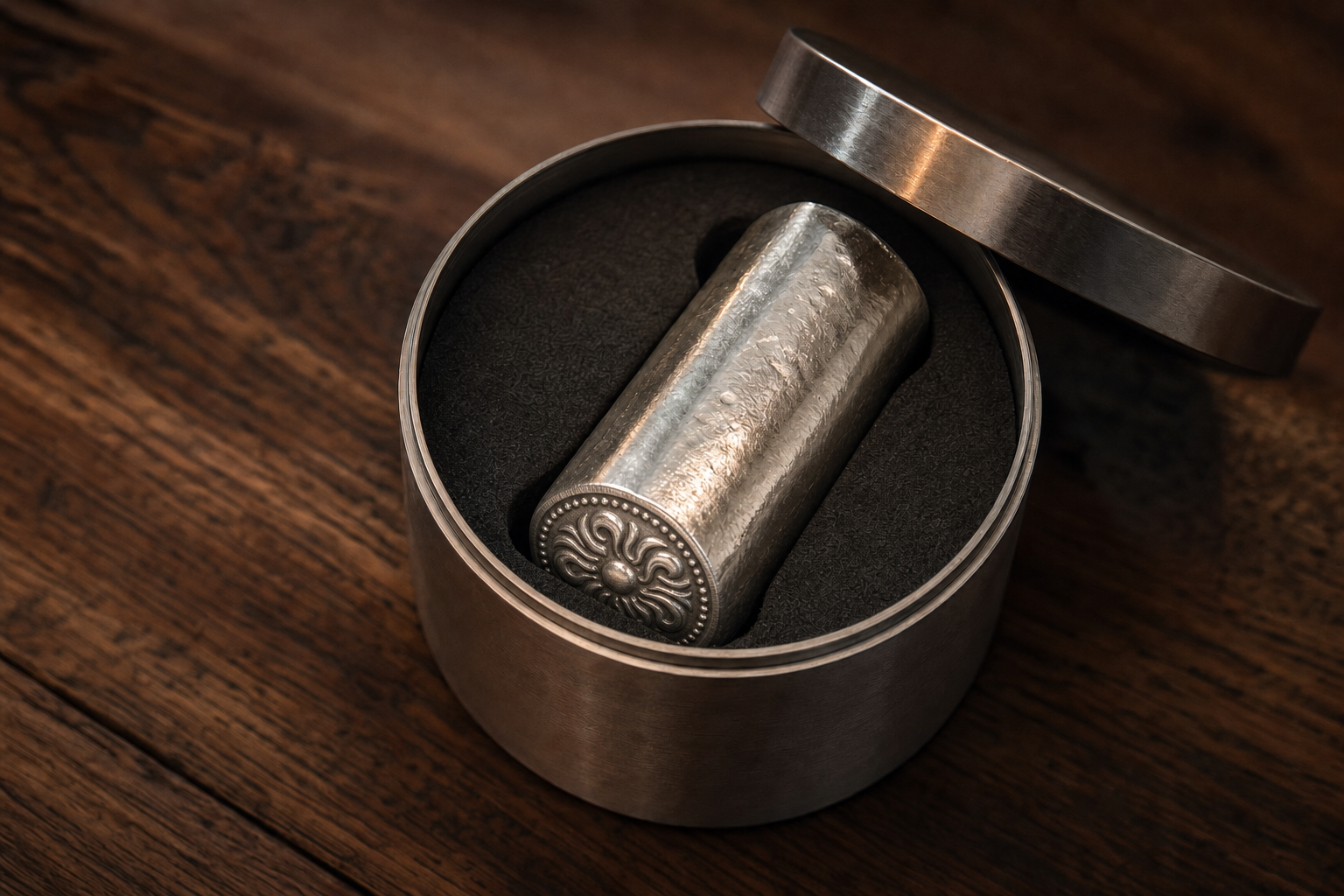
Silver reacts with sulphur compounds in the air and tarnishes over time. This patina is chemically harmless and does not reduce the material value, though it does affect the appearance and can lead to discussions at the time of sale. The original tin with foam insert already offers good protection against mechanical damage; for long-term storage, a dry, temperature-stable location is also recommended.
For larger collections with mixed formats, coin cassettes help keep everything neatly organised, while individual pieces are well protected in coin capsules. Coin bars themselves do not fit into any standard capsule due to their height, so the supplied tin remains the best solution here.
An honest assessment works best in direct comparison. Every format has its merits, but not for every purpose.
Both share the same basic idea of an embossed face value, but they differ in shape. Minted bars are flat and rectangular, stackable, and available in more weight classes. The coin bar is the more distinctive, rarer appearance, but also bulkier and less widespread. Anyone who prioritises easy tradability is better off with the minted bar; anyone looking for an object with character reaches for the coin bar.
Cast and minted standard bars are the bread-and-butter business of the silver market. They are bought back by almost every dealer, pricing is transparent, and the range stretches from 10-gram silver bars up to the kilogram range. Their drawback: a fineness of 999 rather than 999.9 from many manufacturers and no coin character whatsoever. The coin bar counters with higher purity and rarity, but demands patience on resale.
CombiBars pursue the opposite approach: they can be broken into small units and are designed for situations where precious metal needs to be given away in portions. The coin bar is the opposite, a compact block meant to be used as a whole. Both formats can usefully complement each other within a holding, since they answer different questions.
Coin bars appeal to two groups. One values the high fineness and relatively low design effort as a route to solid material value, a building block alongside gold that also appears in concepts such as inflation hedging or long-term retirement provision. The other group collects the curiosity: a bar that is a coin, from an island nation of 15,000 inhabitants, minted in Pforzheim. Anyone wishing to build up holdings regularly in smaller steps will find the more suitable tool in the savings plan products; coin bars are more of a deliberate one-off decision.
For a sense of perspective within a portfolio, it helps to look at the gold-to-silver ratio, the relationship between the two metal prices. Historically, silver fluctuates considerably more than gold, because around half of its demand comes from industry and is therefore tied to the business cycle. Anyone seeking broader diversification often supplements physical silver with gold coins and, in smaller proportions, with platinum or palladium. No statements about future price developments can be derived from this, but certainly the insight that a single metal is rarely the whole answer.
Legally, they are coins: they carry an embossed face value in Cook Islands Dollars and are legal tender in the issuing country. Economically, they behave like bars, since the price is determined almost entirely by the fine silver content rather than the face value.
Three units are commonly available: 250 grams, 500 grams and 1 kilogram. All three have a diameter of 45 millimetres and differ only in height, 15, 30 and 60 millimetres respectively. The face values are 7.50, 15 and 30 Cook Islands Dollars.
Production takes place at the long-established refinery Heimerle + Meule in Pforzheim, which also produces numerous other precious metal products for the German market. The issuing country is the island nation of the Cook Islands in the South Pacific.
Silver of this purity can be processed directly by industry without the need for further refining. With the usual 999 bullion issues, an additional cleaning step is typically required before processing, which incurs costs along the recycling chain.
Unlike investment gold, investment silver is not exempt from VAT in Germany. The reduced rate for silver coins, which applied until the end of 2013, was abolished on 1 January 2014. For imported goods, the margin scheme under § 25a UStG is often applied. For private sales, the one-year holding period under § 23 EStG also applies. Binding advice can only be given by a qualified tax adviser.
Tarnishing is a natural reaction of silver with sulphur compounds in the ambient air and does not affect the material value. Attempting to clean it yourself with polishes or dip baths is not recommended, as this can cause micro-scratches and material loss. Dry, low-air storage in the original tin is the most effective way to prevent it.
The material value can be determined at any time via the silver price, but the format itself is a niche product. Not every buyer carries coin bars in their range, which is why the buy-back spread can be larger than for common silver bullion coins. The original tin and certificate noticeably improve the starting position.
The design shows the Bounty, the three-masted sailing ship that also features on other Cook Islands bullion products. The second end face shows the value side, with the face value and the portrait of the British Queen Elizabeth II. The design remains the same across all years of issue, and the cylindrical surface stays smooth and without inscription.
 Coin Tubes
Stay informed with product launches, financial news and exclusive offers. Sign up for our free newsletter today.
By entering your email address and clicking the "Submit" button, you give the following consent: "I agree to be informed by email about new products, financial news and exclusive offers, and therefore consent to the processing of my email address for the purpose of sending the newsletter. I can revoke this consent at any time without giving reasons, with effect for the future. The lawfulness of processing carried out prior to revocation remains unaffected."