Only 7 left to order
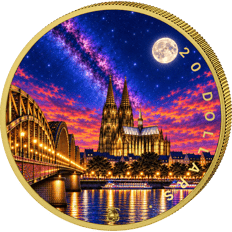
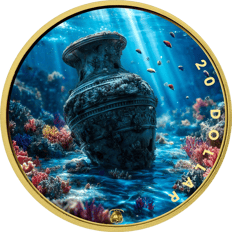
1 oz Silver Bavaria by Night - Neuschwanstein Castle 2026 (Mintage: 100 | Gilded)
€169.00
incl. VAT and excl. shipping
Ships from 20/11/2026

 More than 300,000
 Over 30 years
 Secure shipping
 Google: 4.9/5


Landmarks such as Neuschwanstein Castle, the Paris skyline or the rising sun over Tokyo are among the most popular designs in modern coin minting. The Cities and Landscapes collecting category brings together gold and silver coins that capture famous buildings, metropolises and natural scenery from around the world in precious metal. This guide explains the history of this design category, the common denominations and minting types, tax particulars, and the criteria that collectors and investors use for guidance.
Coins with city and landscape designs belong to the large family of collector's and themed coins. Unlike classic bullion coins, whose design remains unchanged for decades, these mintings feature landmarks, historic buildings or geographical regions that change from year to year. The spectrum ranges from German castles to European capitals of culture to distant metropolises. Many issues are released in small mintages and appeal both to design collectors and to buyers who wish to acquire precious metal in an appealing artistic form.
Characteristic of this field is the close link between the art of minting and cultural history: a coin becomes the carrier of a landmark, documenting its architectural or scenic significance. Those interested in this field will also find connections to other design worlds, such as Art and Culture or History, which draw on similar cultural and historical references.
While animal motifs or mythical creatures place the emphasis on imagination or natural history, with cities and landscapes it is the landmark that takes centre stage. This is often combined with a regional connection: Bavarian mintings, for example, depict royal castles, while international series contrast metropolises such as Paris, Tokyo or London. These dual designs, in which two capital cities appear on a single coin, are a distinctive design feature of this collecting category.
The depiction of buildings and landscapes on means of payment dates back to antiquity, when Greek and Roman mints depicted temples, city gates and harbours. Even then, the design served to identify a city and as a form of self-presentation. In the modern era, this developed into an independent numismatic collecting field, which achieved its present-day diversity with the modern collector's coin.
In German-speaking countries, castles and historic old towns in particular hold a firm place in this design world. Neuschwanstein Castle, for example, is regarded worldwide as one of the most photographed buildings and is a recurring subject of Bavarian mintings. Internationally, series feature landmarks such as the Eiffel Tower, the Statue of Liberty or Far Eastern temple complexes. Such designs tie in with the collecting interest that also shapes the Personalities series or issues related to British cult.
A coin featuring a landmark is more than just a piece of precious metal: it preserves a cultural image in lasting form.
Coins with city and landscape designs appear in both gold and silver. The choice of metal and denomination largely determines price, level of detail and suitability for collecting.
Silver is the most common metal in this collecting category, because the larger minting surface allows for fine architectural detail. The following formats are widespread:
Those who wish to explore this metal in more depth will find the entire range in the Silver Coins section, while partially gilded special editions are grouped under partially gilded silver coins.
Gold mintings in this collecting category are usually issued in smaller denominations such as 1/10 oz or 1/4 oz, as the precious metal has a significantly higher value density. They appeal to collectors who wish to own a design in gold, as well as to buyers who prefer small gold units with added design value. The Gold Coins category offers a broad overview of gold mintings; those seeking gold in bar form as a complement will find what they need among the 1/10 oz gold bars.
City and landscape designs are issued in various minting qualities. The Mint State (MS) finish is the standard quality with a regular lustre. The Proof finish shows mirrored surfaces and frosted reliefs and is used for limited collector's editions. It is particularly with architectural designs that the fine linework comes into its own in this quality.

This collecting category is divided into several recurring design groups. Understanding these groups makes it easier to build a collection in a targeted way.
Design collectors often combine this field with thematically related areas. There are, for example, content links to the Nature design world and to mintings from German minting art, which draws on regional traditions. Technical structures can also be found in the neighbouring collecting category Buildings.
As with all precious metal mintings, authenticity is a central concern. Reputable coins carry details of fine weight, fineness and year of minting, often supplemented by a face value from the issuing country. For collector's editions, a numbered certificate and a matching case increase the traceability of mintage and condition.
When buying, it is worth considering several criteria:
Kettner Edelmetalle relies on an ISO-compliant authenticity verification process, so every coin is checked before dispatch. Those who would like general information on verified editions will find a wide selection of themed mintings under Collector's Coins.
The tax classification depends on the metal. Investment gold is exempt from VAT in Germany under the regulations governing investment gold, provided the statutory criteria are met. Silver coins have been subject to the regular VAT rate since 2014, or are often taxed under the margin scheme in trade, which affects the final price. As this is purely general information and not tax advice, it is advisable to consult a qualified expert in individual cases.
Storage advice
Design coins should be stored with minimal handling and protected from moisture. Fingerprints and environmental influences can diminish condition, particularly on polished surfaces.
Properly fitted protective sleeves and containers are suitable for storage. Individual pieces are well kept in coin capsules, while entire collections can be stored in an orderly way in coin cassettes. Coin cases are also suitable for transport or permanent display. A dry, temperature-stable environment protects the minting in the long term.

Coins with city and landscape designs combine two perspectives. As a collector's item, the design, mintage and condition take centre stage; here, value is also derived from rarity and aesthetic appeal. As precious metal holdings, the material value of the gold or silver content forms a basis that depends on the respective daily price.
For buyers who prioritise pure material value, classic bullion coins or bars are often the more obvious choice, as their premium over the metal value is lower. Design mintings, on the other hand, offer added ideal and aesthetic value. Many collectors combine both approaches, supplementing their design collection with standardised issues such as the Krugerrand in silver or with silver bars as a value-dense basis. Specific return forecasts naturally cannot be made, as precious metal and collector's markets are subject to fluctuations.
It comprises gold and silver coins whose designs depict famous buildings, metropolises and natural scenery. The landmark takes centre stage as a cultural and historical subject, often in changing annual issues and small mintages.
The most common are 1 troy ounce silver coins as well as heavy issues of up to 1 kilogram. Gold mintings are usually issued in smaller units such as 1/10 or 1/4 oz. There are also partially gilded special editions.
Relevant factors are mintage size, condition, the presence of a case and certificate, and the minting authority. Details on fine weight, fineness and year of minting should be clearly recognisable.
Investment gold is exempt from VAT under the statutory conditions. Silver coins are subject to the regular tax rate or are taxed under the margin scheme. For individual circumstances, tax advice is recommended.
They combine both aspects. The appeal for collectors lies in the design, mintage and condition, while the precious metal content represents a material value. Those primarily seeking material value tend to opt for standard bullion coins or bars.
With minimal handling, dry and at a stable temperature. Coin capsules protect individual pieces, while cassettes and cases are suitable for entire collections. Fingerprints and moisture should be avoided to preserve the condition.
 Cities and Landscapes
Stay informed with product launches, financial news and exclusive offers. Sign up for our free newsletter today.
By entering your email address and clicking the "Submit" button, you give the following consent: "I agree to be informed by email about new products, financial news and exclusive offers, and therefore consent to the processing of my email address for the purpose of sending the newsletter. I can revoke this consent at any time without giving reasons, with effect for the future. The lawfulness of processing carried out prior to revocation remains unaffected."