





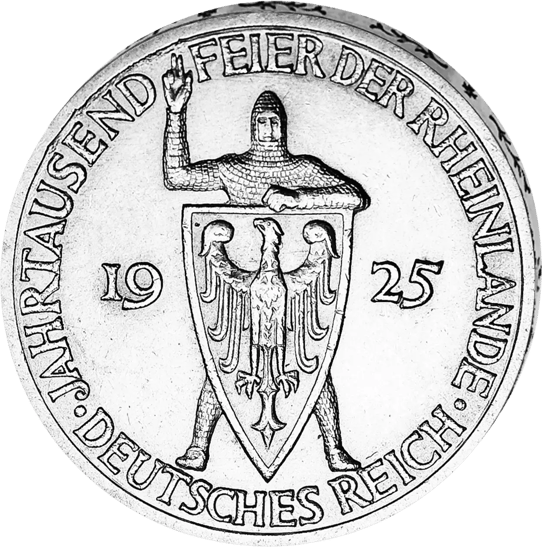


3 Reichsmark 1000 Years Celebration of the Rhineland (1925 | Weimar Republic)













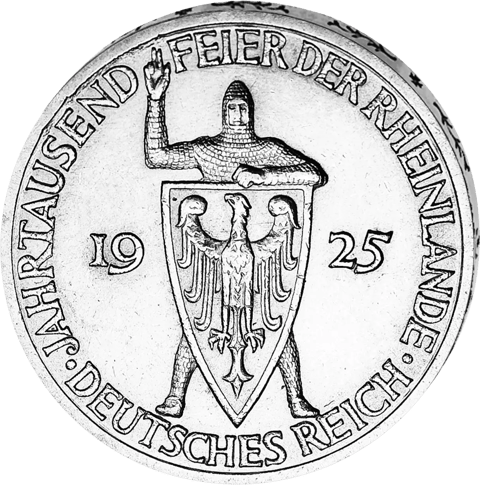
- Striking Design: Warrior with oath hand
- Edge Lettering: Words of our anthem
- Genuine Silver: 7.50 g fine silver
- Striking DesignWarrior in chainmail with oath hand and imperial eagle
- Edge Lettering'Einigkeit und Recht und Freiheit' is inscribed on the edge
- Genuine SilverSilver with 500/1,000 fineness as a tangible asset
 Price alert
  Share
Share
Original from the Weimar Republic · 1925
What a Reichsmark bears
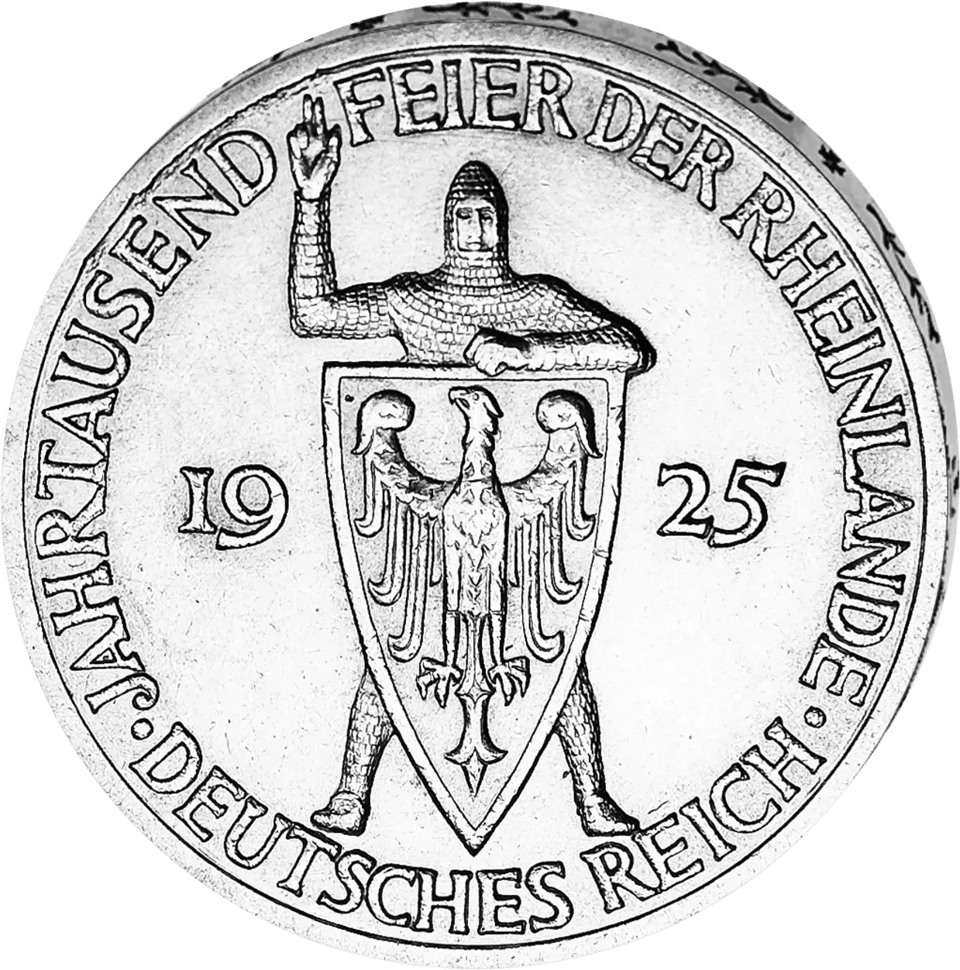
3 Reichsmark Rhineland 1925, picture side
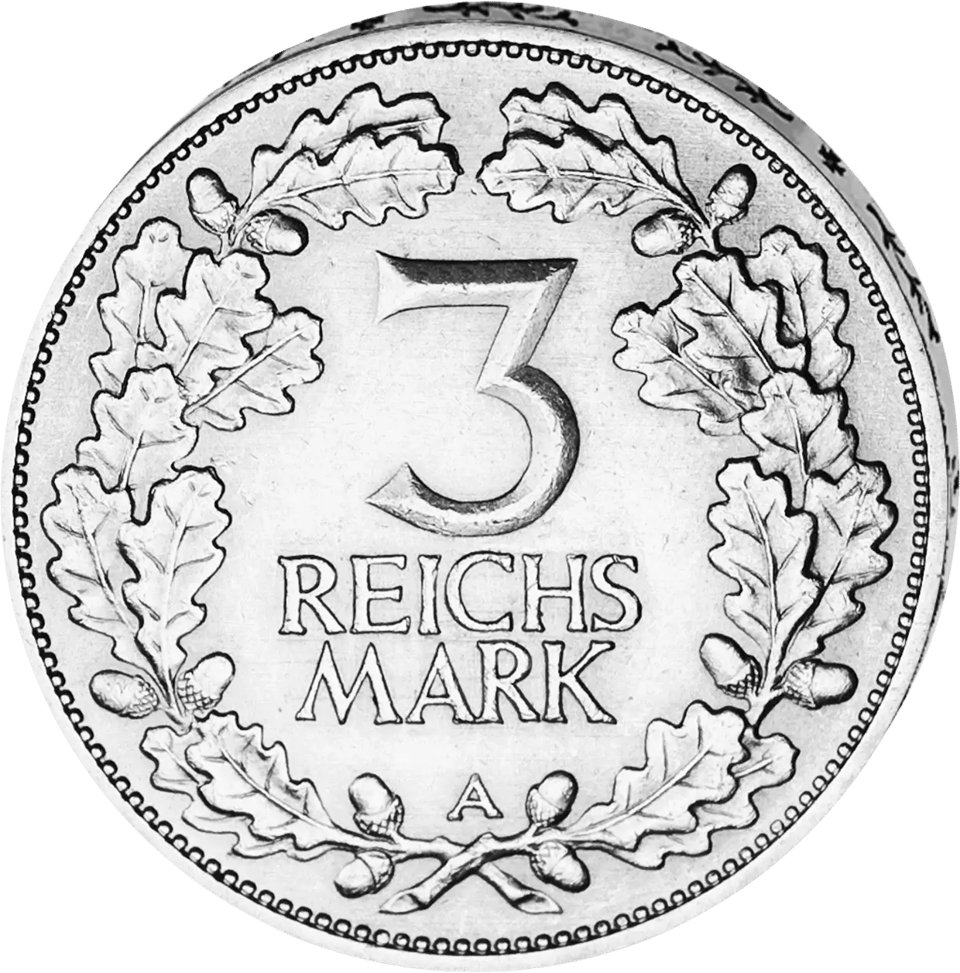
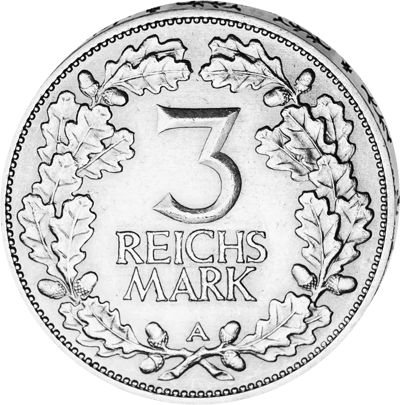
The Reichsmark existed from October 1924. Its commemorative coins of three Reichsmark bear a picture of their own on one side and the value on the other. The picture side bears the year 1925, the value side 3 REICHS MARK in an oak wreath.
On the piece
A value side and a picture of its own
Each of these coins bears Deutsches Reich and the value, 3 Reichsmark. One side bears a picture of its own.
The value side bears 3 REICHS MARK in an oak wreath, the picture side the year 1925.
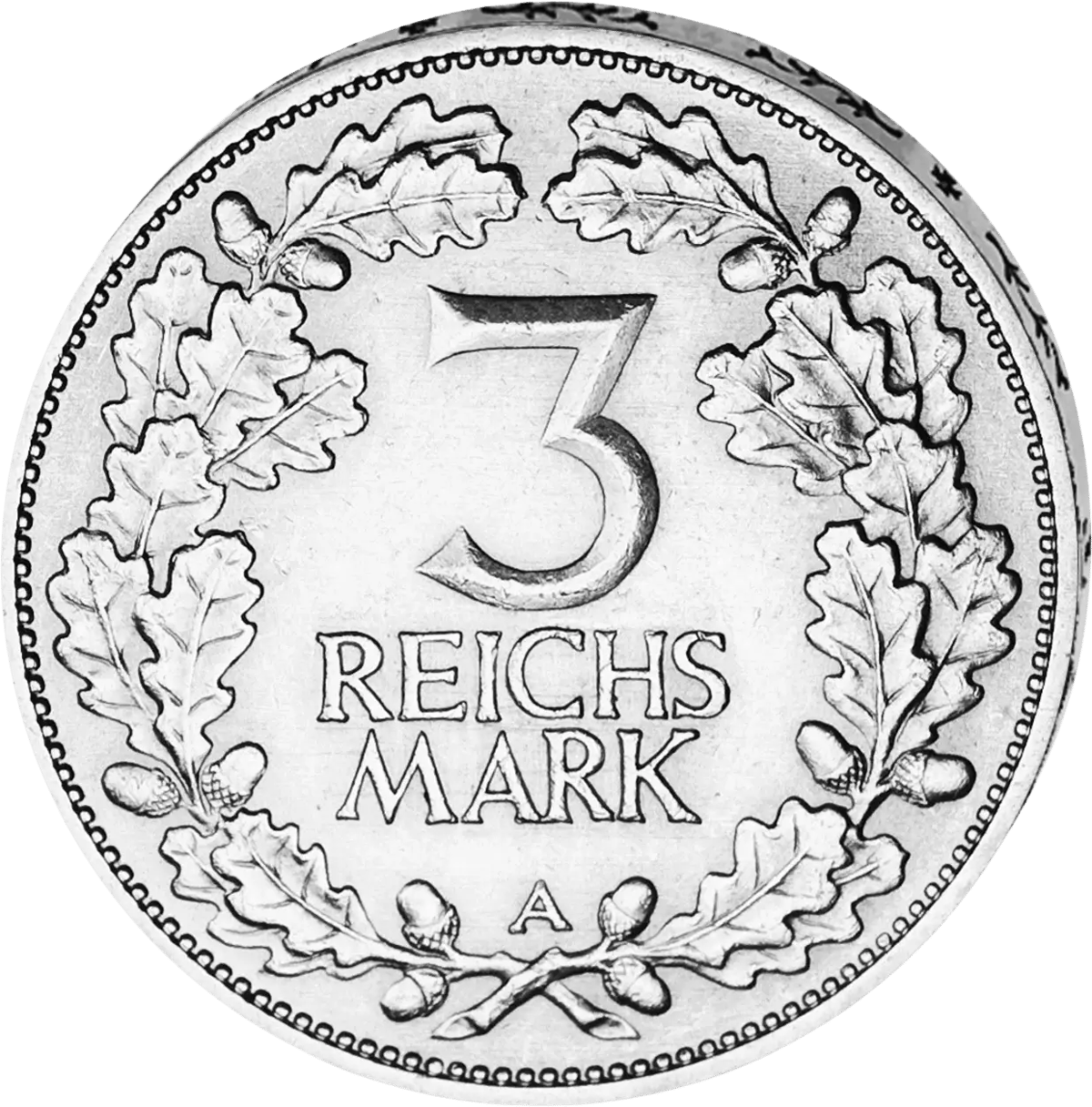
ValueThe value, 3 Reichsmark

Rentenmark and Reichsmark
From the Rentenmark to the Reichsmark
In the autumn of 1923 the Rentenbank was founded. Its Rentenbank notes were issued in a new money:
“The unit of value of these Rentenbank notes is the Rentenmark, which is divided into 100 Rentenpfennig.”
15 October 1923
Decree on the founding of the Rentenbank.
8 November 1923
A decree allows coins of 1, 2, 5, 10 and 50 Rentenpfennig.
30 August 1924
The coinage act introduces the Reichsmark.
October 1924
The Reichsbank issues the Reichsmark alongside the Rentenmark, one to one.
June 1948
The Deutsche Mark replaces the Reichsmark.

Weimar commemorative coins
Three Reichsmark for an occasion
The commemorative coins of 3 Reichsmark are made of silver, 500/1,000, weigh about 15 grams and measure 30 millimetres.
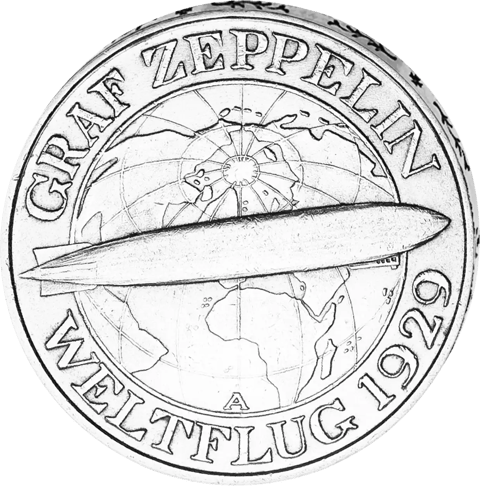
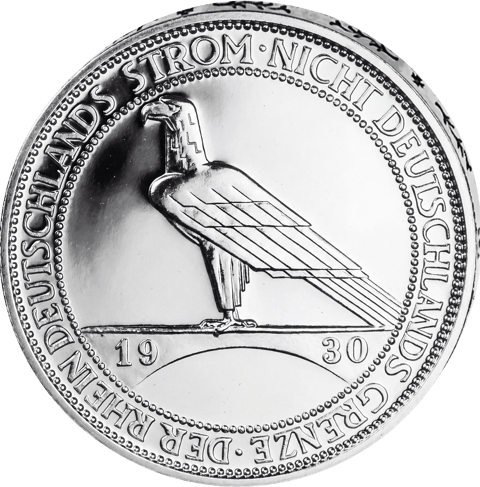
The mint mark
A letter for the mint
On the coins of the Reich a letter names the mint, A for example Berlin, J Hamburg, F Stuttgart. The photo of this piece shows a A.
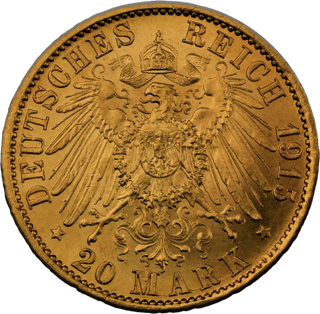
The gold of the mark
The gold of the German Empire
Twenty and ten marks in gold, 900/1,000: a twenty-mark piece weighs 7.96 grams, of which 7.17 grams is fine gold.
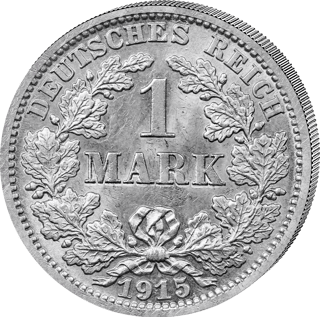
The mark in silver
The silver mark in the hand
A mark holds 5 grams of fine silver, 900/1,000, and measures 24 millimetres. No one had to accept silver coins for amounts over 20 marks.
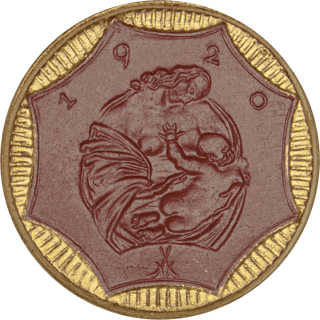
Emergency money
Emergency money in stoneware and from Hamburg
In 1921 Saxony issued emergency money of Meissen Böttger stoneware, and in August 1923 Hamburg issued its own emergency money.
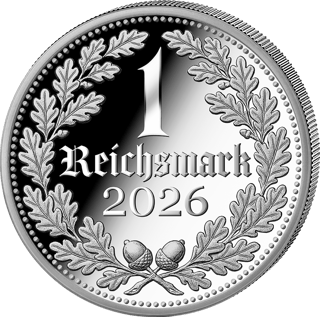
Our strikes
What our strikes take up
Our strikes bear the lettering 1 Reichsmark or 1 Mark in an oak wreath. They are newly struck, no Reichsmark of the past and no legal tender of the Reich.
At a glance
- Type
- Original
- Era
- Weimar Republic
- Face value
- 3 Reichsmark
- Metal
- Silver
- Fineness
- 500/1,000
- Gross weight
- 15 g
- Fine weight
- 7.5 g
- Diameter
- 30 mm
- Year of striking
- 1925
Gross weight: the weight of the whole coin. Fine weight: the pure metal in it. Fineness: its share in thousandths.
Details from our product data and the strike.

Original and new strike
On the left 3 Reichsmark of 1925 with the value in an oak wreath, on the right our ounce, which bears the lettering 1 Reichsmark in an oak wreath.
 3 Reichsmark 1925, original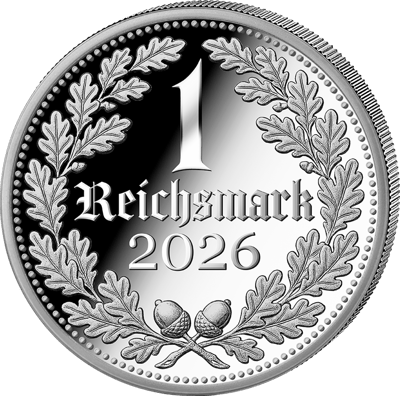
3 Reichsmark 1925 "Millennium Celebration of the Rhineland" – a piece of the Weimar Republic in your hand
Some coins are simply beautiful. This one is, above all, a witness to history. The 3 Reichsmark of 1925 was minted in a year when parts of the Rhineland were still occupied by Allied troops and the memory of the great inflation of 1923 was still fresh in people's minds. Whoever holds this piece between their fingers today is holding 15 grams of coinage metal from one of the most turbulent eras in German history – and at the same time a genuine tangible asset.
The occasion: from 925 to 1925
The background to this commemorative coin was the Rhenish Millennium Celebration. It commemorates the year 925, when Giselbert, Duke of Lotharingia, submitted to the East Frankish King Henry I; Lotharingia was thus incorporated into the East Frankish Kingdom as its fifth stem duchy. In 1925, this thousand-year existence of the Rhineland was celebrated with exhibitions, festive parades, and church services – a major historical-political event of the Weimar Republic intended to underline the region's affiliation with the German Reich.
The design
The obverse shows a warrior in chainmail armor, his right hand raised in an oath, his arm resting on a shield bearing the imperial eagle. To the left and right stands the divided year 19–25, surrounded by the legend JAHRTAUSEND FEIER DER RHEINLANDE · DEUTSCHES REICH ("Millennium Celebration of the Rhineland · German Reich"). The reverse is deliberately simple: the large denomination 3 above the inscription REICHS MARK, with the mint mark beneath, the whole encircled by a wreath of oak branches with acorns. Running along the edge is the motto EINIGKEIT UND RECHT UND FREIHEIT ("Unity and Justice and Freedom") – the very same words that define the German national anthem today.
Technical data at a glance
- Face value: 3 Reichsmark (German Reich, Weimar Republic)
- Year of issue: 1925
- Material: Silver, fineness 500/1,000
- Gross weight: 15.00 g – Fine weight: 7.50 g fine silver
- Diameter: 30.00 mm
- Edge lettering: EINIGKEIT UND RECHT UND FREIHEIT
- Catalog: Jaeger 321
- Manufacturer: German mints
- Condition: Circulated, bank-standard quality
Six mints, one design
The issue was struck at six German mints, identifiable by the small letter beneath the oak wreath: A for Berlin, D for Munich, E for Muldenhütten, F for Stuttgart, G for Karlsruhe, J for Hamburg. The mintage figures varied considerably. Berlin produced the lion's share with over three million pieces, followed by Munich with a good 1.1 million pieces. Numbers were significantly lower in Hamburg (around 492,000), Muldenhütten (about 441,100), Karlsruhe (just under 300,000), and above all Stuttgart with only around 172,875 pieces. In addition, a small number of proof strikes exist, which rarely appear on the market. For collectors, this is precisely the appeal: anyone wanting to assemble all the mint marks needs patience and a keen eye. The coin was withdrawn from circulation on October 1, 1934 – so it was in circulation for only a few years.
Circulated coinage with character – what you receive
These pieces were used as circulating currency and bear the marks of that life: darker patina, individual centering, nicks, wear, and in some cases weaker areas of the legend. This is exactly what makes them appealing. Since the year of minting, mint, and reverse variant may vary, the piece delivered may differ from the picture shown – you receive an original, not a mass-produced item. Please understand that the image in the shop serves as an example and that the delivered item may individually differ in appearance and condition due to historical circumstances.
A coin that has passed through thousands of hands tells more than any glossy product ever could: it was wages, savings, and a means of payment at a time when trust in paper money had only just begun to be rebuilt.
Why silver – and why this coin
Historic silver coins combine two worlds: numismatic collector's value and tangible material value. Silver has served for millennia as a coinage metal, a store of value, and a medium of exchange, and is traded worldwide as a raw material. Its intrinsic value is not derived from trust in governments, as is the case with fiat money, but from its physical properties and industrial demand: electronics, solar, and medical technology require this white metal every day, while supply naturally remains limited.
- Tangible asset you can hold: 7.50 g fine silver per piece, independent of any paper currency
- Double appeal: material value plus the historical collector's value of the Weimar Republic
- Small unit: easily divisible and thus also suitable as a medium of exchange for smaller transactions
- Affordable entry point: silver is generally more accessible than gold – ideal for building up a collection
- Durable: silver retains its physical properties across generations and can be passed down
- High liquidity: silver coins are known worldwide and can be traded at any time
- Tax advantages: profits from the sale of silver are generally tax-free, provided the holding period is at least one year
This makes the piece a solid building block for your inflation hedge as well as part of a well-thought-out crisis protection holding. Precious metals retain their character as political and economic uncertainty increases. Gold is humanity's oldest currency and has outlasted every paper money system – and silver has accompanied it since antiquity as a monetary metal and a symbol of wealth and prestige.
In comparison: related issues
For the same occasion, a 5 Reichsmark coin with similar imagery was also issued in 1925: larger in format, with correspondingly more silver, but harder to find in appealing circulated condition. Five years later, the 3 Reichsmark coin marking the 1930 evacuation of the Rhineland followed – likewise a classic of this series. Anyone building a collection focused on history gets, with the Millennium Celebration coin, the more narratively compelling starting point: it stands at the beginning of the great Weimar commemorative coin series, is still readily obtainable in circulated quality, and needs no explanation once you've seen the design.
For collectors and investors
Whether as a first Reichsmark piece, as an addition to a mint-mark series, or as a solid silver position alongside modern bullion coins: this 3 Reichsmark from 1925 is an honest, historically charged collector's item with a clear precious metal core. We ship it as insured value shipping – carefully packaged and dispatched discreetly.
Product depiction may differ from the final product.
