Sold out

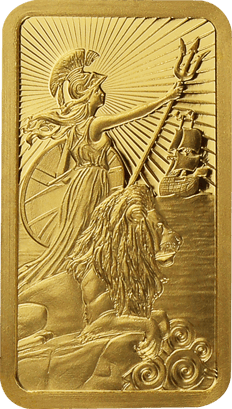
1g Gold Bar Oxford Mint
€150.93
VAT-free and excl. shipping
currently not available

 More than 310,000
 Over 30 years
 Secure shipping
 Google: 4.9/5


The Oxford bars combine British minting tradition with German craftsmanship: struck by the historic Oxford Mint, produced in cooperation with Leipziger Edelmetallverarbeitung, and finished with the iconic Britannia design by designer Jody Clark. Anyone holding one of these bars in their hand holds a piece of living history, and at the same time pure investment gold of certified quality. This guide examines the origin, design world, denominations, authenticity features and tax treatment of the Oxford series, and places it within the broad field of modern bars.
The roots of the Oxford Mint go back to the year 871 AD, the first year of the reign of Alfred the Great, who later united the Anglo-Saxon kingdoms and is regarded as the first English king. For centuries, Oxford was thus one of England's important minting locations. In 1066, coin production was halted, only to be revived under Charles I.
From this era, between 1642 and 1646, come the legendary issues Oxford Crown and Triple Unite, which depict the monarch once mounted on horseback and once in profile portrait. This historic visual language lives on in today's precious metal bars, turning a pure investment product into an object of cultural depth, much as collectors also appreciate in the classic Krugerrand or in British classics such as the Britannia.
A bar whose design carries over 1,150 years of minting history within it is more than metal: it is narrated history in pure gold.
As British as the design, as German the production: the modern products of the Oxford Mint are created in cooperation with Geiger Edelmetalle and Leipziger Edelmetallverarbeitung (LEV). This combination of a historic brand and German precision manufacturing ensures consistently high quality standards. The reverse of each bar features the inscription The Oxford Mint, the mint mark of the minting facility, the specifications for weight and fineness, as well as an individual serial number.
Anyone who values production in German-speaking countries will find in the Oxford series an interesting alternative to established manufacturers such as those represented throughout the gold bar range. Classic German refineries and their products can also be directly compared in the 1 oz gold bars category.
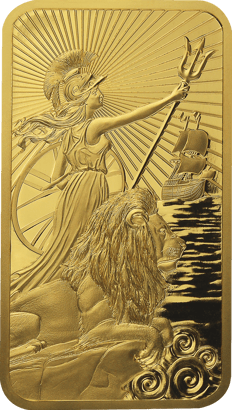
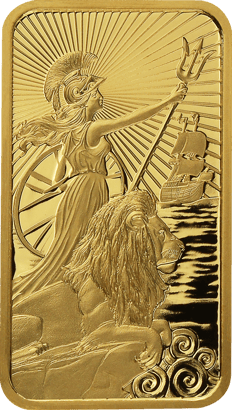
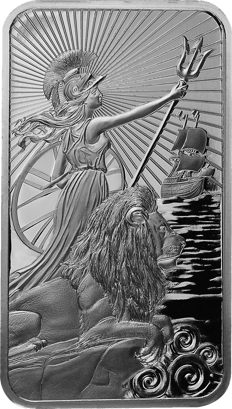
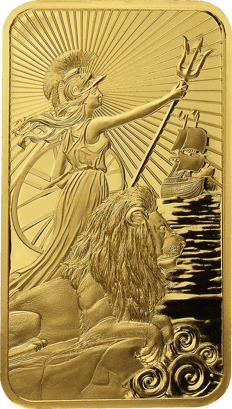
The central design element of the Oxford bars is Britannia, the guardian goddess of the British Isles. The renowned designer Jody Clark, known for numerous official coin portraits, depicts her with a Corinthian helmet, trident and shield. A lion rests at her feet as a symbol of strength, while a sailing ship moves across the sea in the background. The composition represents resilience, unity and maritime tradition.
On the silver bars, the design bears the name Spirit of a Nation, while the gold bars take up the idea of the Unite, a deliberate nod to the historic Triple Unite coinage. This strength of design also makes the series interesting for thematic collectors, for example in the context of British cult and royal heraldic symbolism.
The series covers both small entry-level sizes and substantial investment weights. This makes it equally suitable for cautious wealth building in small steps and for the targeted purchase of larger units.
As a rule of thumb: the larger the unit, the lower the percentage premium on the pure metal value. Smaller denominations cost more per gram but score points with high divisibility and a low entry threshold.
The gold bars from the Oxford Mint are made of 999.9 fine gold, the silver variant of 999 fine silver. All bars are delivered in Brilliant Uncirculated (BU) condition, securely mounted on a sealed blister card. This packaging not only protects against scratches and environmental influences, but also integrates the serial number and technical details directly on the product.
For long-term storage, it is advisable to leave the blister card intact, as an undamaged original makes resale easier. Suitable protective solutions from the coin capsules range or organised storage in coin cassettes are also recommended.
Every Oxford bar carries several features that facilitate verification: the embossed serial number, precise details of weight and fineness, as well as the characteristic mint mark of the minting facility. Combined with the sealed blister card, the origin can be clearly traced.
At Kettner Edelmetalle, every precious metal product undergoes an ISO-compliant authenticity verification before leaving the fully automated logistics centre. Anyone investing in physical precious metals in general will find further guidance throughout the gold range as well as among the classic gold bullion coins.
A key advantage of physical gold bars is their tax status. Investment gold is exempt from VAT under § 25c UStG, meaning no VAT is charged on the purchase of the Oxford Mint gold bars. In addition, profits from the sale of privately held gold are generally tax-free after a minimum holding period of one year.
Tax Note
Different rules apply to silver bars: they are generally subject to the margin scheme or the standard VAT rate. The silver Oxford bar is therefore treated differently for tax purposes than its gold counterparts. This is general information and not tax advice.
Anyone factoring in the tax aspect often combines gold as a tax-exempt core with silver for diversification; a look at the extensive range of silver bars is equally worthwhile here.
The Oxford series deliberately positions itself at the intersection of investment and collector's item. As pure investment gold, it benefits from high liquidity, globally recognised fineness levels and a transparent price that closely tracks the gold price. Gold has been regarded as a store of value for thousands of years and is often used to diversify a portfolio as well as for inflation protection.
At the same time, the historically charged Britannia design sets the series apart from plain standard bars and appeals to lovers of British minting artistry. This dual role makes the Oxford bars a popular building block for long-term wealth building, for example as part of retirement planning or as a tangible part of a personal crisis protection concept. No return promises can be derived from this, of course: precious metal prices fluctuate, and past performance is no guarantee of future results.
The Oxford bars combine the over 1,000-year tradition of the historic Oxford Mint with modern production by Geiger and Leipziger Edelmetallverarbeitung. The Britannia design created by Jody Clark and the embossed serial number give them a collector's character in addition to their material value.
The gold bars are available in denominations of 1 g, 10 g, 50 g and 1 oz with a fineness of 999.9. The silver bar is available in the 1 oz size with 999 fine silver. This means the series covers both entry-level sizes and more substantial investment weights.
Yes, the gold bars are classed as investment gold and are exempt from VAT under § 25c UStG. After a minimum holding period of one year, capital gains from privately held gold are generally tax-free. Different rules, such as the margin scheme, apply to the silver bar.
The modern precious metal bars of the Oxford Mint are manufactured in Germany in cooperation with Geiger Edelmetalle and Leipziger Edelmetallverarbeitung (LEV). The design comes from British designer Jody Clark. This combines British minting tradition with German manufacturing quality.
At the centre is Britannia, the guardian goddess of the British Isles, with a Corinthian helmet, trident and shield, a lion at her feet and a sailing ship in the background. The reverse carries the inscription The Oxford Mint, the mint mark, the specifications, and the individual serial number.
Storage in the original, sealed blister card is ideal, as it protects the product and makes resale easier. Coin cassettes are suitable for the organised storage of several bars, while coin capsules additionally offer extra protection against mechanical stress.
 YouTube OffersOxford Bars
Stay informed with product launches, financial news and exclusive offers. Sign up for our free newsletter today.
By entering your email address and clicking the “Submit” button, you give the following consent: “I agree to be informed by email about new products, financial news and exclusive offers, and therefore consent to the processing of my email address for the purpose of sending the newsletter. I can revoke this consent at any time without giving reasons, with effect for the future. The lawfulness of processing carried out prior to revocation remains unaffected.”