Only 1 left to order
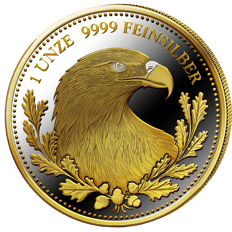
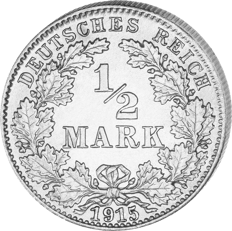
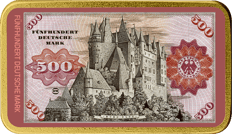
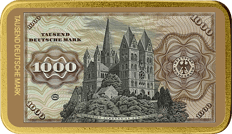
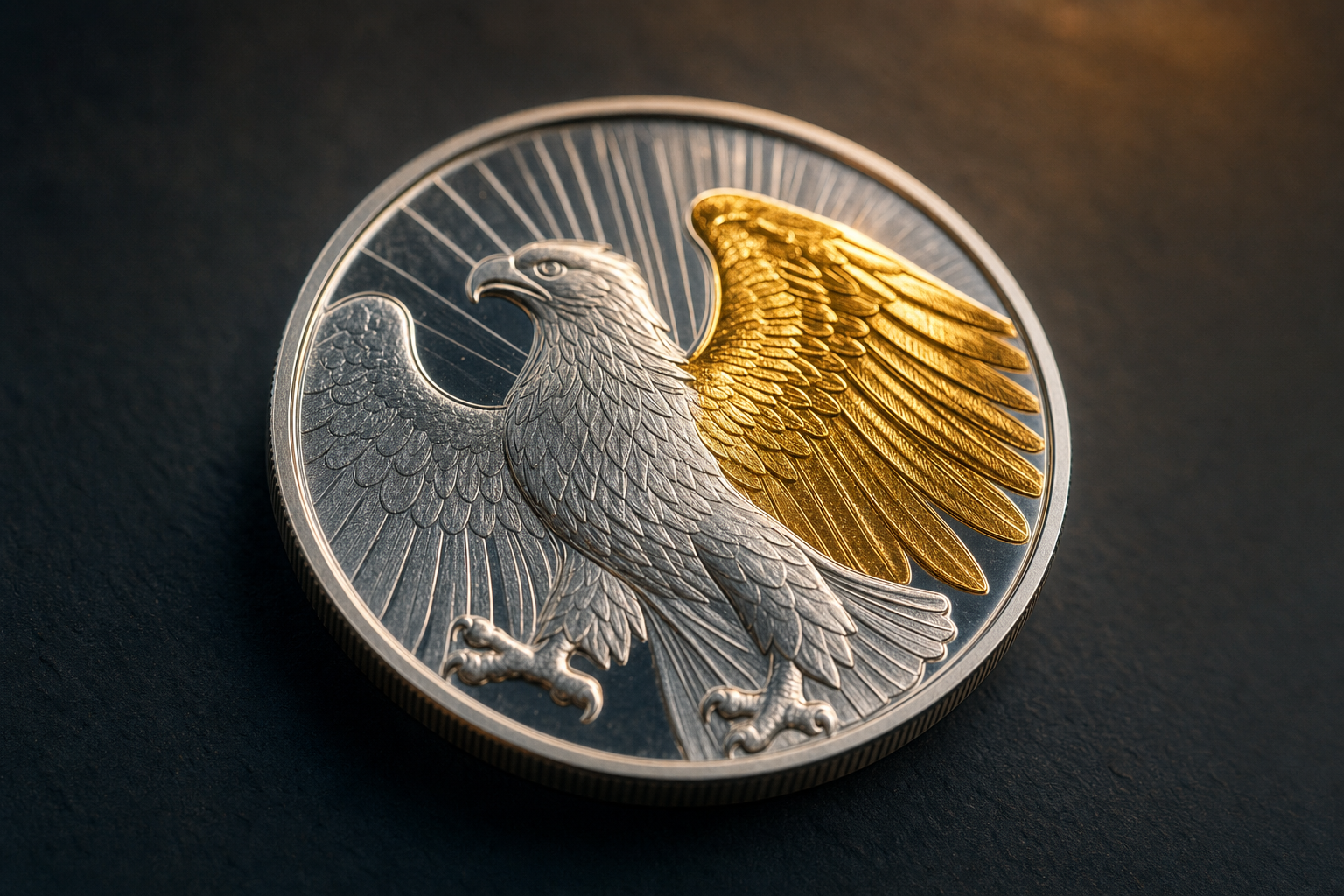
1 Ounce Silver Mark (Mintage: 2,500 | partially gilded | Proof)
€199.00€209.00
incl. VAT and excl. shipping
Available in 2–3 business days
 +49 7930-2699

 More than 310,000
 Over 30 years
 Secure shipping
 Google: 4.9/5


The Deutsche Mark is more than a former currency: it stands for the German economic miracle, value stability and a piece of German identity that many people still associate with trust and nostalgia today. The category The Good Old Days brings together high-quality newly minted silver pieces and partially gilded collector's items that take up this world of designs and reinterpret the familiar symbols of past decades in pure precious metal. This guide explains the origin and meaning of the designs, the available denominations and minting qualities, special tax aspects, questions of storage, and the difference between a historical original and a modern re-strike.
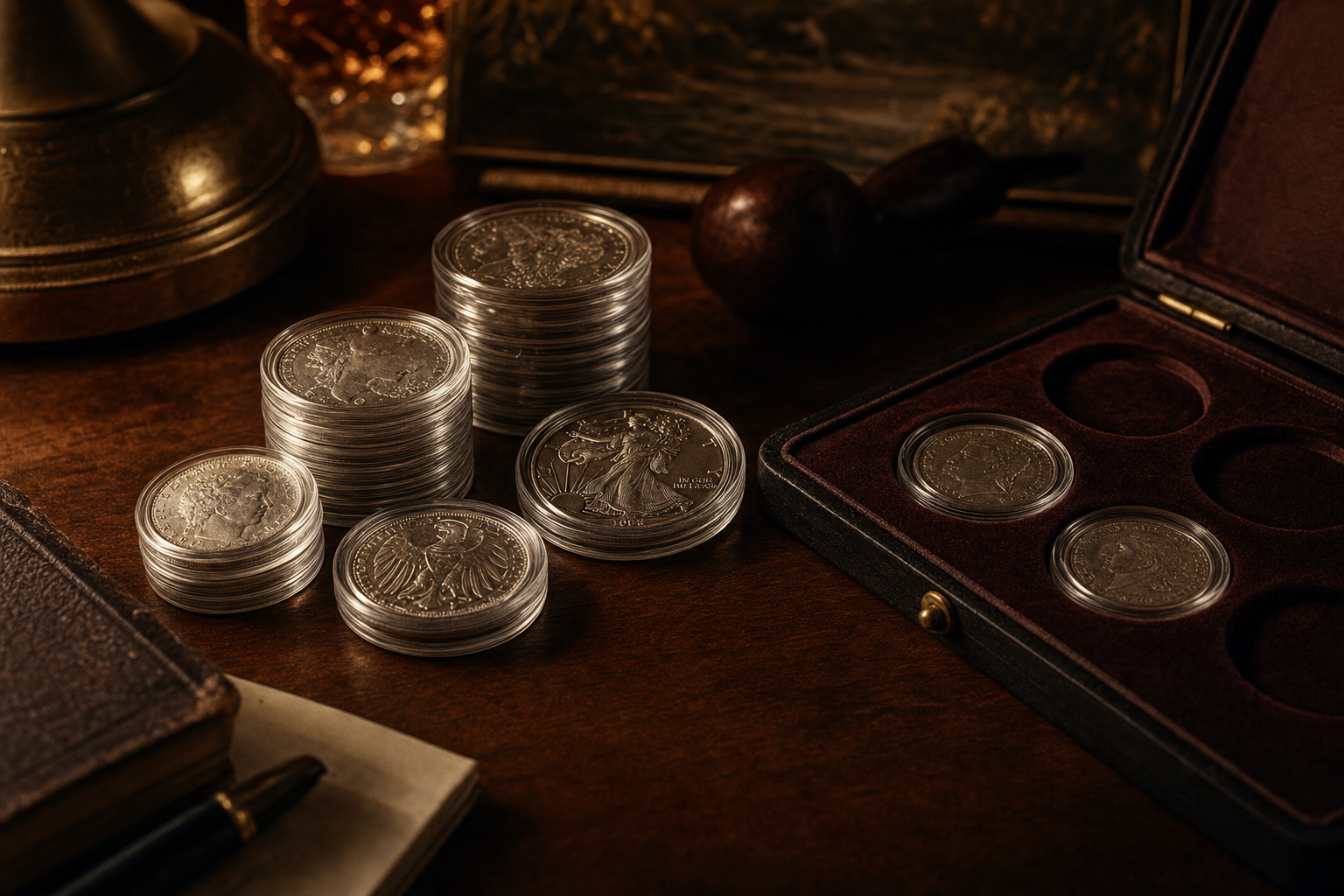
The phrase the good old days evokes memories of the decades of the Deutsche Mark, which was the official means of payment in Germany from 1948 until the introduction of the euro in 2002. For generations of savers, the D-Mark was synonymous with reliability. This is precisely the feeling that the pieces in this category draw on: they quote the classic design language of old circulation and commemorative coins, such as the characteristic silver eagle, historical face-value inscriptions or the nostalgic lettering, and transfer them to modern investment medals and silver talers made of 999 fine silver.
Unlike the means of payment once in circulation, these are not legal tender but private re-strikes and medals with a collector's character. Their appeal lies in the combination of emotional design, fine craftsmanship and the real material value of the silver they contain. Anyone generally interested in silver as a tangible asset will find further classic investment coins in the comprehensive range of silver coins, while thematically related motifs can be found in the history and commemorative coins sections.
The Deutsche Mark was introduced in the western occupation zones with the currency reform of 20 June 1948 and laid the foundation for the economic resurgence of the Federal Republic. For decades it was regarded internationally as one of the most stable currencies and shaped the self-image of several generations.
Denominations in circulation ranged from the Pfennig to the 5-Mark coin. Particularly sought after by collectors are the silver 5-DM coins as well as the 10-DM commemorative coins, which were struck in silver between 1987 and 1997 and honoured personalities, anniversaries and historical events. These pieces contain a genuine silver content and are valued today both according to fineness and condition.
The pieces in this category are not historical originals, but modern interpretations that take up the familiar visual language. They combine the nostalgic design of the old Mark with the advantages of contemporary investment silver production, in particular a clearly defined fineness of 999/1,000 silver. Anyone looking for original historical pieces from the imperial era is more likely to find them among the coins of the German Empire.
The visual language of this series draws on familiar national symbols. At its centre is often the eagle as the traditional heraldic animal, complemented by historical face-value inscriptions such as Mark or Deutsche Mark and classic ornamentation. These elements create immediate recognition value and turn the pieces into emotional collector's objects.
Many of these pieces are created as exclusive Kettner mintings and exclusive products. Anyone interested in further enhanced special editions from German manufactories will find suitable series under German Minting Art as well as in the Kettner exclusive products section. Motifs related in theme with a national connection are also gathered in the German Eagle series.
The pieces in this category follow the international standard of the troy ounce system. Mintings of a full ounce are the most common, along with smaller formats that make it easier to get started.
The silver pieces are generally made of 999 fine silver, some with a partial gilding of fine gold for visual enhancement. The real material value is based on the fine weight and the current silver price. Anyone who puts the material aspect in the foreground should always keep the fineness in view as the central metric. Classic investment products without a collector's premium are additionally offered by the silver bars as well as the range of silver bullion coins.
A distinction is made between two quality levels of condition. Brilliant Uncirculated (BU) describes pieces in normal circulation or production quality. The Proof finish, on the other hand, is the highest minting quality, with mirror-like fields and frosted relief areas created by specially polished dies. Proof pieces are usually produced in a limited mintage and are correspondingly sought after.
A key feature of this category is the strictly limited mintage. While classic bullion coins are issued in mintages of millions, the pieces shown here often number only a few hundred to a few thousand. Small mintages of 99, 100 or 250 pieces create a scarcity that underlines the collector's character.
The smaller the mintage, the more the collector's aspect comes to the fore alongside the pure material value: rarity is the currency of the collector.
Several factors combine to determine the value of a collector's piece: the size of the mintage, the condition, the quality of the minting, and the completeness of accessories such as the case, capsule and certificate of authenticity. Anyone who places greater weight on the investment aspect will find further approaches in the silver investor packages and in the collector's coins section. All information provided is for informational purposes only and does not constitute investment advice or a promise of value.
Unlike investment gold, which is exempt from VAT under §25c UStG, silver products in Germany are generally subject to VAT. For many silver coins and medals, the margin scheme taxation applies, under which tax is levied only on the trading margin, which can lower the final price compared with standard taxation.
Tax Notice
Silver medals and coins may be subject to standard VAT or to margin scheme taxation. For private sales, the one-year speculation period also applies: profits from a sale after a holding period of more than twelve months are generally tax-free for private individuals. This is general information and does not replace individual tax advice.
Anyone who values VAT-free tangible assets usually turns their attention to gold coins or gold bars, which are treated differently for tax purposes as investment gold. For the long-term tangible asset strategy, the topics of inflation hedging and retirement provision are also relevant.
Silver is sensitive to environmental influences and can tarnish if stored unfavourably. Partially gilded pieces and those produced in Proof quality are especially worth protecting, as even fingerprints or moisture can affect the sensitive surfaces.
Suitable coin capsules, coin cases and cases from the accessories range are ideal for safe storage. Kettner Edelmetalle checks all products as part of an ISO-compliant authenticity verification and ships them 100% insured. The authenticity check includes, among other things, checking weight, diameter and fineness as well as comparison with the documented mintage data.
This category appeals to several groups of interest. Collectors appreciate the small mintages, the high-quality Proof minting and the emotional world of designs. Those with a nostalgic streak associate the designs with personal memories of the D-Mark era. And anyone who generally regards silver as a tangible asset receives pieces with real material value in a compact form.
As a gift for anniversaries, milestone birthdays or special occasions, these mintings have a particular appeal, as they combine memory with lasting value. The gift ideas section offers suitable suggestions for this. Anyone planning to build a broader precious metals holding can combine these themed pieces with classic investment staples such as the Maple Leaf or the Vienna Philharmonic.
No. These are modern re-strikes and medals made of fine silver that take up the familiar world of designs of the Deutsche Mark. They are not legal tender, but collector's and tangible-asset items with a real silver content.
The silver mintings are generally made of 999 fine silver. Partially gilded versions additionally carry a thin fine-gold finish on individual parts of the design, which is purely visual and does not significantly change the material value of the silver.
Proof is the highest minting quality. Specially polished dies create mirror-like fields and matte relief areas with high contrast. Proof pieces are usually produced in small, limited mintages and are particularly sensitive to touch.
Silver products in Germany are generally subject to VAT, often in the form of margin scheme taxation. In the case of a private sale after a holding period of more than twelve months, profits are generally tax-free for private individuals. This information does not replace individual tax advice.
The small mintages, often of only 99 to a few thousand pieces, underline the collector's character. Scarcity increases the appeal for collectors, as limited mintings are harder to purchase afterwards. The material value, independent of this, remains determined by the silver content.
Ideally, pieces should be stored in their original capsule or case, in a dry, dark place and without touching the surfaces with bare hands. Suitable coin capsules and coin cases protect against scratches and tarnishing and preserve the condition over a long period.
Stay informed with product launches, financial news and exclusive offers. Sign up for our free newsletter today.
By entering your email address and clicking the “Submit” button, you give the following consent: “I agree to be informed by email about new products, financial news and exclusive offers, and therefore consent to the processing of my email address for the purpose of sending the newsletter. I can revoke this consent at any time without giving reasons, with effect for the future. The lawfulness of processing carried out prior to revocation remains unaffected.”