





German Empire Silver Denominations – ½, 1 & 3 Mark Original plus Gilded Commemorative Mark











 Special offer: Product is currently on sale
- Secure shipping: 100% insured & anonymous delivery
- Kettner Bullion: Already over 280,000 satisfied customers
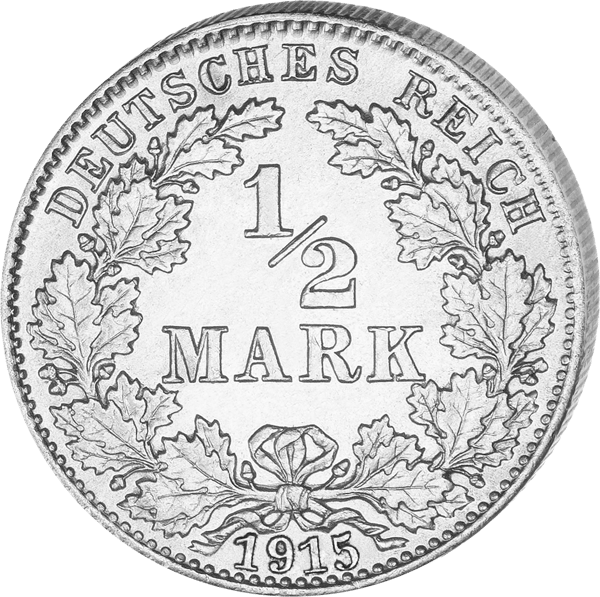 1 ×Germany Empire 1/2 Mark Silver Coin
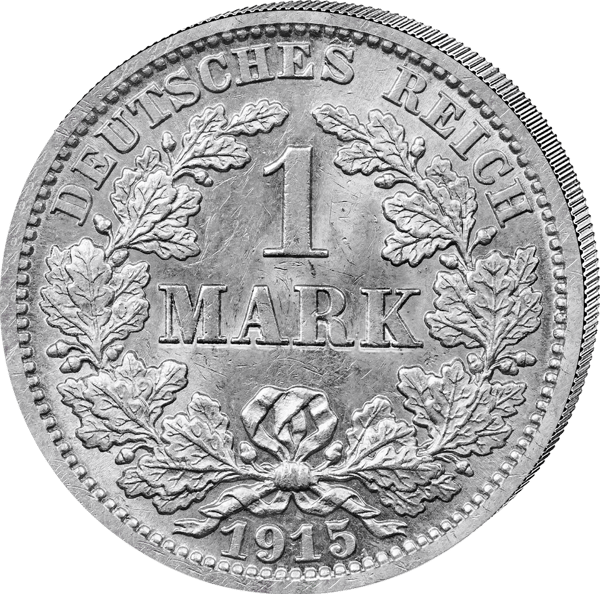 1 ×1 Mark Silver Coin Germany German Empire
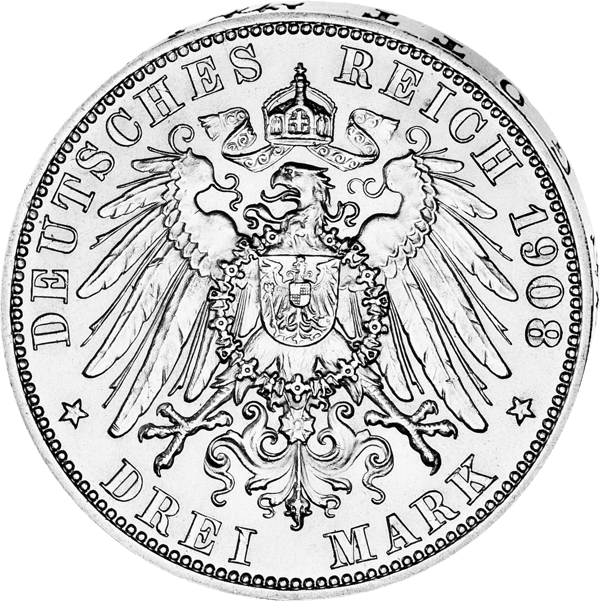 1 ×3 Mark Silver Coin Prussia Wilhelm II Germany Imperial Era (various years of issue)
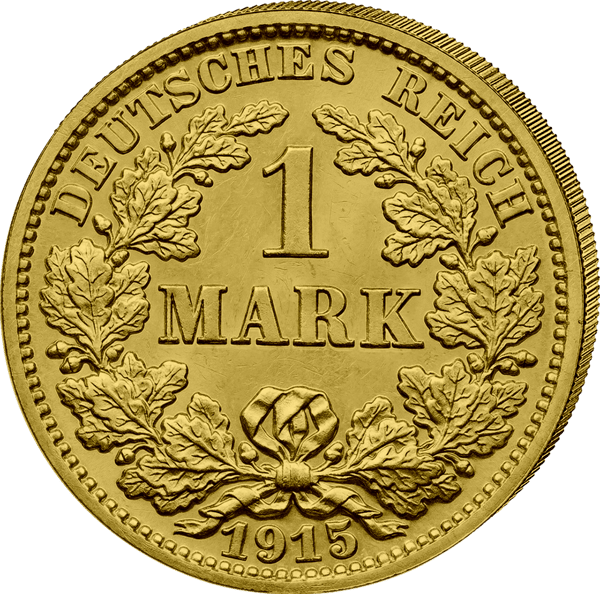 1 ×1 Mark Silver Coin Germany German Empire (Mintage: 500 | gold-plated)
In this bundle you save 25,00 €
15,00 € product discounts10,00 € promotional discount
 Price alert
  Share
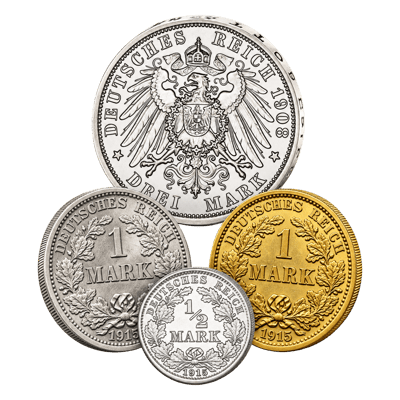
ShareFour coins, one Empire: ½, 1 and 3 Mark plus a gold-plated commemorative Mark
- Design with symbolic power: The crowned imperial eagle with breast shield meets the finely chiselled oak leaf wreath along with the face value. The 3 Mark adds the portrait of Kaiser Wilhelm II and the edge inscription "GOTT MIT UNS" ("God with us").
- Material and fineness: All four pieces are made of silver in the legally defined alloy of 900/1,000. The commemorative Mark additionally bears a gold plating applied afterwards.
- Manufacturer: the state mints of the German Empire. Their mint mark, such as A for Berlin or J for Hamburg, can be found on the eagle side.
- Limitation: The gold-plated 1 Mark is limited to just 500 pieces.
- Country of origin: Germany
Some sets tell a story. This one tells an entire era. In four coins, it combines the silver denominations with which people in the German Empire paid for their everyday life: the small half Mark, the classic Mark, and the stately three-Mark piece from the Kingdom of Prussia. The crowning finale is a gold-plated 1 Mark, minted in a run of just 500 pieces. Anyone collecting historic silver coins or wishing to get started in the numismatics of the imperial era will find here a compact and coherent cross-section.
The Mark: law, silver and imperial eagle
With the Coinage Act of 9 July 1873, the young Empire received a uniform currency. For the Mark and the smaller denominations, it was precisely defined what had to appear on them: face value, year, and the inscription "DEUTSCHES REICH" ("German Empire") on one side, the imperial eagle and the mint mark on the other. That is why these circulation coins look so similar, regardless of whether they were minted in Berlin, Munich, Muldenhütten, Stuttgart, Karlsruhe or Hamburg. The law stipulated that 100 one-Mark pieces were to be produced from one pound of fine silver. This means each Mark contains exactly 5 grams of pure silver. To this day, nothing has changed about this substance.
The coins in the set at a glance
- ½ Mark (Jaeger 16): minted 1905 to 1919, 20 mm diameter, approx. 2.78 g gross weight, 2.5 g fine silver. The value side shows "½ MARK" within an oak leaf wreath, the reverse shows the eagle within a wreath.
- 1 Mark: 24 mm, 5.56 g gross weight, 5 g fine silver. The value side shows a large "1" within an oak wreath, with "DEUTSCHES REICH" above it.
- 3 Mark Prussia, Wilhelm II (Jaeger 103): minted 1908 to 1912 in Berlin (mint mark A), 33 mm, 16.667 g gross weight, 15 g fine silver, edge inscription "GOTT MIT UNS".
- 1 Mark gold-plated: an original from the German Empire with 5 g fine silver and a 24 mm diameter. The gold plating was applied afterwards, with a mintage of 500 pieces.
The half Mark: small, but full-value
It is the smallest of the group. And yet it has plenty to offer. The ½ Mark replaced the previous fifty-pfennig piece from 1905 and remained in production until 1919. This makes it one of the last silver small coins of the Empire. Its delicate oak leaves on just 20 millimetres show how precisely the engravers of those years worked.
Three Mark from Prussia: the successor to the Taler
The three-Mark piece is the youngest denomination in the set and perhaps the most exciting. It was only a law of 1908 that created this coin as a replacement for the Vereinstaler, which had been withdrawn from circulation since 1907. Prussia had its issue minted exclusively in Berlin. The obverse shows the portrait of Wilhelm II, the last German Kaiser and King of Prussia, with the inscription "WILHELM II DEUTSCHER KAISER KÖNIG V. PREUSSEN" ("Wilhelm II German Emperor King of Prussia"). On the reverse, the imperial eagle spreads its wings, framed by "DEUTSCHES REICH", the year, and "DREI MARK" ("THREE MARK"). The specimen in the set is from one of the years between 1908 and 1912.
Gold meets silver: the gold-plated commemorative Mark
What is the visual highlight? Clearly the gold-plated Mark. Beneath the warm gold layer lies a genuine Mark from the German Empire. Oak leaves, acorns and ribbon now stand out especially vividly in the light. Alongside its silver twin in the same set, an appealing contrast emerges: the same design with two faces. With only 500 pieces, this refinement remains a piece for just a few collectors.
Set, single coin, or gold coins? An honest comparison
Of course, the denominations can also be purchased individually. The set, however, saves the search and combines the three silver denominations ½, 1 and 3 Mark with a limited special piece. Modern bullion coins with 999 fineness contain more silver per piece. In return, an Imperial-era coin offers over a hundred years of history, along with small, clearly defined denominations and a collector's appeal that no new minting can replicate. Anyone who prefers gold coins from the same era will find, for example, the 20-Mark piece with 7.17 g fine gold. It is significantly denser in value, but also plays in a completely different price category.
- Pros: original historical witnesses, four different coin designs, finely graduated silver amounts, and a limited gold-plated Mark
- To consider: year of issue and mint mark may differ from the image shown. With the gold-plated Mark, the collector's value is the main focus.
Silver with history: tangible value preservation
The Mark as a currency has long been history, as the silver Mark piece was already withdrawn from circulation in 1920. The silver within it, however, remains. This is exactly where its appeal lies: paper currencies have come and gone, precious metal has remained. Gold is considered humanity's oldest currency and has outlasted all others. Silver stood by its side as a coinage metal for thousands of years. Anyone who values tangible assets as a building block for inflation hedging and crisis protection will find in this set a combination of real substance and the joy of collecting. It also makes an excellent gift for anyone interested in history.
Four coins, one Empire: from the smallest silver denomination to the limited gold-plated Mark.
Note: The images are for illustrative purposes only. Years of issue and mint marks of the delivered pieces may vary.
Product depiction may differ from the final product.
