Only 1 left to order
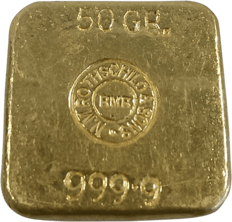
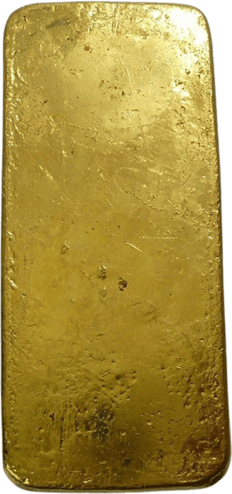
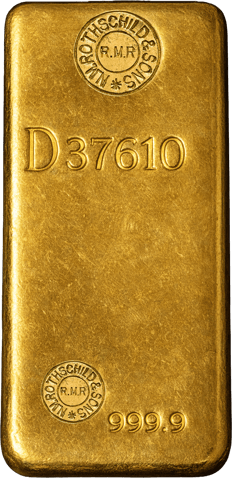
1 oz Gold Rothschild Hercules 1954 (n.d.) - 500 Dirhams
€5,990.00€7,490.00
VAT-free and excl. shipping
Available in 2–3 business days
 +49 7930-2699

 More than 300,000
 Over 30 years
 Secure shipping
 Google: 4.9/5


Until 1967, Rothschild Bank had its own gold bars cast and minted at the Royal Mint Refinery, and thereafter at "Engelhard Industries Limited". The Rothschild bars were produced in the following sizes: 1oz, 50g, 5 Tolar, 100g, 10 Tolar and 1kg.


Authenticity
Behind every bar and every coin stands a house and its stamp. Before a piece goes out to you, we check it ourselves.
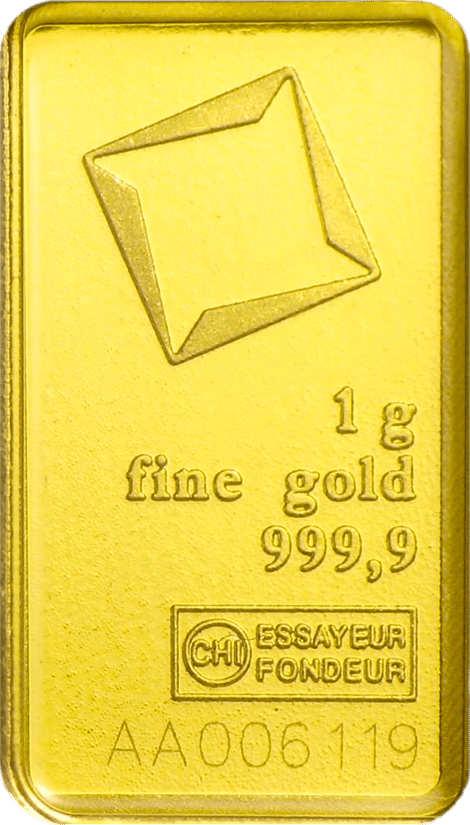
Every bar shows its maker, weight and fineness. Most bars also carry a serial number and come with a certificate from their maker.
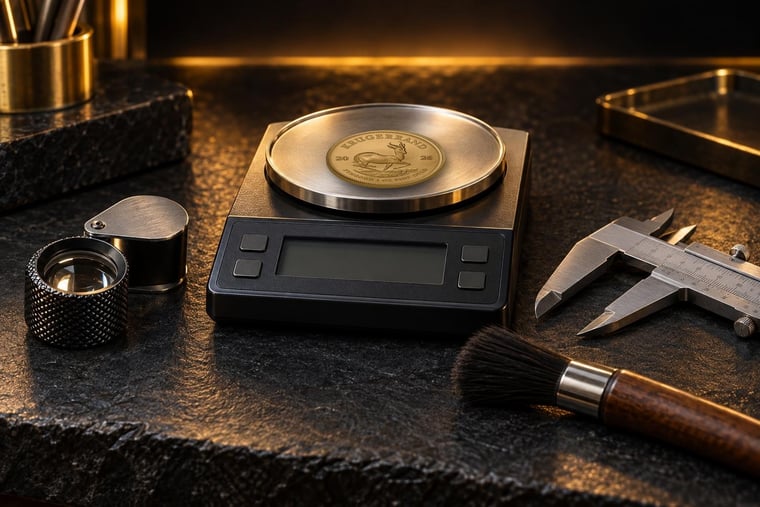
In our CCTV-monitored high-security area, two specialists check every order following the four-eyes principle, including its weight and, by X-ray, its authenticity.
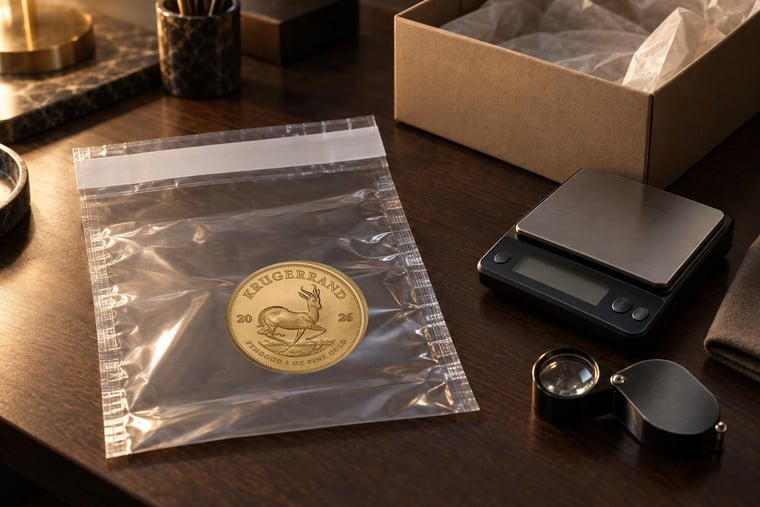
We then seal your order in a security bag that can only be opened once. You will be the first to open it.
Our testing methods
The house
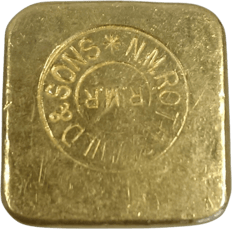
Rothschild bars bear the name of the London banking house N M Rothschild & Sons. The Rothschild family took over the Royal Mint Refinery in London in 1852 and ran it until 1967. Until 2004, the London gold price was fixed at their banking house.
Sources: manufacturer’s details, as of 14 November 2026
Gold bars from the Rothschild Bank are among the most sought-after historical bars in the precious metals market. They combine physical investment gold with the history of one of the world's most famous banking dynasties and are today traded predominantly as collector's items. This guide sheds light on the origin of the bars, their denominations, mints, authenticity features, tax treatment, and the question of why Rothschild bars regularly trade at significant premiums above their pure material value.
The roots of the Rothschild Bank go back to 1811, when Nathan Mayer Rothschild founded the London banking house. In 1836, the institution was renamed N.M. Rothschild & Sons. From the middle of the 19th century onwards, the house was already among the most significant precious metals players in the environment of the Bank of England and played a role in gold market price discovery for decades.
The banking house played a key role in the daily London gold price fixing, which was held on Rothschild's premises until 2004. With its withdrawal from this business, the era in which the house directly shaped the day-to-day trading of the international gold market also came to an end. This very withdrawal contributed to making the already rare Rothschild bars even more coveted among investors and bar collectors. Anyone generally interested in the physical metal will find a broad overview of formats and manufacturers in the extensive range of gold bars.
Unlike modern investment bars, which are produced in large series according to uniform standards, Rothschild bars emerged in a historical context. Their connection to an institution that helped shape the gold trade over generations makes them, for collectors, witnesses to a special era of financial history.
The Rothschild Bank itself operated the Royal Mint Refinery in London until 1967, and the bars originated from this refinery. After that, Engelhard Industries took over production. This origin from renowned refineries underscores the technical quality of the bars, even though today they are primarily sought after for historical reasons.
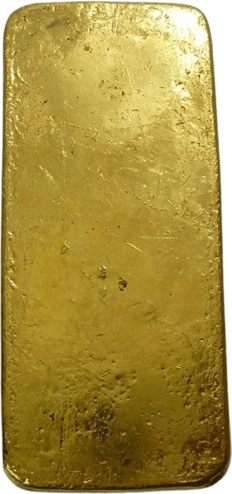
Both cast and minted processes were used in production. Cast bars show the typical, slightly irregular surface of the casting process, while minted examples feature clearer edges and sharper die images. Anyone interested in the differences between historical and modern bar formats will find examples of today's production standards at the manufacturers Heraeus and Argor Heraeus.
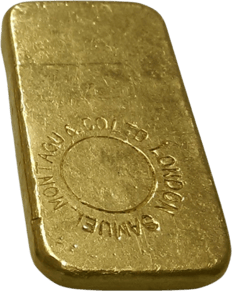
A characteristic feature of many Rothschild bars are their hallmarks and countermarks. Some examples carry additional markings such as the Mocatta stamp, which refers to the traditional London precious metals firm. The position of the die mark varies from bar to bar, for example at the top, bottom, or on the edge, giving each piece an individual character.
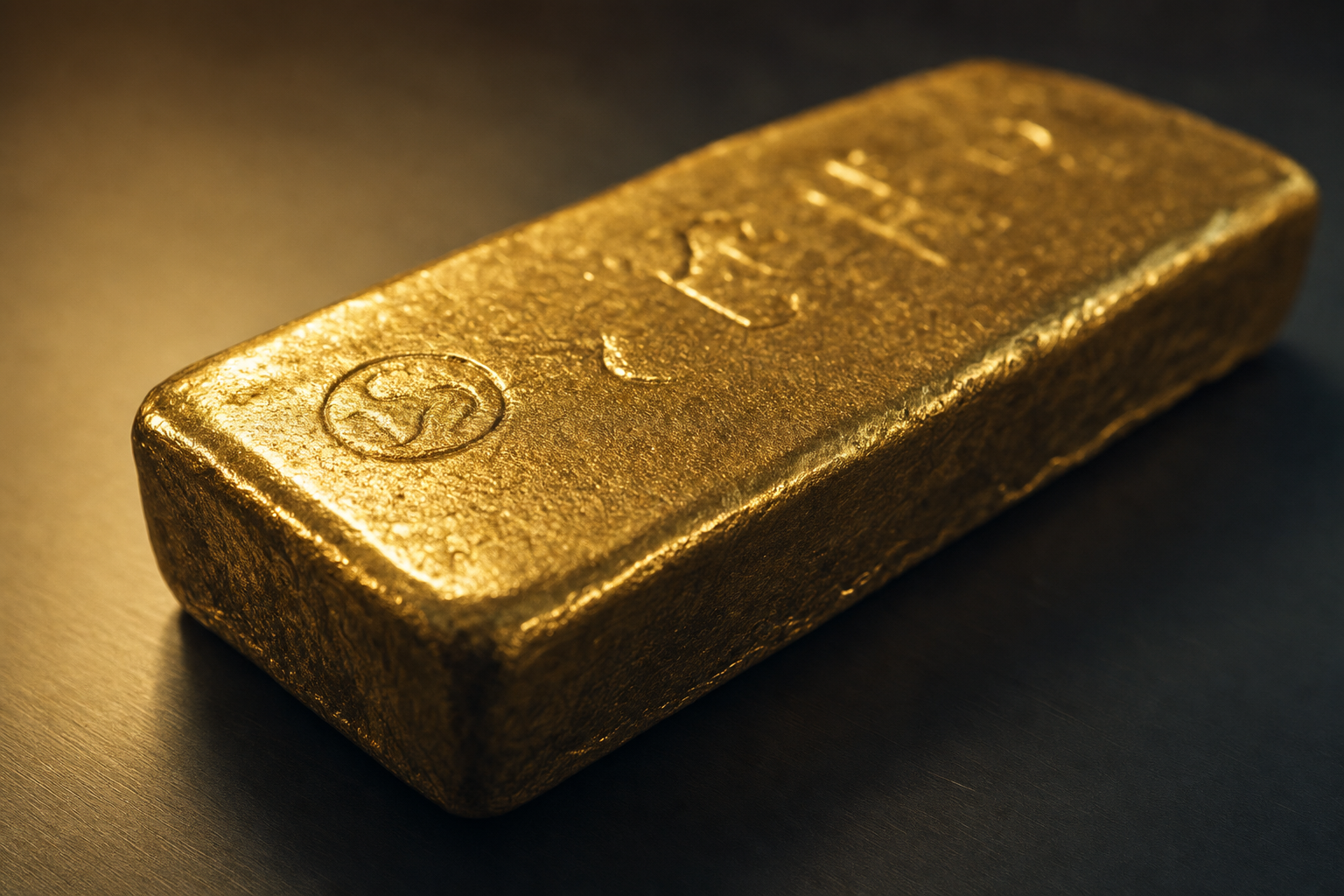
Rothschild gold bars were produced in several weight classes. Documented formats include, among others, 50 g, 100 g, 500 g and 1 kg, as well as historical special weights in tola, a unit of weight commonly used in South Asia. The smaller formats are comparatively easier to trade, while the large bars are particularly sought after by collectors due to their rarity.
The fineness of the bars varied over the years between 999.0, 999.5 and 999.9. Interestingly, bars with lower fineness often achieve higher collector's premiums than high-fineness examples, as they are attributed to an earlier production period.
A key reason for the particular appeal of Rothschild bars is their largely unknown mintage. The exact quantities produced were never disclosed and are regarded as an internal company matter. This uncertainty about actual availability further fuels collector interest.
In addition, there are numerous visual variants: some bars were struck without a stated fine weight, others differ in the position of the die mark. These deviations from today's strictly standardised norms make historical bars more appealing to collectors than uniform mass-produced items. The fact that part of the production took place during periods of major historical upheaval also adds to the charm of these objects.
A Rothschild bar is valued less for its material weight than as a tangible piece of financial history.
For most investment bars, the price closely tracks the current gold price. With Rothschild bars, a significant collector's premium is added. Typical premiums are around 15 to 35 percent above the pure material value, although certain particularly rare units can reach a multiple of the gold value.
Anyone who views gold primarily as a store of value will often find a more cost-effective solution in common investment formats. Rothschild bars, on the other hand, are aimed at collectors who value the historical and numismatic character alongside the metal value. Those who prioritise the investment aspect can find more price-efficient alternatives in the gold section and among the gold coins.
Authenticity verification is of central importance, especially for rare and high-value collector's bars. Historical bars can be assessed using several criteria: weight, dimensions, fineness markings, die image and the characteristic surface of the respective manufacturing process.
Kettner Edelmetalle relies on an ISO-compliant authenticity verification, so that historical bars are properly assessed. For subsequent storage, suitable accessories such as coin capsules or a secure coin case are recommended to protect collector's items from scratches and environmental influences.
In Germany, gold bars are generally considered investment gold and are exempt from VAT upon purchase, provided they meet the statutory criteria regarding fineness. This clearly distinguishes them from silver, which is subject to standard taxation or the margin scheme.
Tax Note
Investment gold is exempt from VAT in Germany under the relevant VAT regulations. A sale of physical gold bars by private individuals can be tax-free after the one-year speculation period has elapsed. This does not constitute tax advice; a tax advisor can clarify individual questions.
Anyone wishing to diversify their precious metals holdings will find, alongside bars, complementary asset classes in the silver bars and platinum sections. For long-term wealth building, it is also worth looking into the topics of retirement provision and inflation hedge.
Historical gold bars are both valuable assets and delicate collector's items. A bank safe deposit box, a high-quality home safe, or professional storage solutions are all suitable for storage. Protection against mechanical damage is crucial, as scratches or pressure marks can reduce the collector's value of a rare bar.
Protective sleeves and capsules are suitable for protecting smaller formats, while larger bars are ideally stored in padded cases. Suitable accessories cover common needs, from a simple case to a lockable coin case. For shipping, Kettner Edelmetalle relies on 100% insured transport.
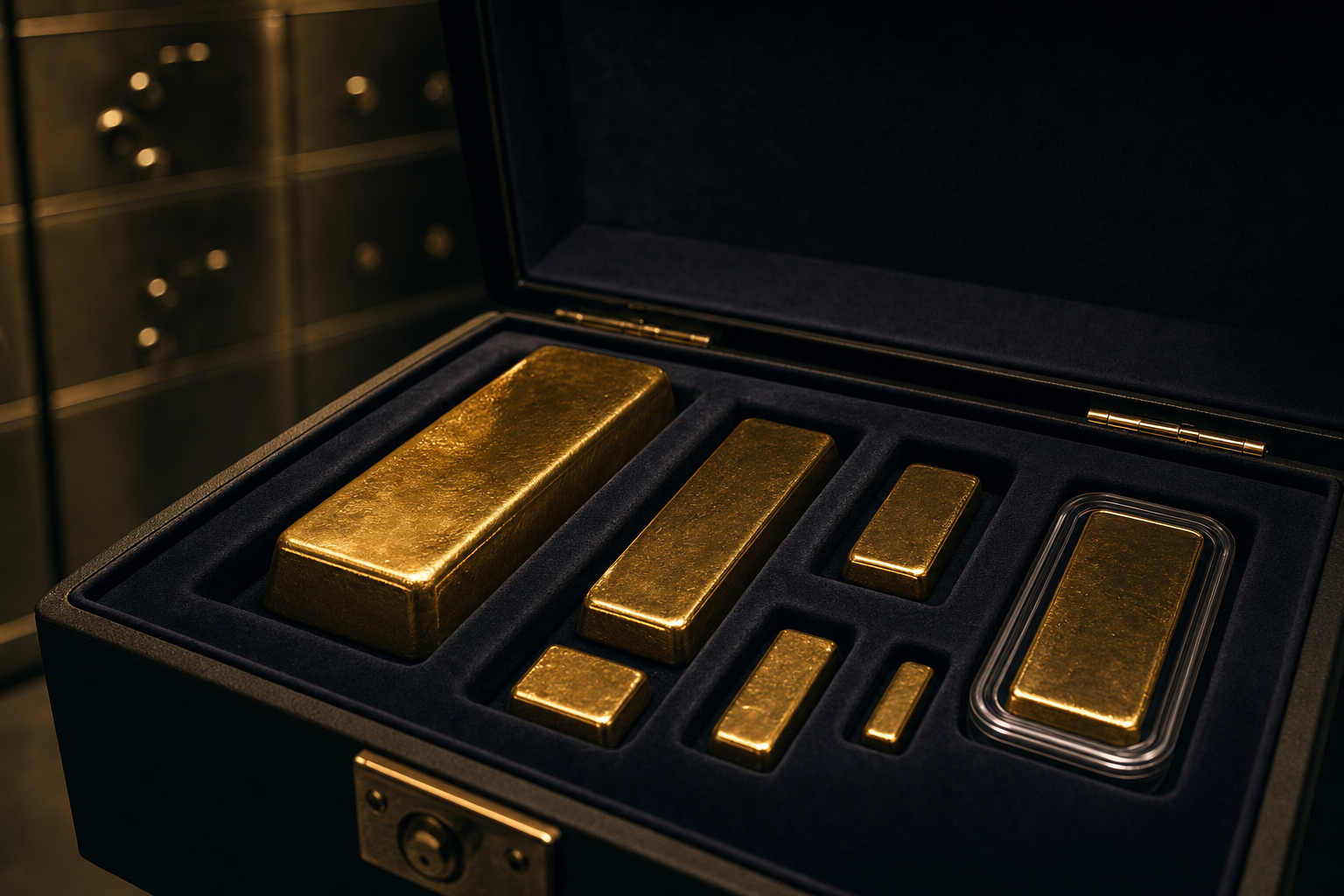
In the context of historical and modern gold bars, it is worth comparing them with other renowned manufacturers. While Rothschild bars score mainly through their history and rarity, established refineries stand for consistent production quality and low premiums in the investment segment.
A complete overview of all the brands carried is offered by the manufacturers category, where historical and contemporary producers can be compared side by side.
Rothschild bars are predominantly traded as collector's items. In addition to the material value, a collector's premium of typically 15 to 35 percent is added, and more for particularly rare units. The reasons are the historical significance, the unknown mintage and the diverse minting variants.
Until 1967, the bars were produced at the Royal Mint Refinery in London, after which Engelhard Industries took over production. The Rothschild Bank had itself operated this refinery until then.
Documented formats include, among others, 50 g, 100 g, 500 g and 1 kg, as well as historical tola weights. The fineness varied depending on the production period, between 999.0 and 999.9.
A countermark is an additional marking on the bar. The Mocatta stamp refers to a London precious metals house with a long tradition. Such features, along with the varying position of the die mark, increase individuality and thus often the attractiveness for collectors.
As investment gold, the bars are generally exempt from VAT upon purchase, provided the statutory criteria are met. For specific tax questions, consulting a tax advisor is recommended.
Weight, dimensions, fineness markings, die image and surface structure are checked, supplemented by non-destructive physical measurement methods. Kettner Edelmetalle uses an ISO-compliant authenticity verification for this purpose.
 Rothschild Bank

Personal advice
Our client advisers know the range of Rothschild and help you choose, by phone or at an appointment that suits you.
Monday to Friday, 8 am to 8 pm
If you decide to sell later, we will buy your bars and coins from you. Sell to us
Stay informed with product launches, financial news and exclusive offers. Sign up for our free newsletter today.
By entering your email address and clicking the "Submit" button, you give the following consent: "I agree to be informed by email about new products, financial news and exclusive offers, and therefore consent to the processing of my email address for the purpose of sending the newsletter. I can revoke this consent at any time without giving reasons, with effect for the future. The lawfulness of processing carried out prior to revocation remains unaffected."