


Sold out

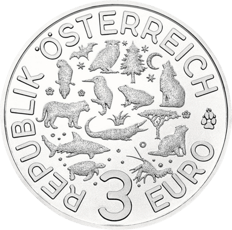
3 Euro Animal Thaler Series Austria Parrot 3 EUR (6th Design | CuNi)
€29.50
incl. VAT and excl. shipping
currently not available
 +49 7930-2699

 More than 310,000
 Over 30 years
 Secure shipping
 Google: 4.9/5
Hardly any modern coin creates as much excitement at a collector's table as the 3-euro coin: a glowing dinosaur that shines in the dark, a vividly coloured parrot, a legendary dragon. This coin exists exclusively in Austria across the whole of Europe, minted by the Austrian Mint (Münze Österreich), and it is dedicated with great passion to collectors of every age. Instead of precious metal, it is made from a sturdy copper-nickel alloy and captivates with colourful designs, raised reliefs and technical tricks such as glow-in-the-dark image elements. The following sections shed light on the origin and series of the 3-euro commemorative coins, their minting quality, their appeal to collectors, and tax and practical questions regarding storage and purchase.
The 3-euro coin was introduced by the Austrian Mint (Münze Österreich) as an independent face-value format and exists in this denomination within the eurozone only there. Unlike classic bullion coins made of gold or silver, it does not aim at material value but at collector appeal: each series tells a theme and is continued over several issues. In this way, the 3-euro coin stands within a long tradition of collectable euro commemorative coins, which are issued in many European countries with different face values and designs.
Characteristic is the nine-sided or round base shape, depending on the series, as well as the use of a copper-nickel alloy. The printed face value of three euros is legal tender in Austria, but plays no role for collectors. Anyone interested in further Austrian coins will find a wide range of design-rich issues among the series from Münze Österreich AG.
3-euro coin at a glance
The 3-euro issues are deliberately designed as affordable entry-level items. Since they contain no gold or silver, they differ clearly from silver coins or gold coins, whose value depends primarily on their precious metal content. The appeal lies in the design, the series logic and collector completeness, not in the melt value.
The Austrian Mint has launched several themed series, each spanning twelve or more issues. This is exactly where the appeal lies: you start with a single design, and before you know it, a whole collection has grown. This series logic is at the heart of what collectors value about the 3-euro coin, a clear concept that invites continued collecting over the years and turns every new issue into a small event.
The individual issues are usually supplied in a protective blister pack with a short description card about the design, making them an ideal entry point into collecting. Series like these take up themes that are also popular among modern collector's coins worldwide, from land animals to sea creatures to mythical creatures. Anyone collecting by theme will find numerous connecting points in these thematic worlds beyond the 3-euro series.
A collector's coin does not live from the metal price, but from the story it tells, and from the fact that a series only unfolds its full appeal once it is complete.
The 3-euro coins are predominantly issued in Brilliant Uncirculated (BU) quality (hand-selected), a quality typical for freshly minted circulation and collector's coins. Unlike the mirror-like Proof finish of high-quality bullion coins, Brilliant Uncirculated shows an evenly matte-shiny surface without a mirror field. For the 3-euro series, this is the standard finish.
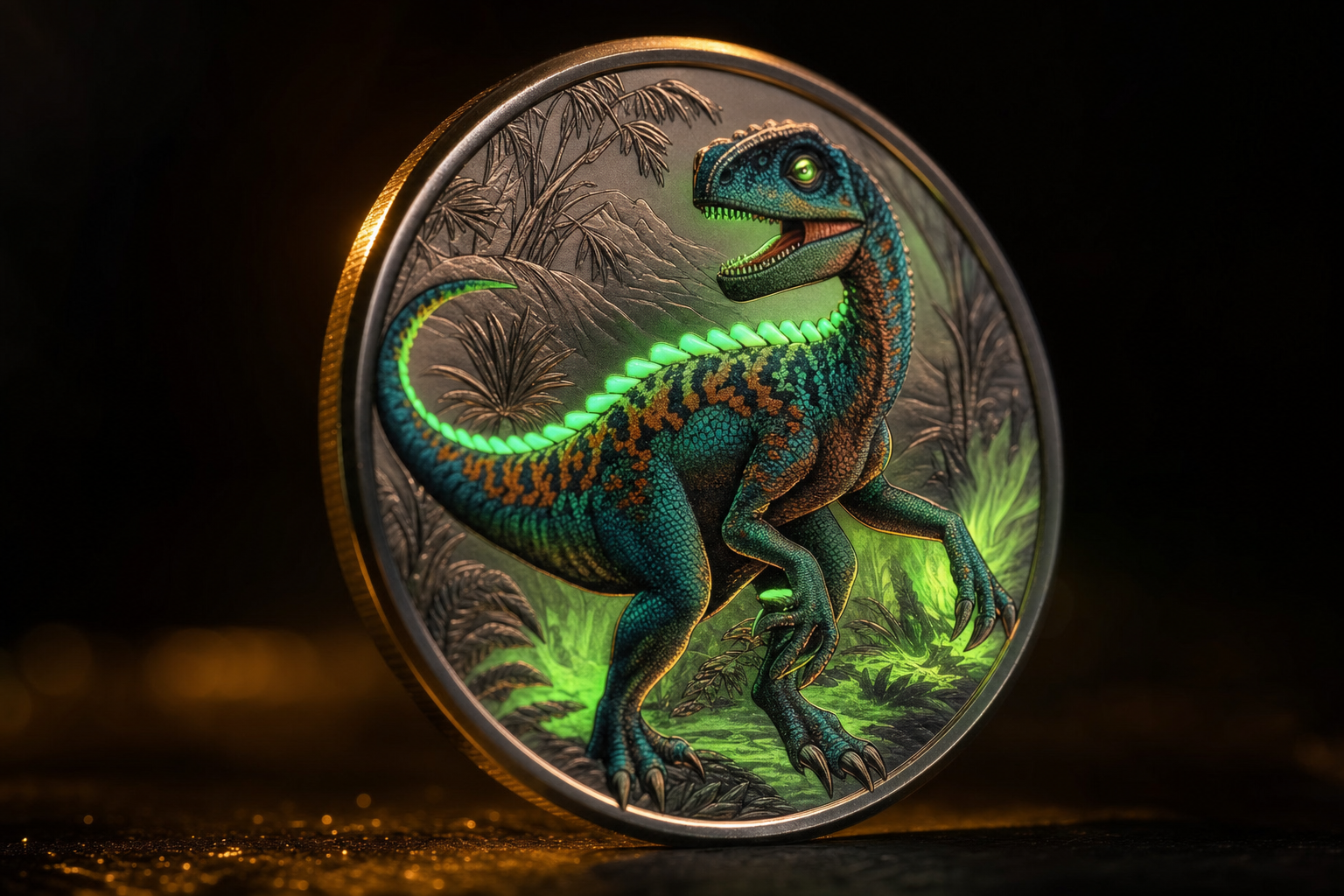
A key design feature of many series is the colour printing combined with a glow-in-the-dark coating. This glow-in-the-dark technique stores light and releases it in the dark as a gentle glow, an effect that characterises the Super Saurier and Leuchtende Meereswelten series. Such technical details increase the appeal to collectors and set the 3-euro coin apart from simpler commemorative issues.
The mintages of the individual issues are limited, which makes older and sold-out designs interesting for collectors. Anyone wanting to complete a series pays attention to condition and completeness. A comparable series logic can also be found in other European commemorative issues such as the 2-euro commemorative coins or the larger 5-euro collector's coins.
Within the euro commemorative coins, the 3-euro coin occupies a clearly defined niche. While 2-euro commemorative coins circulate throughout Europe as circulation coins, the 3-euro coin is a pure collector's item from Austria. Higher face values, by contrast, are often minted from precious metal.
Unusual intermediate face values such as 4 euro or 25 euro also show how diverse the collecting field of euro commemorative coins is. As one of the few copper-nickel issues, the 3-euro coin combines a low entry price with elaborate design.
Since 3-euro coins are made of a copper-nickel alloy and not of investment gold, the VAT exemption for investment gold under § 25c UStG does not apply to them. Collector's coins made of base metals are generally traded with VAT in Germany; for certain collectable items, the reduced tax rate or margin scheme taxation may apply.
Tax note
The VAT treatment of collector's coins depends on the material and classification as a collectable item. Unlike gold bullion coins, which, as investment gold, can be exempt from VAT, VAT is generally to be expected for copper-nickel collector's coins. For a binding classification in individual cases, tax advice should be sought.
Anyone wishing to look further into the VAT-exempt area will find the classic instruments of precious metal investment in the ranges of bullion coins and gold bars.
Proper storage is crucial for preserving collector's value. Copper-nickel is sensitive to fingerprints, moisture and environmental influences; the surface should not be touched with bare hands. Even small discolourations or scratches noticeably reduce the collector's value.
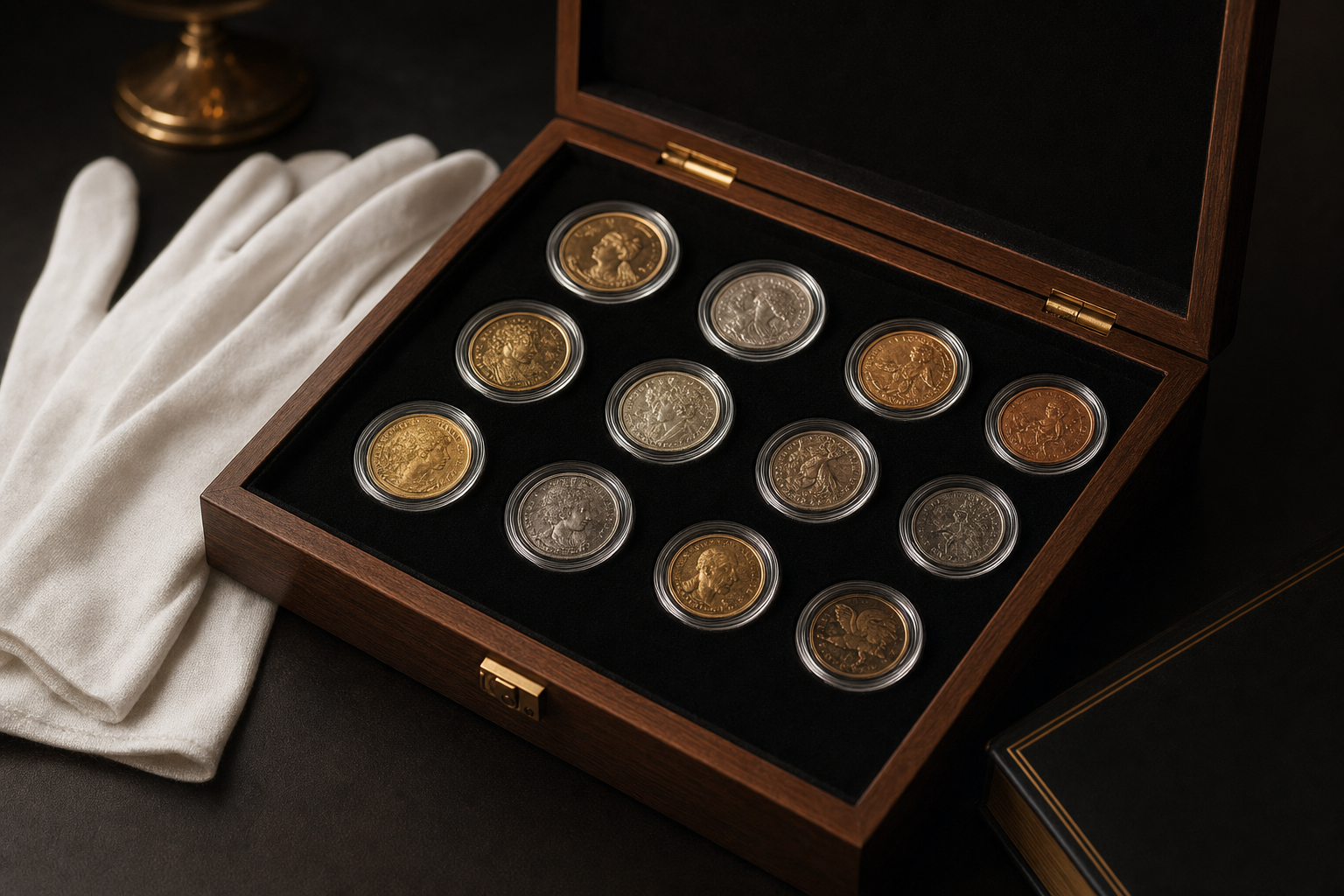
Anyone building a larger collection should also think about secure storage, as the entire accessories range offers suitable solutions from coin tubes to cases.
The 3-euro coin appeals above all to design-oriented collectors and beginners who wish to build a thematically cohesive series on a manageable budget. Thanks to child-friendly themes such as dinosaurs and sea creatures, as well as the glow-in-the-dark effect, many issues are also suitable as gifts to introduce young people to collecting. Suitable ideas for this can also be found under gift ideas.
Anyone primarily focused on preserving value and securing wealth is better advised to choose classic investment gold or investment silver, as these possess an intrinsic value through their precious metal content. As a family business based in Villingen-Schwenningen, Kettner Edelmetalle offers both collector's coins and the complete spectrum of precious metal investment.
The 3-euro commemorative coins from the Austrian Mint are made of a copper-nickel alloy and contain no precious metal. Their value comes from the collector appeal, the design and the series logic, not from a gold or silver content.
Series such as Super Saurier and Leuchtende Meereswelten use a glow-in-the-dark coating. This stores light and releases it in the dark as a gentle glow of the design areas. This effect is a deliberate design feature and makes the series especially popular with younger collectors.
In Austria, the 3-euro coins carry an official face value and are considered legal tender there. In practice, however, they are traded as collector's items, whose collector's value can exceed the printed face value.
Among the best-known series are the Tiertaler with native and exotic animals, the Super Saurier with dinosaur designs, the Leuchtende Meereswelten with sea creatures, and the Fantastische Fabelwesen with mythological creatures. Each series comprises several issues that gradually invite completion.
Coin capsules are recommended, as they protect individual pieces from moisture, dust and touch, along with coin cases for entire series. Since copper-nickel is sensitive to fingerprints, the coins should only be handled by the edge or with gloves to avoid discolouration and loss of value.
3-euro coins are primarily collector's items without precious metal value and are therefore not a classic investment. Their possible increase in value depends on mintage, condition and collector demand. Anyone relying on value preservation through precious metal is better positioned with investment gold, silver coins or gold bars.
A good start is a design that personally appeals to you, such as a favourite animal from the Tiertaler series or a glowing saurian. From there, the respective series can be completed issue by issue. It is advisable to store the coins in capsules right from the start and to pay attention to a consistent condition, so that the collection appears cohesive.
 Commemorative Coins3 Euro
Stay informed with product launches, financial news and exclusive offers. Sign up for our free newsletter today.
By entering your email address and clicking the “Submit” button, you give the following consent: “I agree to be informed by email about new products, financial news and exclusive offers, and therefore consent to the processing of my email address for the purpose of sending the newsletter. I can revoke this consent at any time without giving reasons, with effect for the future. The lawfulness of processing carried out prior to revocation remains unaffected.”