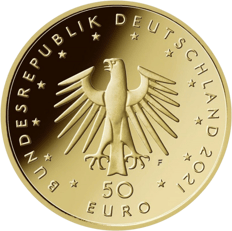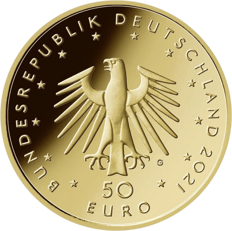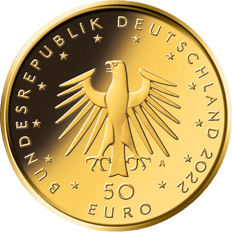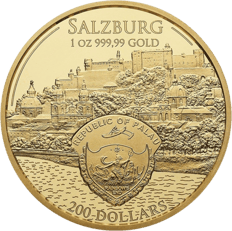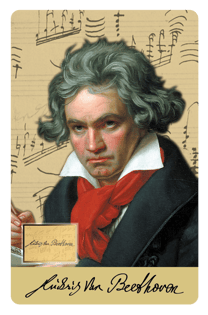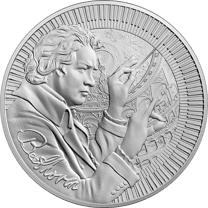


Gold Ludwig van Beethoven Coin (Mintage: 50,000)
€34.90
VAT-free and excl. shipping
Available in 2–3 business days

 More than 300,000
 Over 30 years
 Secure shipping
 Google: 4.9/5
A little orchestra in gold.
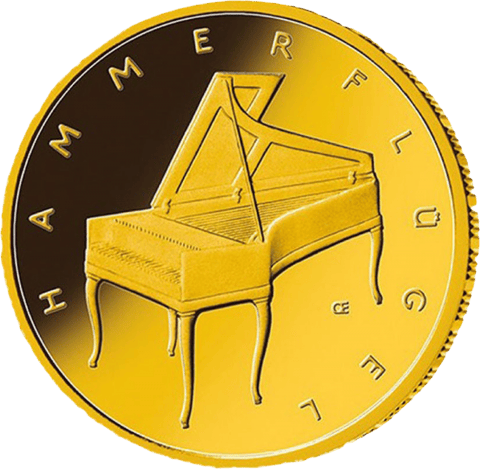
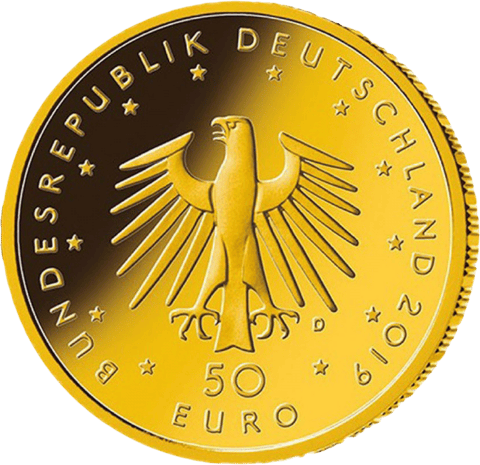
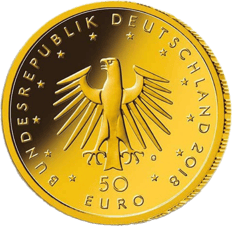
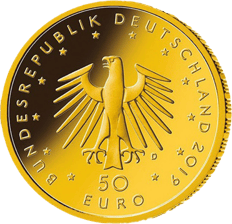
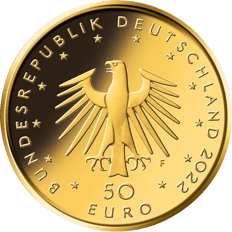
Five German gold coins, five instruments, one a year from 2018 to 2022.


8 May 2018, Musikinstrumenten‑Museum Berlin
That evening the first coin in the series, the double bass, was presented there. State Secretary Bettina Hagedorn called the series a “little orchestra in gold”.
Musical Instruments
50 euro gold coins, 2018 to 2022
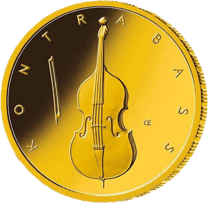
for the string instruments
Picture side: Erich Ott
Maximum mintage 105,000
According to the Prussian Cultural Heritage Foundation, the model was a double bass from the Musikinstrumenten‑Museum in Berlin, built around 1730 by Andreas Jais.
View the coin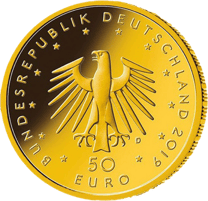
for the keyboard instruments
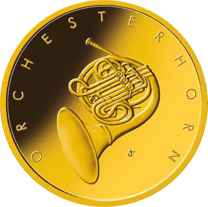
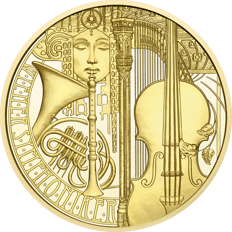
for the wind instruments
Picture side: Jordi Truxa
Maximum mintage 150,000
According to the official description, it is above all the bell that makes the sound visible.
not available
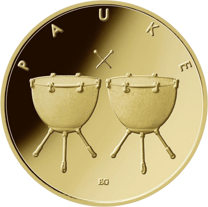
for the percussion instruments
Picture side: Elena Gerber
Maximum mintage 120,000
Two kettledrums, with two crossed mallets floating above them.
View the coin
for the plucked instruments
Picture side: Jordi Truxa
Maximum mintage 120,000
Set at an angle, just as it is held when played. With it, the series came to an end.
View the coinAll five: fine gold 999.9, 7.78 g, 22 mm, brilliant uncirculated, struck in equal numbers at the five German mints.
Mintages and designers: notices in the Bundesgesetzblatt from 2018 to 2022Vienna, 1803 to 1826
In Vienna, Beethoven had pianos from Paris, London and Vienna. All three are now in museums:
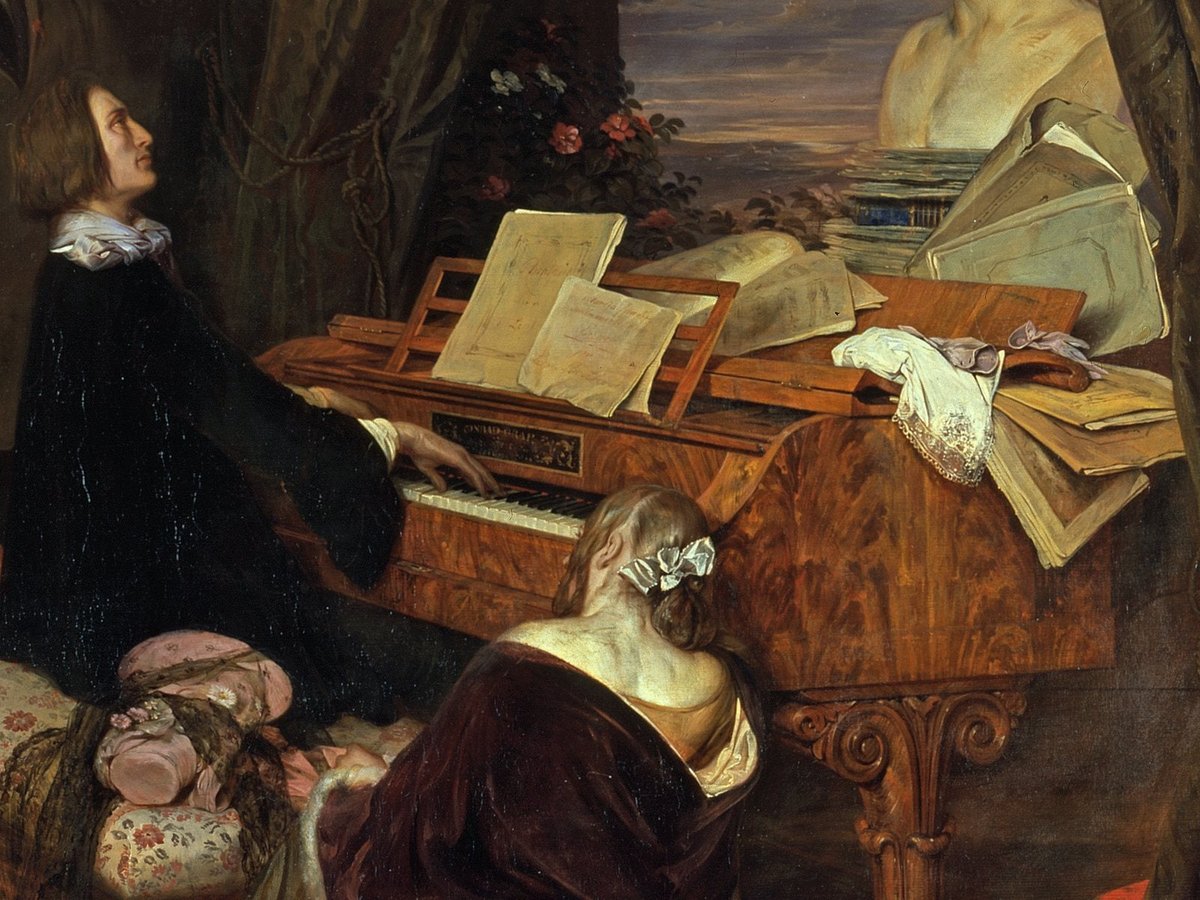
Érard’s piano came to Beethoven in 1803. After six years he declared it useless, yet kept it as a keepsake. Today it stands in the Linz Castle Museum.
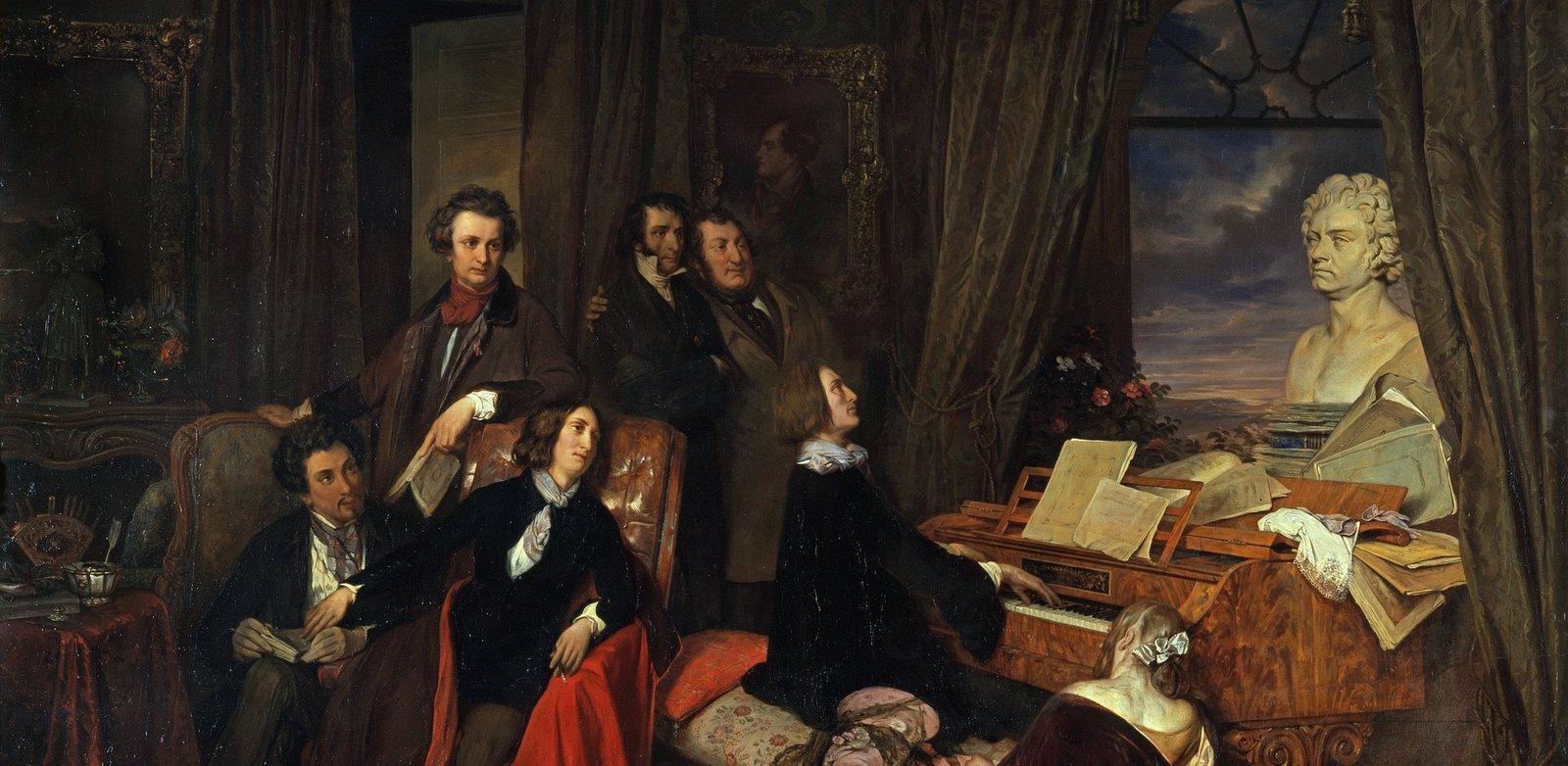
In 1817 Broadwood sent Beethoven a piano from London. Beethoven loved it and used it until his death. In 1845 it passed to Franz Liszt, and today it belongs to the Hungarian National Museum.
On 24 January 1826 Graf lent Beethoven a piano. After Beethoven’s death it went back to Graf, and since 1889 it has belonged to the Beethoven‑Haus Association in Bonn.
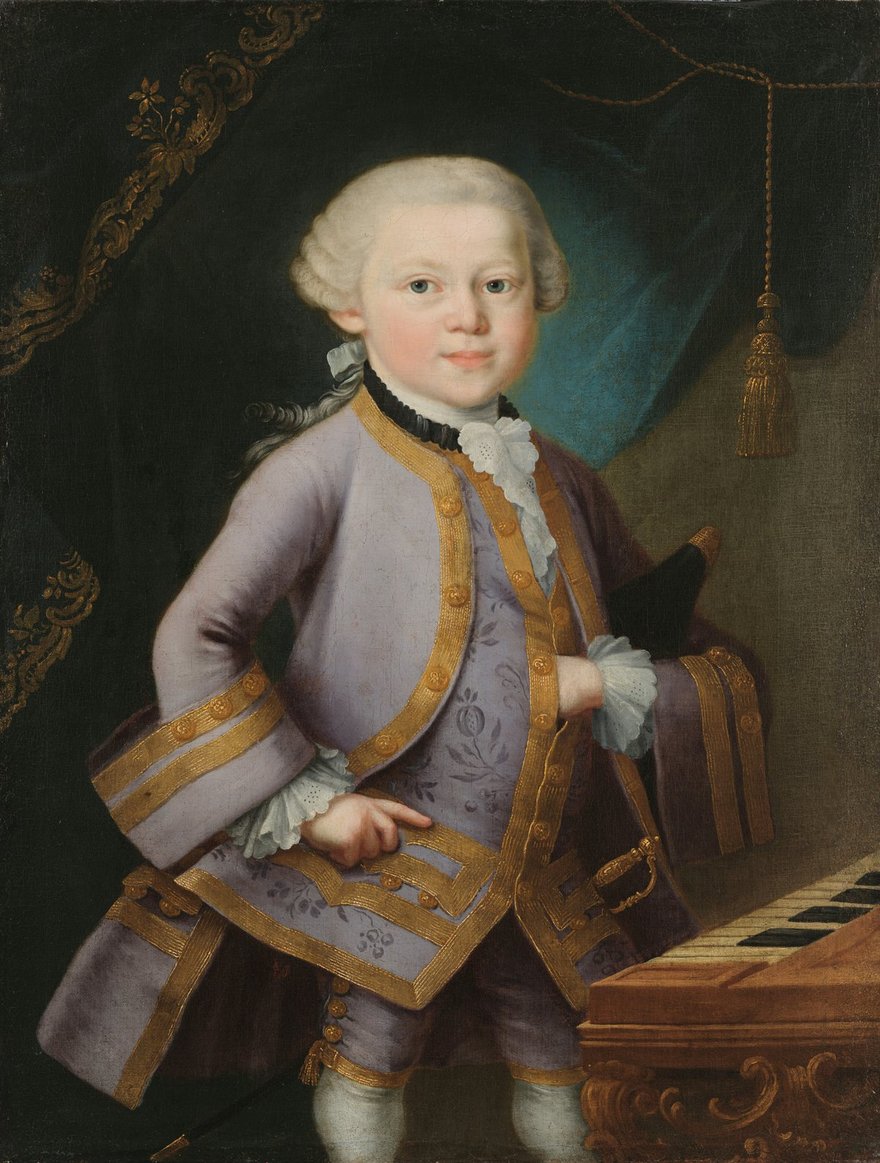
Schönbrunn, 13 October 1762
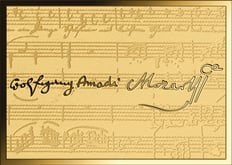
The six‑year‑old Mozart played for Empress Maria Theresa, in the Hall of Mirrors as tradition has it. Three days later his father Leopold wrote:
“Wolferl jumped onto the Empress’s lap, put his arms round her neck and kissed her heartily.”
Leopold Mozart, 16 October 1762, modernised
On 19 October Leopold was summoned early in the morning to the privy paymaster. That same day he wrote:
“The paymaster then paid me 100 ducats, adding that Her Majesty would soon summon us again.”

125 years of the Vienna Symphony Orchestra
The orchestra was founded in 1900 as the Wiener Concertverein. It made its official debut on 30 October 1900 under Ferdinand Löwe in the Great Hall of the Vienna Musikverein. Since 1933 it has been called the Wiener Symphoniker.
In its first season it became the first Viennese orchestra ever to perform all of Beethoven’s symphonies one after the other.


100 euros, ½ ounce of gold, proof, maximum mintage 20,000 coins. Designed by Helmut Andexlinger. Issued on 15 October 2025.
Beethoven Year 2027
“From the heartMay it returnTo the heart!”
Beethoven’s motto on the autograph score of the Missa solemnis
2027 marks the 200th anniversary of Beethoven’s death. His last piano, the Graf at the Beethoven‑Haus, can no longer be played; a replica is to be finished by the end of 2026 and heard in the anniversary year.
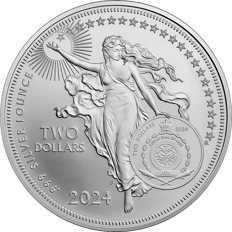
Coins on the theme of classical music bring together two worlds that, at first glance, have little in common: the cultural heritage of great composers and works, and the lasting tangible value of gold and silver. From the Viennese Classical period with Mozart, Haydn and Beethoven, through the German gold coin series devoted to classical musical instruments, to anniversary editions of renowned orchestras, this category covers a broad spectrum. This guide explains the most important designs and series, the precious metals and denominations used, the tax particulars, and sensible storage, and answers the most frequently asked questions about music designs on bullion and collector's coins.
Hardly any other cultural theme is as closely linked to German-speaking Europe as classical music. Austria and Germany are regarded as the cradle of European music history, and this tradition is reflected in numerous coin issues. Coin designs draw on two main directions: portraits of famous composers and depictions of individual musical instruments. Both approaches make an abstract theme tangible and give a coin an ideal significance that goes beyond its pure metal value.
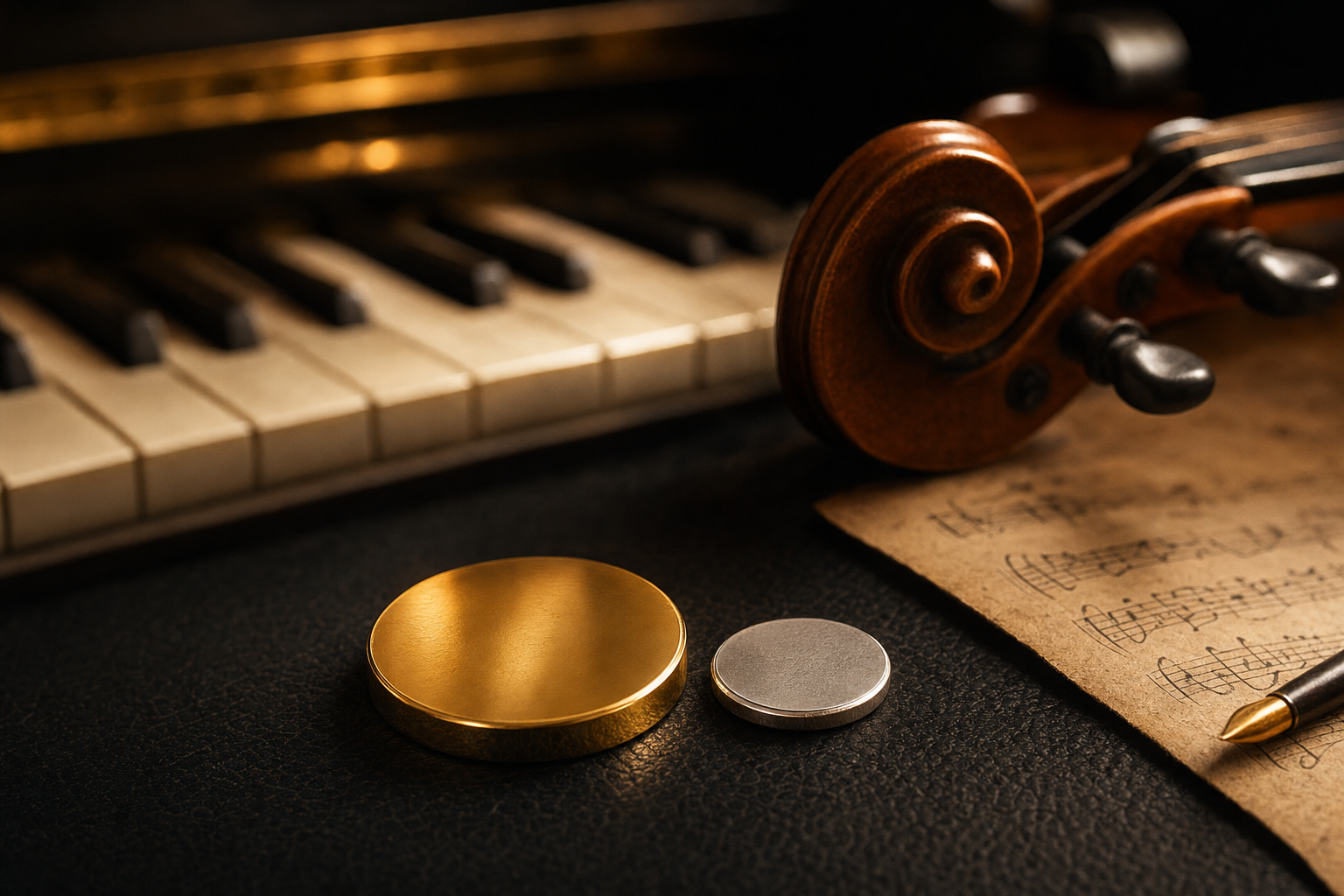
Besides designs from the world of music, further cultural series exist within the same thematic field. Those interested in figures from literature or science will find related designs in the range of literature coins, while fans of modern sound will find what they are looking for in the rock music category. The fine art category also adds painting and sculpture to this cultural subject area.
Portrait issues form the heart of many music series. Designs such as Ludwig van Beethoven or Wolfgang Amadeus Mozart appear both on small, affordable gold coins with a high mintage and on strictly limited editions. The great names of the Viennese Classical period frequently appear together: Joseph Haydn, Mozart and Beethoven are often portrayed as a trio representing a musical golden age. Such designs appeal both to music lovers and to collectors who appreciate the combination of art and precious metal.
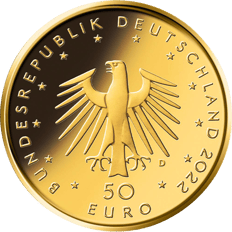
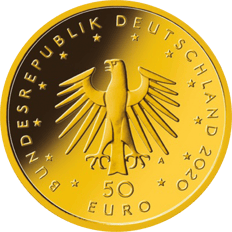
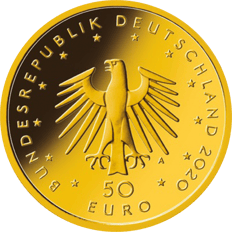
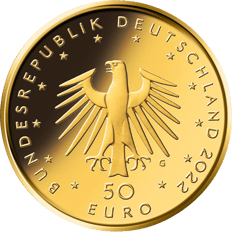
A second major design group is devoted to individual instruments. The German series of 50-euro gold coins on the theme of musical instruments features, across several years of issue, designs such as the grand piano, French horn, kettledrum, double bass and concert guitar. Each year a different instrument takes centre stage, creating an ongoing collecting series that can be completed over time.
The world of classical music designs is spread across several mints and countries. German and Austrian issues are at the centre, complemented by international collector issues. Understanding the most important series helps to classify individual coins both thematically and numismatically.
The German 50-euro gold coins on the theme of musical instruments are produced by Germany's state mints in 999.9/1,000 fine gold and are generally issued in Mint State quality. Weighing a quarter ounce, they appeal to collectors who wish to combine investment gold with a cultural design. Comparable issues can also be found in the broader category of German gold coins, which covers numerous other themes in addition to music designs.
Austria cultivates its musical tradition with particular care. The Münze Österreich regularly issues gold and silver coins relating to Viennese orchestras and concert halls, for instance to mark anniversaries of important ensembles. Such issues often appear in the high-quality Proof finish and in a limited mintage. Those looking for the best-known Austrian bullion coin will find it in the Vienna Philharmonic, which carries the instruments of the famous orchestra as a lasting investment gold design.
Beyond German-speaking Europe, numerous countries take up the theme of music. Strictly limited editions combine portraits of world-famous figures with modern minting techniques such as partial gilding or colour finishing. Designs of this kind overlap thematically with the musician coins category, which brings together composers and performers from different eras.
Music designs appear on both gold and silver coins, and the choice of precious metal significantly affects the price, appearance and tax treatment. An overview of the common variants makes classification easier.
For investors who want to use a music design as an entry point into physical gold, it is worth looking at classic denominations outside of collector's coins. Small bars from the 1-gram gold bars or 5-gram gold bars categories offer pure material value without a collector's premium and make a sensible addition to a themed collection.
Note the premium
Collector's coins with an elaborate music design, low mintage and special finishing generally carry a higher premium over the pure metal value than classic bullion coins. This premium pays for the numismatic and ideal component -- when it comes to pure value preservation, the material value plays the greater role.
Music designs bring together two groups of buyers: collectors who appreciate the theme and the design, and investors who focus on the precious metal value. Both perspectives are not mutually exclusive, but they lead to different purchasing criteria.
For the investment aspect, the gold or silver content is the primary consideration. High-mintage portrait coins and the instrument-themed gold euro coins are priced close to their material value and are therefore suitable as tangible assets. Those who place the investment idea in the foreground will find further common classics in the broader category of gold bullion coins.
For the collector's aspect, the mintage size, grade of preservation and completeness of a series are decisive. Strictly limited issues in Proof quality or with special finishing specifically appeal to collectors. Such pieces fit thematically into the field of collector's coins, where numismatic criteria take centre stage.
A coin dedicated to classical music carries two values within it: the measurable metal value and the priceless memory of a cultural heritage.
Tax treatment largely depends on the precious metal involved. Investment gold is exempt from VAT in Germany under the applicable regulations, provided the coin meets the statutory criteria for investment gold. The German 50-euro gold coins and the Austrian gold issues are accordingly traded free of VAT.
For silver coins, on the other hand, VAT applies. For silver collector's coins, the margin scheme is often applied, which results in a lower surcharge than under full standard taxation. When later selling physical precious metals, the one-year holding period is also relevant: after one year has elapsed, any capital gain is generally tax-free for private individuals. Those who wish to delve deeper into tax-advantaged gold will find complementary investment options in the gold bars section.
Note
The information on tax treatment is provided for general information purposes and does not replace individual tax advice. The legal situation applicable at the time of purchase is always decisive.
Especially with collector's coins featuring a high-quality design, the grade of preservation is crucial to long-term value. Fingerprints, scratches and environmental influences can permanently damage the surface of a Proof-quality coin. Proper storage protects both the material and the design.
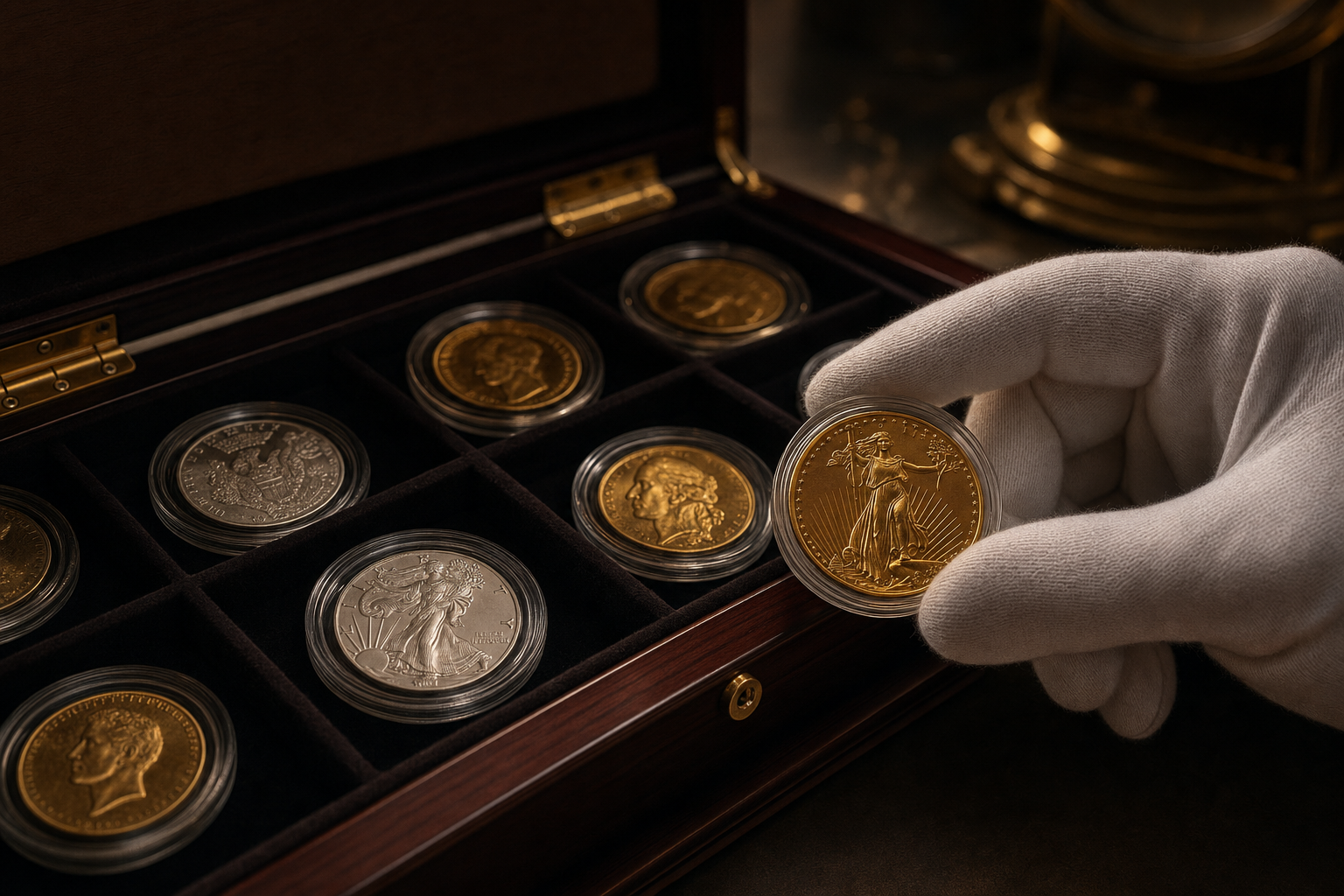
For larger holdings, secure storage in a home safe or bank safe deposit box is also recommended. Suitable accessories for storage and presentation round off a well-maintained collection.
Anyone choosing a coin on the theme of classical music should keep a few criteria in mind in order to find the right issue for their own purpose. The following points help with the decision between a collecting focus and an investment focus.
The low-priced portrait coins are especially suitable as a present for a musical occasion. Further ideas can be found in the gold gifts category, which brings together small gold coins for various occasions.
The great names of the Viennese Classical period appear most often: Wolfgang Amadeus Mozart, Ludwig van Beethoven and Joseph Haydn. These three composers shape a large part of international music designs, complemented by further figures from the Romantic and Baroque periods on specialised collector's issues.
If a gold coin meets the statutory criteria for investment gold, it is traded free of VAT in Germany. This applies to the common German 50-euro gold coins and Austrian gold issues. Silver coins, by contrast, are subject to VAT, often in the form of the margin scheme.
Proof (PP) refers to the highest minting quality, with a mirror-bright background and matt design surfaces; it is produced in low mintages for collectors. Mint State describes the regular, uncirculated quality of a circulation or bullion coin. Proof issues are more sensitive to touch and are usually supplied in a case.
This depends on the particular issue. High-mintage gold coins are priced close to their material value and are suitable as a tangible asset. Strictly limited silver issues in Proof quality, by contrast, appeal mainly to collectors, as here the design and rarity take centre stage and a higher premium applies.
Collector's coins should only be handled by the edge and protected individually in coin capsules. Coin cassettes or a coin case are suitable for complete series. Dry, temperature-stable storage prevents the tarnishing of silver and preserves the grade of preservation in the long term.
Yes. The German 50-euro gold coins on the theme of musical instruments are issued over several years of issue with changing designs such as the grand piano, French horn, kettledrum, double bass and concert guitar. Collectors can complete the series over the years, with each instrument forming its own year of issue.
 Art and CultureClassical Music
Stay informed with product launches, financial news and exclusive offers. Sign up for our free newsletter today.
By entering your email address and clicking the "Submit" button, you give the following consent: "I agree to be informed by email about new products, financial news and exclusive offers, and therefore consent to the processing of my email address for the purpose of sending the newsletter. I can revoke this consent at any time without giving reasons, with effect for the future. The lawfulness of processing carried out prior to revocation remains unaffected."