Sold out

1 oz Silver Blue-Girdled Angelfish 2021 (Mintage: 25,000)
€43.91
excl. shipping *
currently not available
 More than 310,000
 Over 30 years
 Secure shipping
 Google: 4.9/5


The Silver Clearance Sale brings together selected silver coins and silver bars offered at reduced conditions, often limited design series, discontinued years of issue or remaining stock from past editions. Anyone who values silver as a tangible asset will find here an opportunity to acquire well-known bullion and collector's coins below the regular price level. This guide explains what constitutes a silver clearance sale, how the tax treatment of silver is structured, which denominations and designs are typical, and what to look out for when buying reduced-price goods.
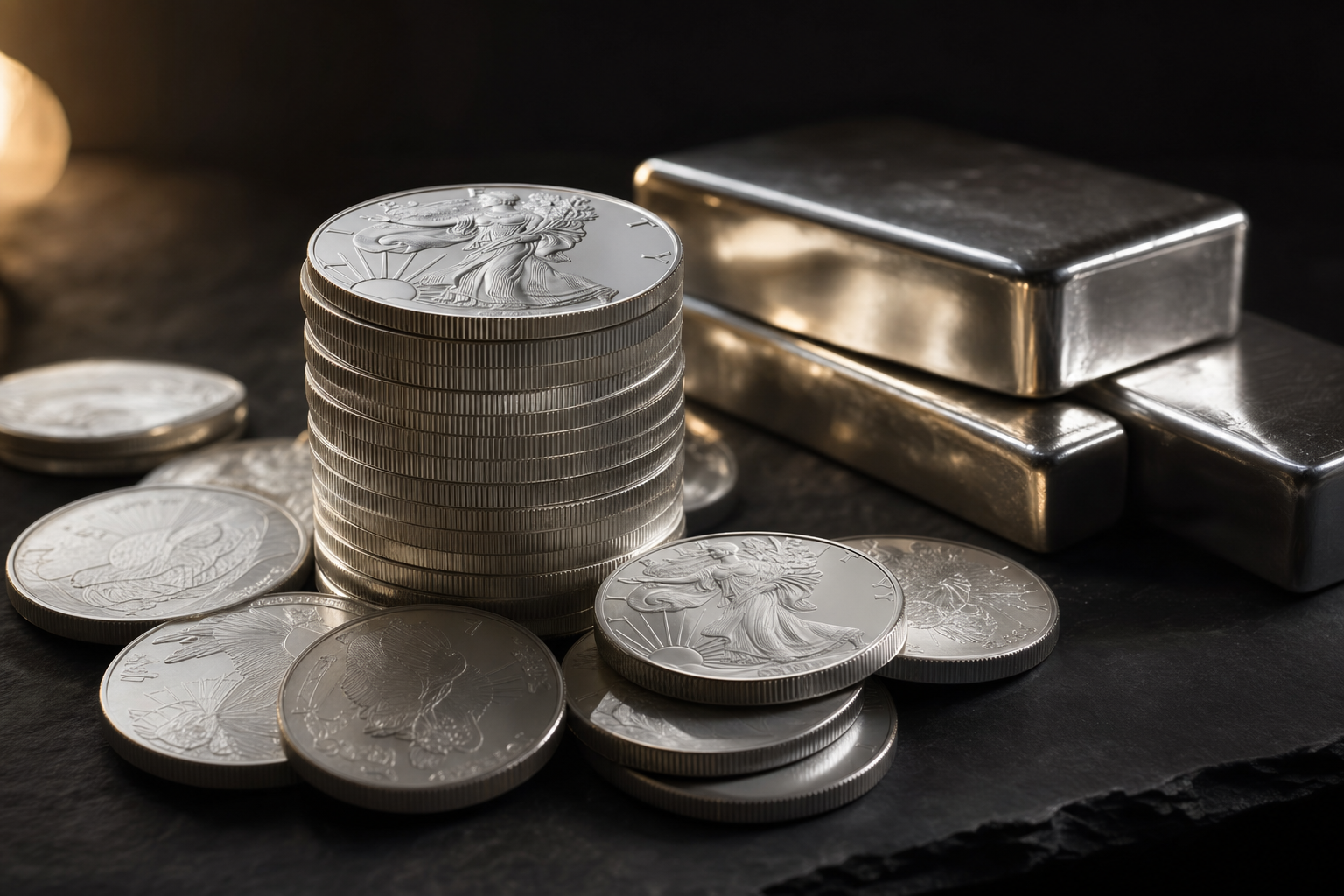
A clearance sale describes the sale of goods at discounted conditions, usually to clear stock, release discontinued years of issue, or free up capital. In the precious metals sector, this mainly affects silver coins whose year of minting already dates back a few years or whose series has come to an end. The material value of the silver contained remains unchanged, what is typically reduced is the mark-up on the pure silver price, the so-called premium.
Especially with silver, it's worth taking a look at such offers, because the premium here is proportionally higher than with gold. A reduced premium noticeably lowers the entry costs. Anyone who deals with the subject in general will find the full range of bullion and collector's pieces in the comprehensive range of silver coins, while the clearance sale brings together particularly favourable positions at specific points. It's also worth taking a look at the current special offers, which gather further reduced precious metals.
Silver coins often appear as annual series or thematic editions with a limited mintage. Once a year of issue has ended and a new one has appeared, older issues move into the background, even though their silver content and minting quality remain identical. Such pieces are then offered in the clearance sale. This creates an advantage for price-conscious buyers: the collector's or design character is preserved, while the price moves closer to the material value.
A key distinguishing feature between gold and silver is VAT. While investment gold is exempt from VAT in Germany, silver is generally subject to VAT. For silver coins from non-EU countries, the margin scheme taxation is often applied, whereby tax is only charged on the trading margin, which can lower the final price compared to standard taxation.
This particularity explains why silver coins in the clearance sale may appear with different price indications, some taxed under the margin scheme, some including standard VAT. Anyone looking for a comparison with tax-privileged investment gold will find the corresponding ranges under Gold bullion coins. Within the silver segment, the Silver bullion coins offer the classic bullion mintages, which are suitable for building up a quantity-oriented holding.
Tax notice
Unlike investment gold, silver is subject to VAT in Germany. For coins from third countries, the margin scheme may apply. The specific tax classification depends on the individual case, this is general information and does not replace tax advice.
For privately held physical silver, a one-year holding period applies in Germany. If the metal is held for longer than twelve months, any capital gain on sale is tax-free. This rule makes physical silver attractive for long-term holders. A holding can also be built up gradually via savings plan products.
Silver is available in a wide range of sizes. The most common unit for coins is the troy ounce (31.1 grams). In addition, there are smaller and larger formats, each offering advantages and disadvantages depending on the purpose:
Anyone prioritising pure material value over individual design coins will find particularly premium-efficient options in the range of silver bars. For larger quantities, the 1 kg silver bar is a good choice, or the 100 g silver bar as a handy unit. In the coin segment, the troy ounce remains the most widely traded format.
Coins carry a design, a face value and the name of a mint, appealing to both investors and collectors. Bars, on the other hand, focus on the pure metal value and typically have the lowest premium. In the clearance sale, this calculation shifts: discontinued design coins can, due to the reduced price, move close to the premium level of bars while still offering the visual and collector's added value of a minted coin.
Silver coins thrive on their designs. Many editions appear in annually changing years of issue and form entire series over time. In the clearance sale, animal and nature designs as well as thematic special series whose current year of issue has already been superseded appear particularly frequently.
Among the best-known classic silver bullion coins are the Maple Leaf from Canada, the Vienna Philharmonic from Austria and the American American Eagle. Anyone who prefers thematic animal designs will find what they're looking for in series such as the sea creatures or among the varied further silver coins, which also gather attractive designs beyond the great classics.
The mintage size significantly influences the character of a coin. Editions with a low mintage, for example 10,000 or 25,000 pieces, are considered scarcer and attract collector interest beyond the pure material value. If such a series ends and enters the clearance sale, a double appeal can arise: a reduced price combined with limited availability. However, the collector's aspect should never be mistaken for a promise of returns, the silver price remains the decisive value factor.
The price of a silver coin is made up of two components: the silver spot price as the material value and the premium for minting, distribution and, where applicable, rarity. The spot price is formed on international markets and fluctuates continuously. Silver is considered more volatile than gold because, in addition to investment demand, it is also strongly driven by industrial demand, for example from electronics, photovoltaics and medical technology.
In the clearance sale, it is mainly the premium component that falls, while the material value remains dependent on the current price. Anyone wishing to understand price developments should consider the factors of supply, industrial use and investment demand together. In addition to silver, related metals such as the industrially widely used platinum or the affordable copper also offer points of connection for a diversified tangible-asset portfolio.
In the clearance sale, the buyer pays less premium for the same silver, the material value remains, the mark-up shrinks.
Physical silver requires appropriate storage to avoid scratches, tarnishing and moisture damage. Silver reacts more sensitively to environmental influences than gold and can tarnish on contact with air and sulphur compounds. The value itself is not affected, but the appearance of a collector's coin suffers.
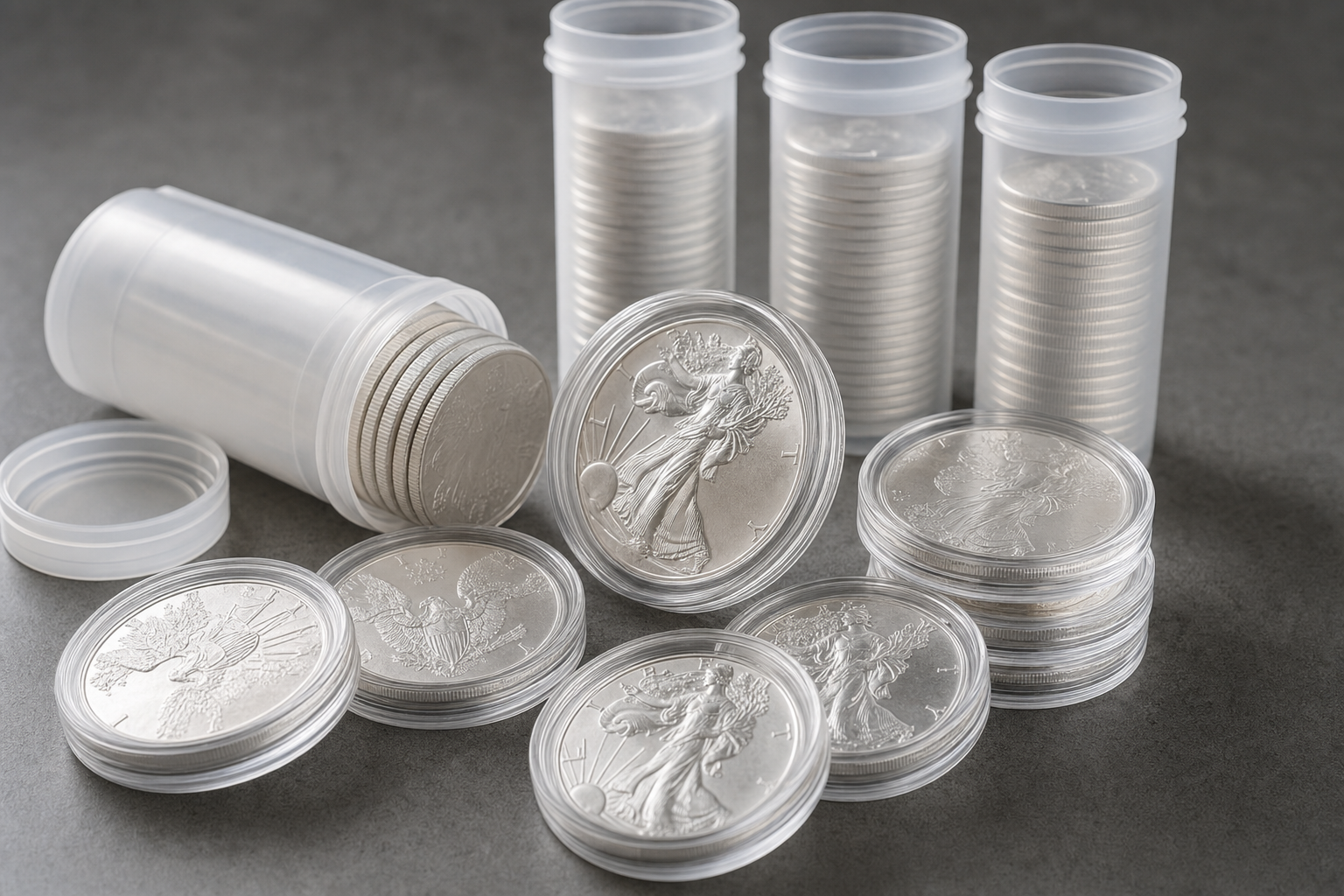
Suitable accessories can be found in the range of coin capsules as well as among the coin tubes for storing larger quantities. Anyone wishing to organise an entire collection will find what they need among the coin cassettes. In general, it's worth browsing the entire accessories range to set up storage properly from the start.
Reduced-price goods deserve the same care as regular offers. Condition, completeness and transparent pricing are decisive. The following points help with the assessment:
As a German family business with ISO-compliant authenticity verification and over 200,000 customers, Kettner Edelmetalle places great value on verified goods and transparent prices, even in the clearance sale. Anyone wishing to diversify further will find suitable compilations among the Silver investor packages or in the themed crisis protection packages.
A clearance sale refers to the sale of silver coins or bars at reduced conditions, for example because a year of issue has ended or stock is being cleared. The silver content remains unchanged; usually the premium on the pure material value is reduced.
Silver is subject to VAT in Germany, while investment gold is VAT-exempt. In addition, the material value per piece is lower, so minting and distribution costs weigh more heavily as a percentage. For coins from third countries, the margin scheme can lower the final price.
Reduced-price silver coins can make getting started more affordable, because the premium falls and the price is closer to the material value. Whether a purchase is worthwhile depends on the individual goal, be it pure material investment, collector's interest or diversification. No promise of returns can be derived from this.
Coin capsules are recommended to protect individual pieces, as well as coin tubes and master boxes for larger quantities. Safes or cash boxes are suitable for theft protection. Silver should be stored dry and protected from sulphur compounds to prevent tarnishing.
For privately held physical silver, a one-year holding period applies in Germany. After twelve months have elapsed, any capital gain on sale is tax-free. The specific classification depends on the individual case and does not replace tax advice.
As a rule, these are as-new goods from past years of issue or discontinued series. The condition and scope of delivery, including case or certificate, should be checked before purchase. At Kettner Edelmetalle, goods undergo an ISO-compliant authenticity verification.
Stay informed with product launches, financial news and exclusive offers. Sign up for our free newsletter today.
By entering your email address and clicking the “Submit” button, you give the following consent: “I agree to be informed by email about new products, financial news and exclusive offers, and therefore consent to the processing of my email address for the purpose of sending the newsletter. I can revoke this consent at any time without giving reasons, with effect for the future. The lawfulness of processing carried out prior to revocation remains unaffected.”