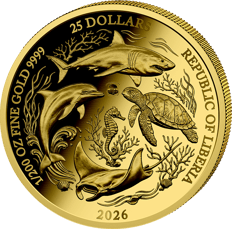
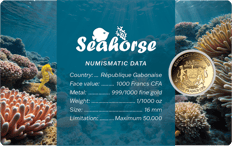
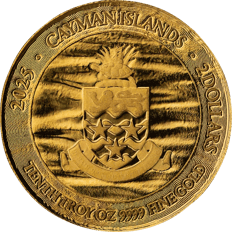
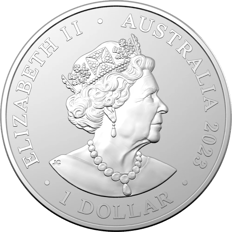
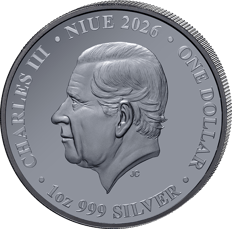
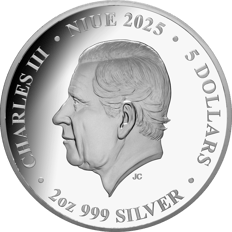
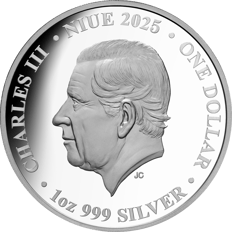
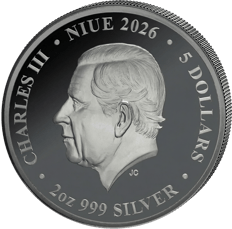
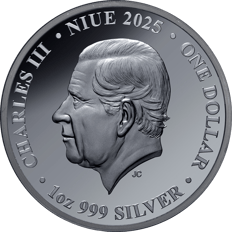
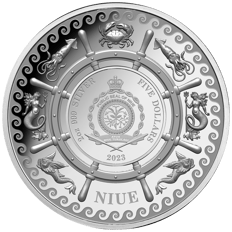
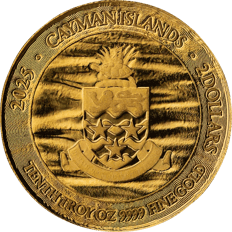
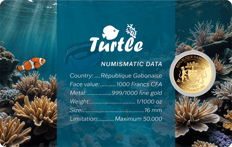
1/200 oz Gold Sea Turtle 2026 (Mintage: 1,000 | Proof)
€69.90
VAT-free and excl. shipping
Ships from 24/11/2026

 More than 310,000
 Over 30 years
 Secure shipping
 Google: 4.9/5


The category Other Marine Animals brings together silver and gold coins whose designs depict the diversity of the oceans, without falling into the classic categories of fish or predatory fish. Dolphins, sea turtles, seahorses, whales, rays, octopuses and shells take centre stage in this thematic collecting world, which combines artistic minting craftsmanship with the appeal of precious metal. This guide explains the most important design groups, the available denominations and minting qualities, the tax particularities of gold and silver, as well as the key purchasing criteria for collectors and investors alike.
Marine animal coins are among the most popular themes in modern design coinage. While fish and predatory fish each fill their own ranges, the Other category brings together all those sea creatures that cannot be clearly assigned to either group. This spans from playful dolphins to majestic humpback whales to intricately designed seahorses, sea turtles and cephalopods such as the octopus.
The particular appeal lies in the creative range: mints like to use marine animals to demonstrate technical possibilities such as colouring, high relief or antique finish. This results in coins that go far beyond the pure function of the material and develop an independent artistic value. Anyone wishing to understand the basic systematics of design coinage will find an overview of the entire maritime theme in the overarching section Marine Animals.
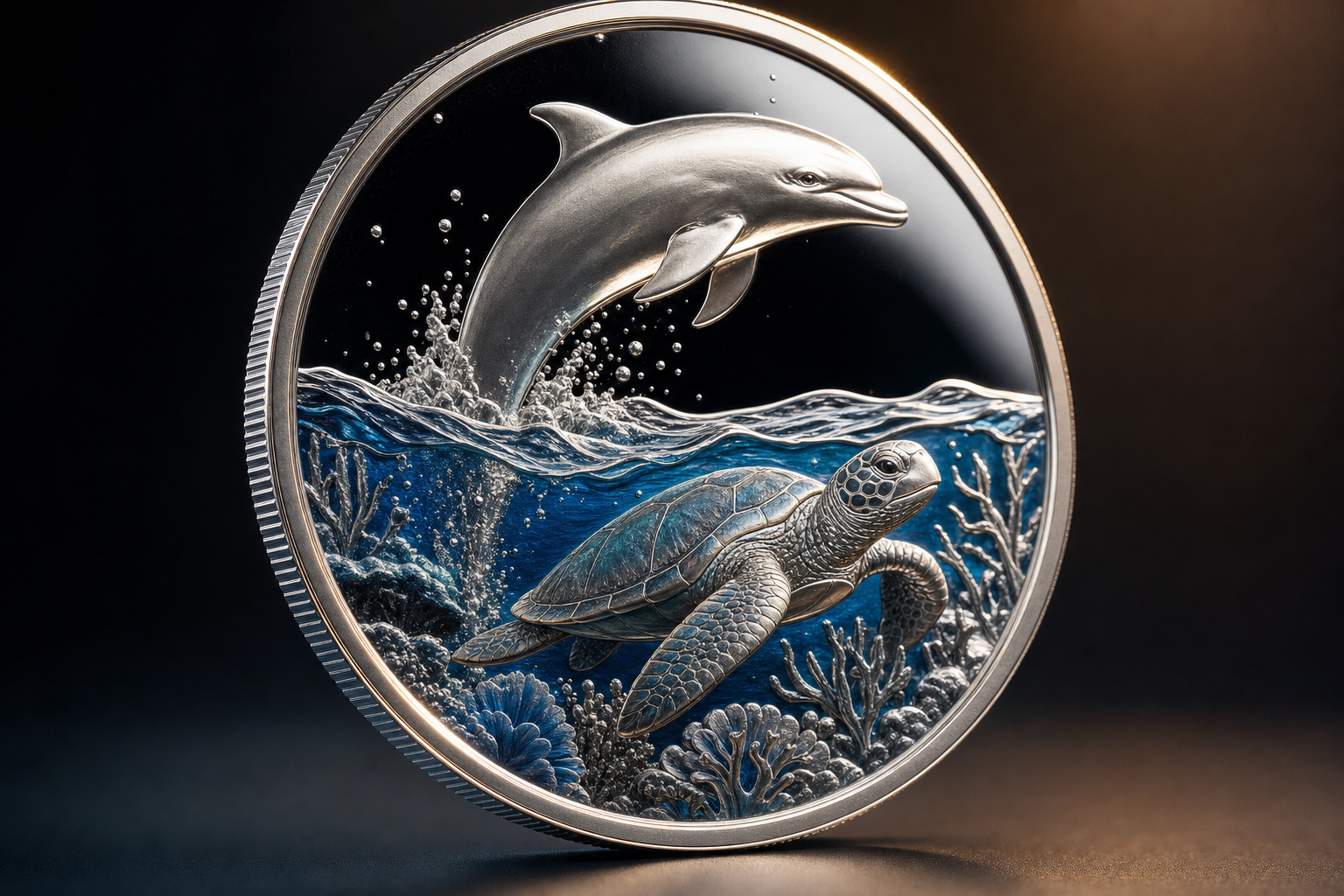
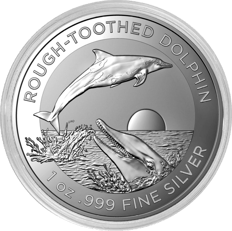
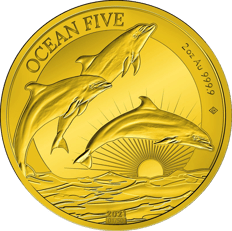
Dolphins are among the most emotionally charged marine designs and appear both as bullion coinage in small gold denominations and as elaborately designed collector's coins in kilogram-bar size. Sea turtles, in turn, symbolise longevity and are often minted in series with an ecological focus. Whales, particularly the humpback whale, frequently appear in connection with protected areas such as the Australian Antarctic Territory.
Thanks to their unusual silhouette, seahorses are a rewarding design for detailed coinage and partially gilded editions. Rays and mantas use their flat body shape for large-format relief depictions, while octopuses create dynamic compositions with their tentacles. Related maritime series can also be found under Ocean Five Silver and the corresponding Ocean Five Gold edition.
A large proportion of marine animal coins are produced as part of ongoing series that give collectors a common thread to follow. Such editions increase recognisability and make it easier to systematically put together a collection. Characteristic of this is the close interlinking with the major mints and their recurring themes.
Anyone looking for thematically related nature designs will find what they need in the Wildlife series or among the coloured silver coins. The turtle ranges also overlap thematically with the marine animal world.
Marine animal coins are available in a wide range of weights, giving both beginners and advanced collectors room to manoeuvre. The most common size is the 1 oz silver coin, which offers a balanced ratio of design surface and price. There are also smaller gold denominations for price-conscious buyers as well as large-format collector's pieces.
Silver numerically dominates the category. The classic ounce (31.1 g) is the standard, frequently supplemented by 2 oz coins featuring high relief or colouring. At the upper end are kilogram coins, which are regarded as impressive individual pieces. Anyone wishing to view silver as a range in general will find a wide selection of related designs under other silver coins.
Gold marine animal coins often appear in 1/10 oz or as small design coins, which allows entry into physical gold even on a smaller budget. Larger editions in 1 oz or 2 oz are usually strictly limited collector's pieces. An overview of gold design coinage beyond the classic bullion coins is offered by the category other gold coins.
Note on denomination and price
Smaller denominations have proportionally higher minting costs per gram of fine weight. For collector's coins, the pure material value often takes a back seat to the design and rarity value anyway, which is why it is worth looking at the mintage figures and minting quality.
The visual impact of a marine animal coin depends significantly on the minting quality. Especially with maritime designs, elaborate finishing techniques are used that evoke water, light and movement.
Suitable accessories are recommended for storing these sensitive surfaces. In particular, coin capsules protect coloured and Proof coinage from scratches and fingerprints.
As with all precious metal coinage, authenticity plays a central role. Marine animal coins from renowned mints carry defined features that make verification easier. These include precise details of fine weight, fineness (usually 999/1,000 for silver, often 9999/10,000 for gold) and face value, as well as the issuing country.
Limited collector's coins are often accompanied by a numbered certificate of authenticity, which documents membership of the respective mintage. Kettner Edelmetalle relies on ISO-compliant authenticity verification and a fully automated high-security logistics centre, so that every coin is checked and shipped securely. Anyone wishing to delve deeper into the basics of verification will also find relevant quality standards among the bullion coins.
A design tells a story -- the minting quality determines how vividly that story is told.
The tax classification differs significantly between the precious metals and is relevant for purchasing decisions. In Germany, investment gold is exempt from VAT pursuant to §25c UStG, provided the coin meets the legal criteria for investment gold. This applies to many gold marine animal coins that are classified as investment products.
Silver coins, on the other hand, are subject to VAT. For imported collector's coins, the margin scheme is often applied, under which only the trading margin is taxed. In addition, private individuals are subject to a one-year holding period: after this period has elapsed, capital gains from the sale of physical precious metals are generally tax-free. Anyone interested in purely investment-oriented silver coinage will find further information under silver bullion coins.
Tax notice
The information provided is for general informational purposes only and does not replace tax advice. The specific treatment depends on the individual case and the applicable legal situation.
Coloured and Proof marine animal coins are more sensitive to environmental influences than plain bullion coinage. Fingerprints, moisture and temperature fluctuations can affect the surface. Proper storage therefore preserves not only the visual appearance but also the collector's value.
For larger holdings, a bank safe deposit box or a home safe can also be advisable. At Kettner Edelmetalle, shipping is always insured at 100%.
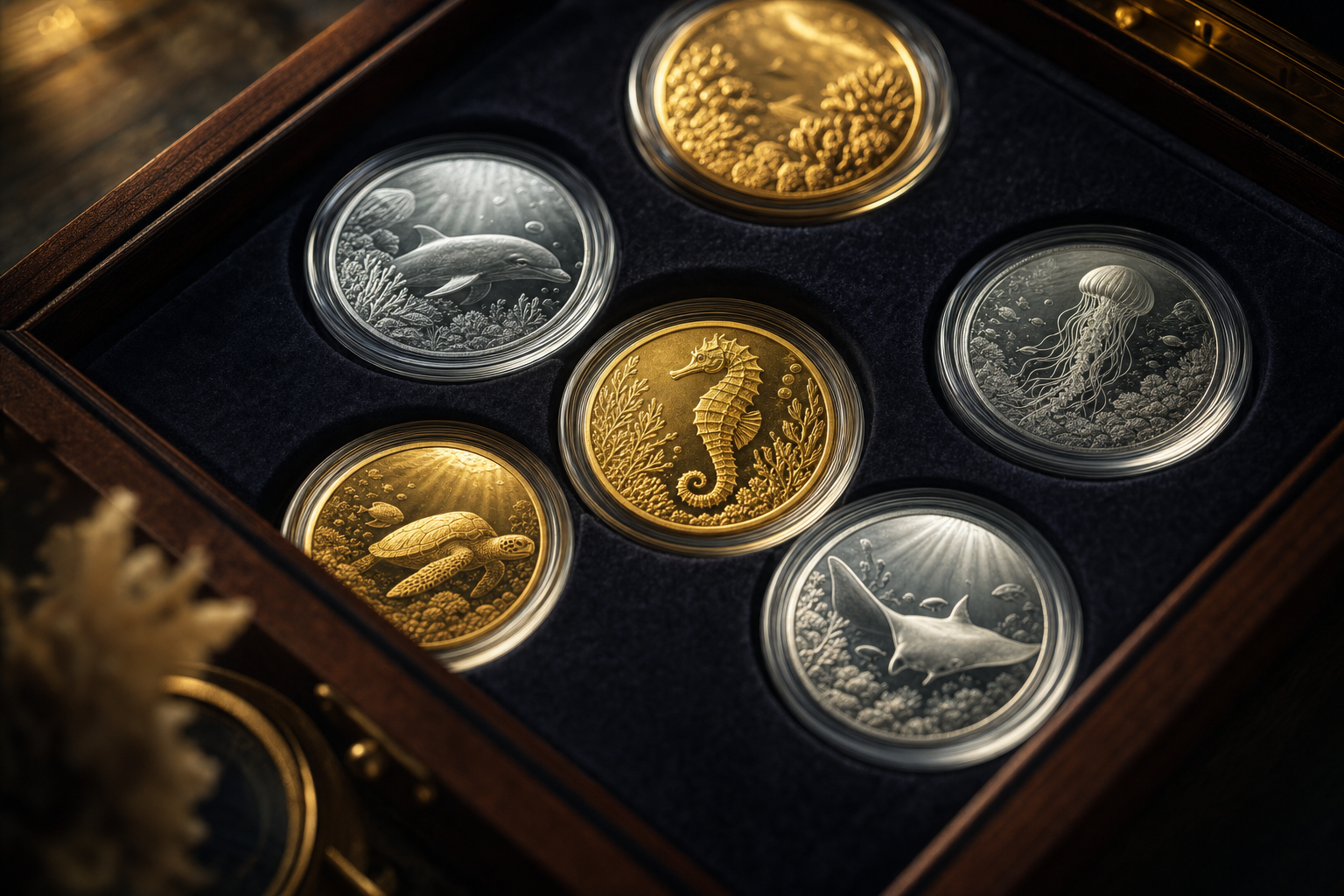
Marine animal coins cater to two different motivations. For investors, fine weight, fineness and tradability are paramount; here, small gold denominations and plain silver coinage are particularly suitable. For collectors, the design, mintage, minting quality and condition count. Strictly limited editions with only a few hundred or thousand pieces in particular develop their own enthusiast market.
Many buyers combine both aspects: they purchase design coins that possess both a material value and a thematic collecting appeal. Anyone who places a stronger focus on long-term value preservation can combine marine animal coins with classic gold bullion coins or silver bars to balance enjoyment of the design with substance.
The category brings together sea creatures that belong neither to the fish nor to the predatory fish group, including dolphins, whales, sea turtles, seahorses, rays, octopuses, jellyfish and shells. It thus complements the fish and predatory fish sections.
Gold coins classified as investment gold within the meaning of §25c UStG are traded VAT-free in Germany. Silver coinage, on the other hand, is subject to VAT, often via the margin scheme. Further details are provided by the gold bullion coins.
The most common is the 1 oz silver coin. There are also 2 oz and kilogram editions, as well as small gold denominations starting at 1/10 oz. An overview of related formats can be found among the other silver coins.
Coloured and Proof surfaces should be protected from contact and moisture in coin capsules. For entire series, coin cassettes are suitable in a dry, evenly tempered environment.
Both are possible. Plain coinage with a high fine weight emphasises the investment aspect, while strictly limited, coloured or high-relief editions place the collector's value in the foreground. Combining them with classic bullion coins is common.
What matters is exact information on fine weight, fineness and face value, along with an often-included numbered certificate of authenticity. Coins from the range undergo an ISO-compliant authenticity verification at Kettner Edelmetalle. Related standards are shown by the silver bullion coins.
Stay informed with product launches, financial news and exclusive offers. Sign up for our free newsletter today.
By entering your email address and clicking the "Submit" button, you give the following consent: "I agree to be informed by email about new products, financial news and exclusive offers, and therefore consent to the processing of my email address for the purpose of sending the newsletter. I can revoke this consent at any time without giving reasons, with effect for the future. The lawfulness of processing carried out prior to revocation remains unaffected."