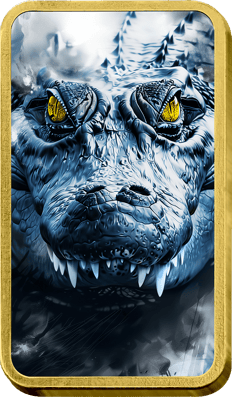
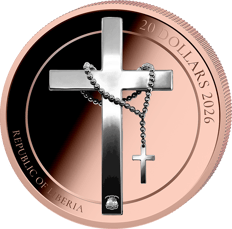
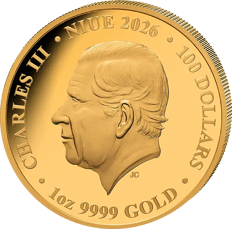
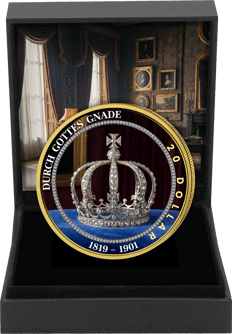
1 oz Silver Porcelain Eagle 2026 (Mintage: 100 | Gilded)
€169.00€199.00
incl. VAT and excl. shipping
Ships from 04/12/2026

 More than 310,000
 Over 30 years
 Secure shipping
 Google: 4.9/5


The elephant is the same on all three coins. What changes is the gold: from stage to stage, more of it lies on the silver.

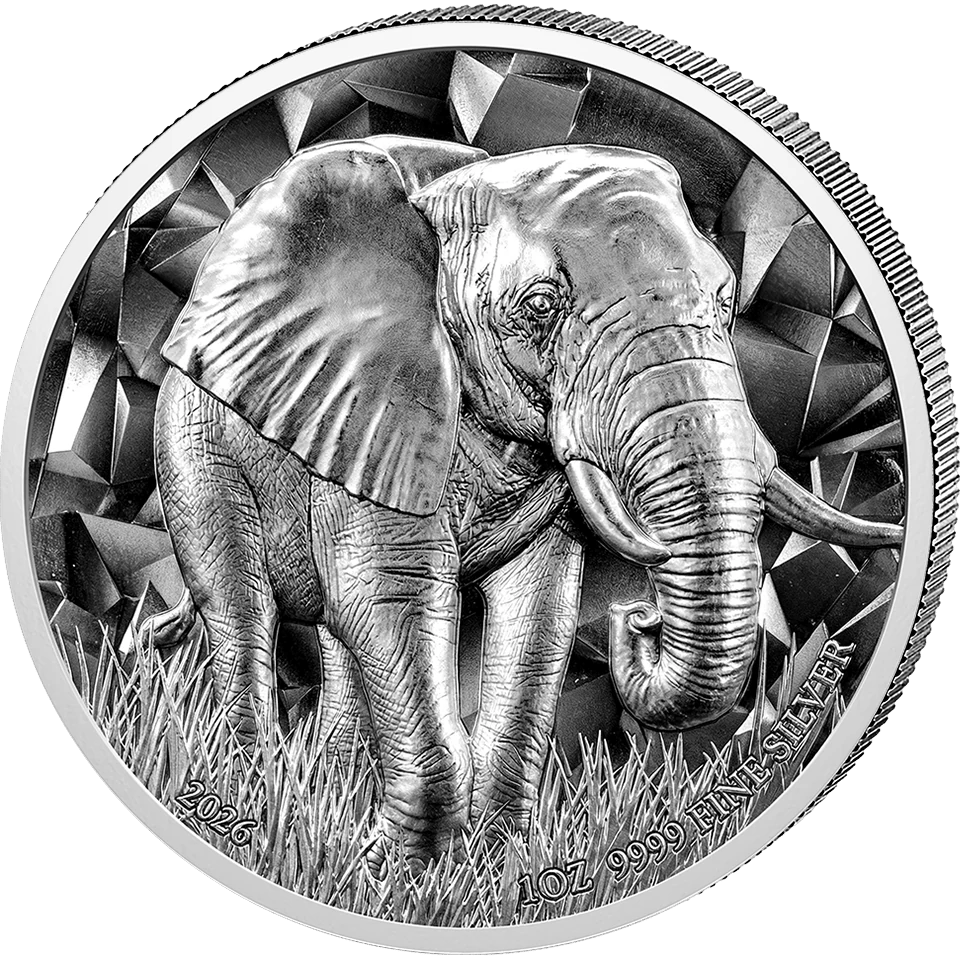
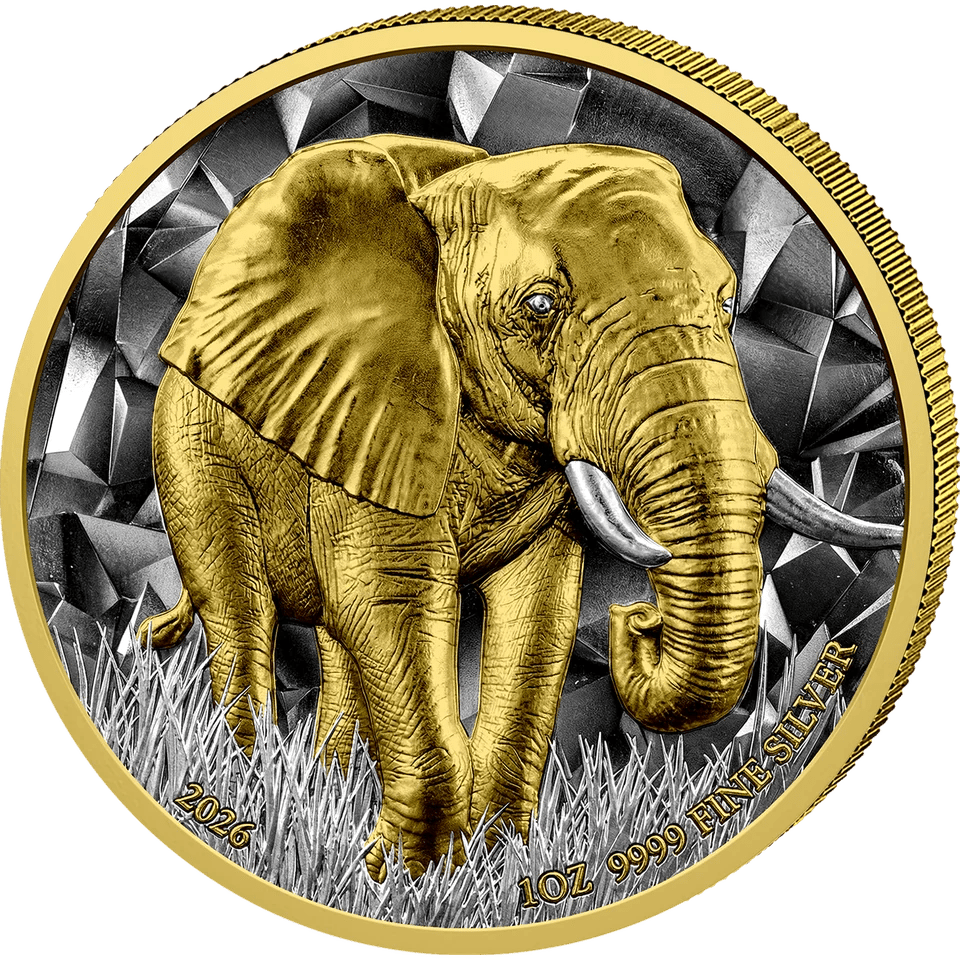
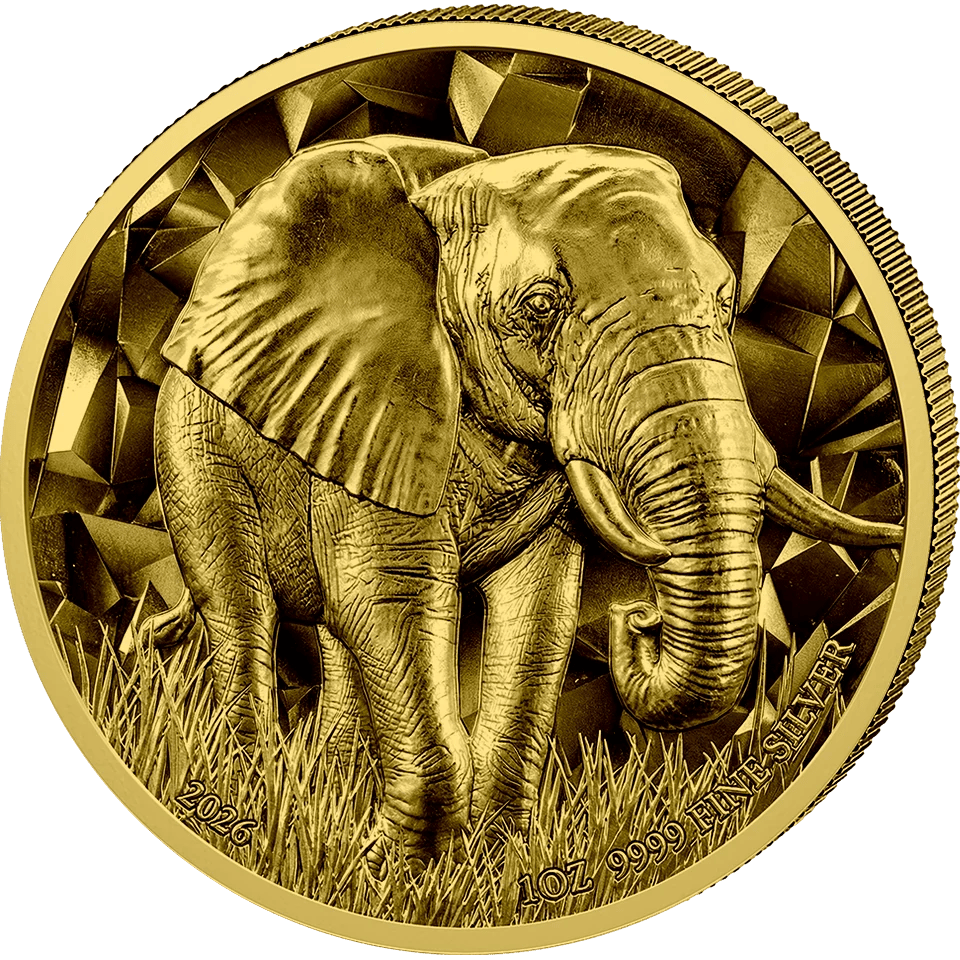
All three come from Kettner Edelmetalle: country of issue Liberia, face value 20 dollars, 1 ounce (31.1 g) of silver with a fineness of 999.9/1,000, 40 mm in diameter. On the first, the whole coin stays silver. On the second, the elephant and the rim are golden, and the crystal field behind them looks dark. On the third, the whole surface is golden. The photos are on the same scale, so ears, trunk and rim can be compared directly.
The Perth Mint has described how colour gets onto its coins. At the start there is a camera, at the end a cabinet with UV light.
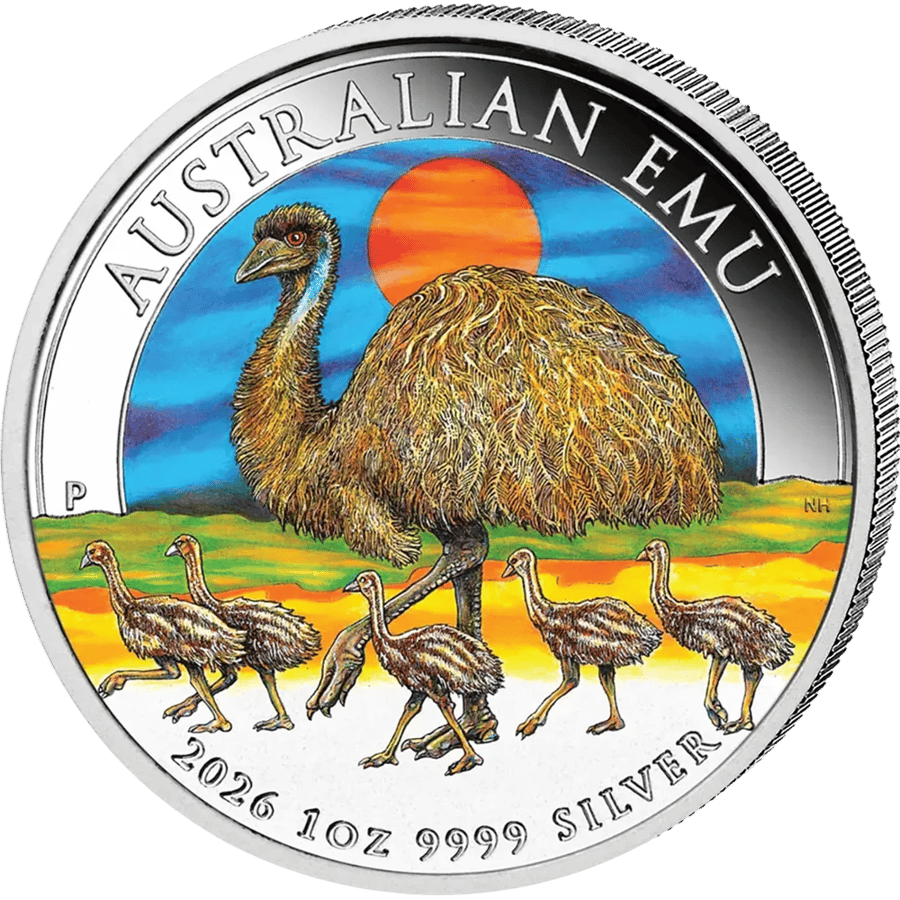
The mint used to apply the colour by pad printing; today it uses an LED UV printer developed specifically to colour coins. First, a digital camera records the areas of the design that receive colour. Then the printer applies a primer, on top of it white and then the colours. After that, the coins go into a UV cabinet for a set time.
Any coins which are blemished are melted back down, cast back to blocks of metal, ready to begin the process again until perfection is reached.
The Perth Mint, “How are coins coloured?”, 16 November 2022
No mint whose information we have read states how thick the gold on a coin is. A report from 1946, however, shows the order of magnitude.
At the time, the American National Bureau of Standards described how gold layers on jewellery, watch cases and insignia can be measured. One example from the report: 0.00025 mm of gold, that is 250 nanometres. One square centimetre with this layer contains 0.49 mg of gold.
Our own calculation for comparison: 250 nanometres is one four‑hundredth of a sheet of paper. That is about 750 gold atoms stacked one on top of another.
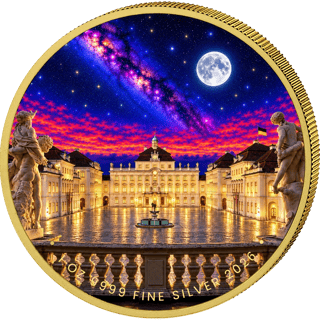 Ludwigsburg PalaceLudwigsburgAt night, gold rimGold rim
For a long time, metal was gilded in fire. In the 19th century, people learned to do it with electricity.
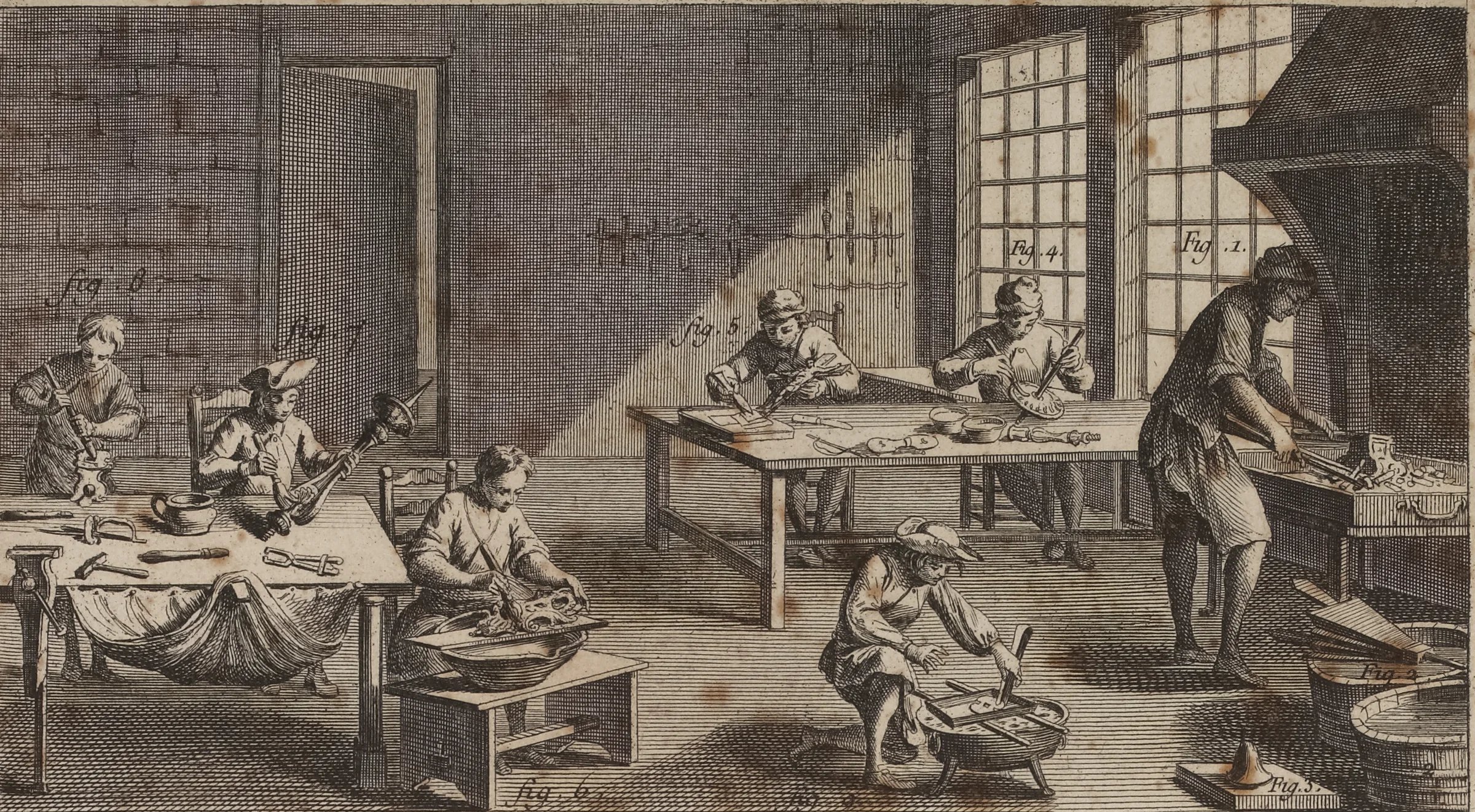
In fire gilding, an amalgam of gold and mercury was brushed onto the piece, which was then heated carefully until only the gold remained.
Up to 1840 plated silver goods were made only by rolling or soldering thin sheets of silver upon copper.
Dictionary of National Biography, 1889, vol. 17, “Elkington, George Richards”
From 1836 the Elkingtons applied for patents. The liquid best suited to electroplating with silver and gold was found by John Wright, a surgeon from Birmingham.
For gilding, the Perth Mint in most cases dips the coin into a liquid containing gold; the current carries the gold onto the exposed silver. Its article from 2023 does not describe how only some areas become golden.
The duration of the electric current determines how many microns of gold are applied to the coin.
The Perth Mint, “Finishing touches make all the difference to coins”, 3 August 2023
The case of the two golden elephants holds a card. Three details are on it.
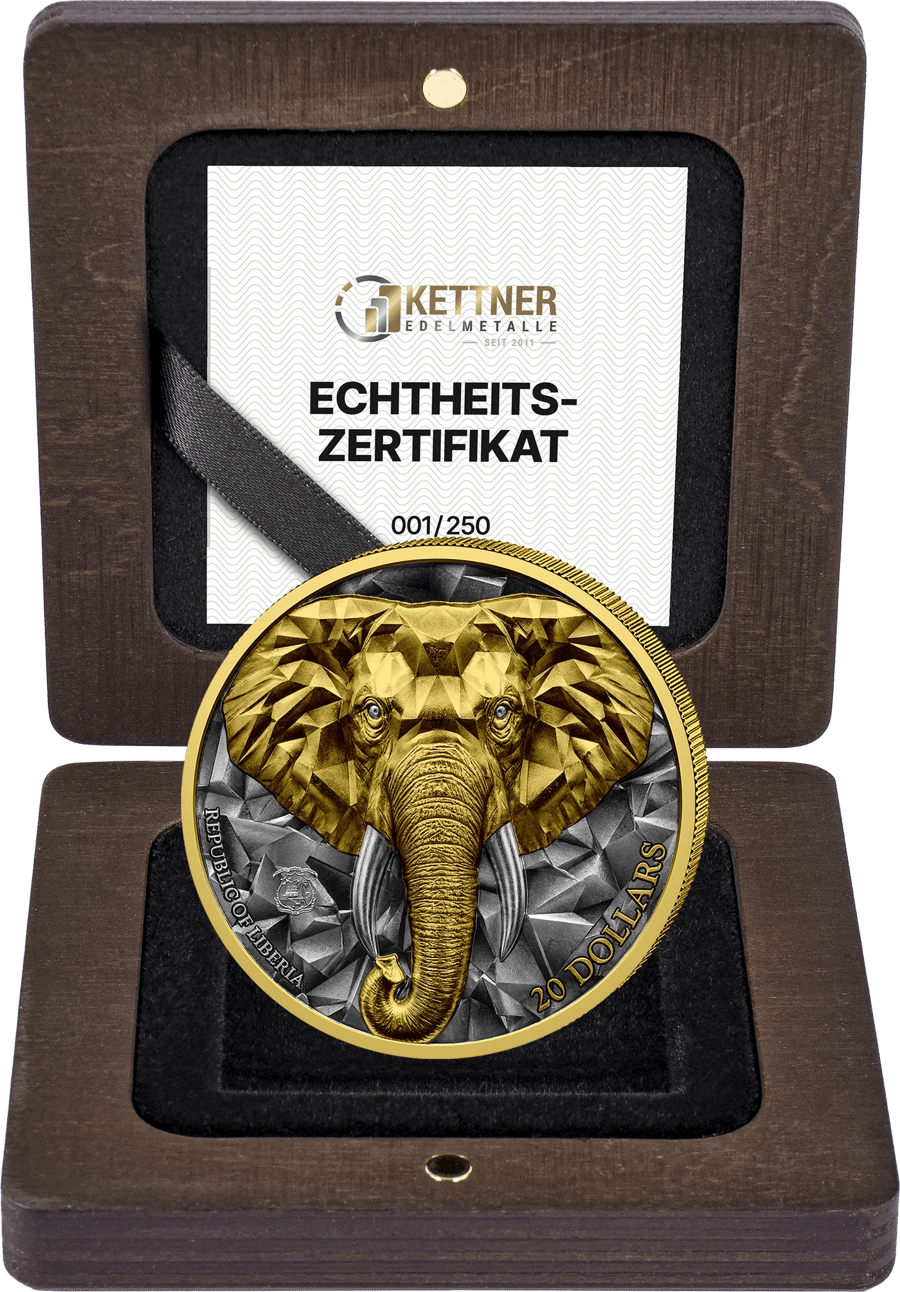
The number after the slash corresponds to the mintage of 250 pieces. The card does not say how thick the gold or colour is, or who applied it.
Mints keep figures as well. In its list, the Perth Mint distinguishes between the “Maximum Mintage” and the “Declared Mintage”. On its product page for the coloured 2021 Quokka in proof, it gives the maximum mintage and a numbered certificate.
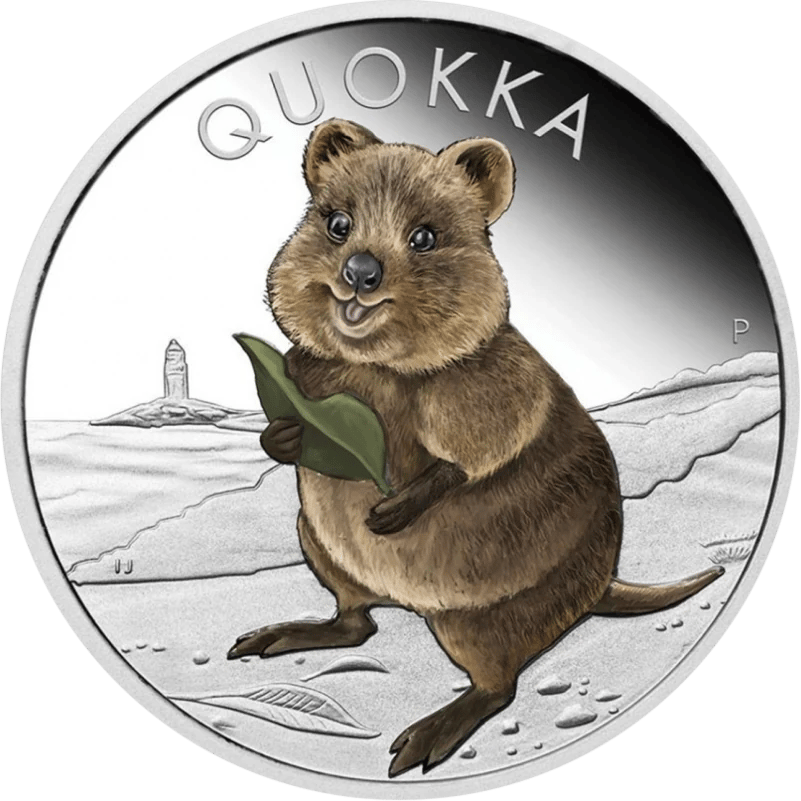
Quokka 2021 1oz Silver Proof Coin
SKU 21H49BAA
- Maximum Mintage
- 5,000
- Finish
- Proof, Coloured
Accompanied by a numbered certificate of authenticity, the coin is housed in a classic display case with a clear lid.
Gold and colour lie on the surface of the coin. What harms it is described by two mints and a government institute for conservation.
The Royal Canadian Mint advises anyone who is not a specialist not to clean coins; even wiping them with a soft cloth can damage the surface. Coins should always be held by the rim, and one should talk over them as little as possible, because tiny droplets of saliva can leave spots that no longer come off. According to the Perth Mint, proof, coloured and gilded coins need a protective acrylic capsule. So that they do not rub inside it, the rim must be the thickest part of the coin.
Polishes will damage gilding.
Canadian Conservation Institute, CCI Note 9/7, care of silver
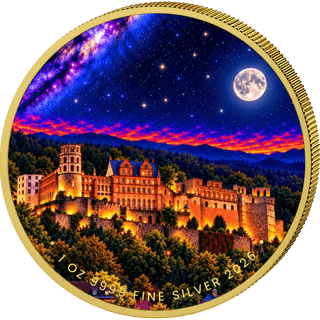 Heidelberg CastleHeidelbergAt night, gold rimGold rim
Enhanced precious metal products combine the material value of silver, gold and platinum with elaborate surface treatments that go far beyond classic minting. Whether partially gilded silver coins, platinum-plated editions, coloured designs or the crystal-studded Iced-Out look: finishes turn a plain bullion coin into a detail-rich collector's item with its own aesthetic. This guide explains the most important finishing techniques, typical minting qualities such as Proof, tax particularities, storage questions and the role that often very low mintages play for collector value.
The term enhancement describes any additional surface treatment applied to a precious metal product after the basic minting process. While a classic bullion coin such as the Maple Leaf is left in its pure minted state, an enhanced coin undergoes additional production steps: partial gilding, electroplating, colouring or the setting of crystals. The aim is a visual contrast that makes the design appear more three-dimensional and expressive.
Enhanced editions generally come from the collector segment, not from pure investment products. They are usually issued in low mintages, carry a fixed design theme and are often released as a series. The appeal lies in the combination of precious metal content and craftsmanship refinement, which turns a coin into a small work of art. The range includes both individual coins and coordinated precious metal sets that tell a theme across several editions.
Pure investment products such as a gold bar or a Vienna Philharmonic are priced according to the current daily metal price and are traded without a surcharge for additional appearance. Enhanced coins, by contrast, contain the same precious metal content but cost more, because the processing, the low mintage and collector demand justify a premium. Anyone wishing to invest primarily in the metal will find the more affordable option among bullion coins; anyone who appreciates collecting pleasure and design will find enhanced editions the right choice.
Enhancement is a collective term for a wide range of different processes. The following techniques are the most common on modern collector's coins:
Some editions combine several techniques, for example a partially gilded coin in Proof quality with additional colouring. Such multiple enhancements are especially elaborate and correspondingly limited.

In addition to classic yellow gold, rose gold coatings are also used, creating a warm, reddish tone. Ruthenium, a rare platinum-group metal, is used for dark, almost black surfaces on which partial gilding stands out especially well. These processes are technically demanding and remain reserved for special editions.
Closely linked to enhancement is minting quality, meaning the way the blank and the dies are processed. It determines the lustre, contrast and collector value:
Since enhanced designs only achieve their full effect through sharp contrasts, they are issued in Proof quality more often than average. Collectors pay particular attention to flawless surfaces here, which is why proper storage plays a central role. Anyone who appreciates minting quality and design will also find a broad range of themes among collector's coins.
A defining feature of enhanced editions is their strict limitation. While investment classics are issued in mintages of millions, enhanced collector's coins are often limited to just 50 to a few thousand pieces. The exact mintage number is usually stated in the product name and documented by certificates.
A low mintage does not automatically mean an increase in value, but it can boost demand among collectors if the design and series are popular. Collector value arises from the interplay of metal content, mintage size, condition and the popularity of the design. Since enhanced coins serve a collector segment, they should not be confused with pure investment objectives: information on value questions can be found in the Value Appreciation section.
An enhanced coin is not struck in mass quantities but designed in a small series: that is where its appeal as a collector's item lies.
Enhanced editions thrive on strong designs. Popular subjects include animal depictions, mythological and religious themes, historical anniversaries and modern cultural motifs. Many series draw on well-known investment designs and refine them through gilding or colouring. Anyone interested in particular design worlds will find a wide selection of thematically grouped editions under Themes, for example on Land Animals or Symbolism.
Good to know
The gold layer on a partially gilded silver coin is only a few micrometres thick. It barely affects the weight and serves purely for visual design: the actual precious metal value remains in the coin's silver core.
The tax classification is based on the base metal, not the enhancement. Investment gold is exempt from VAT in Germany under the applicable regulations; however, a partially or fully gilded silver coin remains, for tax purposes, a silver coin and is subject to VAT.
For silver coins, commercial dealers frequently apply the margin scheme, under which tax is levied only on the trading margin. This applies to enhanced silver editions in the same way as to other silver coins. Pure gold editions with enhancement follow the same system as gold coins. The specific tax treatment should be checked on a case-by-case basis; this text does not replace tax advice.
In Germany, a one-year holding period applies to privately held precious metals. If a coin is sold after this period has elapsed, any profit remains tax-free. This rule applies to enhanced collector's editions just as it does to classic silver bullion coins.
Enhanced surfaces are more sensitive than plain bullion strikes. Gilding, colouring and crystal settings can be damaged by fingerprints, friction or aggressive cleaning. Careful handling protects the condition and therefore the collector value.
Further storage materials, from capsules to safe accessories, can be found in the Accessories category. Especially with Proof editions, the original packaging with the certificate of authenticity should be kept carefully, as it documents the certified condition.

Anyone wishing to purchase enhanced coins should consider a few points in order to find the right edition for them:
As a German family business with ISO-compliant authenticity verification and over 200,000 customers, Kettner Edelmetalle places great importance on offering enhanced editions with documented provenance and verified quality as well. It is also worth taking a look at related collector topics such as the exclusive, strictly limited collector's coins or the overarching range of Kettner exclusive products.
Partially gilded means that only individual areas of the design are coated with an extremely thin layer of gold. The silver core remains fully intact; the gilding serves purely to highlight the design visually and barely increases the weight.
Enhanced editions belong to the collector segment. Their price is above the pure metal value because the processing, low mintage and design justify a premium. Anyone wishing to invest primarily in the precious metal will find the more cost-effective option in classic bullion coins or bars.
With Proof, the background appears mirror-bright and the design frosted, creating a strong contrast. Brilliant Uncirculated describes a mint-fresh quality with an even lustre, without this mirror-frosted effect. Proof is considered the highest minting quality.
Enhanced surfaces are sensitive and should be protected in a coin capsule and only touched by the edge. Cleaning or polishing should be avoided, as this damages the coating. Dry, temperature-stable storage preserves the condition and the collector value.
No. The gold layer is only a few micrometres thick and does not contribute significantly to the material value. The actual precious metal value of a partially gilded silver coin remains in the silver core; the premium arises from the processing and the mintage.
Iced Out refers to an enhancement in which numerous small crystals or cubic zirconia are set into the coin surface. This creates a sparkling, jewellery-like effect and is mainly used on strictly limited collector's editions.
 Refined
Stay informed with product launches, financial news and exclusive offers. Sign up for our free newsletter today.
By entering your email address and clicking the "Submit" button, you give the following consent: "I agree to be informed by email about new products, financial news and exclusive offers, and therefore consent to the processing of my email address for the purpose of sending the newsletter. I can revoke this consent at any time without giving reasons, with effect for the future. The lawfulness of processing carried out prior to revocation remains unaffected."