Sold out

1 oz Silver Australian Stock Horse 2016
€195.00
excl. shipping *
currently not available

 More than 300,000
 Over 30 years
 Secure shipping
 Google: 4.9/5
At the beginning of each year, usually in May, the 1 oz Stock Horse silver coin is released, produced and issued by the Australian Perth Mint. The diameter of the silver coin without capsule is 40.60 mm. The annual mintage is limited to just 10,000 coins limited. The fineness of the silver is 999/1000. The "Stock Horse" breed originates primarily from Australian cattle farmers, who use these horses purely as working horses in agriculture. Due to its physical characteristics, the Stock Horse is particularly well suited for this purpose.


Hardly any design connects Australian history and numismatic passion as vividly as the Australian Stock Horse. From 2013 to 2017, the renowned Perth Mint dedicated its own silver coin series to this hardy working horse breed: a new horse design every year, each year limited to just 10,000 pieces. The following sections cover the history of the breed, the design of each year of issue, the technical specifications, and tax and practical aspects surrounding the Stock Horse silver coin.
The Stock Horse silver coin ranks among the most sought-after Australian bullion and collector's coins of recent numismatics. It was issued by the Perth Mint, one of Australia's oldest and most respected mints. Unlike the island's great classics, such as the Silver Koala or the Kookaburra, the Stock Horse series was issued in a deliberately small quantity, which is part of its special appeal to collectors.
Each edition is struck from 999 fine silver, weighs exactly one troy ounce (around 31.1 grams) and measures 40.6 mm in diameter. As official Australian legal tender, the coin carries a face value of 1 Australian dollar, though its actual material value lies far above that. Anyone interested in further Australian coin issues will find a thematically related range from the same country of origin in the Silver Kangaroo category.
Behind the coin's design stands a horse breed with an eventful past. The Australian Stock Horse, often also called the Waler, traces back to the early colonial horses that arrived in New South Wales with the first fleets from 1788 onwards. From the crossing of Arabians, Thoroughbreds and imported horses from South America emerged a robust, enduring working animal that took its name, Waler, from its region of origin, New South Wales.
Over generations, Australian farmers and cattlemen, the so-called Stockmen, deliberately bred for the traits that mattered in the harsh outback: toughness, sure-footedness, a calm temperament and enormous resilience. These horses herded cattle and sheep, covered vast distances and became an indispensable companion to the rural population.
A horse that opened up the continent over centuries: the Stock Horse embodies the pioneering spirit of Australia like hardly any other animal.
It was not until 1971 that the Australian Stock Horse was officially recognised as an independent breed, when numerous breeders joined together in Tamworth to form the Australian Stock Horse Society. Today, around 190,000 animals are registered. The breed is regarded as a versatile all-rounder and is used not only in classic cattle work but also in sport: in campdrafting, show jumping, dressage and eventing. Anyone who appreciates the cultural significance of Australian animal designs will find another popular emblematic animal of the continent in the Silver Koala.
What makes the series special: each year of issue shows a different horse design. The design side captures the Stock Horse each time in a typically rural Australian setting, sometimes rearing, sometimes galloping, always in front of a farm landscape with the characteristic post-and-rail fence. It is precisely this yearly variety that makes assembling the complete collection of all five issues such an appealing goal for numismatists.
The first issue of 2013 presents a rearing Stock Horse against a classic farm backdrop. The 2014 year of issue shows a galloping horse at a paddock fence. In the years that followed, the Perth Mint continued to vary the depiction, until the fifth and final design of the series appeared in 2017. Alongside the horse, the inscription Australian Stock Horse, the year of minting, the fine weight of 1 oz and the purity designation 999 Silver are always struck into the coin.
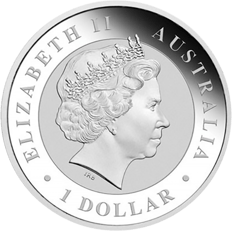
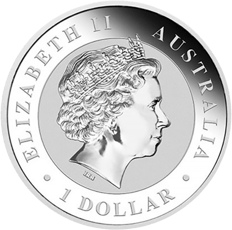
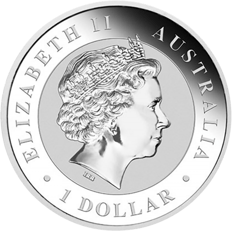
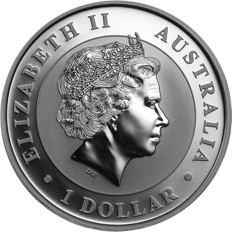
As with all official Australian coins, the value side is adorned with the portrait of Queen Elizabeth II, based on the design by British sculptor Ian Rank-Broadley. Around the edge are the Queen's name, Australia as the issuing country, and the face value of 1 dollar. A small P refers to the Perth mint. Collectors of classic portrait coins will also find elegantly designed value sides on the Vienna Philharmonic or the Britannia.
The key to its fascination lies in its limitation. With only 10,000 pieces per year of issue, the Stock Horse silver coin is among the rarest series coins ever minted in Australia. By comparison, classic bullion coins such as the Maple Leaf or the popular Somalia Elephant are issued in far higher mintages. The low mintage of the Stock Horse meant that individual issues were often quickly sold out after launch.
Since the series was permanently discontinued in 2017, no new years of issue will be added, which means the available stock is finite. For collectors, this means that each individual piece tends to gain in sentimental significance, especially the early years of issue and complete year sets. Anyone specifically seeking limited coin issues will find what they are looking for in the Rarities category. Statements about future price developments should, however, always be understood as a non-binding assessment and not as investment advice.
Silver coins combine two worlds: the material value of the precious metal and the collector's value of a limited coin issue. While the pure silver content corresponds to that of a 1 oz silver bar investment, a series coin like the Stock Horse additionally offers the potential of a collector's piece. Particularly with strictly limited issues, the collector's premium can exceed the pure metal value.
Anyone who views silver as a broader addition to long-term wealth building often combines bullion coins with classic silver bars. Coins score points here with better divisibility and international recognisability, while bars usually carry a lower premium. An overview of the entire range is provided by the silver coins category.
Tax Notice
Unlike investment gold, silver coins are, in principle, subject to VAT in Germany. The margin scheme is often applied for imported collector's coins. After a holding period of more than one year, private capital gains are tax-free under the applicable rules. This is general information and does not replace tax advice.
Proper storage is essential for a Stock Horse silver coin to retain its as-minted condition. Silver is sensitive to humidity and sulphur compounds and can tarnish over time. The coins are shipped from the mint in a protective capsule, complete with blister pack and certificate of authenticity from the Perth Mint; this original packaging should be kept whenever possible.
For long-term storage, close-fitting coin capsules are recommended, along with coin cassettes for protecting several pieces at once. A dry, temperature-stable storage location provides additional protection for the fine silver. Touching the coin's surface with bare fingers should be avoided, as skin oils can leave marks.
Beyond its investment and collector appeal, the Stock Horse silver coin makes an emotional gift. A galloping horse in gleaming fine silver appeals not only to numismatists but also delights horse lovers and anyone seeking a lasting token of appreciation. Its compact size, elaborate design and real precious metal value make it a gift with substance.
Anyone looking for further gift-worthy designs will find suitable alternatives in the thematically related Turtle category or among the gift ideas. Since the Stock Horse series has concluded, a timely decision is advisable if you have a specific year of issue in mind.
The series was minted by the Australian Perth Mint, one of the country's most historic mints. It was issued from 2013 to 2017 with a different horse design each year.
Each year of issue of the Stock Horse silver coin is limited to 10,000 pieces. This low mintage clearly distinguishes the series from classic bullion coins with mintages in the millions and makes it a sought-after collector's item.
The coin is struck from 999 fine silver, weighs one troy ounce (around 31.1 grams) and measures 40.6 mm in diameter. The face value is 1 Australian dollar; it was minted exclusively in the 1 oz denomination in Brilliant Uncirculated quality.
The Australian Stock Horse is a robust, enduring working horse breed with its origins in the so-called Waler. It emerged from the colonial horses of New South Wales and was officially recognised as an independent breed in 1971. To this day, it is regarded as a versatile all-rounder in cattle work and equestrian sport.
No. The Stock Horse series was discontinued in 2017 after five years of issue. No new issues will be added, which means the available stock is finite, an aspect that makes the series additionally interesting for collectors.
Ideally in its original capsule with certificate, supplemented by suitable coin capsules or coin cassettes. The coin should be kept dry, protected from light and only handled by the edge, to protect the fine silver from tarnishing and fingermarks.
 Stock Horse
Stay informed with product launches, financial news and exclusive offers. Sign up for our free newsletter today.
By entering your email address and clicking the "Submit" button, you give the following consent: "I agree to be informed by email about new products, financial news and exclusive offers, and therefore consent to the processing of my email address for the purpose of sending the newsletter. I can revoke this consent at any time without giving reasons, with effect for the future. The lawfulness of processing carried out prior to revocation remains unaffected."