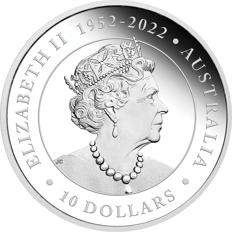
1 oz Silver Australian Wedge Tailed Eagle 2026 (Mintage: 50,000)
€95.00
incl. VAT and excl. shipping
Available in 2–3 business days

 More than 310,000
 Over 30 years
 Secure shipping
 Google: 4.9/5
Discover the four majestic birds of Canadian wildlife in the impressive coin series Birds of Prey Canada. Available in Mint State, Proof and coloured editions, these limited silver coins feature a fineness of 999.9.


Four majestic birds of prey, outstretched wings and a silver purity of 999.9/1,000: the Birds of Prey series from the Royal Canadian Mint ranks among the most striking Canadian silver coins of recent years. Minted between 2014 and 2015, it combines the finest investment silver with designs that captivate the eye of collectors and investors alike. This guide explores the origins, the four designs, technical specifications, minting variants, tax treatment and the proper storage of the series.
The Birds of Prey series is the direct successor to the Royal Canadian Mint's hugely successful Canadian Wildlife series. After the Wildlife editions, each with mintages of up to one million ounces, sold out at record speed, the Canadian mint consistently continued the idea of a thematically self-contained bullion series, this time focusing on the birds of prey of the North American continent. Anyone familiar with the predecessor series will find the matching editions in the Wildlife Canada category.
A characteristic feature of both series is the high fineness of 999.9, which exceeded the then-common market standard of 999. This clearly positioned the series within the segment of premium silver coins, without losing the character of an affordable bullion coin. Each edition weighs exactly one troy ounce (31.1 grams) and measures around 38 millimetres in diameter.
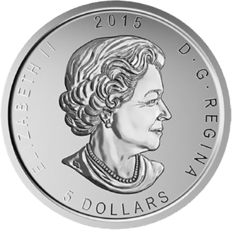
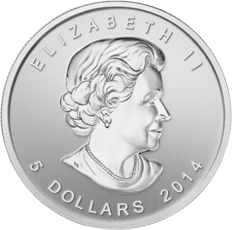
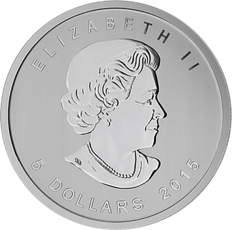
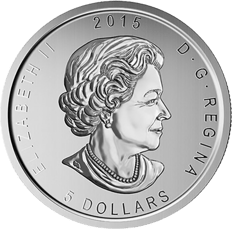
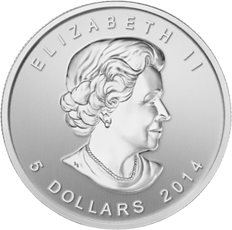
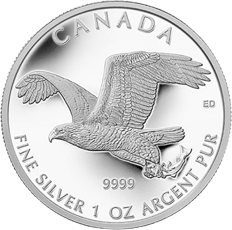
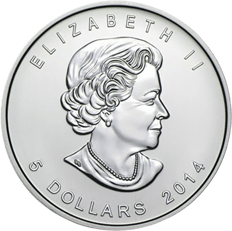
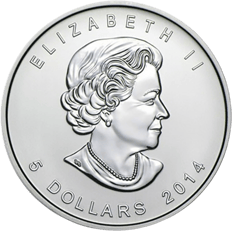
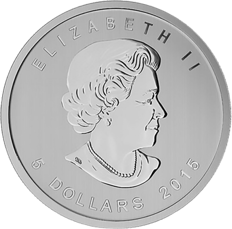
Across two years of issue, four designs appeared, created by Canadian designer Emily Damstra. Each coin shows a bird of prey in a dynamic pose: in flight, approaching, or keeping watchful vigilance. The reverse carries the portrait of Queen Elizabeth II based on the design by Susanna Blunt, deliberately kept understated so that the birds dominate the visual space.
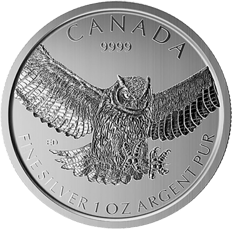
The owl, as the final design, enjoys particular attention among collectors, since it concludes the series and thus marks a natural endpoint. Design enthusiasts who collect birds of prey across different countries will find thematically related editions, for example in the Australian Kookaburra or in the Andorra Eagle category.
All editions share the same core specifications: 1 troy ounce of fine silver, a fineness of 999.9, a face value of 5 Canadian dollars and a diameter of around 38 millimetres. The regular bullion editions were minted with mintages of up to one million pieces each, which makes the series liquid and easy to trade. In addition, there are significantly scarcer Proof variants and coloured special editions.
| Design | Year | Mintage (Bullion) | Proof Mintage | Coloured |
|---|---|---|---|---|
| Peregrine Falcon | 2014 | 1,000,000 | 20,000 | 5,000 |
| Bald Eagle | 2014 | 1,000,000 | 75,000 | 5,000 |
| Red-Tailed Hawk | 2015 | 1,000,000 | n/a | 5,000 |
| Great Horned Owl | 2015 | 1,000,000 | n/a | 5,000 |
The comparatively low mintages of the coloured editions, just 5,000 pieces each, explain their appeal to collectors. Anyone enthusiastic about coloured editions will find further examples in the coloured silver coins category.
The series was issued in several versions that differ in price, appearance and target audience. Knowing the differences helps in classifying the individual editions.
The classic investment edition in Mint State (Brilliant Uncirculated) forms the backbone of the series. It is the most affordable, closely tracks the silver price, and suits anyone who is primarily focused on the material value. This variant is typically traded in larger quantities.
The Proof version features mirrored fields and frosted designs: an elaborate minting quality that appeals above all to collectors. For the Bald Eagle, the Proof mintage was highest at 75,000 pieces, while for the Peregrine Falcon it was considerably lower at 20,000 pieces.
Coloured editions vividly showcase the birds' plumage colours, giving the designs a particularly lifelike appearance. With only 5,000 pieces per design, they are the rarest variant in the series.
A bird of prey in a dive, captured in fine silver: the Birds of Prey series combines numismatic design with the reliable value of precious metal.
Silver coins from the Royal Canadian Mint of this era occasionally show so-called milk spots: light, cloudy discolourations on the surface. They result from residues from the minting process and are already present from the time of production, rather than being caused by improper storage.
For investors focused on the metal, milk spots are therefore purely a cosmetic issue. Anyone who values flawless condition should inspect collector editions carefully before purchase.
Unlike investment gold, which is exempt from VAT in Germany, silver coins are subject to VAT. For bullion coins from outside the EU, commercial dealers often apply the margin scheme, which can bring the effective tax burden below the standard rate. Also important for private investors is the holding period: after a holding period of more than one year, any capital gain on the private sale of silver coins is exempt from income tax.
Tax Note
Tax regulations may change and depend on individual circumstances. The points mentioned here are for general information only and do not replace tax advice. Anyone wishing to combine silver and gold will find VAT-exempt alternatives under gold coins.
Silver reacts more sensitively to environmental influences than gold, which is why proper storage determines its long-term condition. The Birds of Prey coins are delivered from the mint in stable units: individually in a capsule, in sets of 25 in a coin tube, and in sets of 500 in a monster box.
Anyone who sees the series as a building block within a more broadly diversified collection can combine it with other Canadian classics such as the Maple Leaf.
Within the Canadian silver portfolio, the series stands between pure investment classics and thematic design series. The Maple Leaf scores with permanent availability and worldwide recognition, while the Birds of Prey, due to their run limited to two years, has a self-contained, manageable collecting character. Animal series from other mints, such as the Somalia Elephant or the Austrian Vienna Philharmonic, cater to similar collecting interests with their own character.
Anyone specifically looking for birds of prey and eagle designs will also find what they are looking for with the American American Eagle. For getting started with broader silver holdings, it is also worth taking a look at the overview of silver coins and the matching silver bars as a complementary form of investment.
The series features the Peregrine Falcon and the Bald Eagle (both 2014), as well as the Red-Tailed Hawk and the Great Horned Owl (both 2015). All four designs were created by designer Emily Damstra.
Each coin contains one troy ounce of silver with a fineness of 999.9/1,000. This places the series above the standard of 999 that was common at the time, and makes it one of the Royal Canadian Mint's premium bullion editions.
Not for bullion editions: milk spots only affect the surface, the silver content remains unchanged. For collector pieces in Proof quality, however, visible spots can affect the value to enthusiasts.
Mint State is the affordable investment variant close to the silver price. The Proof version offers mirrored fields for collectors. Coloured editions showcase the plumage colours and, with only 5,000 pieces per design, are the rarest.
Unlike investment gold, silver coins are subject to VAT, often in the form of the margin scheme. After a holding period of more than one year, a capital gain for private investors is exempt from income tax. This information does not replace tax advice.
The Great Horned Owl from 2015 was the final design in the series, bringing the series, which was planned for four editions, to a close. This concluding character makes it particularly appealing to collectors.
 Birds of Prey
Stay informed with product launches, financial news and exclusive offers. Sign up for our free newsletter today.
By entering your email address and clicking the "Submit" button, you give the following consent: "I agree to be informed by email about new products, financial news and exclusive offers, and therefore consent to the processing of my email address for the purpose of sending the newsletter. I can revoke this consent at any time without giving reasons, with effect for the future. The lawfulness of processing carried out prior to revocation remains unaffected."