


Sold out

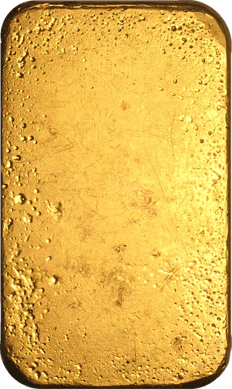
10 Tolas Gold Bar Credit Suisse (Cast Bar)
€13,610.70
VAT-free and excl. shipping
currently not available

 More than 310,000
 Over 30 years
 Secure shipping
 Google: 4.9/5
The 3.75 oz gold bar is one of the most fascinating bar sizes in international gold trading, and at the same time one of the least known here in Germany. Behind these 3.75 troy ounces lies a format steeped in tradition from the Orient: the Ten Tola Bar, which has been the preferred form of gold investment for generations in India, Pakistan and the Persian Gulf. This guide examines the origin, weight and fineness of this special bar, classifies it for tax purposes, and shows which investors stand to benefit from choosing this unusual format.
A 3.75 oz gold bar weighs the equivalent of around 116.6 grams of pure gold, which corresponds exactly to ten tola, the classic unit of measurement of the Indian subcontinent. A single tola measures about 11.66 grams, and ten of them add up to that distinctive bar weight, which is referred to in Western trade as "3.75 oz" or simply as the Ten Tola Bar. This places the bar in the weight class between the 100 g gold bar and the 250 g gold bar, filling a gap that is not otherwise covered by the standard European denominations.
The fineness of standard bullion bars is typically 999 to 999.9 parts per thousand, meaning pure fine gold. Unlike jewellery gold, which is often quoted in carats, gold bars speak the language of fineness: 999.9 corresponds to 24 carats in an almost perfectly pure form. This high degree of purity is a basic requirement for a gold bar to qualify as investment gold and to be traded accordingly. Anyone wishing to get a general overview of the variety of sizes available will find, in the broader gold bars range, an overview ranging from gram bars to kilo bars.
The tola is a centuries-old unit of weight that remains alive today in India and large parts of the Middle East. While the troy ounce (around 31.1 grams) became established as the unit of account in Western gold trading, the tola remained the familiar measure for gold in Asian markets. The Ten Tola Bar emerged from precisely this tradition: it was compact enough for private ownership while still valuable enough to store a small fortune in a compact form.
To this day, the format remains one of the most widely traded bar sizes in countries such as India, Bangladesh, Pakistan, Nepal, Singapore and the United Arab Emirates. Renowned refineries such as Johnson Matthey, PAMP and Credit Suisse minted and cast these bars by the million over the decades, some minted, some as cast bars with their characteristically slightly irregular surface. It is precisely this cultural background that gives the 3.75 oz gold bar an aura that sets it apart from the plain, functional European denominations.
A tola bar tells of weddings, inheritances and generations: in these cultures, gold is not merely an investment but a living tradition.
Gold bars are produced in two fundamentally different ways. Minted bars are stamped out of a rolled gold strip and then struck with a design, logo, fineness mark and often a serial number; they appear flawless and uniform. Cast bars, on the other hand, are produced by pouring molten gold into a mould; they have their own, often somewhat rougher appearance and are regarded as the more original variant.
The classic Ten Tola Bar is traditionally produced as a cast bar and is often issued without a serial number, a peculiarity rooted in its origin. Anyone looking for minted bars of a similar order of magnitude will find what they need in the 1 oz gold bar range or with the rarer 10 oz gold bar. An overview of the most important mints and foundries is provided in the manufacturers category, including established names such as Heraeus or Argor Heraeus.
A significant advantage of gold bars over other tangible assets is their tax status. In Germany, investment gold is exempt from VAT under § 25c UStG, provided it meets the statutory requirements for fineness and form, and the 3.75 oz gold bar with a fineness of 999 or 999.9 clearly meets them. This means no VAT is charged on purchase, which makes gold noticeably more attractive than silver, platinum or palladium.
Tax notice
Investment gold is exempt from VAT under § 25c UStG. Any private capital gain from physical gold remains tax-free once the one-year holding period has elapsed. This information does not replace individual tax advice.
There is also the one-year holding period: if physical gold is held for longer than one year, any resulting capital gain remains tax-free for private individuals. This combination makes gold bars a popular building block for retirement provision and inflation hedging. Anyone wishing to build up their holdings regularly in smaller steps will also find suitable alternatives in the savings plan products range.
Precisely because the Ten Tola Bar is often issued without a serial number, authenticity verification takes on particular importance. Reputable dealers source their bars exclusively from manufacturers that meet the LBMA Good Delivery standard (London Bullion Market Association) and check every piece before shipping. Common verification methods include checking weight and dimensions, density measurement, and non-destructive techniques such as ultrasonic or X-ray fluorescence analysis.
The following characteristics provide guidance when identifying a genuine gold bar:
For storage, a home safe, a bank safe deposit box or an insured safekeeping system are all suitable options. To keep the surface in flawless condition, it is advisable to store the bar in suitable accessories, such as coin capsules or a lockable coin case from the accessories range.
The Ten Tola Bar is not a standard product for beginners, but rather something for connoisseurs and collectors who value an extraordinary format. Anyone wanting to concentrate substantial gold value in a single, culturally rich piece makes a deliberate choice with this bar. Investors seeking maximum flexibility when reselling, on the other hand, often opt for smaller, globally standardised units.
The following comparison helps put this into perspective:
| Aspect | 3.75 oz (10 tola) | Standard denominations |
|---|---|---|
| Weight | approx. 116.6 g | 1 g to 1 kg |
| Prevalence | Asia, Middle East | worldwide |
| Character | traditional, collectible | standardised, liquid |
| Divisibility | low (single piece) | high (many units) |
Anyone who prefers smaller, easily divisible units will find these in the 50 g gold bar or the compact 20 g gold bar. As a complement to bars, it is also worth taking a look at classic bullion coins such as the Krugerrand or the Maple Leaf from the gold coins range.
Gold has always been regarded as a crisis-proof tangible asset whose material value is based on the daily gold price. The price of a 3.75 oz gold bar is made up of the pure material value plus a moderate premium for production and trading. Since this format is particularly sought after in Asian markets, it has its own vibrant trading culture there, while in Europe it remains a collector's piece for enthusiasts.
As a German family business based in Villingen-Schwenningen, Kettner Edelmetalle places great importance on ISO-compliant authenticity verification and fully insured shipping. Anyone who views physical gold as a building block for long-term value preservation will find further perspectives in the value appreciation and crisis protection topic areas. Physical gold is explicitly not associated with any guaranteed return; what counts is its character as a real, tangible asset.
A 3.75 oz gold bar weighs around 116.6 grams of pure gold. This corresponds exactly to ten tola, the traditional Indian unit of weight of approximately 11.66 grams each.
The tola is the classic unit for measuring gold in India and the Middle East. Ten tola add up to around 116.6 grams, which is quoted in Western trade as 3.75 troy ounces. Both terms refer to the same bar.
Yes. Investment gold with a fineness of at least 995 parts per thousand is exempt from VAT under § 25c UStG. The 3.75 oz gold bar, with a fineness of 999 or 999.9, meets this requirement.
Both variants contain the same fine gold. Minted bars look more flawless and usually carry a serial number, while cast bars such as the classic tola bar win over buyers with their original character. The choice is a matter of taste.
Important indicators include the exact weight, correct dimensions, the high density of around 19.32 g/cm³, and a clear fineness and manufacturer's stamp. Reputable dealers additionally rely on non-destructive methods such as ultrasonic or X-ray fluorescence analysis.
The 3.75 oz gold bar appeals primarily to connoisseurs and collectors who appreciate an extraordinary format steeped in tradition. Anyone looking for maximum divisibility when reselling is often better served by smaller standard denominations.
 3.75 oz Gold Bars
Stay informed with product launches, financial news and exclusive offers. Sign up for our free newsletter today.
By entering your email address and clicking the “Submit” button, you give the following consent: “I agree to be informed by email about new products, financial news and exclusive offers, and therefore consent to the processing of my email address for the purpose of sending the newsletter. I can revoke this consent at any time without giving reasons, with effect for the future. The lawfulness of processing carried out prior to revocation remains unaffected.”