





Silver Drachm Sassanid Empire Great King Khosrow II (591-628 AD | Second Persian Empire)
- Genuine Original: around 1,400 years old
- Royal Portrait: with winged crown
- World History: to hold in hand
- Genuine OriginalHand-struck and once used as a means of payment
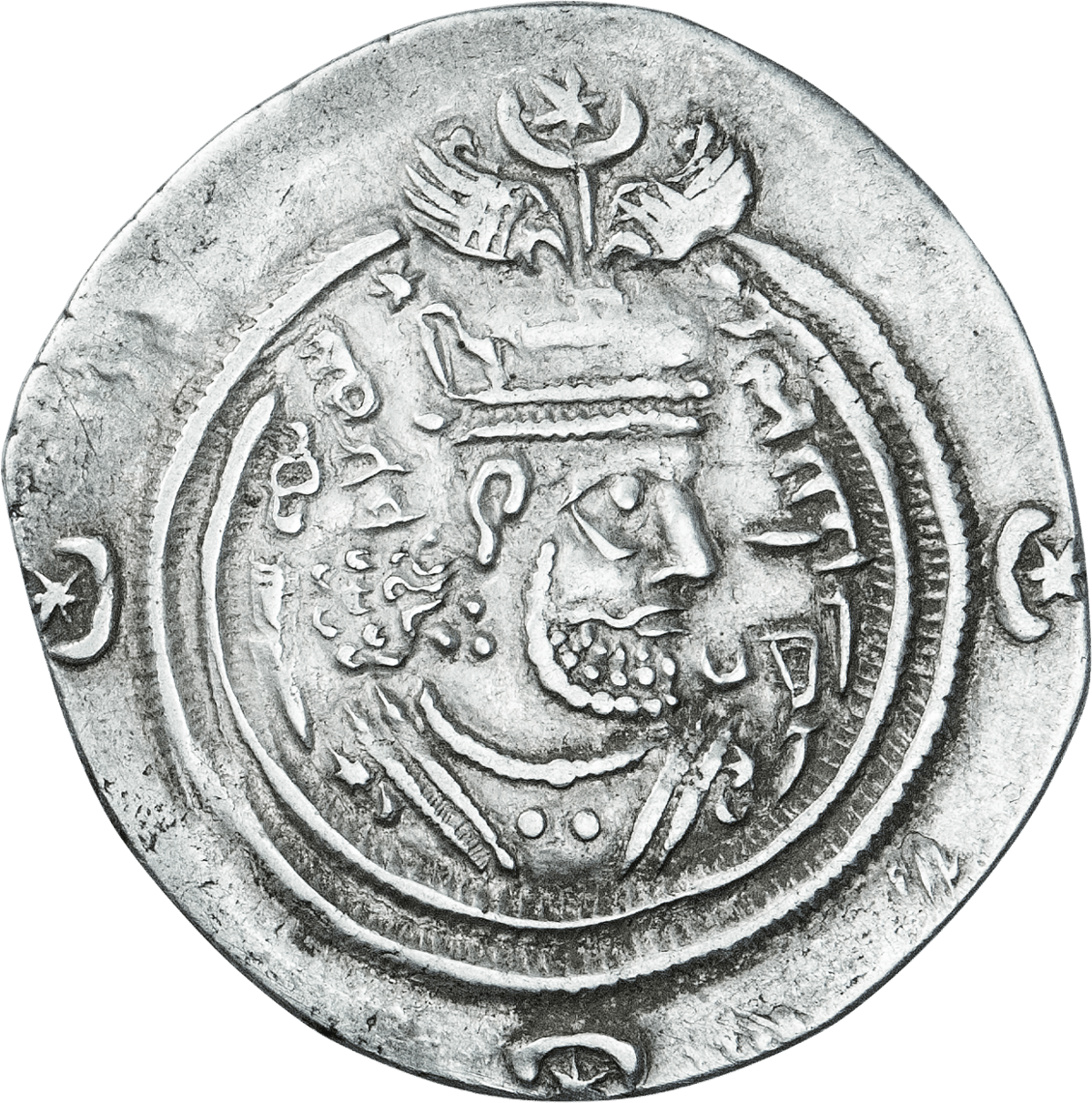
- Royal PortraitMagnificent crown with crescent, star and two wings
- World HistoryFrom the era Persia captured Jerusalem in 614





By submitting your order you accept our Terms & Conditions and confirm the Right of withdrawal.
- Genuine Original: around 1,400 years old
- Royal Portrait: with winged crown
- World History: to hold in hand
 Price alert
 Share

Ancient original · The Sasanian empire
Drachm of Xusro IIAbout 1,400 years old.
Xusro II lost his throne and won it back with the help of the eastern Roman emperor Maurice. His epithet Parviz means “the Victorious”.
- Ruler
- Xusro IIAD 591 to 628
- Diameter
- 30 mm
- Weight
- c. 4.2 g
Xusro II lost his throne and won it back with the help of the eastern Roman emperor Maurice. His epithet Parviz means “the Victorious”.
- Ruler
- Xusro IIAD 591 to 628
- Diameter
- 30 mm
- Weight
- c. 4.2 g
The Sasanian empire · AD 224 to 651
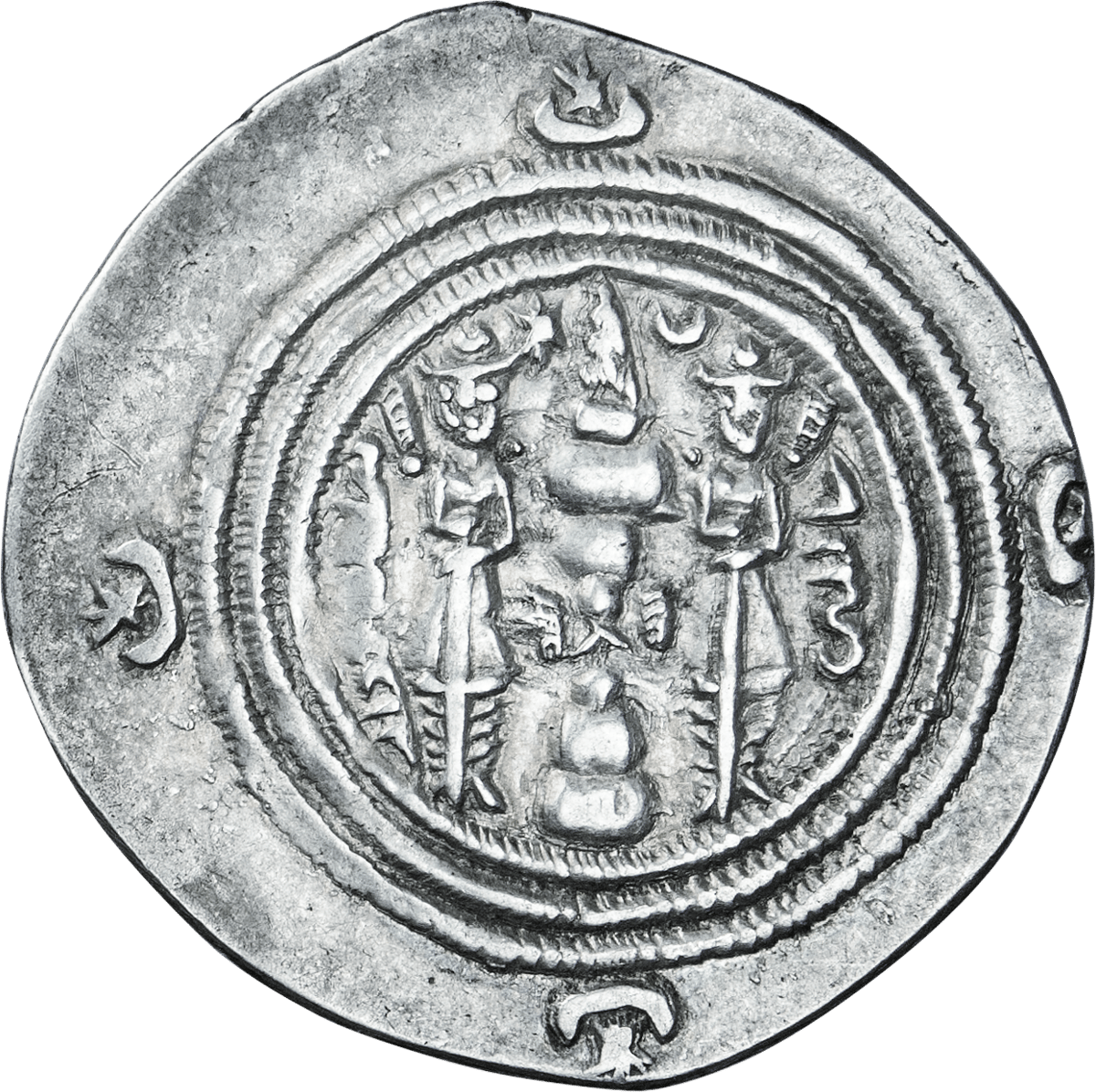
Wings on the crown, fire on the altar: the drachm of the Sasanians.
The Sasanians ruled from Ctesiphon and for centuries were Rome's great rival in the east. The fire altar with two attendants on their drachms is a symbol of their faith, Zoroastrianism. Under Xusro II Persian armies took Jerusalem and Egypt, until the emperor Heraclius pushed deep into the Persian heartland.
The picture shows an example. The piece you receive may differ in detail. On this type the reverse names the mint and the regnal year in Pahlavi.
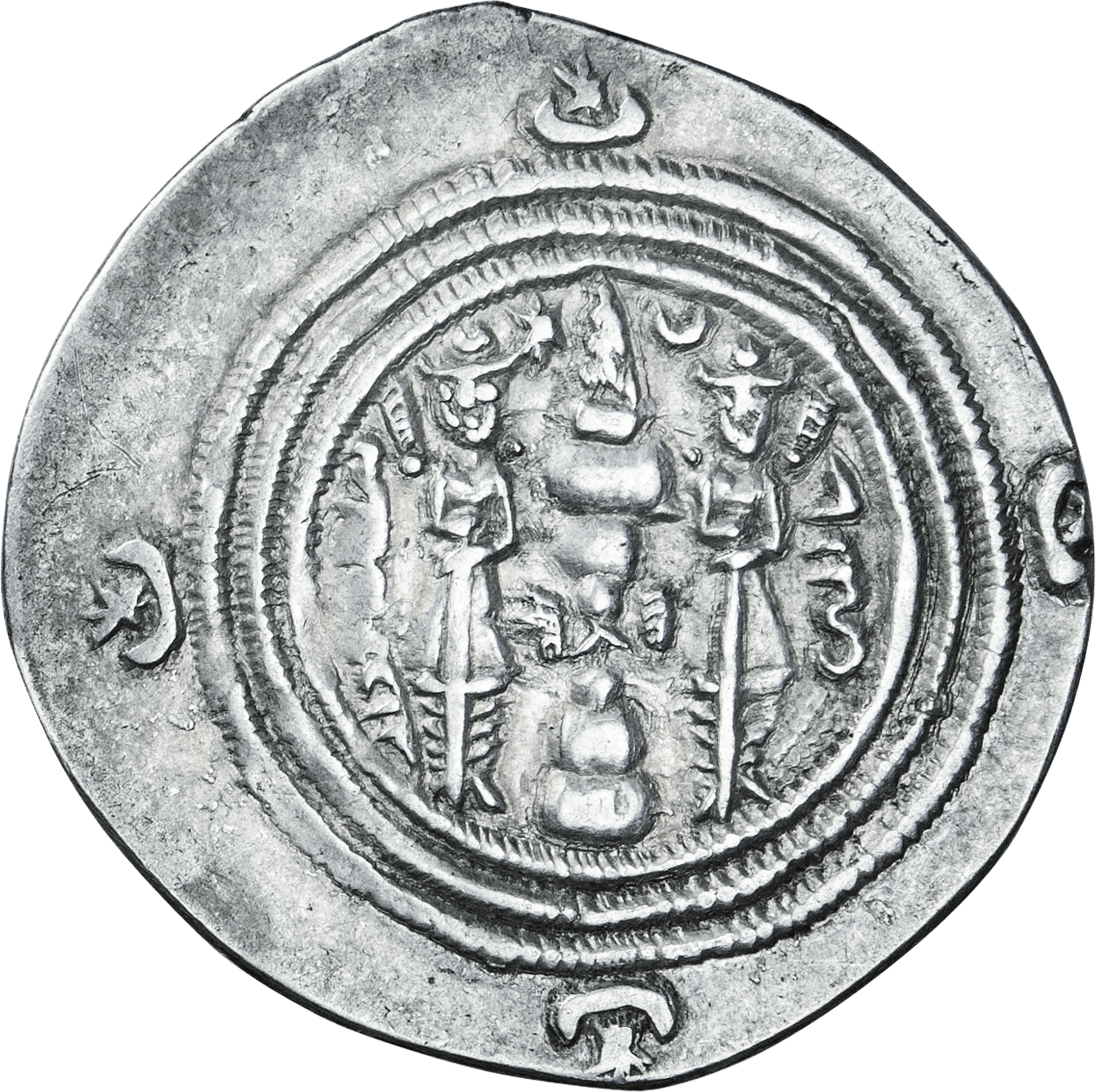
Under the lens
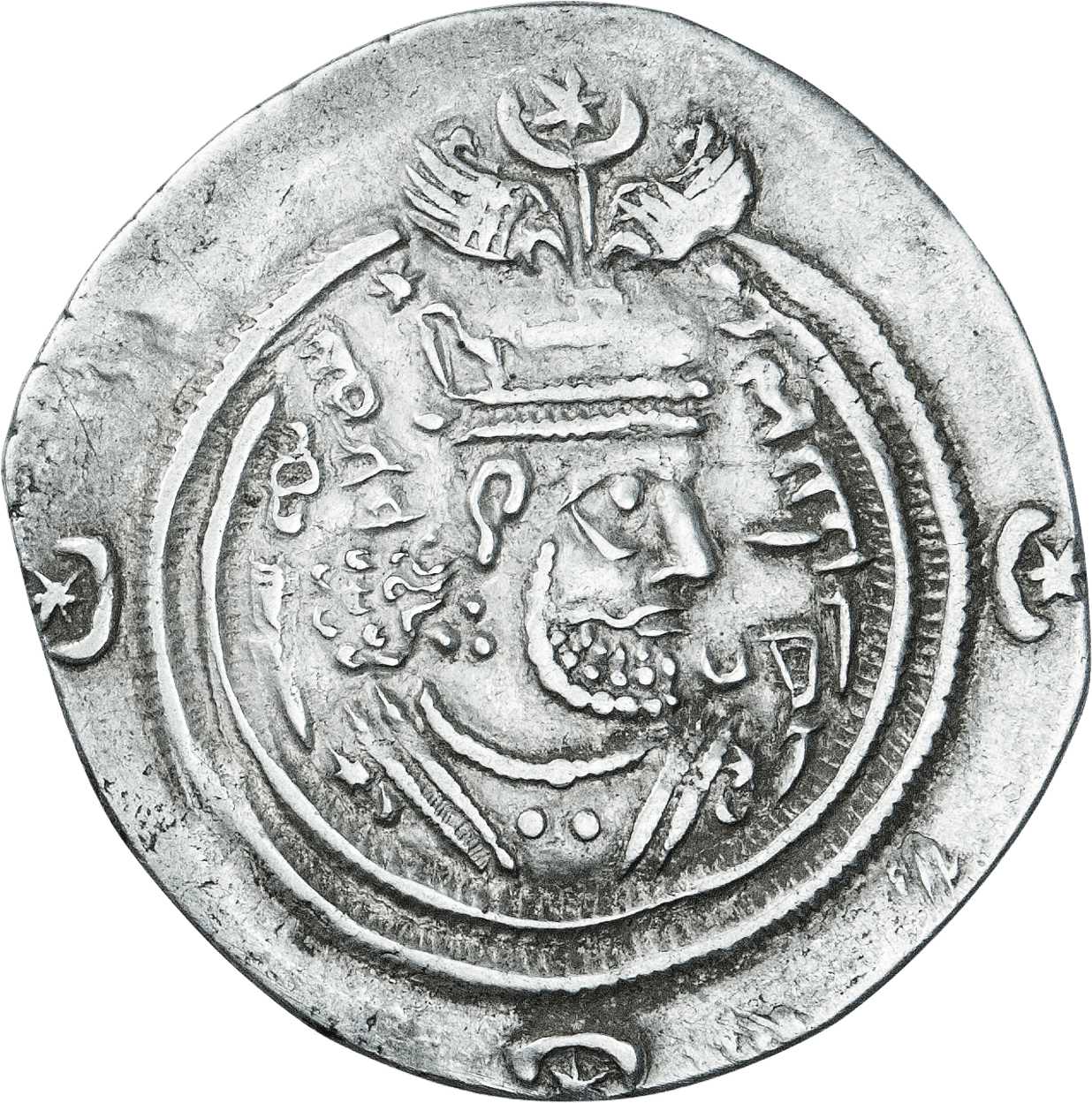
Drachm of Xusro II up close: every detail about 1,400 years old.
At the same scale
Rome and its neighbours: coins side by side
The follis changed its size: about 27 mm early in the tetrarchy, 20 to 24 mm under Maximinus II, 20 mm under Constantine and his sons, 28 mm under Justinian.
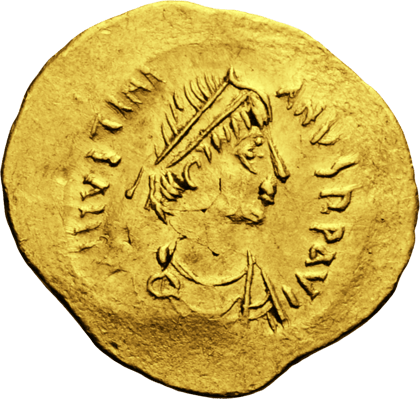 TremissisJustinian I
16 mm
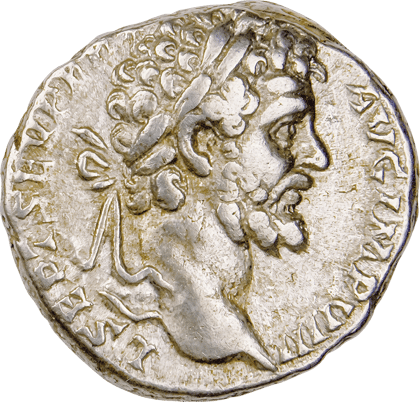 DenariusSeptimius Severus
c. 18 mm
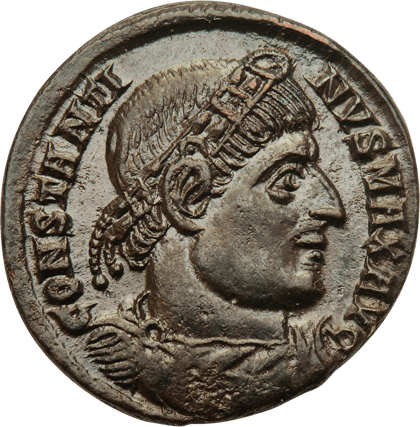 FollisConstantine I
20 mm
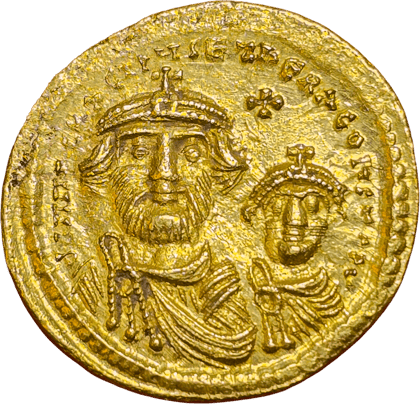 SolidusHeraclius
20 mm
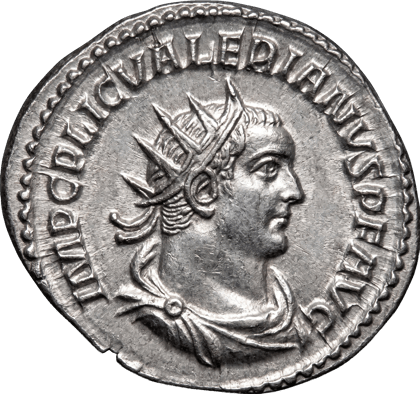 AntoninianusValerian I
21 to 23 mm
 1 eurofor comparison
23.25 mm
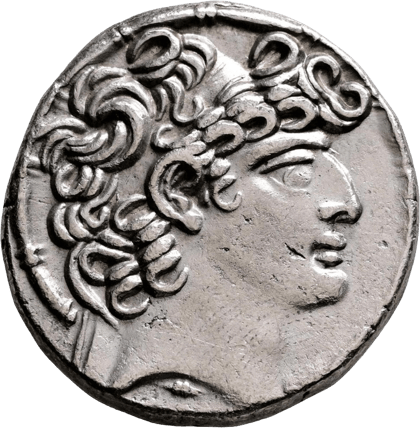 TetradrachmGaius Cassius
c. 27 mm
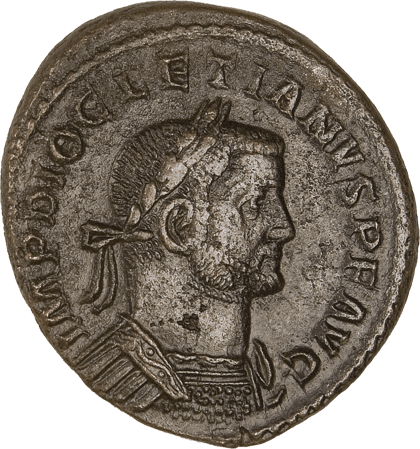 FollisDiocletian
27 mm
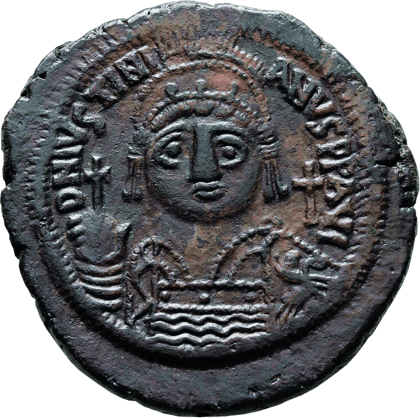 FollisJustinian I
28 mm
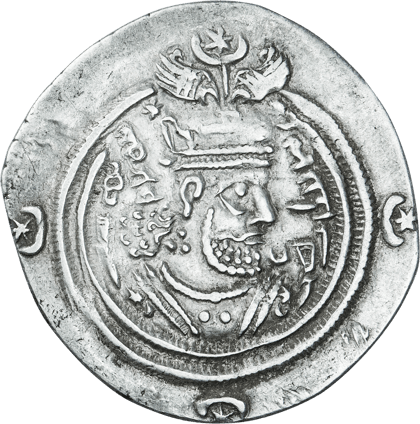 DrachmXusro II
30 mmthis page
Where it belongs
43 originals from about 1,100 years
Each piece stands at the years of its ruler or of its type. The era of this piece is highlighted; choose another one to see its originals.
The Sasanian empire AD 224 to 651 · 1 original
 Drachm of Xusro IIAD 591 to 628this page

Keeping it
First things first: do not clean it.
The dark layer on bronze and the matte grey on silver are called patina. It has grown over centuries and protects the surface. Polishing it away takes that protection from the piece.
- Hold it by the edgeSkin oil can etch itself permanently into the surface. Take the piece by the rim between thumb and forefinger, over a soft surface.
- Store each piece on its own, and dryKeep each piece on its own in a dry place, in a capsule or an acid-free case. PVC sleeves do not belong there, they attack the surface.
- No agents, no polishing clothNo vinegar, no silver cloth, no ultrasound. According to the Bank of Canada Museum, almost any attempt at cleaning without a conservator leaves damage, mostly from abrasion.

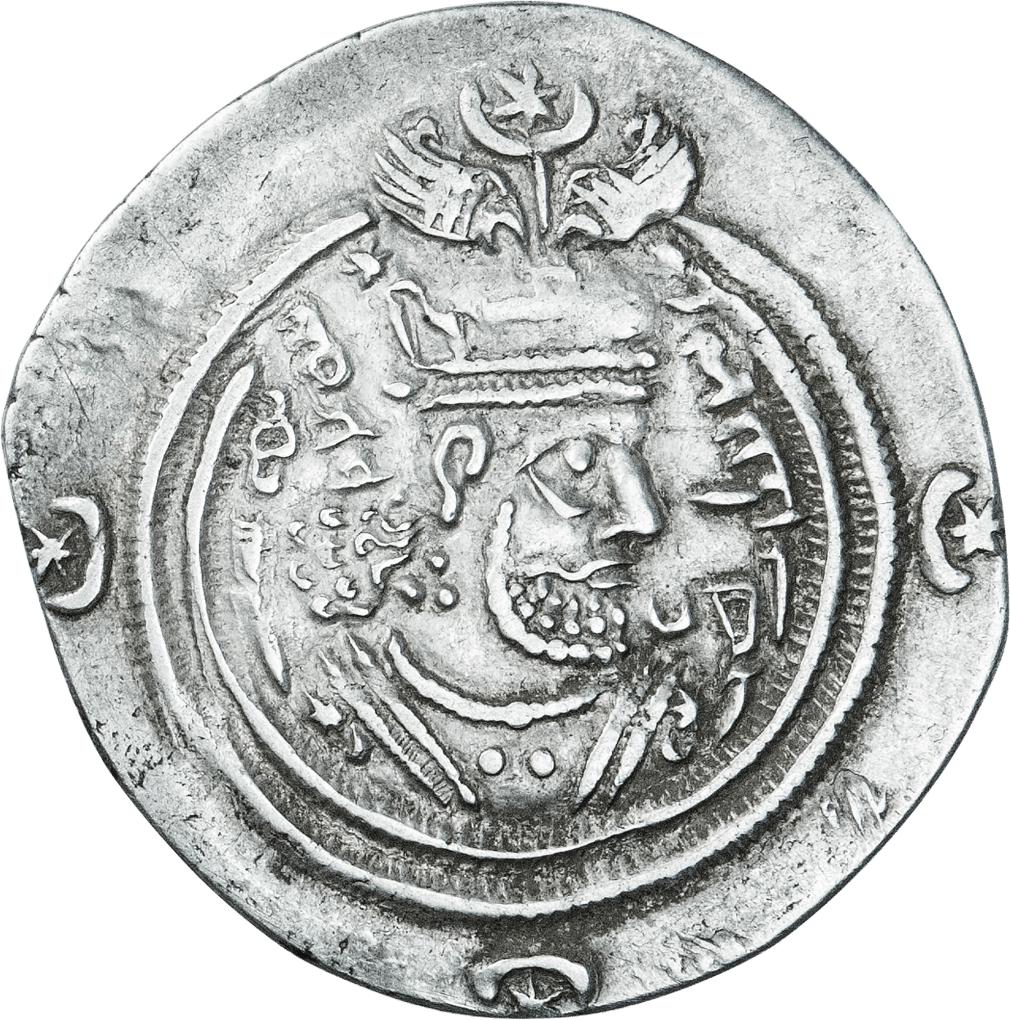
Struck about 1,400 years ago.
Xusro II and his world are long gone. The piece has remained, with the traces of its circulation.
Silver Drachm of the Sasanian Great King Khosrow II – Hand-Struck Money from the Second Persian Empire
Roughly 1,400 years old. Struck by hand onto an irregular flan, it circulated for decades through bazaars, caravan stations, tax offices and soldiers' hands. This ancient coin is no modern collector's product, but genuine currency from the twilight of the Sasanian Empire – issued under the Great King Khosrow II (in German sources Chosrau II, Persian Khosrow Parviz, "the Victorious"), who ruled from 591 to 628 AD after a brief interruption and is regarded as the last great king of the Second Persian Empire. Anyone searching for silver coins with genuine history will find here an original that can be held in the hand, its strike marks felt with a finger.
Obverse and Reverse: Royal Portrait and Zoroastrian Fire Altar
The obverse shows the bust of the Great King in profile facing right – with a richly decorated crown, a frontal crescent, a star-in-crescent finial and two wings, plus ribbons over the shoulders. Surrounding it are Pahlavi legends, including the blessing formula "afzud xwarrah" ("May his glory increase") and the royal name Husraw. Crescent-and-star motifs repeat around the border.
The reverse bears the emblem of the empire: a Zoroastrian fire altar with fluttering ribbons, flanked by two attendants facing forward. To the left of the legend is the regnal year, to the right the mint abbreviation – also in Pahlavi script. It is precisely this combination that makes each piece individual: over 100 minting locations and nearly four decades of reign result in a wide range of variants. Numismatically, the type is usually classified as Göbl II/3 or IIb/3.
Technical Data at a Glance
- Face value: Drachm (Drachma)
- Precious metal: Silver, fineness varies
- Gross weight: approx. 4.2 g
- Diameter: 30 mm
- Minting technique: hammered, hand-struck on an irregular flan
- Year of issue / mint / manufacturer: various (reign 591–628 AD)
- Country of origin: Persia
- Series: History · Investment purpose: Collector's product
- Condition: circulated (used), grade of preservation varies
Condition – Honest Traces of a Long Life
These pieces are circulated currency and bear corresponding traces: a darker patina, individual centering, nicks, signs of wear, and sometimes weaker legend areas. This is precisely what makes them appealing. Since the year of issue, mint, and reverse variant may vary, the specimen delivered will differ from the image shown – you receive an original, not a mass-produced item. Please understand that the image in the shop is an example and may individually differ from the delivered item in terms of appearance and condition due to historical circumstances.
A King Who Wrote World History
Khosrow II ascended the throne in 590, lost it in a civil war to the usurper Bahram Chobin, and returned with Byzantine assistance. What followed was the last great war between Persia and Byzantium. His troops captured Jerusalem in 614, and the empire temporarily extended as far as Egypt. Then the tide turned: Emperor Heraclius struck back, and in 628 the Great King was overthrown. A few years later the Arab conquest of Persia began – and even the new rulers initially retained the tried-and-tested coin type. The Arab-Sasanian dirhams follow directly on from these drachms. Whoever owns such a piece holds the transition of two world eras in their hand.
Gold is humanity's oldest currency and has outlived every paper currency. Silver has accompanied it for millennia as everyday money – and this drachm is the physical proof of that.
Silver: A Tangible Asset with Intrinsic Value
Unlike fiat money, whose purchasing power depends on trust in governments, silver possesses its own intrinsic value. The metal is available in limited quantities, liquidly tradable worldwide as a raw material, and in strong industrial demand in electronics, solar and medical technology. It does not corrode, it does not decay, it retains its physical properties over centuries – this drachm is impressive proof of that. This is why physical silver is traditionally regarded as an inflation hedge and as crisis protection, as a medium of exchange for smaller transactions, and as a building block of wealth that can be passed down through generations. For tax purposes: profits from the sale of silver are generally tax-free, provided the holding period was at least one year.
Who Benefits Most from This Ancient Coin
- Newcomers to antiquity: Sasanian drachms are comparatively well available and thus offer an affordable entry into 1,400-year-old numismatics – more attractive as a starting point than, for example, Greek tetradrachms.
- Thematic collectors: Ideal as a link between Roman-Byzantine and Islamic coinage.
- Tangible asset enthusiasts: Historical collector's value and silver substance combined in a single piece.
- Gift givers: A gift that tells a story – more impressive than any modern re-strike.
A note for comparison: modern bullion coins such as Maple Leaf or Vienna Philharmonic score with defined fineness and denomination. This drachm plays in a different league – its value derives from age, the rarity of the respective variant, and historical significance. Both complement each other excellently within a portfolio. Shipping is, of course, carried out as insured value shipping.
Product image may differ from the actual product.
