





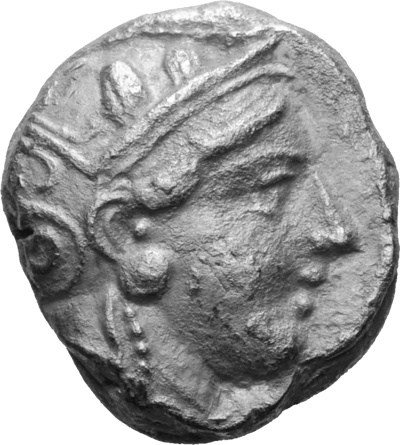

Ancient Silver Tetradrachm Athena and Owl (380-250 BC | Later Style)
- Collector coin: Especially interesting for collectors
- Secure shipping: 100% insured & anonymous delivery
- Collector coinEspecially interesting for collectors
- Secure shipping100% insured & anonymous delivery





By submitting your order you accept our Terms & Conditions and confirm the Right of withdrawal.
- Collector coin: Especially interesting for collectors
- Secure shipping: 100% insured & anonymous delivery
 Price alert
 Share
Athena and Owl: The Money of the Athenians in Your Hands
Some coins tell history. This one wrote it. The ancient tetradrachm featuring Athena and the owl is struck from silver and dates from a time when Athens was the intellectual centre of the Greek world, between roughly 380 and 250 BC. Plato taught at his Academy, Aristotle conducted research at the Lyceum, and on the Agora exactly such pieces changed hands. Whoever holds one today touches more than two millennia of the past.
The "Owl of Athens" is still considered the most famous ancient Greek coin of all. Traders from Sicily to Egypt accepted it because it was trusted. Hardly any other design embodies so strongly the idea that sound money endures.
The Design: Goddess of Wisdom, Bird of Vigilance
On the obverse, the head of the goddess Athena (Pallas Athena) looks right in profile. The patron goddess of the city, goddess of wisdom, craftsmanship and strategic warfare, wears an Attic helmet with a crest, decorated with three upright olive leaves and a spiral tendril. Below: the large, almond-shaped eye, a distinctive nose, a round earring. The relief is high and sculptural, as is typical of hand-struck ancient coins.
The reverse shows the standing owl with its head turned frontally, the little owl, Athena's sacred bird. An olive branch and a crescent moon accompany it, along with the inscription ΑΘΕ, the abbreviation for "of the Athenians". An incuse square (quadratum incusum) frames the design.
Why "later style"?
Athens held on to Athena and the owl for around two centuries. Deliberately so, since the high recognition value was part of this money's strength. Differences show up mainly in style. The tetradrachms of the 4th century BC are classified in numismatics as the later classical style; experts recognise them, among other things, by a pi-shaped ornament on Athena's helmet. The strikes appear more compact and are often struck on thick, irregular blanks. Compared to the mass strikes of the 5th century, they possess a very distinctive, powerful character.
Technical Data at a Glance
- Denomination: Tetradrachm (face value 4 drachms)
- Metal: Silver
- Gross weight: 16.9 g
- Diameter: 21.00 mm
- Period of minting: approx. 380-250 BC, later style (year of issue varies)
- Origin: Greece (Athens, Attica)
- Obverse: Head of Athena with Attic helmet, facing right
- Reverse: Owl, olive branch, crescent moon, inscription ΑΘΕ
- Packaging: Case with certificate of authenticity
- Condition: Varied, circulated. The pieces are coins that once served as actual payment and bear corresponding traces: darker patina, individual centring, nicks, wear and sometimes weaker areas of the legend. That is precisely what makes them appealing. Since the year of issue, mint and reverse variant may vary, the piece you receive will differ from the image shown: you receive an original, not a mass-produced item. We therefore ask for your understanding that the image in the shop is an example and may differ individually from the item delivered in terms of appearance and condition due to historical circumstances.
Small Work of Art, Great Legacy
Each of these coins was made without a machine. A blank was heated, placed between the upper and lower die, and struck with a hammer. That is why the design sits sometimes centred, sometimes at an angle, and sometimes the helmet crest extends beyond the edge. For lovers of ancient art, this is exactly what is fascinating: you can almost see the hand of the mint master before you.
Silver with a Past, and with a Future
The metal of the Athenian owls came from the silver mines of Laurion in southern Attica. With this wealth, Athens financed its fleet, magnificent buildings and a far-reaching trade network. The tetradrachm, struck to the Attic standard, nominally weighed around 17.2 g and became the leading trade coin of the Mediterranean.
At its core, little has changed. To this day, silver remains a store of value with intrinsic worth: limited in supply, tradeable worldwide and in demand, whether in electronics, medical technology or jewellery. Unlike paper money, its value does not depend on a government's promise. Many people therefore value precious metal as an inflation hedge and as crisis protection in uncertain times. A pleasant bonus for private individuals in Germany: profits from the sale of physical silver are generally tax-free after a holding period of at least one year.
Who Is This Ancient Silver Coin Suitable For?
- Collectors of ancient coins looking for a classic of Greek numismatics
- History enthusiasts who want to own a genuine piece of antiquity
- Beginners starting their collection with an iconic design
- Gift-givers seeking a present with meaning, for example for a graduation or anniversary
- Families who want to pass on lasting value from generation to generation
Comparison: Ancient Owl or Modern Coin?
Modern silver coins, such as well-known bullion coins, score points with precise fine weight and a flawless surface. However, they are issued in large mintages and are virtually identical to one another. The ancient tetradrachm is the opposite: each piece is unique, marked by its journey through history. Its appeal arises less from the pure silver weight than from age, condition and provenance. And compared to similar drachms and tetradrachms of Hellenistic kings, the Athenian owl has a decisive advantage: it is the model on which many later coinages were based.
A piece of silver trusted even by the contemporaries of Plato and Aristotle: the Owl of Athens combines lasting value with living history.
Securely Delivered, with Certificate
Your tetradrachm reaches you in a case with a certificate of authenticity and via insured shipping. This marks the start of the next stage of a journey that began in Athens more than 2,000 years ago, this time at your home.
Product image may differ from the actual product.
