





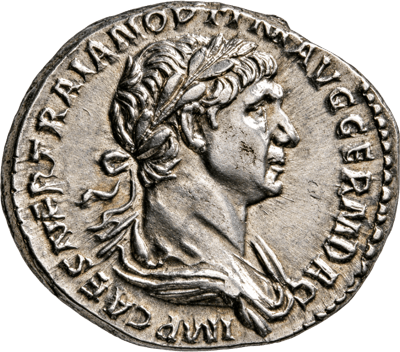

Silver Denarius Emperor Trajan (89-117 AD | Optimus Princeps)
- Genuine Antique: around 1,900 years old
- Rome's Golden Age: greatest extent
- Hand-struck: each one unique
- Genuine AntiqueOnce circulated as currency in the Roman Empire
- Rome's Golden AgeThe empire stretched from Britain to Mesopotamia
- Hand-struckStruck by the mint master with a forceful hammer blow








- Genuine Antique: around 1,900 years old
- Rome's Golden Age: greatest extent
- Hand-struck: each one unique
 Price alert
 Share

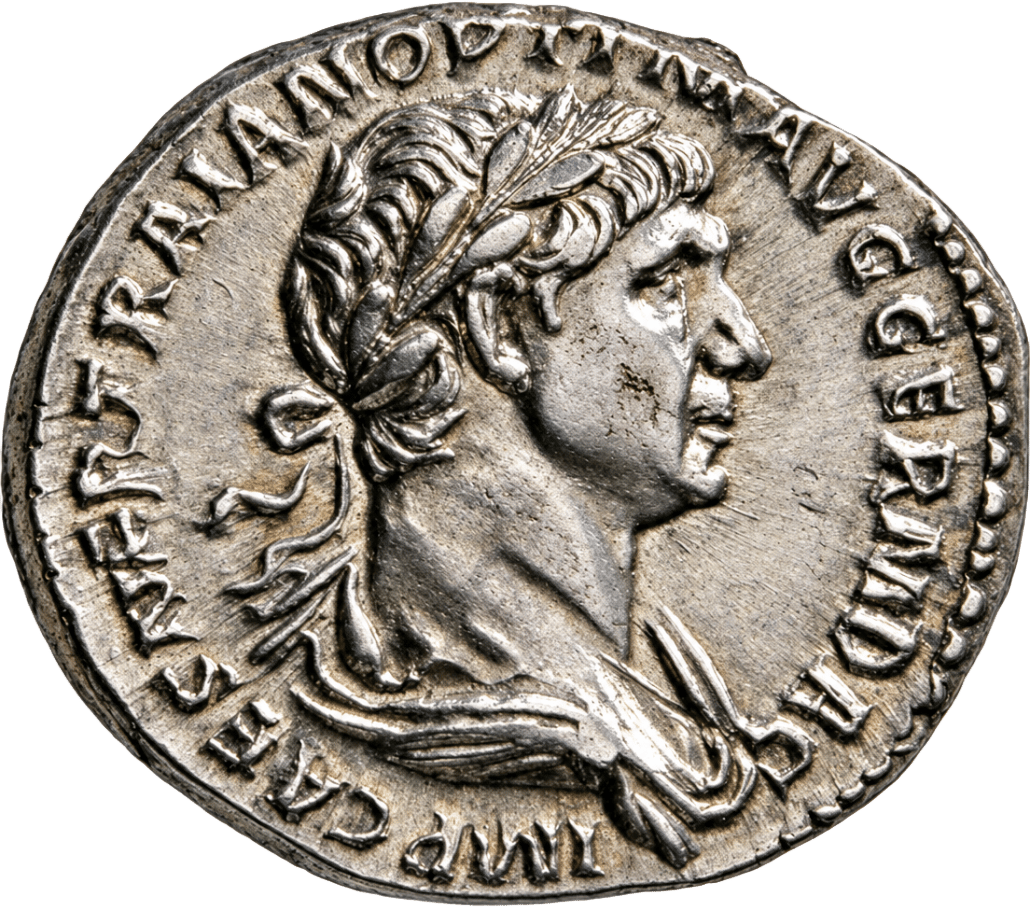
Ancient original · The Roman empire
Denarius of TrajanAbout 1,900 years old.
Under Trajan, emperor from 98 to 117, the Roman Empire reached its greatest extent. He is the only emperor whom the Senate officially honoured as Optimus, the best.
- Ruler
- TrajanAD 98 to 117
- Diameter
- c. 18 mm
- Weight
- c. 3.2 g
Under Trajan, emperor from 98 to 117, the Roman Empire reached its greatest extent. He is the only emperor whom the Senate officially honoured as Optimus, the best.
- Ruler
- TrajanAD 98 to 117
- Diameter
- c. 18 mm
- Weight
- c. 3.2 g
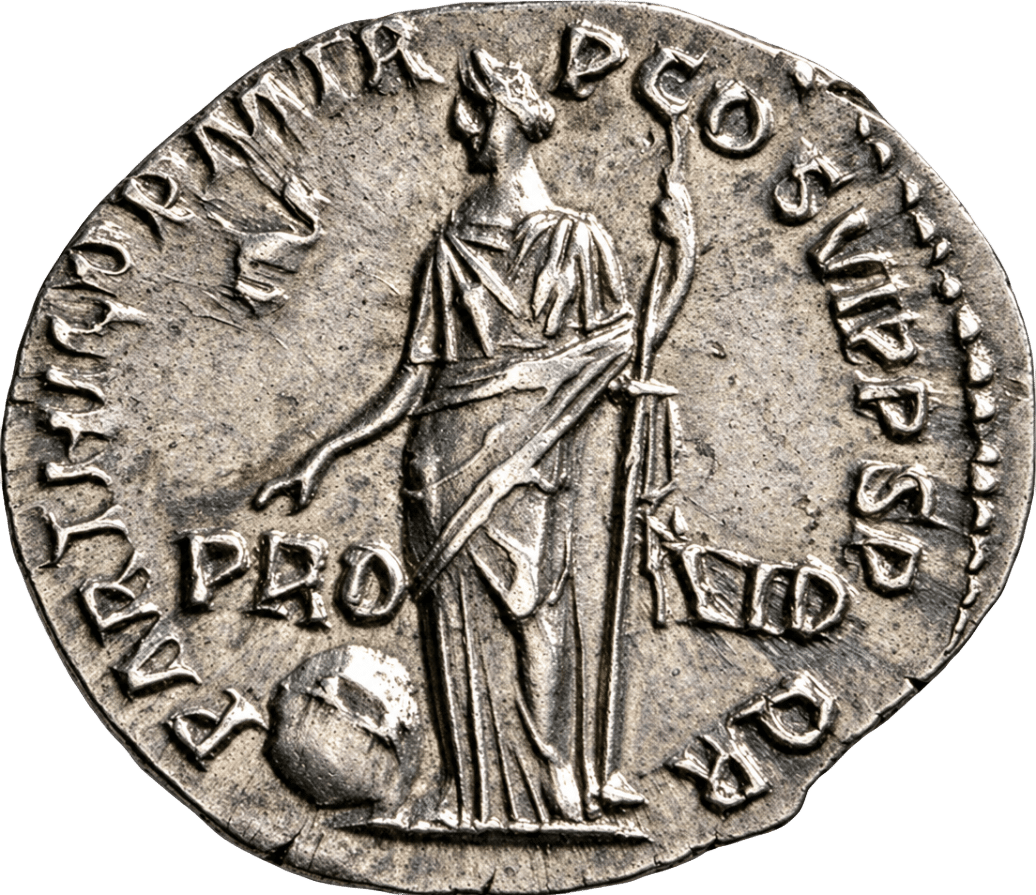
The Roman empire · 27 BC to AD 235
The denarius, the leading currency of the Mediterranean.
For more than two hundred years the denarius was the leading currency of the Mediterranean and paid for the army and administration of an empire reaching from Britain to the Euphrates. Under Augustus a legionary received, according to Tacitus, ten asses a day, about 225 denarii a year. On the reverse the emperor advertised himself: his victories, his piety, his wife.
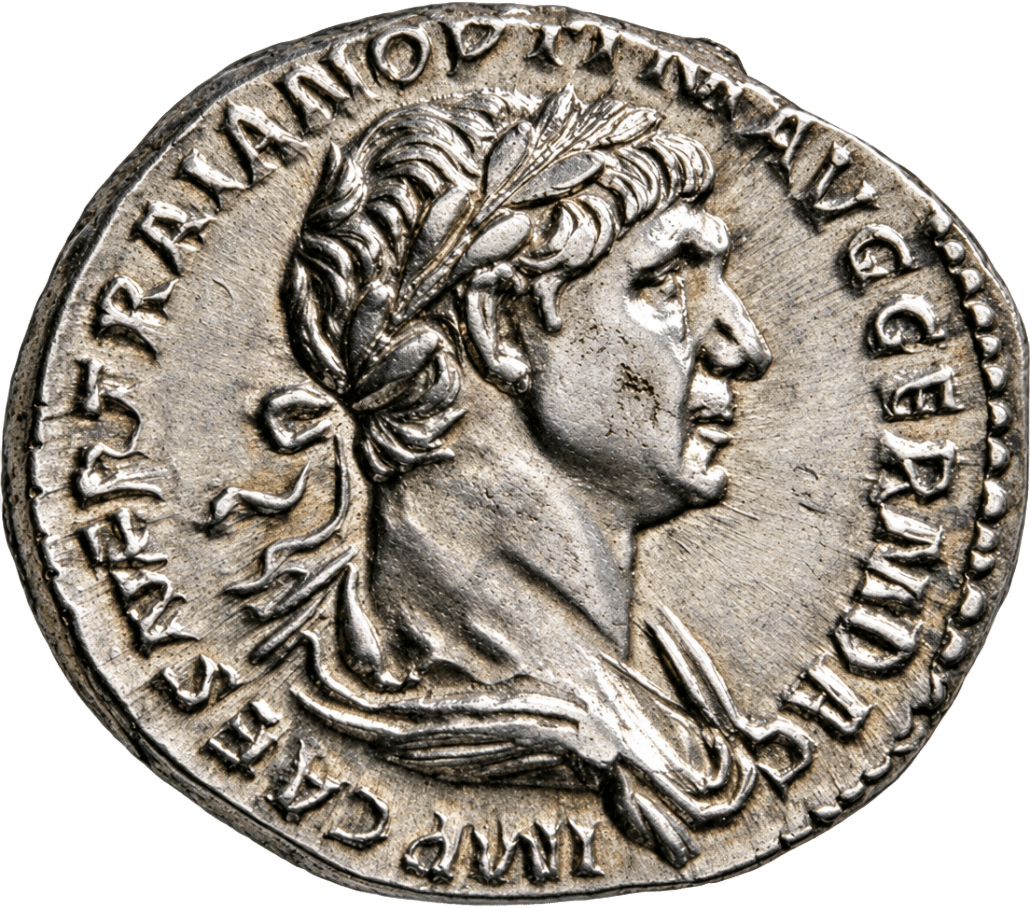
The picture shows an example. The piece you receive may differ in detail. The legend of the piece shown calls him OPTIMO, the best, along with his victory titles for Germania, Dacia and Parthia. On the reverse stands Providentia, providence, with the sceptre; her hand points to a globe, and in the field stands PRO VID.
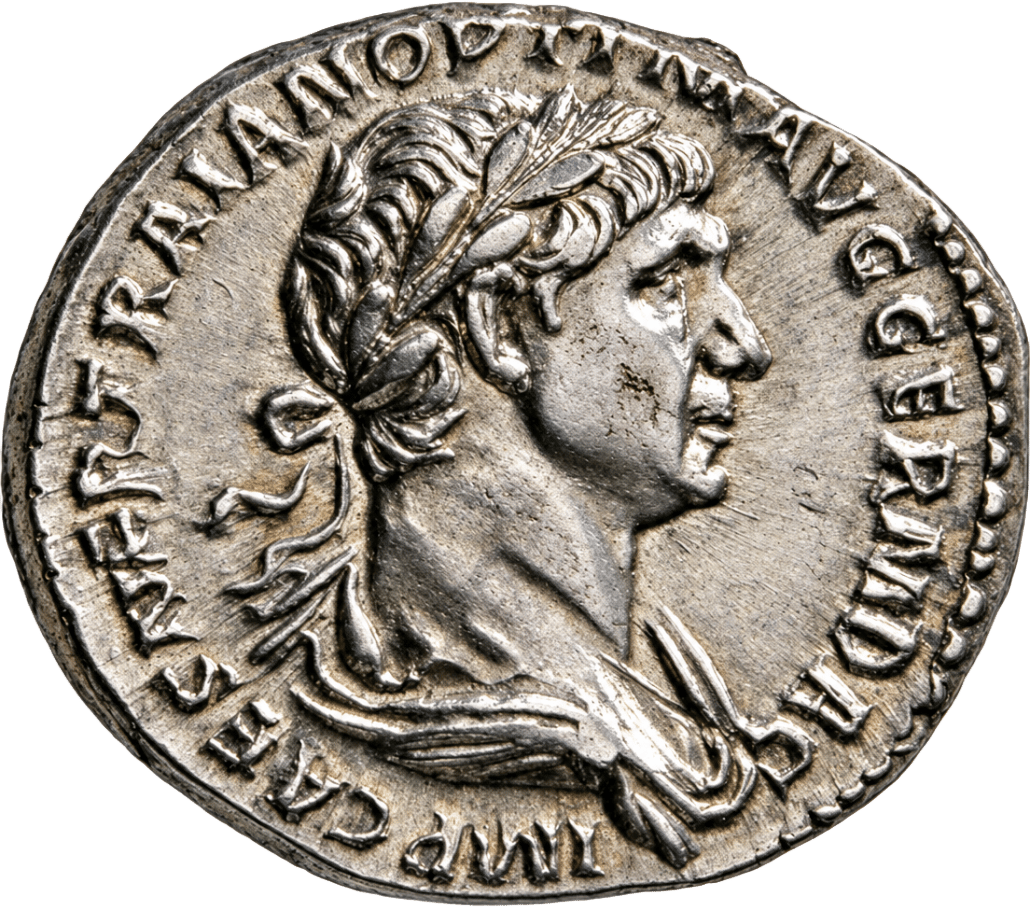
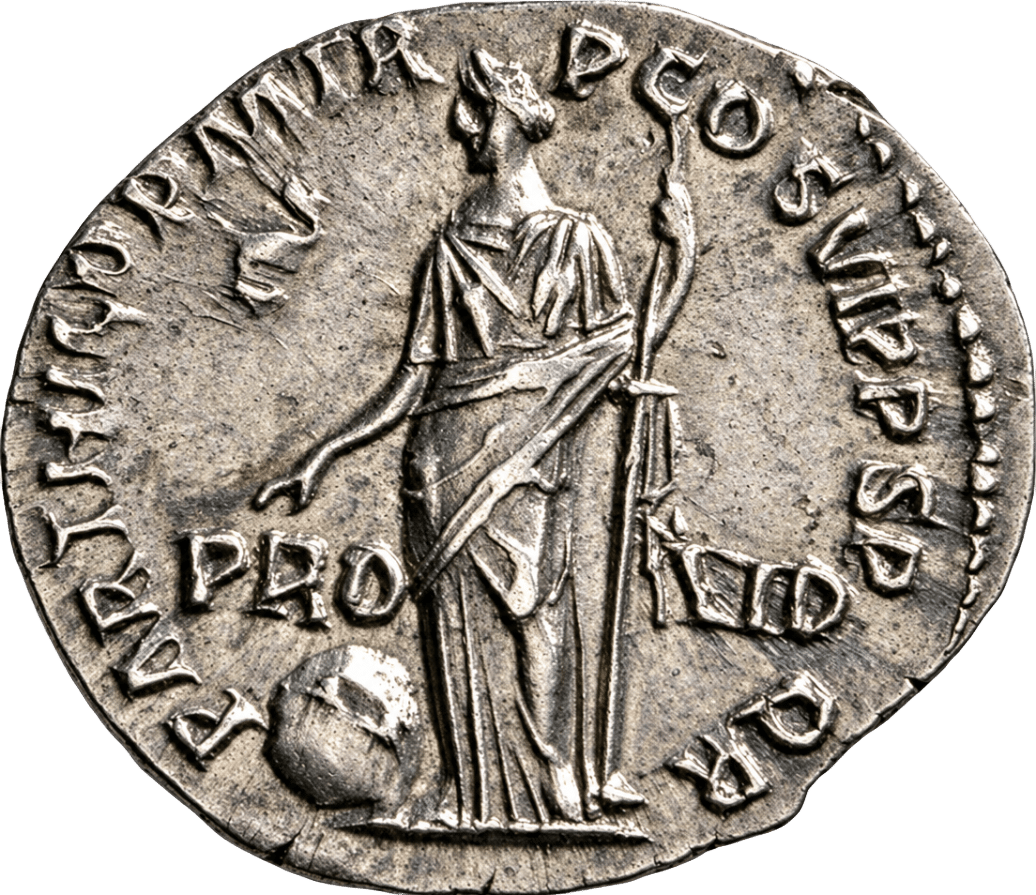
Under the lens
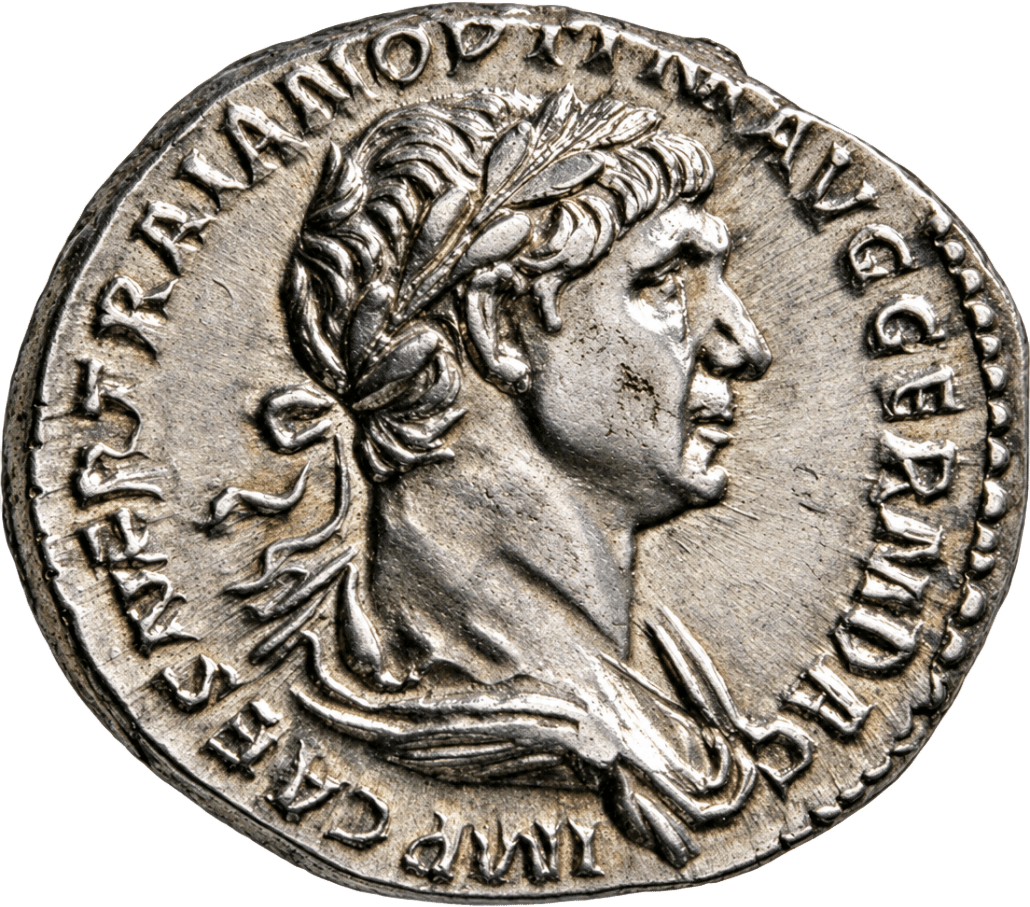
Denarius of Trajan up close: every detail about 1,900 years old.
At the same scale
Rome and its neighbours: coins side by side
The follis changed its size: about 27 mm early in the tetrarchy, 20 to 24 mm under Maximinus II, 20 mm under Constantine and his sons, 28 mm under Justinian.
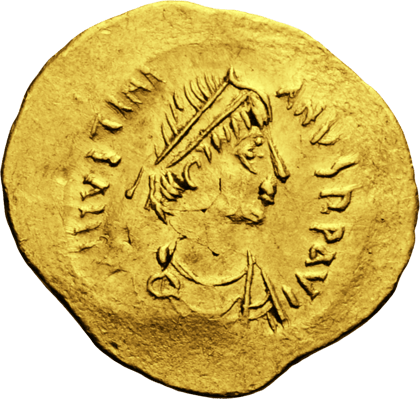 TremissisJustinian I
16 mm
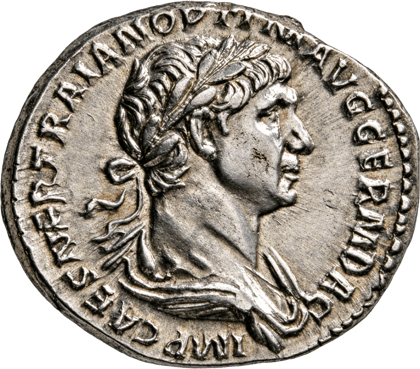 DenariusTrajan
c. 18 mmthis page
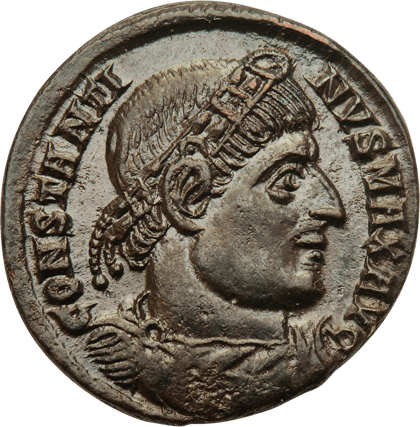 FollisConstantine I
20 mm
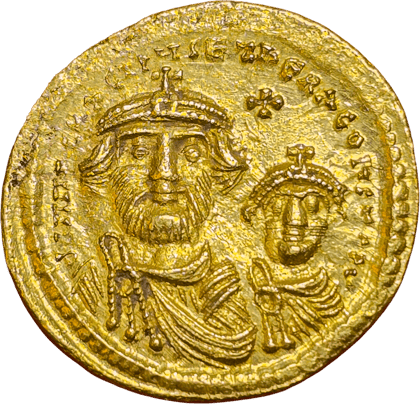 SolidusHeraclius
20 mm
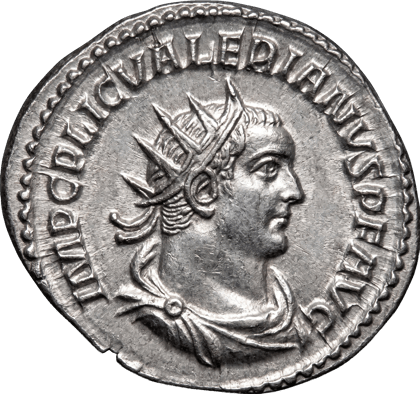 AntoninianusValerian I
21 to 23 mm
 1 eurofor comparison
23.25 mm
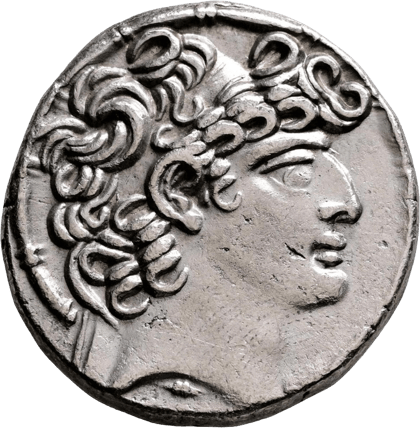 TetradrachmGaius Cassius
c. 27 mm
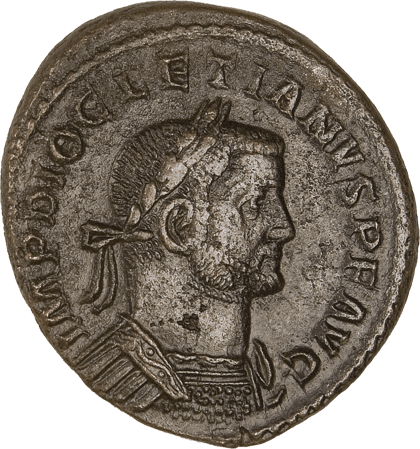 FollisDiocletian
27 mm
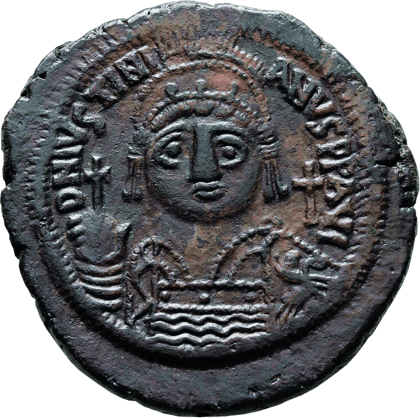 FollisJustinian I
28 mm
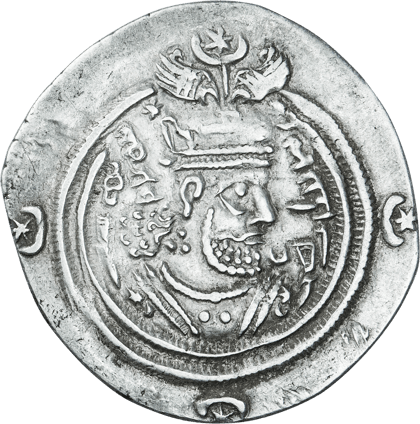 DrachmXusro II
30 mm
Where it belongs
42 originals from about 1,100 years
Each piece stands at the years of its ruler or of its type. The era of this piece is highlighted; choose another one to see its originals.
The Roman empire 27 BC to AD 235 · 9 originals
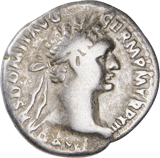 Denarius of DomitianAD 81 to 96
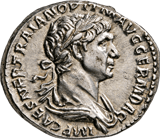 Denarius of TrajanAD 98 to 117this page
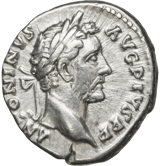 Denarius of Antoninus PiusAD 138 to 161
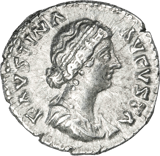 Denarius of Faustina the YoungerAD 147 to 175
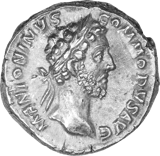 Denarius of CommodusAD 180 to 192
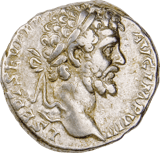 Denarius of Septimius SeverusAD 193 to 211
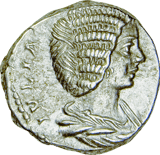 Denarius of Julia DomnaAD 193 to 211
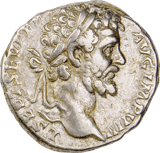
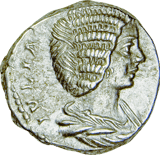 Denarius pair, Severus and Julia DomnaAD 193 to 211
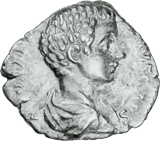 Denarius of CaracallaAD 196 to 217

Keeping it
First things first: do not clean it.
The dark layer on bronze and the matte grey on silver are called patina. It has grown over centuries and protects the surface. Polishing it away takes that protection from the piece.
- Hold it by the edgeSkin oil can etch itself permanently into the surface. Take the piece by the rim between thumb and forefinger, over a soft surface.
- Store each piece on its own, and dryKeep each piece on its own in a dry place, in a capsule or an acid-free case. PVC sleeves do not belong there, they attack the surface.
- No agents, no polishing clothNo vinegar, no silver cloth, no ultrasound. According to the Bank of Canada Museum, almost any attempt at cleaning without a conservator leaves damage, mostly from abrasion.

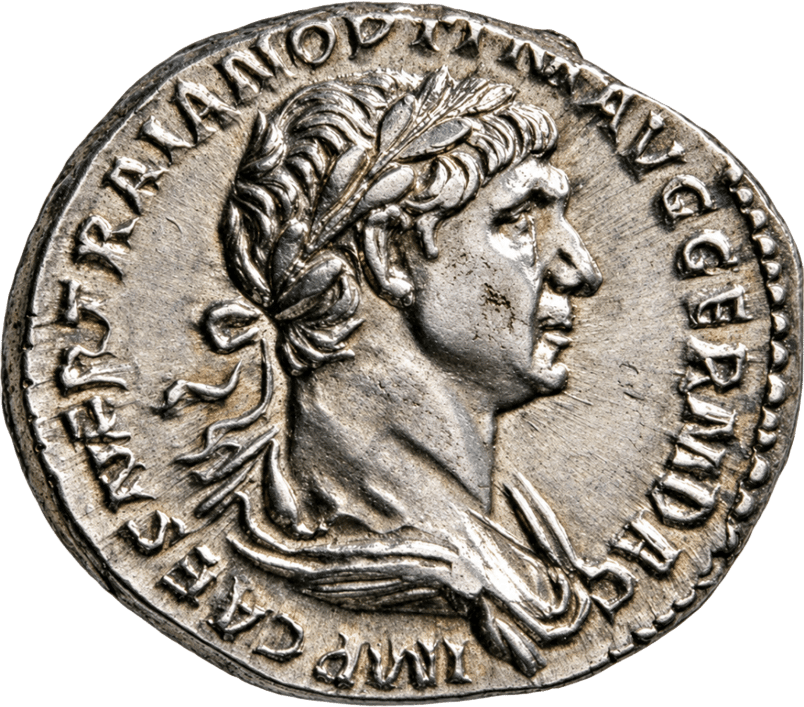
Struck about 1,900 years ago.
Trajan and his world are long gone. The piece has remained, with the traces of its circulation.
A Piece of World Empire in Your Hand: the Denarius of the "Best Emperor"
Some coins tell history. This one has lived it. The denarius of Emperor Trajan circulated as a means of payment in the Roman Empire, passed through the hands of legionaries, merchants and craftsmen, and now, around 1,900 years later, comes to you as a genuine testament to antiquity. It is made of silver with a fineness of 833/1,000, weighs 3.2 g and measures 18 mm in diameter. Its significance extends far beyond weight and size.
Anyone who collects ancient silver coins can hardly avoid Trajan (98–117 AD). Under him, the Imperium Romanum reached its greatest extent, from Britain to Mesopotamia. No other ruler was praised so unanimously by posterity.
Marcus Ulpius Traianus: Soldier, Builder, Optimus Princeps
Trajan was born in 53 AD, probably in Italica in the province of Hispania Baetica near present-day Seville. He was the first Roman emperor to come from a province. Emperor Nerva adopted the experienced general, then governor of Upper Germania. In January 98, Trajan assumed power and held it for almost twenty years.
What remains of him? A great deal. In the Dacian Wars (101/102 and 105/106), he conquered Dacia, the territory of present-day Romania. This is still told today by the relief frieze of Trajan's Column in Rome. He built the Trajan's Forum, harbors, roads and bridges. His relationship with the Senate was also unusually good. In the year 114, the Senate officially honored him with the title Optimus Princeps, "best princeps." You will find the epithet Optimus in many legends of his coins. After the Parthian campaign, Trajan died on 8 August 117 in Selinus, Cilicia. His successor was Hadrian.
Obverse and Reverse: Imperial Message in Silver
Coins were Rome's most important mass medium. On the obverse of the pictured example, you see the laureate, draped bust of Trajan facing right. The inscription reads IMP CAES NER TRAIANO OPTIMO AVG GER DAC. This means Imperator Caesar Nerva Traianus Optimus Augustus, victor over the Germans and Dacians. The reverse of the example shows Providentia, divine providence. She points with her right hand to a globe and holds a scepter with her left. In the field it reads PRO–VID. The inscription names the titles PARTHICO P M TR P COS VI P P S P Q R. These stand for the victor over the Parthians, the Pontifex Maximus, the tribunician power, the sixth consulship, the father of the fatherland, and the Senate and people of Rome. Types of this kind come from the Rome mint from Trajan's final years of reign.
The reverses of Trajan's denarii are highly varied. Depicted among others are Victoria, Aequitas, Fortuna, the Via Traiana and victory symbols following the Dacian Wars. Your specimen may therefore show a different reverse design.
Condition: Traces That Write History
These pieces are circulated currency and bear corresponding traces: darker patina, individual centering, nicks, wear and sometimes weaker legend areas. This is exactly what makes them appealing. Since the year of minting, mint and reverse variant may differ, the delivered specimen will differ from the image shown — you receive an original, not a mass-produced item.
Please understand that the image in the shop is an example and may individually differ from the delivered item in terms of appearance and condition due to historical circumstances. The image of the reverse may differ. Each of these coins was struck by hand. A mint master placed the blank between two dies and delivered a powerful hammer blow. Each denarius is therefore a one-of-a-kind piece.
The Facts at a Glance
- Denomination: Denarius
- Ruler: Emperor Trajan, reigned 98–117 AD
- Country: Roman Empire, country of origin Italy
- Precious metal: Silver, fineness 833/1,000
- Gross weight: 3.2 g
- Diameter: 18 mm
- Year of issue, denomination, fine weight and grade: varies
- Condition: circulated coin, original antique and hand-struck
- Series: History
The Denarius in the Roman Monetary System
For centuries, the denarius was Rome's most important silver coin. It was used to pay soldiers' wages and taxes and to trade goods. Its equivalent in gold was the aureus, while bronze and brass coins such as the sestertius, dupondius, as and semis served everyday needs. Under Trajan, the denarius was still a coin of good silver. Later, the silver content decreased significantly, and from 215 AD under Caracalla, the antoninianus was introduced. A Trajan denarius thus comes from a time when Rome's money still stood for stability. For collectors, this is a strong argument.
Ancient Denarius or Modern Silver Coin?
With modern bullion coins such as the Maple Leaf or the Vienna Philharmonic, the metal is what counts above all: one ounce of 999.9/1,000 fine silver, uniformly minted and easy to compare. The Trajan denarius appeals to different buyers. Here, history takes center stage.
- Advantage of authenticity: a genuine means of payment from Rome's golden age, not a later-struck design
- Advantage of rarity: no new pieces are being added. The supply is definitively limited.
- Advantage of narrative power: imperial titles, deities and victory motifs turn each coin into a history book.
- To note: The price is determined primarily by collector's value and not by the pure metal weight. For building up a large silver holding, modern bullion coins are better suited.
Compared with other Roman denarii, for example those of Augustus or Hadrian, Trajan is particularly popular. His name stands for military success, great buildings and careful administration. The many reverse types offer material for a collection of its own.
Silver: Value That Outlasts Time
This denarius shows that silver endures for millennia. The metal remains chemically stable, retains its properties and has been used in almost all cultures as money, a medium of exchange and a sign of prosperity. To this day, silver is in demand worldwide, in industry for example for electronics, solar and medical technology, but also for jewelry and among collectors. Because silver has its own tangible value and cannot be multiplied at will, many buyers value it as a building block for inflation hedge and personal crisis protection. It is cheaper than gold, easy to trade and suitable for passing on to future generations.
A denarius from Trajan's time has outlasted the Roman Empire, the Middle Ages and all later currencies. Whoever holds it in their hand notices how enduring silver is.
Tax note: Profits from the sale of physical silver are generally tax-free in Germany if at least one year has passed between purchase and sale.
Who Is the Trajan Denarius Suitable For?
The denarius is a good introduction to ancient numismatics, a fitting addition to any series of emperors, and a gift with meaning. It is suitable for history enthusiasts, Latin teachers, travelers to Rome, and for anyone who wants not only to own silver but also to experience it. With us, you receive an original piece from the Roman Empire, almost two thousand years old.
Product image may differ from the actual product.
