





- Genuine investment gold: 999/1,000 fine gold
- Swiss minting: by Valcambi
- Verified authenticity: in the blister card
- Genuine investment goldPure fine gold, its value tied to the gold price
- Swiss mintingValcambi is among the most renowned gold refiners
- Verified authenticitySealed in BU condition, permanently protected from touch





- Genuine investment gold: 999/1,000 fine gold
- Swiss minting: by Valcambi
- Verified authenticity: in the blister card
 Price alert
 Share

Gold coin · 1/1,000 ounce fine gold
A museum for the hand.
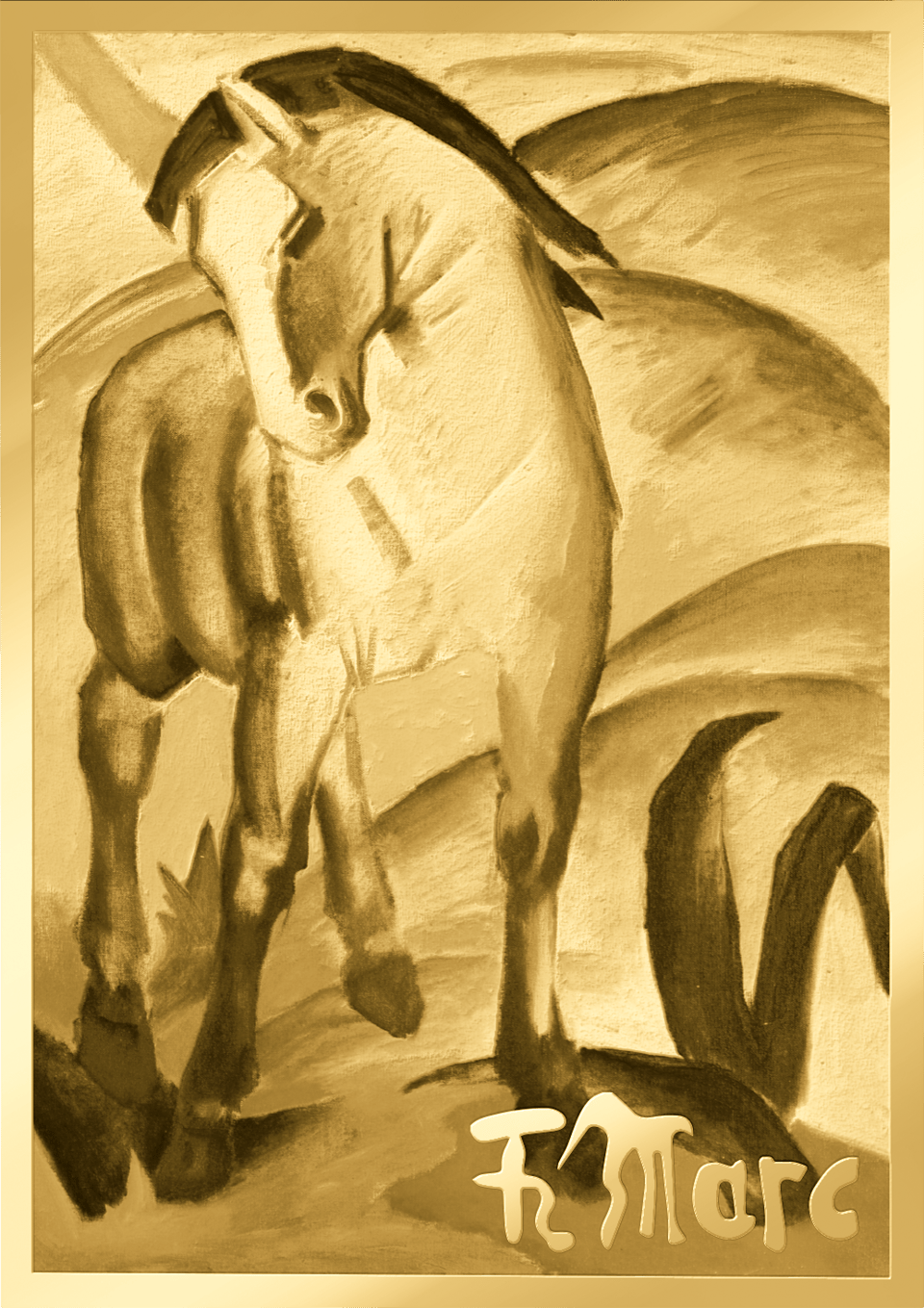
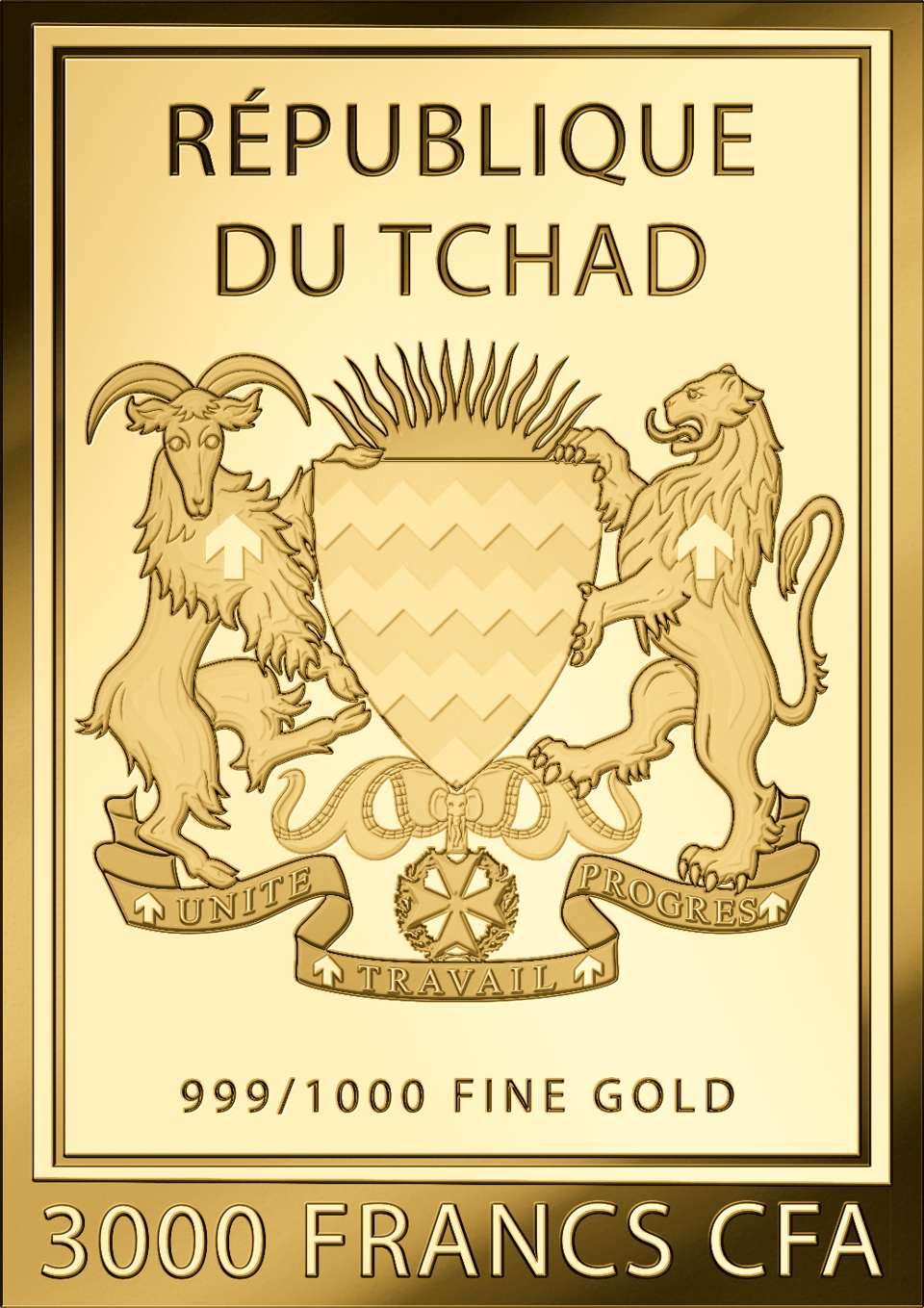
Blue Horse I, 1/1,000 ounce fine gold, picture side
The young horse before the hills, its head tilted to one side, as a relief in gold. The original is at home in the Lenbachhaus in Munich.
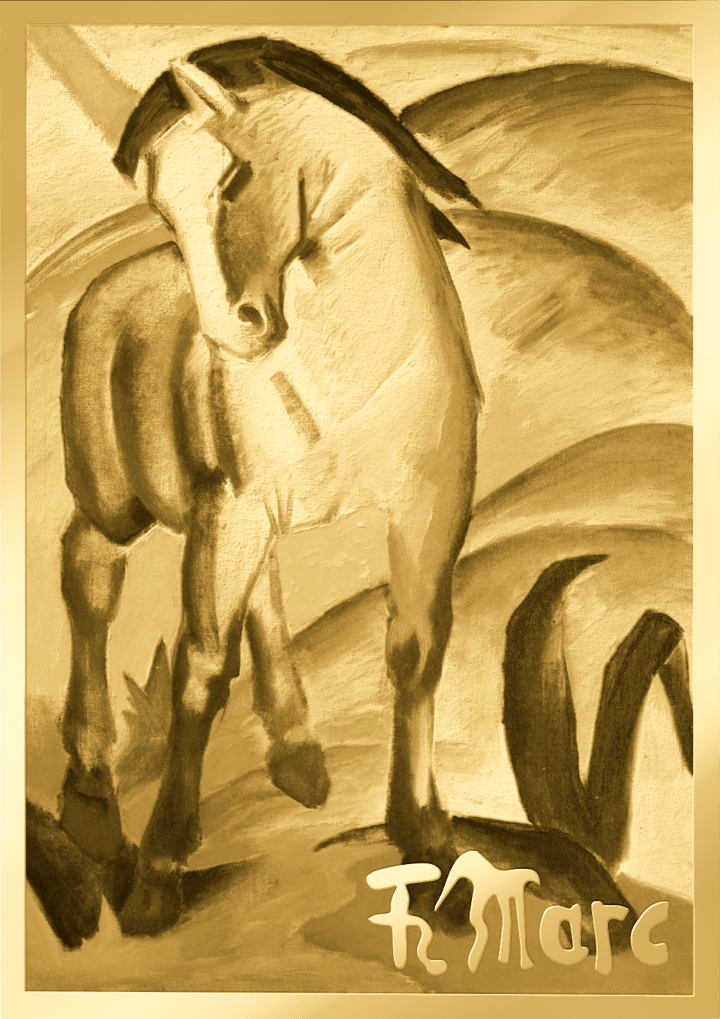
The original
At home in the Lenbachhaus.
Franz Marc painted the picture in 1911. It is at home in the Lenbachhaus in Munich.
- Painter
- Franz Marc
- Work
- Blue Horse I, 1911
- Medium
- Oil on canvas
- Dimensions
- 112 × 84.5 cm
- Location
- Lenbachhaus, Munich
A second look
According to the Lenbachhaus, the colours range from vermilion and green below to violet, blue and orange in the upper zone.
A tour
Where the originals are at home.
Paris is the centre, with the Louvre, the Orsay, the Marmottan and the Orangerie. Then come museums from Florence to Kraków and, across the Atlantic, New York and Washington.
Munich
- Blue Horse I LenbachhausThis piece
- Self-Portrait with Fur-Trimmed Robe Alte Pinakothek
- Promenade Lenbachhaus
Paris
- Marten and Oopjen Musée du Louvre
- Mona Lisa Musée du Louvre
- Noon: Rest from Work (after Millet) Musée d’Orsay
- Self-Portrait of 1889 Musée d’Orsay
- Water Lilies Musée de l’Orangerie
- Impression, Sunrise Musée Marmottan Monet
- Tahitian Women Musée d’Orsay
- Liberty Leading the People Musée du Louvre
Vienna
- Young Hare Albertina
- The Art of Painting Kunsthistorisches Museum
- The Kiss Belvedere
Florence
- The Birth of Venus Uffizi Galleries
- Primavera Uffizi Galleries
Amsterdam
- The Night Watch Rijksmuseum
- Marten and Oopjen Rijksmuseum
The Hague
- Girl with a Pearl Earring Mauritshuis
London
- The Umbrellas National Gallery
Düsseldorf
- Four Girls Kunstpalast
Braunschweig
- The Girl with the Wine Glass Herzog Anton Ulrich-Museum
Wiesbaden
- The Butterfly Hunter Museum Wiesbaden
Salzburg
- Sunday Stroll Salzburg Museum
Kraków
- Lady with an Ermine Czartoryski Museum
Venice
- Vitruvian Man (drawing) Gallerie dell’Accademia
New York
- The Starry Night Museum of Modern Art
- Self-Portrait with a Straw Hat Metropolitan Museum of Art
- The Siesta Metropolitan Museum of Art
- Portrait of Adele Bloch-Bauer I Neue Galerie
Washington
- Woman with a Parasol, Madame Monet and Her Son National Gallery of Art
- Luncheon of the Boating Party Phillips Collection
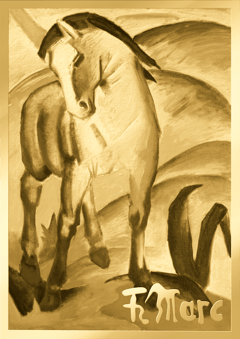
Under the loupe
The painting in gold, up close.
The coin bears the painting as a fine relief, whole or as a detail, together with the painter’s signature or monogram.
The value side bears RÉPUBLIQUE DU TCHAD, the national coat of arms, 999/1000 FINE GOLD and 3000 FRANCS CFA.
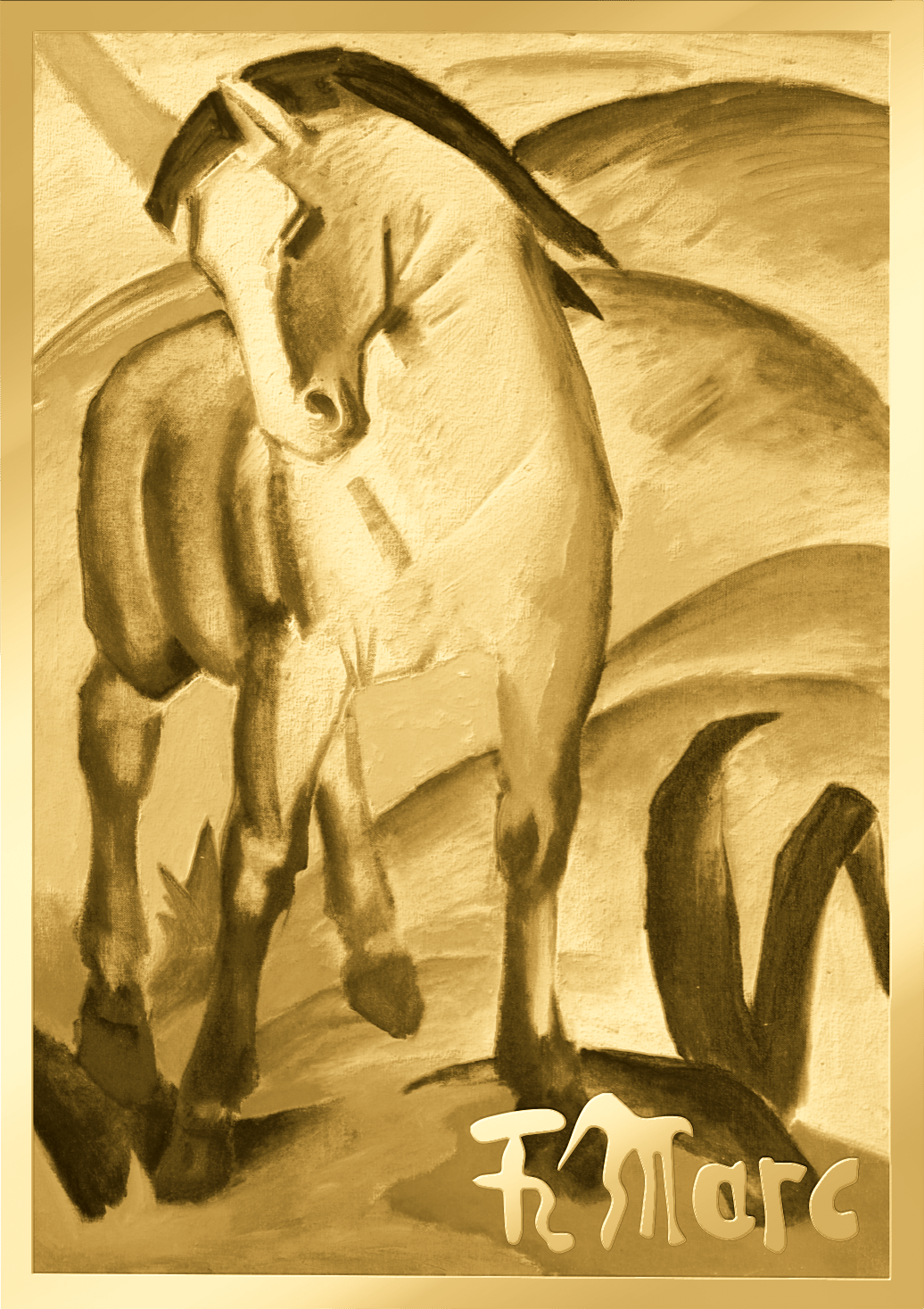
FoalThe foal’s head
Enlarged from the photos in our gallery.
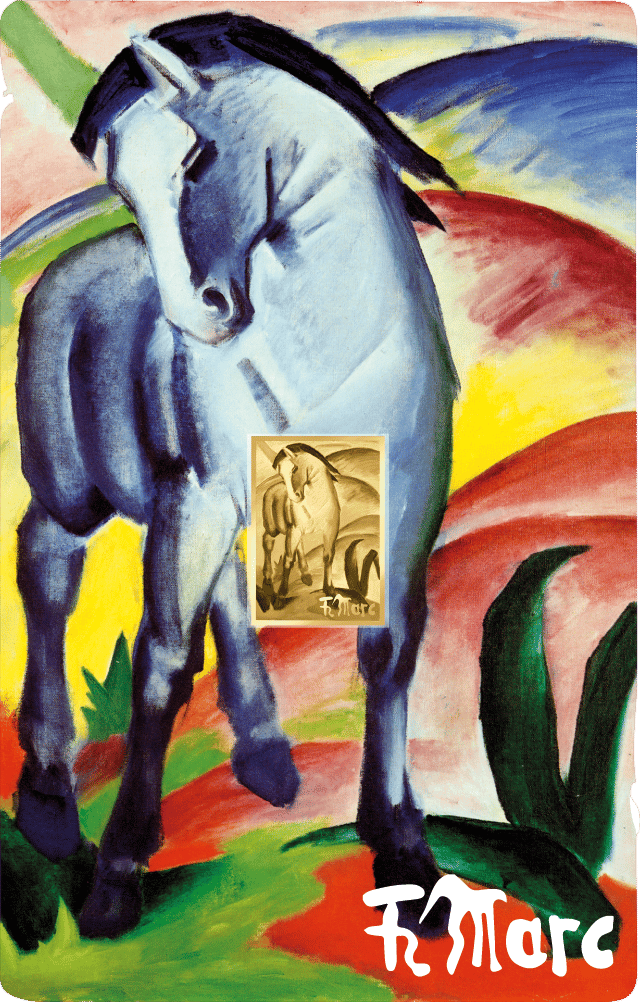
The craft
The painting in gold, the colour on the card.
The coin bears the painting as a relief in gold, 15.4 × 11 millimetres, issued by the Republic of Chad at 3,000 CFA francs.
- The blister card
- On the front the painting in colour with the painter’s signature or monogram, the coin in the window, on the back the details of the issue.
At a glance
- Type
- Coin
- Metal
- Gold
- Design
- Blue Horse I
- Painter
- Franz Marc
- Weight
- 1/1,000 ounce fine gold
- Fine weight
- 0.031 g
- Fineness
- 999/1,000
- Face value
- 3,000 Francs CFA
- Issuing country
- Republic of Chad
- Dimensions
- 15.4 × 11 mm
- Mintage
- 50,000 pieces
- Original
- Lenbachhaus, Munich
- Packaging
- Blister card
After the tour
Most of the originals are at home in museums, from Florence to Washington. Whoever wants to see them travels to them.
This coin brings one of them home: in gold, with the painter’s name, and in colour on the card.
Franz Marc "Blue Horse" – Investment Gold with a World-Famous Design
A masterpiece of Expressionism, struck in pure fine gold: the Franz Marc Blue Horse coin brings one of the most famous paintings in German art history to life in precious metal. What matters here is not just the visual appeal, but the substance – full-value, physical gold whose worth is tied to the gold price.
- Design: The reverse shows Franz Marc's iconic "Blue Horse" – the lowered, deep-blue shimmering animal set against vivid fields of yellow, red and green, along with the signature "Fz Marc". A key work of Expressionism and of the "Der Blaue Reiter" (The Blue Rider) artist group, recreated here in flowing forms and broad brushstrokes.
- Material & Fineness: Struck from the purest fine gold with a fineness of 999/1,000 – that is, 24 carat. The fine weight is 1/1,000 ounce, or 0.031 g.
- Manufacturer: Produced by the traditional Swiss mint Valcambi, one of the world's most renowned gold refiners.
- Issuing Country & Face Value: Official legal tender of the Republic of Chad with a face value of 3,000 CFA francs.
- Format & Finish: 11 x 15.4 mm, Brilliant Uncirculated (BU), securely mounted in a high-quality coincard (blister card). Strictly limited mintage of 50,000 pieces, year of issue 2023.
With this coin, you hold a gold coin weighing 1/1,000 oz in your hands – and at the same time, genuine, tangible investment gold. The design gives the coin its personal character, but the true substance and reason for purchase is the gold it contains. The coincard protects the delicate piece permanently while also guaranteeing its authenticity and quality.
A Masterpiece of Expressionism in Fine Gold
Franz Marc (1880–1916) is considered one of the most important German painters of the modern era. His "Blue Horse I" from 1911 is among the best-known works in art history and is now on display at the Lenbachhaus in Munich. The obverse of the coin bears the coat of arms of Chad along with the inscriptions "RÉPUBLIQUE DU TCHAD", "3000 FRANCS CFA" and "999/1000 FINE GOLD". This issue is part of the "Art & Culture" series, which also features designs by other great artists – such as Gustav Klimt.
Why Physical Gold Is a Smart Foundation
Gold is the world's oldest currency and has served as a proven store of value for over 6,000 years. It has intrinsic value, has never been worth zero, and protects against the loss of purchasing power. It is no coincidence that central banks around the globe hold substantial gold reserves. As an inflation hedge and crisis protection, this precious metal is valued worldwide – tradable, liquid, and convertible into cash at any time.
Despite its artistic design, what you are acquiring here is full-value investment gold – struck fine gold whose worth is tied to the gold price.
- Value Preservation: Build wealth in small, affordable steps – small amounts of gold add up over the years to a considerable fortune.
- Liquidity: Recognised worldwide and tradable and resellable at any time.
- Tax Advantage: Profits from the sale of gold are generally tax-free after a minimum holding period of one year.
- A Legacy Across Generations: Suitable as a long-term safeguard that can be passed on.
Whether as an entry point into physical gold investment or as a thoughtful addition to your precious metals holdings: this coin combines a timeless artistic design with the lasting value of fine gold. And if you wish to give genuine investment gold as a gift for a birthday, christening or wedding, you are presenting not merely an object, but a true asset of value.
Product image may differ from the actual product.
