





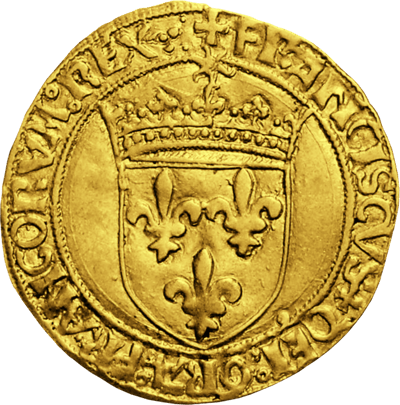

Ecu d'or au soleil (1515-1547 | France | King Francis I)
- Collector coin: Especially interesting for collectors
- Secure shipping: 100% insured & anonymous delivery
- Collector coinEspecially interesting for collectors
- Secure shipping100% insured & anonymous delivery





By submitting your order you accept our Terms & Conditions and confirm the Right of withdrawal.
- Collector coin: Especially interesting for collectors
- Secure shipping: 100% insured & anonymous delivery
 Price alert
 Share

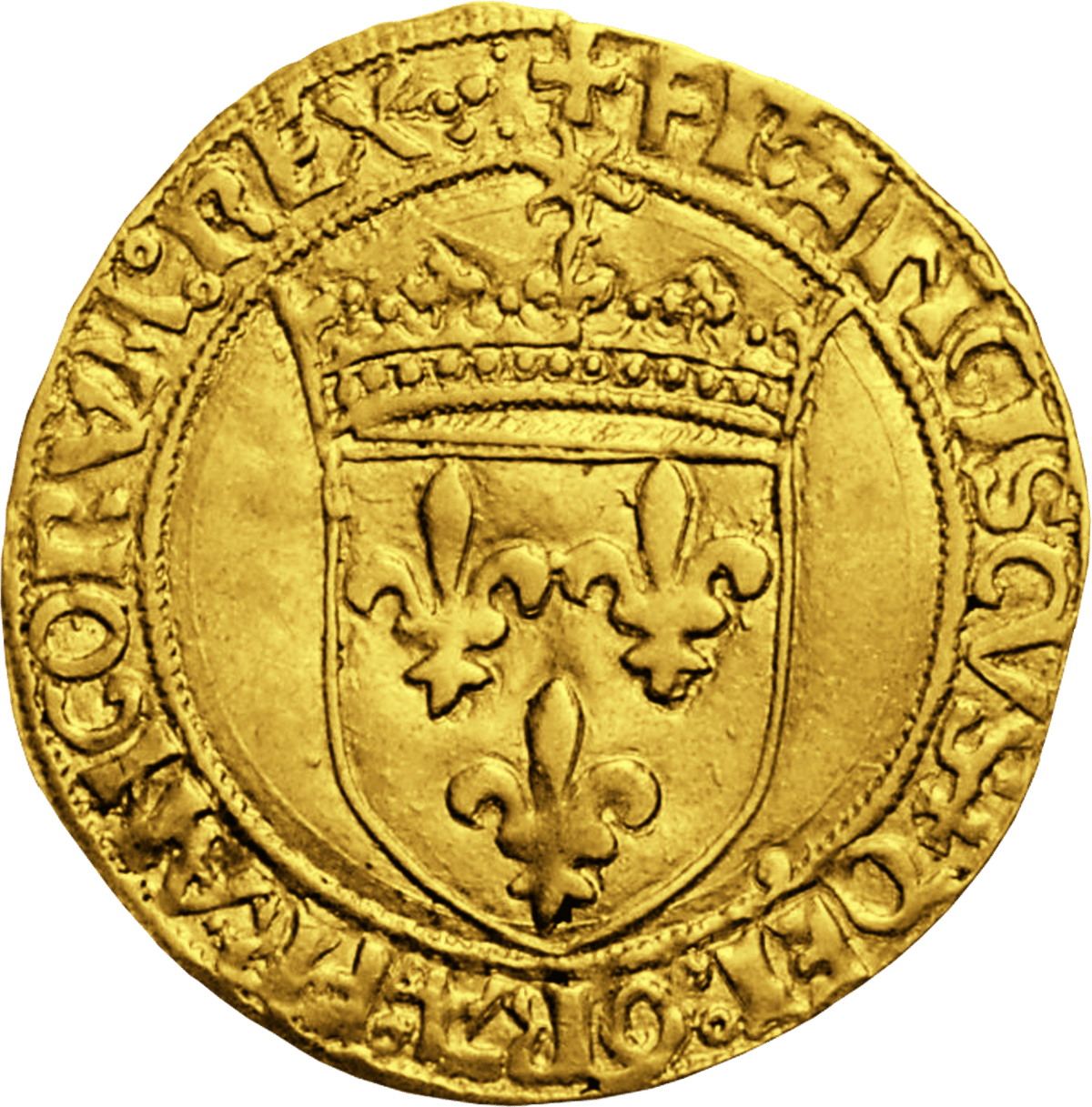
Kingdom of France
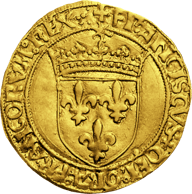
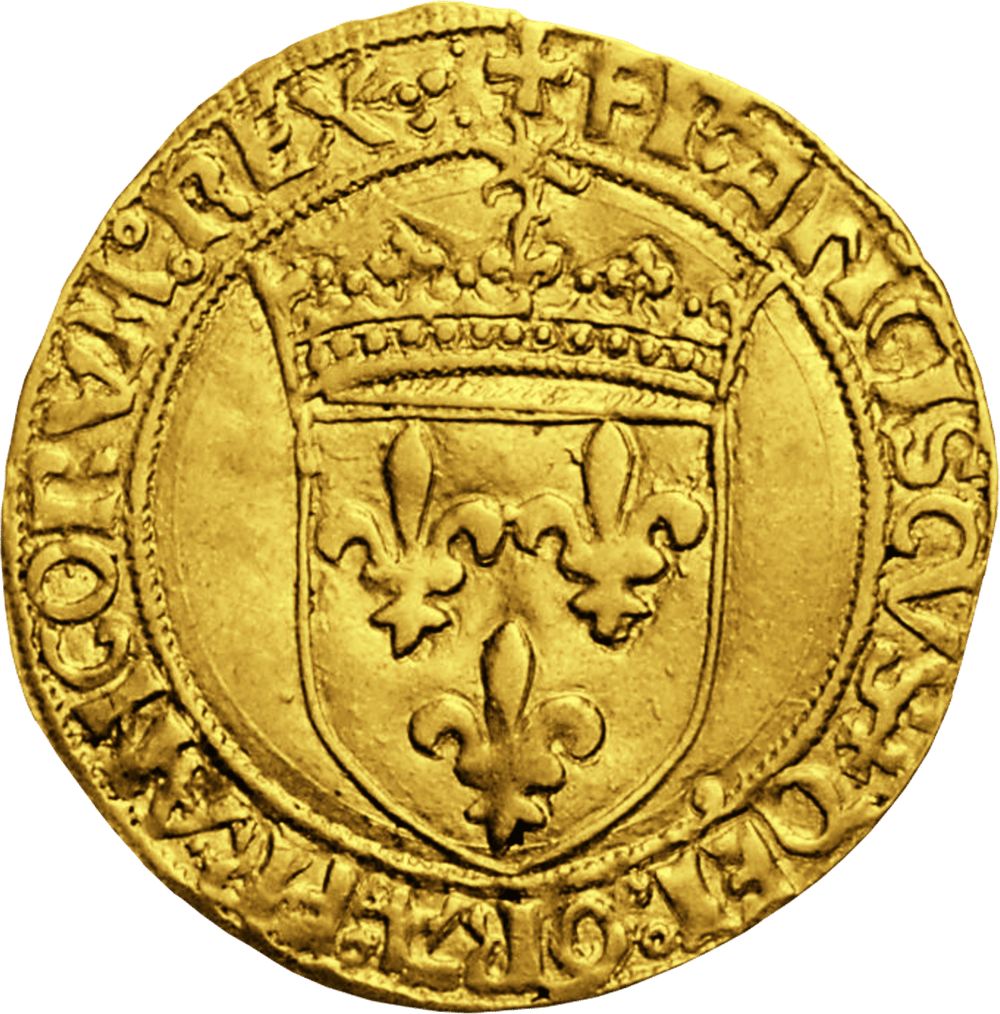
The écu d’or au soleil.The sun rises over the crown, 1515 to 1547.
Above the crowned shield with 3 lilies stands the sun, which gives the coin its name: écu au soleil, shield with sun. Louis XI introduced it in 1475, and Francis I kept striking it.
- Age
- over 450 years
- Coin
- Écu, gold
- Weight
- 3.4 g
Above the crowned shield with 3 lilies stands the sun, which gives the coin its name: écu au soleil, shield with sun. Louis XI introduced it in 1475, and Francis I kept striking it.
- Age
- over 450 years
- Coin
- Écu, gold
- Weight
- 3.4 g
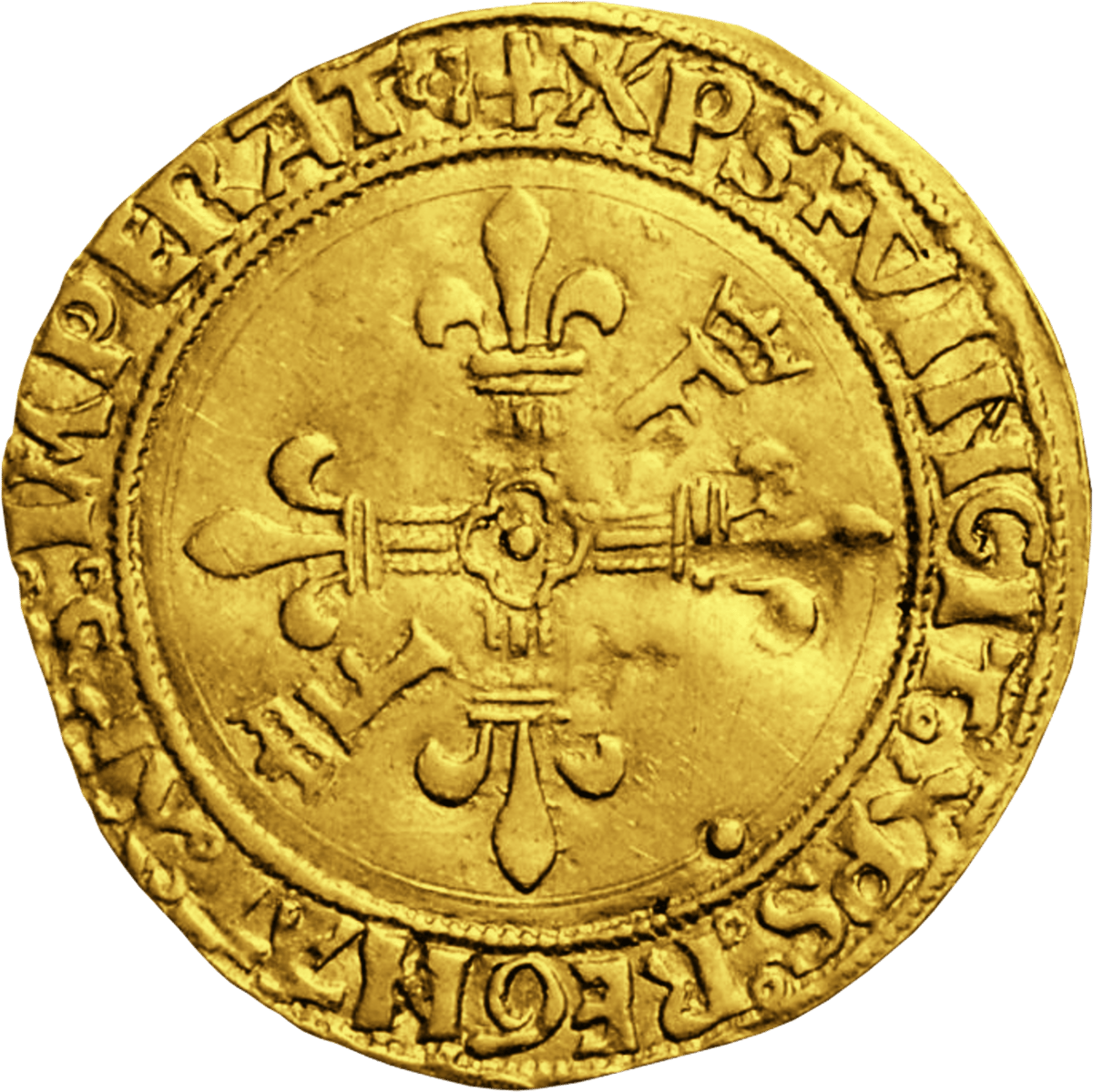
The other side
A cross of lilies.
On the other side stands a cross whose arms end in lilies. The inscription XPS VINCIT XPS REGNAT XPS IMPERAT means: Christ conquers, Christ reigns, Christ commands. On the front, FRANCISCVS DEI GRA FRANCORVM REX names the king: Francis, by the grace of God King of France.
In 1640 the louis d’or replaced the écu d’or.

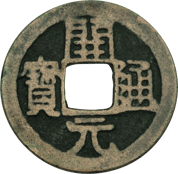
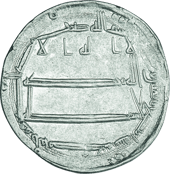
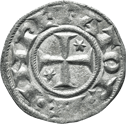
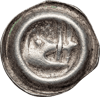
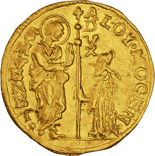
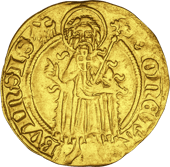

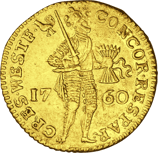
Size comparison
14 coins, one scale.
All 14 lie on the table in their true proportions, the oldest on the left. Your piece measures 26 mm.
- Cash coin24 mm · 2.6 g
- Dirham23 mm · 2.9 g
- Denier17 mm · 0.83 g
- Denier of Poitou18 mm · 1 g
- Denier of Sicily17 mm · 0.7 g
- Bracteate13.5 mm · 0.2 g
- Zecchino21 mm · 3.5 g
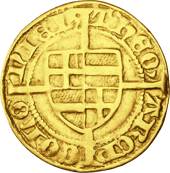
- Gold gulden23 mm · 3.9 g
- Gulden with arms23 mm · 3.9 g
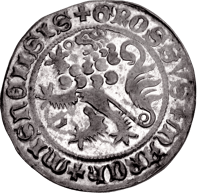
- Prince’s groschen27 mm · 2.85 g
- Kreuzer18 mm · 0.7 g
- Écu d’or26 mm · 3.4 gthis page
- Gold fanam8 mm · 0.3 g
- Trade ducat21.4 mm · 3.5 g
The heaviest piece is not the widest: the gold gulden weighs almost twenty times as much as the bracteate and is still narrower than the groschen. Gold is almost twice as dense as silver.
Timeline
From 621 to 1797.
Each bar shows the years from which the pieces of a type come. For the zecchino that is 468 years, for the prince’s groschen only 13.
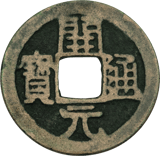 Tang dynasty621 to 907
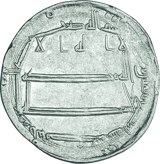 Abbasid caliphate8th and 9th centuries
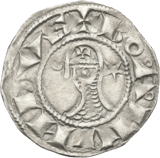 Principality of Antioch1163 to 1232
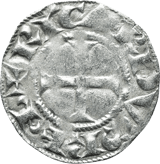 County of Poitou1189 to 1196
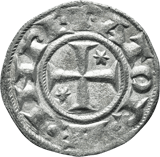 Kingdom of Sicily1194 to 1197
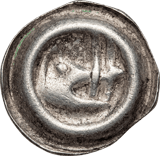 Town of Schweidnitz14th and 15th centuries
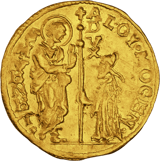 Republic of Venice1329 to 1797
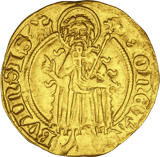 Electorate of Cologne1371 to 1463
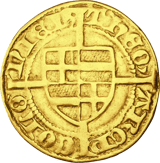 Electorate of Cologne1371 to 1463
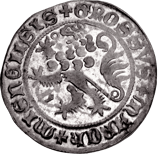 House of Wettin1393 to 1406
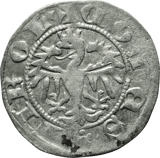 Tyrolfrom 1477
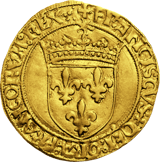 Kingdom of France1515 to 1547 · Your piece
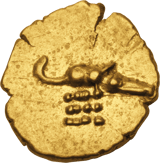 South India1600 to 1750
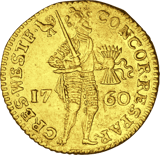 United Provinces1739 to 1794

14 coins.Over 1,100 years.
From 621 to 1797 and from China to the North Sea: every one of these coins was money that people paid with.
Ecu d'or au soleil: The Sun Crown of Renaissance King Francis I
- Design: The crowned fleur-de-lis coat of arms of France, above which sits a small sun. This is where the coin gets its name. On the reverse, a fleur-de-lis cross with a quatrefoil in the center, and depending on the type, the king's crowned initials "F" and fleurs-de-lis in the angles.
- Material / Fineness: High-carat gold with a fineness of 970/1,000. With a gross weight of 3.40 g, each piece contains 3.298 g of fine gold.
- Manufacturer: The royal mints of France, depending on the specimen, for example Paris, Lyon, Bordeaux, or Toulouse.
- Era: Reign of Francis I (François Ier, 1515–1547). A genuine original from the 16th century.
- Delivery: In a case with certificate of authenticity.
Some coins tell stories of history. This one was there. The Ecu d'or au soleil passed through the hands of merchants, mercenaries, and courtiers, at a time when Leonardo da Vinci lived along the Loire and the first stones of Chambord were being laid. Are you looking for historical gold coins that are more than just precious metal? Then hold a genuine piece of the French Renaissance in your hands.
From Louis XI to Francis I: The History of a Royal Gold Coin
The name itself reveals what the coin depicts. "Écu" means shield, referring to the coat of arms, and "au soleil" means "with the sun." King Louis XI introduced the Ecu d'or au soleil in 1475. At the time, a small but important detail was new: the sun above the crown of the coat of arms. This allowed the coin to be instantly recognized in markets across Europe. Francis I retained this proven denomination. His mints struck it in many types and issues, individually catalogued in reference works such as Duplessy.
His reign was eventful. In 1515, he was victorious at Marignano. In 1520, he met Henry VIII of England with great splendor at the "Field of the Cloth of Gold." This was followed by a bitter power struggle with Emperor Charles V, which culminated in the defeat at Pavia in 1525, after which the king was taken captive. At the same time, Francis I brought artists and scholars to his kingdom and is still regarded today as the epitome of the Renaissance prince. With the Ordinance of Villers-Cotterêts (1539), he made French the language of administration. The coin dates from exactly this period.
Legends with Weight: "Christ Conquers, Christ Reigns, Christ Commands"
On the obverse, the king styles himself FRANCISCVS DEI GRATIA FRANCORVM REX, meaning Francis, King of the Franks by the Grace of God. The reverse bears the solemn motto XPS VINCIT XPS REGNAT XPS IMPERAT. This inscription illustrates well why gold is often called the money of God. The coin served as both a means of payment and a profession of faith.
Genuine Circulated Coinage: Traces That Make History Visible
These pieces are circulated means of payment and bear corresponding traces: darker patina, individual centering, nicks, wear, and in some cases weaker areas of the legend. This is precisely what makes them so appealing. Each of these traces tells of hand striking, of circulation, and of roughly five centuries of history.
Since the year of minting, mint, and reverse variant may differ, the specimen delivered will differ from the image shown – you will receive an original, not a mass-produced product. Please understand that the image in the shop serves as an example and that the delivered item may individually differ in appearance and condition due to historical circumstances.
Ecu, Louis d'or, or Ducat? A Comparison
The Louis d'or did not appear until 1640, under Louis XIII. The Ecu d'or au soleil is older, and its hand-struck origin is clearly visible. Alongside ducats and gold guilders of similar size, it stands out for its French fleur-de-lis coat of arms. Add to that the connection to one of Europe's most famous kings. For a collection of European coins, it is therefore a particularly fitting addition.
- Advantages: genuine Renaissance original, convenient size, high fineness, rich history, case with certificate.
- To consider: condition and appearance vary from piece to piece. The collector's value naturally exceeds the pure material value.
Gold as a Value Anchor: Why Historical Precious Metal Convinces
Gold is the world's oldest currency and has served as a proven store of value for over 6,000 years. Because it possesses intrinsic value, it has never been worth nothing. The Ecu d'or au soleil demonstrates this impressively: the kingdom that minted it no longer exists, yet its gold still shines today.
- Protects against loss of purchasing power and is considered a classic inflation hedge
- A proven crisis protection in political and economic crises
- Globally recognized, highly liquid, and easily converted into cash
- Limited supply: unlike fiat money, gold cannot simply be printed on demand
- Central banks are among the largest gold holders in the world
- For private individuals, profits from the sale are generally tax-free after a holding period of at least one year
- Ideal for passing on wealth and history to the next generation
An Ecu d'or au soleil is more than a gold coin. It connects you to nearly five centuries of French history.
For collectors, this piece is a highlight of any France collection. Investors with a sense of history get both: lasting value preservation and genuine cultural heritage. Secure your Ecu d'or au soleil from King Francis I today. Each specimen is a one-of-a-kind piece.
Product image may differ from the actual product.
