





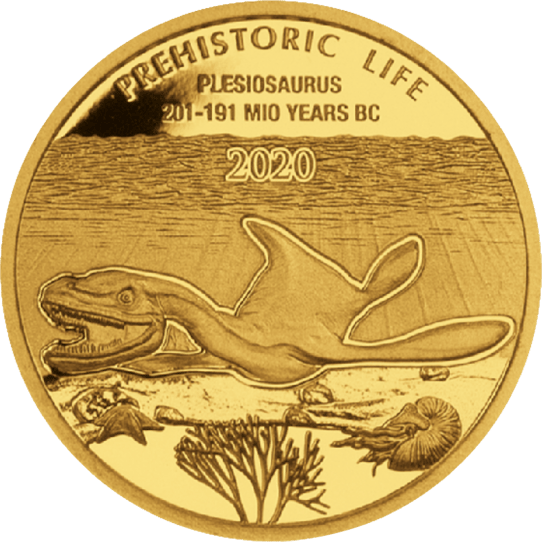


0.5g Gold Prehistoric Life Plesiosaurus 2020 PP (Mintage: 2,000 | 2nd Issue | Proof)













- Pure fine gold: Fineness 999.9
- By B.H. Mayer: minted in Germany
- Official coin: Face value 100 Francs
- Pure fine goldGenuine investment gold, its value tied to the gold price
- By B.H. MayerTraditional mint with precise minting technique
- Official coinLegal tender of the Democratic Republic of the Congo
 Price alert
  Share
Share
Plesiosaurus
From the rock into the light.A Plesiosaurus in gold.
0.5 g of gold, in proof quality, issuing country Democratic Republic of the Congo.
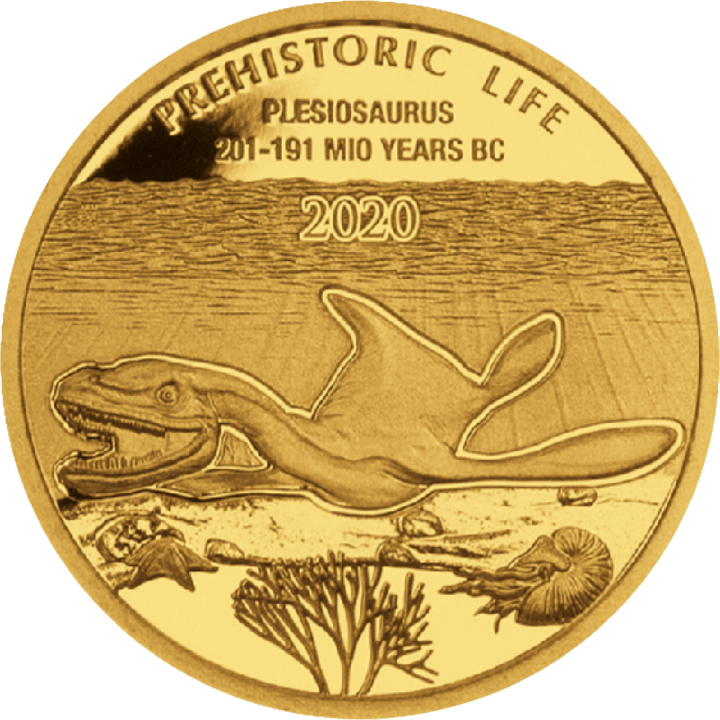
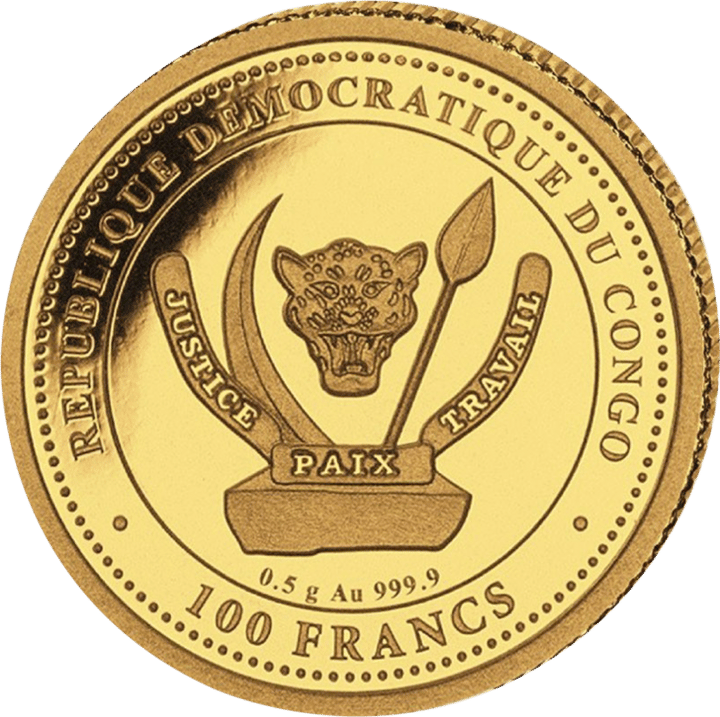
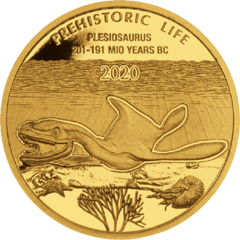
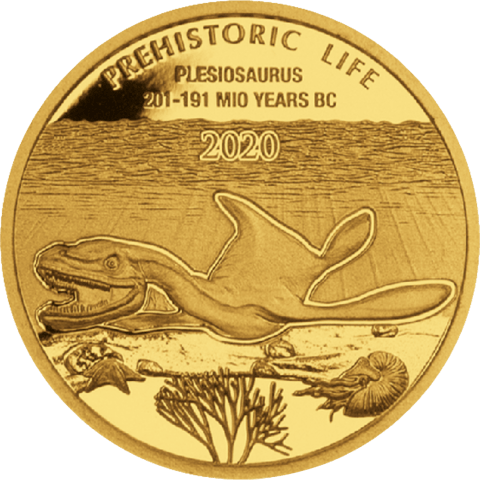
Plesiosaurus on 0.5 g of gold, reverse, image
0.5 g of gold, in proof quality, issuing country Democratic Republic of the Congo.

From the rock
Mary Anning found an almost complete skeleton and showed what these animals looked like.
Plesiosaurs were marine reptiles and only distantly related to the dinosaurs.
No human has ever seen this animal alive: the age of the dinosaurs ended 66 million years ago, and the human genus has existed for about 2.8 million years.
Source: Natural History Museum, London
The timeline
From the Devonian to the last Ice Age
Each animal stands in its geological period. The sections show the order, not the duration.
Devonian
about 420 to 359 million years ago
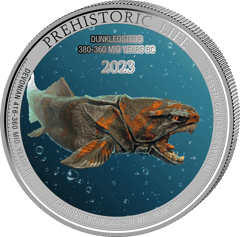 DunkleosteusArmoured fish
Carboniferous
about 359 to 299 million years ago
Permian
about 299 to 252 million years ago
Triassic
about 252 to 201 million years ago
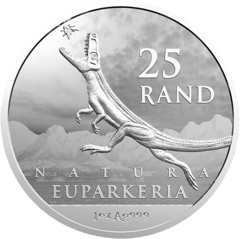 ArchosaursAnimal group
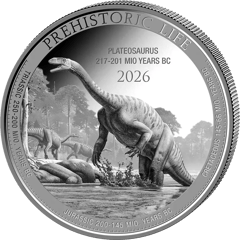 PlateosaurusDinosaur
Jurassic
about 201 to 143 million years ago
 PlesiosaurusMarine reptile
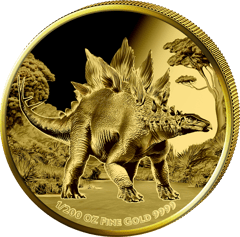 StegosaurusDinosaur
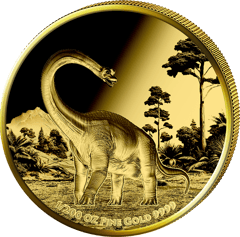 BrachiosaurusDinosaur
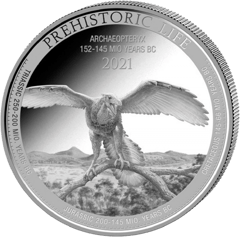 ArchaeopteryxEarly bird
Cretaceous
about 143 to 66 million years ago
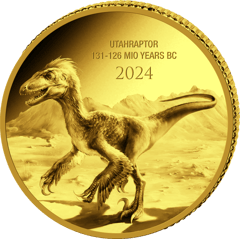 UtahraptorDinosaur
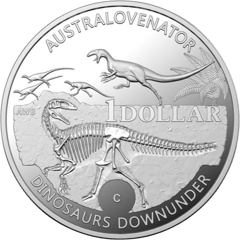 AustralovenatorDinosaur
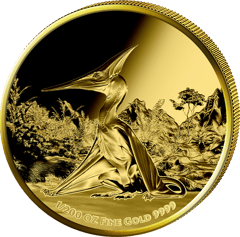 PteranodonPterosaur
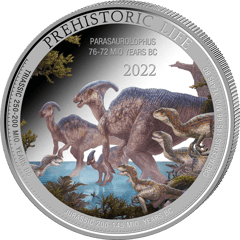 ParasaurolophusDinosaur
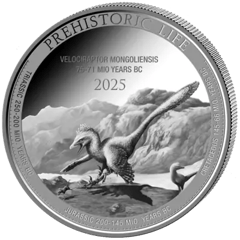 VelociraptorDinosaur
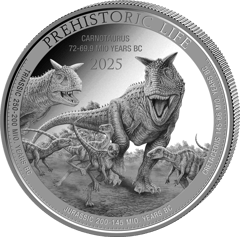 CarnotaurusDinosaur
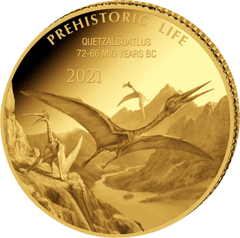 QuetzalcoatlusPterosaur
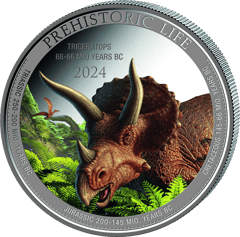 TriceratopsDinosaur
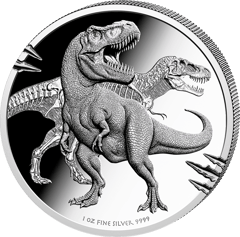 T. rexDinosaur
- The age of the dinosaurs ends 66 million years ago.
Palaeogene
66 to about 23 million years ago
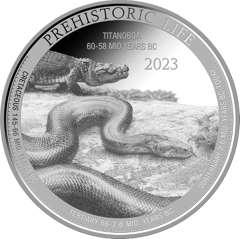 TitanoboaSnake
Neogene
about 23 to 2.6 million years ago
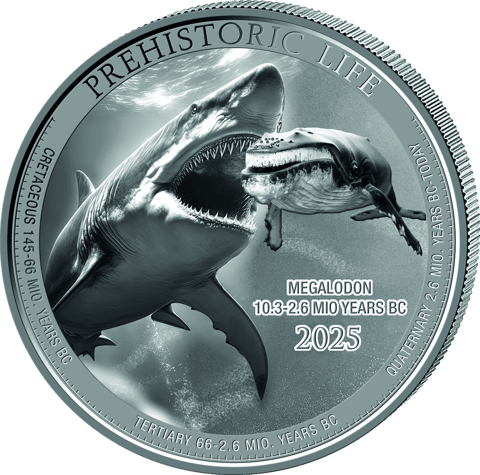 MegalodonShark
- The human genus begins about 2.8 million years ago.
Pleistocene
about 2.6 million to 11,700 years ago
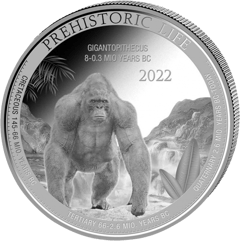 GigantopithecusGreat ape
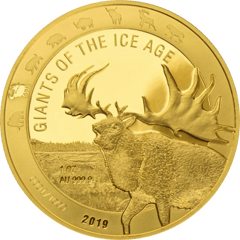 Giant deerMammal
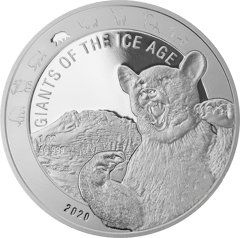 Cave bearMammal
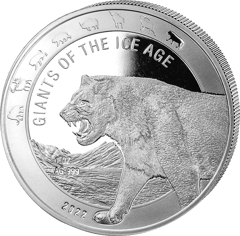 Cave lionMammal
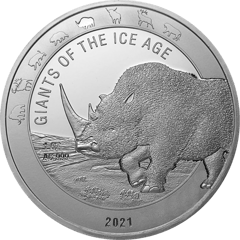 Woolly rhinocerosMammal
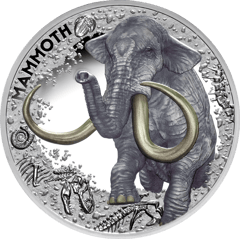 MammothMammal
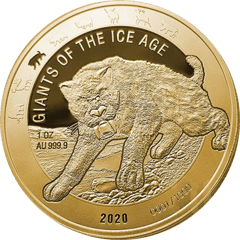 Sabre-toothed catMammal
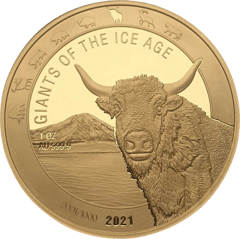 AurochsMammal
- Homo sapiens has existed for about 300,000 years.
- People enter the Chauvet Cave about 36,500 years ago.
Not to scale. Dates according to the International Commission on Stratigraphy, rounded.
The coin
Each animal in its habitat
Since 2020 the Prehistoric Life series of the Democratic Republic of the Congo has shown animals of prehistory, each in its habitat.
On the silver coins a timeline of the geological periods runs around the rim, and the obverse bears the coat of arms of the Democratic Republic of the Congo.
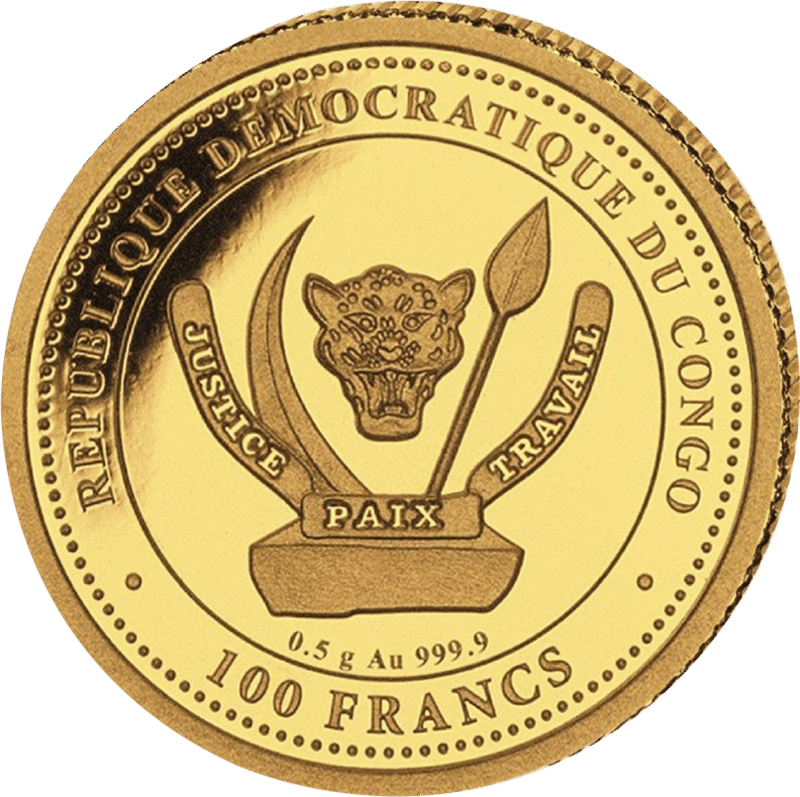
Coat of armsCoat of arms of the DR Congo
Face valueThe face value
The image up close

At a glance
- Issuing country
- Democratic Republic of the Congo
- Face value
- 100 francs
- Metal
- gold
- Weight
- 0.5 g
- Diameter
- 11 mm
- Quality
- Proof
- Mintage
- 2,000 pieces
- Year
- 2020

What we know of these animals comes from the rock.
0.5 g Gold Prehistoric Life Plesiosaurus 2020 – Proof (2nd Edition)
- Minting quality: struck in the most prestigious of all quality grades – Proof (PP) with deep mirror finish.
- Strictly limited: limited worldwide to a very low mintage of only 2,000 pieces.
- Growth potential: distinct value appreciation potential due to the strict limitation and sustained high demand.
- Rarity: a sought-after collector's coin and a true rarity for discerning investors.
- Design: highly detailed depiction of the Plesiosaurus, a prehistoric marine reptile from the early Jurassic period.
- Material & fineness: 0.5 grams of pure fine gold with a high fineness of 999.9.
- Manufacturer: produced by the renowned mint B.H. Mayer.
- Country of origin: the issuing country is the Democratic Republic of the Congo; the coin was minted in Germany.
With the second edition of the popular Prehistoric Life series, you acquire full-value investment gold in its purest form. Each piece contains 0.5 grams of pure gold with a fineness of 999.9 – the value of this coin is based primarily on the fine gold it contains and moves with the gold price. Gold has been regarded as a proven store of value for over 6,000 years, is the world's oldest currency, and possesses an intrinsic value that has never fallen to zero. The design gives this investment its personal touch – but the true substance and reason for purchase remains the fine gold.
It is precisely the handy small format that makes this coin an attractive entry point into physical gold investment. Small amounts of gold add up over the years to a considerable fortune, can be traded worldwide, and thanks to high liquidity can be converted back into cash at any time. This places the coin among the smallest gold coins of its kind – ideal for gradual wealth accumulation and for passing on value across generations. Anyone wishing to give genuine investment gold as a gift for a personal occasion such as a birthday, christening, or wedding is not handing over a mere trinket, but a real asset of pure fine gold.
What further distinguishes this edition is its strict limitation: only 2,000 pieces were minted worldwide. This limited availability makes the coin a genuine rarity and underpins its special value appreciation potential, as steady demand is met by a strictly limited supply. Experience shows that small gold coins with such low mintages sell out quickly and are difficult to acquire afterward – a factor that further underscores the appeal of such limited editions.
The design: the Plesiosaurus from prehistoric times
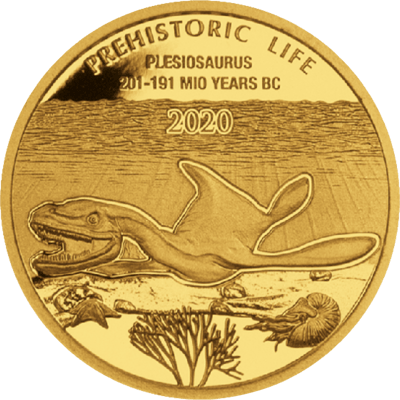
The design shows the Plesiosaurus, an imposing marine reptile that roamed the ancient seas around 201 to 191 million years ago and could reach a body length of several meters. The animal glides gracefully over a seabed featuring plants and a smaller sea creature. Above the water's surface are the inscriptions "PREHISTORIC LIFE", "PLESIOSAURUS", "201–191 MIO YEARS BC", as well as the year of issue, 2020. Fossil remains of the Plesiosaurus were already discovered in the early 19th century by the famous British paleontologist Mary Anning – a piece of scientific history captured here in the purest gold. The reverse bears the coat of arms of the Democratic Republic of the Congo, the inscription "RÉPUBLIQUE DÉMOCRATIQUE DU CONGO", and the face value of 100 Francs, which makes the coin official legal tender of the issuing country.
The Prehistoric Life series is dedicated, edition by edition, to the fascinating creatures of Earth's history, combining a captivating theme with pure fine gold. As the second edition, the Plesiosaurus represents one of the highlights of this series. The coin is produced by the renowned German mint B.H. Mayer, known for its exceptionally precise minting technique and the highest quality standards.
Minting quality and delivery
The Proof finish is the highest minting quality there is: mirrored surfaces and finely matted reliefs create an impressive sense of depth and make the design stand out in relief. Compared to simple Brilliant Uncirculated coins, production is more elaborate and the mintage significantly lower – a feature that underscores the special character of this edition. Please handle the coin only by its edges; to protect it from scratches and fingerprints, it is delivered in a sturdy coin capsule.
Gold is the world's oldest currency – it has shone for thousands of years and will not lose its shine in the future either.
Technical data at a glance
- Precious metal: Gold, fineness 999.9
- Fine weight: 0.5 g
- Diameter: 11.00 mm
- Face value: 100 Francs
- Year of issue: 2020
- Mintage: 2,000 pieces (2nd edition of the Prehistoric Life series)
- Grade: Proof (PP)
- Issuing country: Democratic Republic of the Congo
- Manufacturer: B.H. Mayer
- Delivery: in coin capsule
Product depiction may differ from the final product.
