







10 Mark Prussia Wilhelm I Gold Coin (First Issue of 1872 | Premium Coincard)













- Early Spelling: only 1872 and 1873
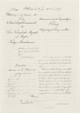
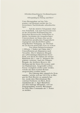
- With Historic Document: Imperial Proclamation
- Berlin Mint: Mint mark A
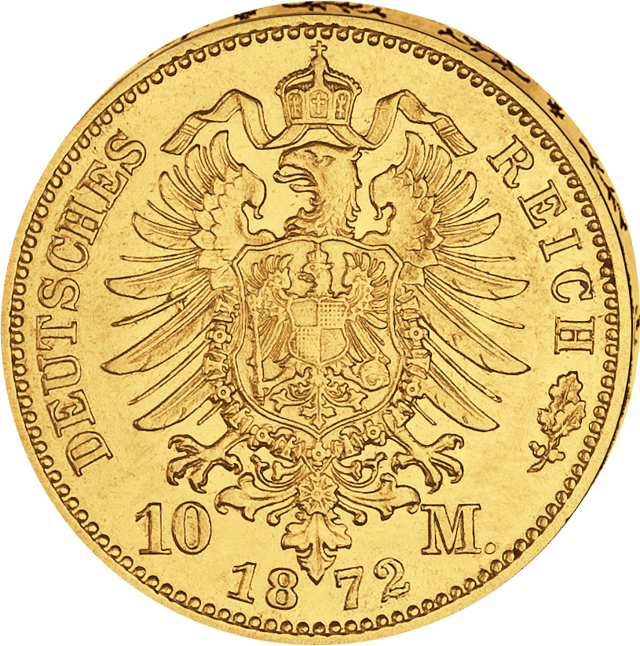
- Early SpellingFace value abbreviated as 10 M, spelled out only from 1874
- With Historic DocumentWith record of the Imperial Proclamation of 18 January 1871
- Berlin MintMinted at the historic Berlin Mint
 Price alert
  Share
Share
Original from the German Empire · Wilhelm I
What a mark had to bear


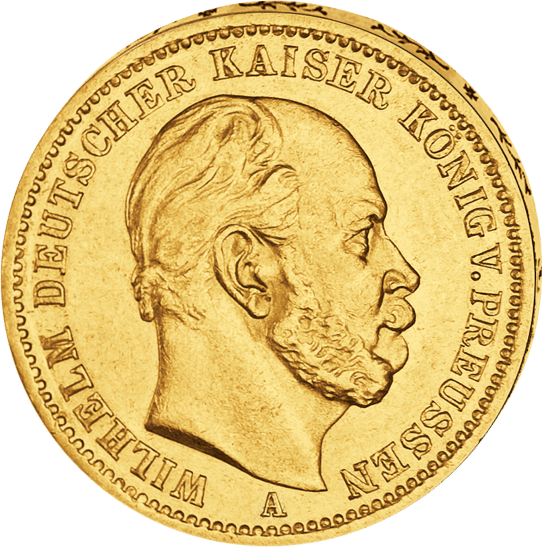
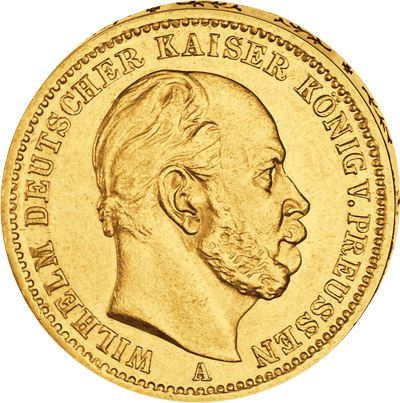
10 marks Prussia, Wilhelm I, obverse with the portrait
Value, year, imperial eagle and a letter for the mint: all of this was laid down by law. A piece of 10 marks weighs 3.98 g, of which 3.58 g is fine gold.
What the law prescribes
Eagle, value, year and a portrait
For every gold coin of the Reich, the law of 1871 laid down what it bears:
“The imperial gold coins bear on one side the imperial eagle with the inscription ‘Deutsches Reich’ and the statement of the value in marks, as well as the year of striking, on the other side the portrait of the sovereign, or the emblem of the free cities, with a corresponding legend and the mint mark.”
The Münzkabinett Berlin calls the side with the sovereign the obverse and the side with the eagle the reverse. The mint mark is the letter of the mint.

LegendThe legend above the portrait

ReichThe word REICH above the eagle
10 M.The value, abbreviated: 10 M.
The mint mark
A letter tells where it was struck
The law prescribes a mint mark for every gold coin: a letter that names the mint. A stands for Berlin, J for Hamburg, F for Stuttgart.
“Below, the mint mark J for Hamburg.”
The photo of this piece shows a A. As it comes from different years, your piece may bear another letter.

The gold of the mark
How heavy the gold had to be
The law of 1871 counted in pounds of fine gold, the pound at 500 grams:
“Imperial gold coins of 20 marks, of which 69¾ pieces are struck from one pound of fine gold.”
In other words: one pound of fine gold yields 69¾ pieces of 20 marks.
Fineness 900/1,000 means: of a thousand parts, nine hundred are pure gold.
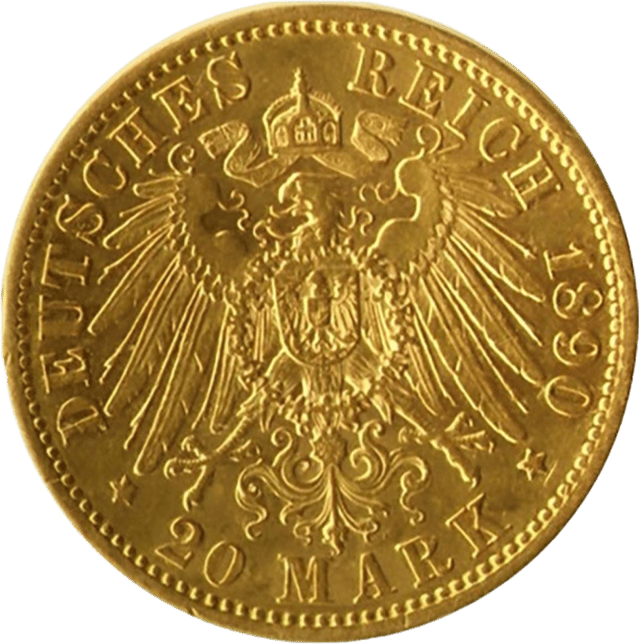
Officially the ten-mark piece was called the crown and the twenty-mark piece the double crown, as a decree for the imperial authorities laid down in 1875. It never caught on, the Münzkabinett Berlin notes.
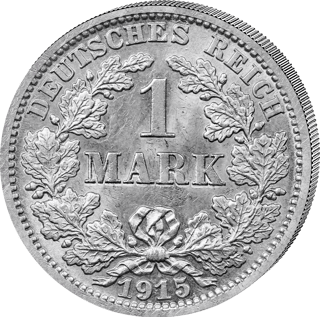
The mark in silver
The silver mark in the hand
A mark holds 5 grams of fine silver, 900/1,000, and measures 24 millimetres. No one had to accept silver coins for amounts over 20 marks.
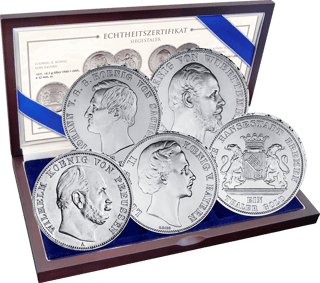
Commemorative coins
Thalers that commemorate
The Victory Thaler of 1871 from Prussia is a commemorative coin in silver. The law of 1871 allowed large silver coins for the time being only as commemorative coins, until the end of 1873.
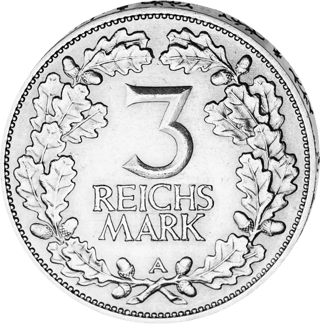
Rentenmark and Reichsmark
The Reichsmark from 1924
The coinage act of 30 August 1924 introduced the Reichsmark; in October 1924 it came into circulation alongside the Rentenmark, one to one.
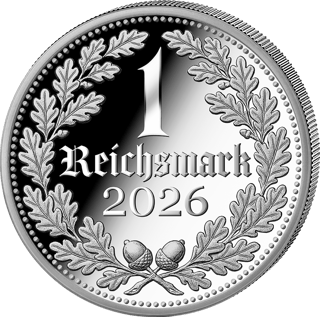
Our strikes
What our strikes take up
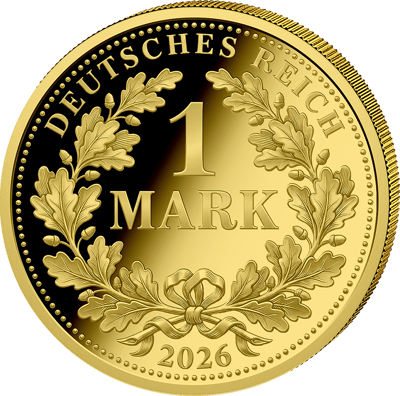
Our strikes bear the lettering 1 Reichsmark or 1 Mark in an oak wreath. They are newly struck, no Reichsmark of the past and no legal tender of the Reich.
At a glance
- Type
- Original
- Era
- German Empire
- Ruler
- Wilhelm I
- Face value
- 10 marks
- Metal
- Gold
- Fineness
- 900/1,000
- Gross weight
- 3.98 g
- Fine weight
- 3.58 g
- Diameter
- 19.5 mm
- Packaging
- Coin card
Gross weight: the weight of the whole coin. Fine weight: the pure metal in it. Fineness: its share in thousandths.
Details from our product data, the coinage acts and the photo. The year and mint mark of your piece may differ from the photo.

Original and new strike
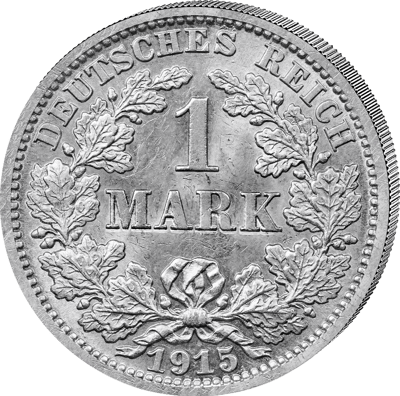
On the left a mark from the German Empire, on the right our strike of 1/200 ounce of fine gold, which takes up DEUTSCHES REICH and 1 MARK in an oak wreath.
One was money throughout the Reich, the other is newly struck: two pieces, one image.
10 Mark Prussia Wilhelm I – the first gold mark of the German Empire
With the 10 Mark gold coin Wilhelm I of Prussia, you hold a genuine piece of German history in your hands. The first issue from 1872 was the very first ten-mark gold coin struck by the young German Empire following its founding – and it comes to you from Kettner Edelmetalle in a high-quality Premium Coincard that vividly tells the historical story behind this coinage.
Design: The obverse shows the striking, sharply drawn profile of Emperor Wilhelm I with the inscription "WILHELM DEUTSCHER KAISER KÖNIG V. PREUSSEN". The reverse is dominated by the crowned imperial eagle bearing the Hohenzollern shield – flanked by the lettering "DEUTSCHES REICH", the year of issue, and the abbreviated face value "10 M".
Material / fineness: The coin is struck from reddish-shimmering 900 gold. The robust alloy consists of nine parts fine gold and one part copper – resulting in a gross weight of 3.98 g with a pure gold content of 3.58 g fine gold.
Manufacturer: The coin was struck by the German mints of the Empire. The mint mark "A" visible on this issue refers to the historic Berlin Mint.
Why the first issue of 1872 is something special
Following the founding of the Empire in 1871, the mark divided into 100 pfennig was introduced as the new, unified currency. Already in the following year, the first 10-mark coin of the Empire appeared – a historic milestone. One detail makes the early years of issue particularly sought after among collectors: on the 1872 and 1873 coinages, the face value was still abbreviated as "10 M". Only from 1874 onward was "10 Mark" spelled out in full, in order to firmly establish the young imperial currency in people's minds. Anyone who owns a Mark-Wilhelm coinage from the first year of issue therefore holds a clearly time-bound original piece.
The origin of the precious metal is also fascinating: a large part of the gold came from French gold coins that flowed into Germany as reparations after the Franco-Prussian War, were melted down, and re-struck into German imperial gold coins. The included Premium Coincard picks up on this chapter and recounts the legendary imperial war treasure, which was stored in the Juliusturm of Spandau Fortress.
The key coin data at a glance
Face value: 10 Mark (Reichsmark)
Material: Gold, 900/1,000 (remainder copper)
Fine weight: 3.58 g fine gold
Gross weight: 3.98 g
Diameter: 19.50 mm
Design series: German Empire, Wilhelm I of Prussia
Year of issue: First issue 1872
Condition: Circulated quality, bank-standard
Delivery: in a coin capsule and Premium Coincard with a record of the Imperial Proclamation of 18 January 1871, the coin's specifications, information on the first Reichsbank in 1876, as well as a high-quality reproduction of the imperial treasury featuring the imperial eagle.
Equally appealing to collectors and investors
Historic gold coins like this one combine two worlds: the cultural-historical appeal of an imperial gold coin over 150 years old, and the tangible material value of the precious metal it contains. Collectors of Imperial German coins often begin their collection with exactly this kind of Prussian coinage – the 10 Mark Wilhelm I is considered a classic among the so-called gold marks. Compared to the larger 20-mark pieces, the 10-mark coin is more manageable in size and lower in price, making it an ideal entry point. Alongside the British Sovereign, the Swiss Vreneli, or the Austrian Ducat, it fits seamlessly into the family of classic trade gold coins.
Gold is the oldest currency in the world – a proven store of value for over 6,000 years that has never fallen to zero, because it possesses an inherent, intrinsic value.
Physical gold protects against loss of purchasing power and has always been regarded as a reliable inflation hedge. While central banks can expand fiat money almost without limit, the supply of gold is naturally scarce – a key reason for its long-term stability in value. It is no coincidence that these very central banks are among the largest holders of gold in the world. As a globally tradable, highly liquid precious metal, gold can be converted back into cash at any time, offering solid crisis protection in economically uncertain times.
Tax advantages of investment gold
Another advantage: investment gold is exempt from VAT in Germany. If you sell your gold coin after a holding period of at least one year, any profits realized are generally tax-free. This historic gold coin can thus be understood not only as a collector's item but also as a long-term building block of wealth – a value that can be passed down through generations. Secure the first issue of the 10 Mark Prussia Wilhelm I in the Premium Coincard and bring a shining piece of the German Empire home with you.
Product depiction may differ from the final product.
