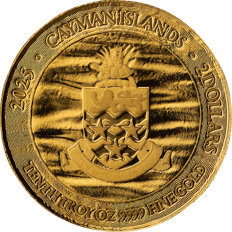
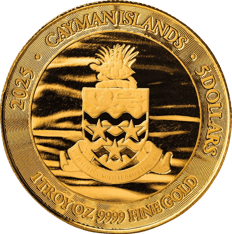
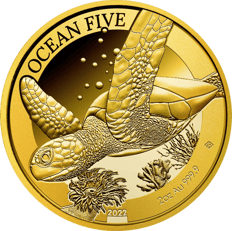
1/200 oz Gold Sea Turtle 2026 (Mintage: 1,000 | Proof)
€69.90
VAT-free and excl. shipping
Ships from 24/11/2026

 More than 310,000
 Over 30 years
 Secure shipping
 Google: 4.9/5
The New Zealand Mint produces the Turtle as a gold coin for the Reserve Bank of Fiji in outstanding quality. The exquisite coin depicts the hawksbill sea turtle. The reverse features the coat of arms of the Fiji Islands and, in later years of issue, the Niue Islands. The coin is issued annually in a consistent design.


Hardly any bullion coin combines natural beauty and fine gold quality as impressively as the Gold Turtle. Carried by the seeming weightlessness of a hawksbill sea turtle gliding through the ocean, the coin tells a story of freedom and vastness, while also delivering what investors expect from a gold coin: 999.9 fine gold in the finest minting quality. This guide sheds light on the history, designs, denominations, authenticity features and tax treatment of the turtle gold coins, and places them within the field of globally sought-after bullion coins.
In the precious metals sector, it has long been a tradition to immortalise country-typical and rare animal species in fine gold with great artistry. What the elephant is to Somalia and the maple leaf is to Canada, the sea turtle is to the island nations of the South Pacific. The best-known representative of this world of designs is the hawksbill sea turtle, affectionately called Taku in the native languages of the Fiji Islands. Its graceful, almost weightless movement through the water makes the design one of the most emotionally charged in the entire bullion coin segment.
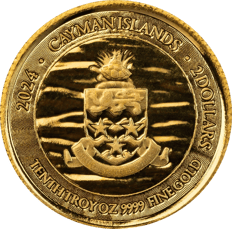
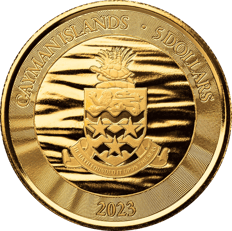
This category comprises several mintings centred on the turtle theme, ranging from the classic series by the New Zealand Mint to issues from the Cayman Islands and elaborate sea-motif series in Proof quality. Anyone enthusiastic about animal-themed bullion coins will find thematically related designs, for example, in the Somalia Elephant or the Australian Kangaroo.
The hawksbill sea turtle (Eretmochelys imbricata) is a species of sea turtle native to the waters off Fiji, Niue and New Zealand. It grows up to 90 centimetres long and weighs around 75 kilograms. It owes its German name to Spanish seafarers: the term Karett derives from the Spanish carey and alludes to the resemblance between the turtle's head and the head of a bird of prey, hence the English name Hawksbill Sea Turtle. Because its intricately patterned shell remains sought after to this day, the species is classified as endangered despite being protected under the Washington Convention on International Trade in Endangered Species (CITES). The coin thus carries a quiet message for the preservation of a fascinating marine creature.
The turtle series from the New Zealand Mint in Auckland is among the most eventful stories in modern bullion coins. The coin first appeared in silver in 2010, with the gold version following in 2013 due to rising demand. This places the turtle among a line-up of popular animal bullion coins that, alongside classics such as the Maple Leaf and the Vienna Philharmonic, have gained increasing importance.
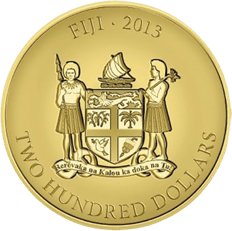
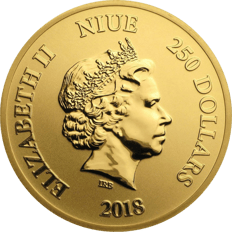
In its early years, the series was named Fiji Taku and was officially issued for the island nation of Fiji. The 2013 gold year of issue remained the only one minted under the Fijian flag, with a face value of 200 Fijian dollars. From 2014, the New Zealand Mint produced the coin for the Niue Islands, which changed the name to Niue Turtle. With the 2017 year of issue, the face value was raised from 200 to 250 New Zealand dollars.
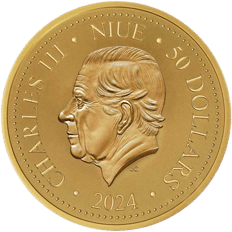
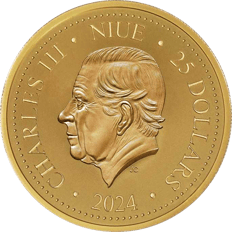
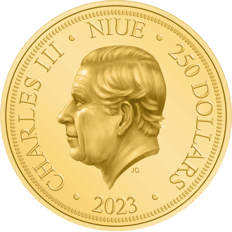
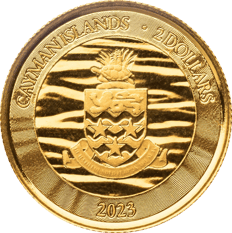
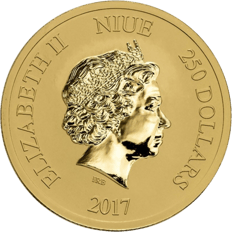
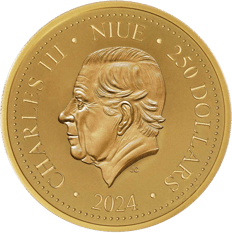
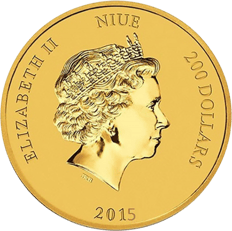
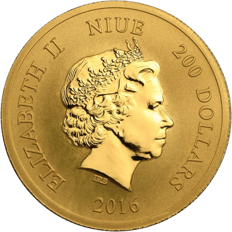
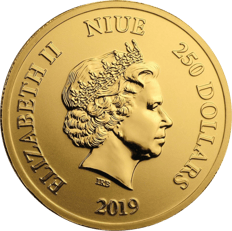
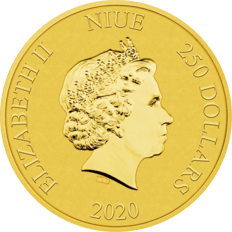
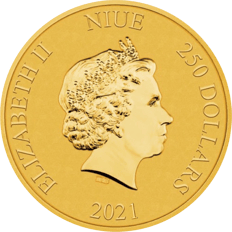
The change of issuing country was also reflected in the design. On the early Fiji issue, a juvenile could be seen alongside the adult animal, while the value side displayed the national coat of arms of the Republic of Fiji. Since the 2014 Niue year of issue, the value side has featured the portrait of Queen Elizabeth II, as is typical for Commonwealth coins. The arrangement of the design elements also varies slightly from year to year, a detail that makes the series appealing to collectors in addition to its fair price relative to its material value. Collectors of year-of-issue sequences will find related concepts in the Lunar Series II.
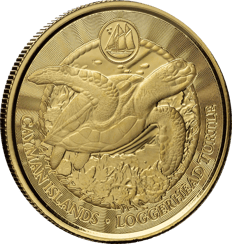
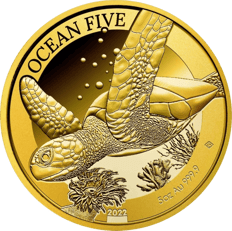
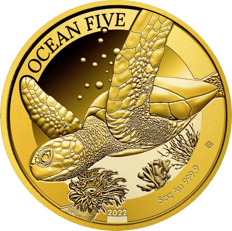
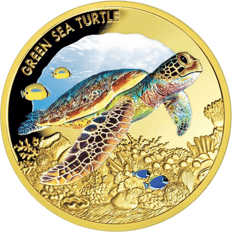
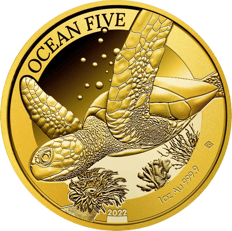
The design side transports the viewer into the underwater worlds of the South Pacific. At the centre swims the eponymous hawksbill sea turtle, which fills almost the entire coin surface. Subtly indicated air bubbles on the textured, struck background give the underwater space an almost three-dimensional effect. Unlike strictly naturalistic animal designs, the turtle is depicted in an artistically stylised form that recalls Maori art.
A crescent-shaped, smoothly polished band along the upper edge bears the inscription TURTLE or Fiji Taku and, through its contrast with the matte background, particularly highlights the shine of the fine gold. The design is rounded off by the indication of the fine weight and the fineness. The value side completes the coin, depending on the year of issue, with either the national coat of arms of Fiji or the royal portrait, together with the issuing country, year and face value.
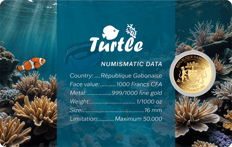
The classic turtle gold coin from the New Zealand Mint is traditionally issued in the standard weight of one troy ounce. Within the category, further denominations and design variants can also be found, such as smaller fractional ounces for a price-conscious entry as well as larger issues and series featuring several marine animals. Anyone placing particular value on especially small units will also find what they are looking for among the 1/10 oz gold bars.
The fineness of the gold issues is 999.9/1,000. The coin's edge is reeded, providing an additional visual and tactile security feature. The coin is supplied in Brilliant Uncirculated (BU) quality, depending on the issue, either in a coin capsule or in a black blister pack with an individual serial number. For long-term storage, suitable coin capsule accessories are recommended, which protect the sensitive struck surface from scratches and abrasion.
The high minting quality is itself an authenticity feature of the turtle gold coin: the contrast between polished and matte-textured surfaces, the fine air bubbles and the reeded edge are difficult to counterfeit with this level of sharpness. Another security feature found in many years of issue is the blister pack with an individual certificate number. To preserve the value over the long term and facilitate a later resale, the coin should ideally remain in its original packaging.
Note on authenticity verification
Fine weight, diameter and fineness are precisely defined for each year of issue. Checking the weight and dimensions, as well as the sharply struck relief details, already provides good indications of authenticity. Kettner Edelmetalle relies on ISO-compliant authenticity verification, so that every coin reaches the market fully checked.
Anyone building up a whole collection should also think about organised storage. In addition to individual capsules, coin cases are a good option, allowing several years of issue to be kept safely and neatly together.
The turtle gold coin is classified as an investment gold coin and benefits from the special tax status of investment gold in Germany. It combines a tangible material value with an exceptional design and thus sits at the intersection of bullion coin and collector's item.
Tax note
Investment gold is exempt from VAT in Germany under § 25c UStG, provided the statutory requirements are met. On a later sale by private individuals, a capital gain may be tax-free after the one-year holding period has elapsed. This information is of a general nature and does not replace tax advice.
Compared with purely standard bullion coins, the appeal of the turtle lies in the combination of a manageable annual mintage and a recognisable design. Classic bullion coins without an annual change of design, such as the Krugerrand, score instead with maximum liquidity and narrow trading spreads. Anyone wishing to diversify more broadly often combines design coins with neutral gold bars as a cost-effective basis for their precious metals holdings.
The turtle gold coin appeals to a broad audience, from collectors of intricate animal designs to investors who wish to add an emotional yet value-retaining component to their holdings. Thanks to manageable mintages and changing years of issue, it is suitable both as a display piece and as a thoughtful addition to a precious metals portfolio.
A sea turtle in fine gold combines what makes precious metal so special: lasting value and a design that tells stories.
Anyone wishing to expand their portfolio further will find a wide selection of further investment and collector classics from around the world in the overarching category gold coins.
Both come from the New Zealand Mint and depict the hawksbill sea turtle. The Fiji Taku was issued in gold exclusively in 2013 and bore the national coat of arms of Fiji on the value side. From 2014, the coin was minted for the Niue Islands and has since featured the portrait of Queen Elizabeth II.
The gold issues are struck with a fineness of 999.9/1,000. The classic standard issue weighs one troy ounce (31.1 grams), has a diameter of 32.1 millimetres and features a reeded edge.
As an investment gold coin, it is exempt from VAT in Germany under § 25c UStG, provided the statutory requirements are met. Any later capital gain on a private sale may be tax-free after the one-year holding period has elapsed. This does not replace individual tax advice.
Taku is the native Fijian name for the hawksbill sea turtle depicted on the coin. In English, it is called the Hawksbill Sea Turtle because its head resembles that of a bird of prey, which is also where the German name Karettschildkröte derives from.
Yes. The blister pack with an individual certificate number, or the coin capsule, protects the sensitive struck surface and serves as a security feature. Undamaged original packaging also makes a later resale easier and helps preserve the coin's value.
Yes, the New Zealand Mint has also been minting the turtle in silver since 2010, in several denominations ranging from fractional ounces to larger formats. The silver issues can be found in the Silver Turtle range.
 Turtle
Stay informed with product launches, financial news and exclusive offers. Sign up for our free newsletter today.
By entering your email address and clicking the "Submit" button, you give the following consent: "I agree to be informed by email about new products, financial news and exclusive offers, and therefore consent to the processing of my email address for the purpose of sending the newsletter. I can revoke this consent at any time without giving reasons, with effect for the future. The lawfulness of processing carried out prior to revocation remains unaffected."