





Turning Points of Antiquity - Currency Collection
- New arrival: Product is new in the shop
- Secure shipping: 100% insured & anonymous delivery
- New arrivalProduct is new in the shop
- Secure shipping100% insured & anonymous delivery








By submitting your order you accept our Terms & Conditions and confirm the Right of withdrawal.
- New arrival: Product is new in the shop
- Secure shipping: 100% insured & anonymous delivery
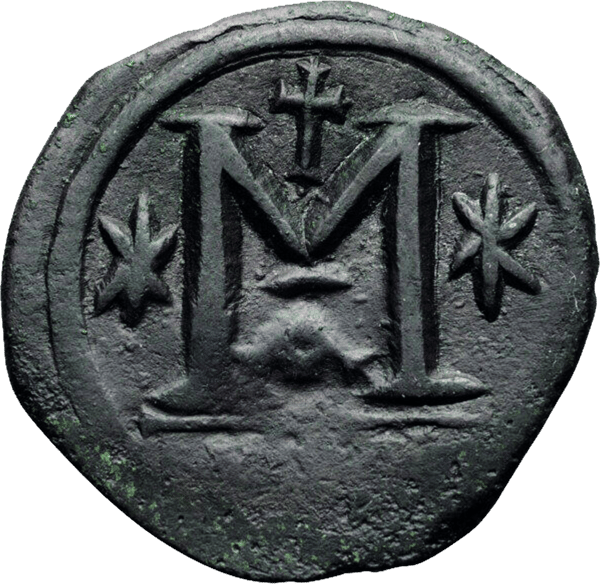 1 ×Bronze Follis Emperor Justinian I (543 AD | Era of the Reconquest of Italy)
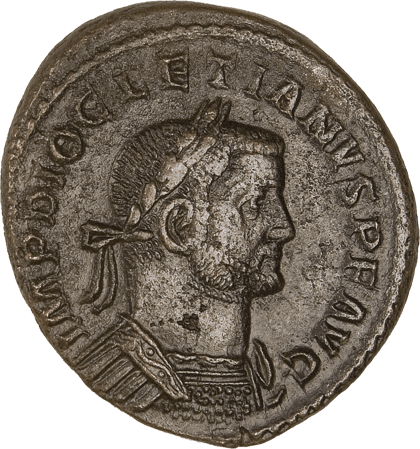
 1 ×Bronze Large Follis Emperor Diocletian (284-305 AD | Age of the Tetrarchy)
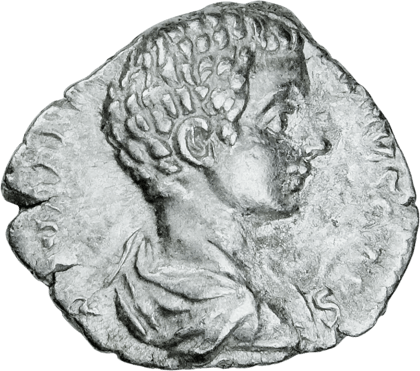
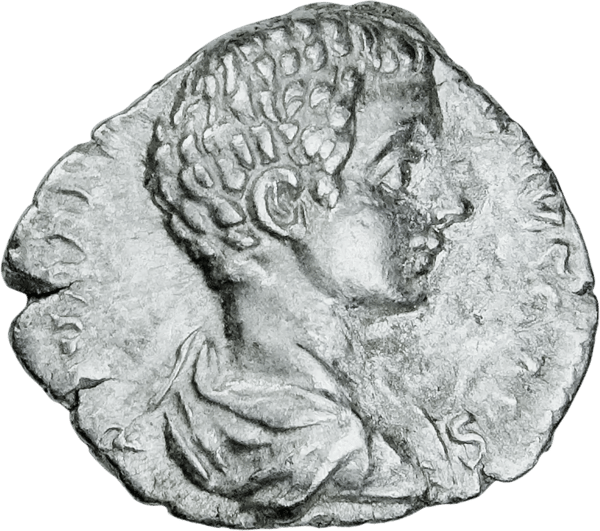 1 ×Silver Denarius Emperor Caracalla (196-198 AD | Roman Citizenship)
 1 ×Ancient Persian Silver Coin Great King Darius III (336-330 BC | Opponent of Alexander the Great)
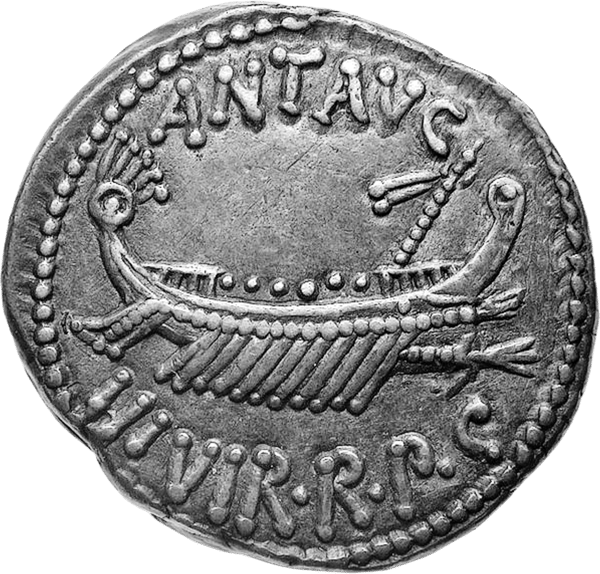 1 ×Silver Legionary Denarius (31-32 BC | Roman Republic | Marcus Antonius)
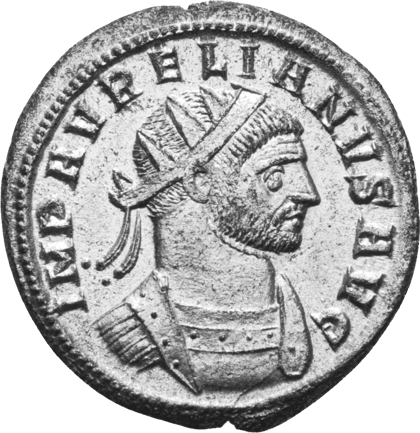
 1 ×Antoninianus Emperor Aurelian (270-275 AD | Age of the Imperial Crisis)
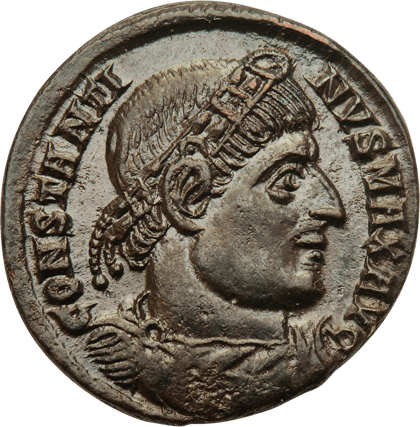
 1 ×Bronze Follis Emperor Constantine I the Great (306-337 AD | Rise of Christianity)
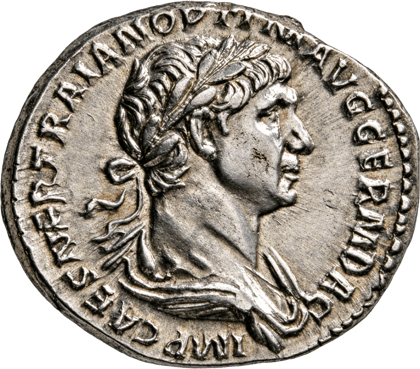
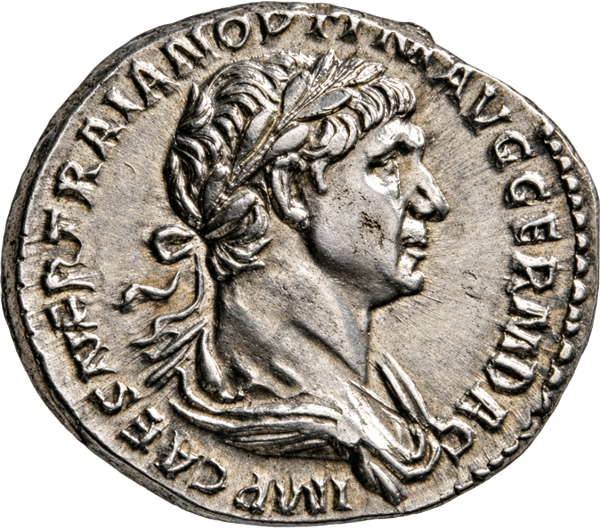 1 ×Silver Denarius Emperor Trajan (89-117 AD | Optimus Princeps)
This package saves you €30.00
 Price alert
 Share

Turning points of antiquity
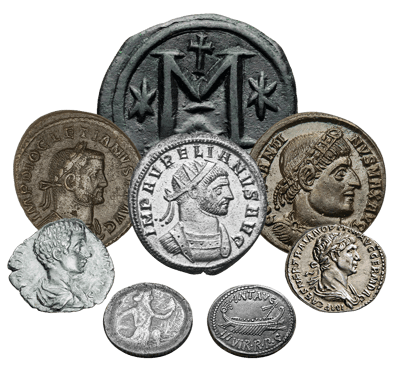
When empires fall.8 coins of antiquity.
With legionary denarii like this one Mark Antony paid his legions in the last war of the Roman Republic; on 2 September 31 BC came the battle of Actium. Beside it a siglos of the Achaemenids, denarii of Trajan and Caracalla, an antoninianus of Aurelian and the folles of Diocletian, Constantine and Justinian. All 8 are originals.
- Coins
- 8
- Kinds of coin
- 4
- Emperors
- 6
Siglos, denarius, antoninianus, follis
4 kinds of coin in silver and bronze.
All 8 to the same scale. At 28 mm and 17 g the follis of Justinian is the heaviest piece, the siglos weighs 5.4 g. The denarii of Mark Antony, Trajan and Caracalla measure 18 to 19 mm.
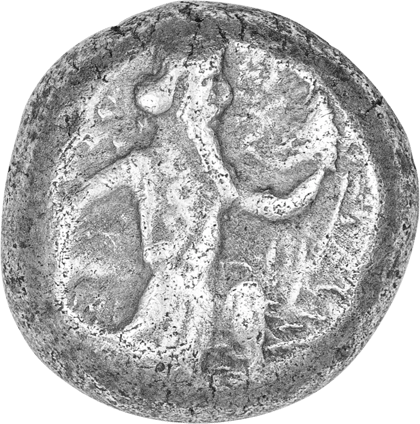
 SiglosOn the shop image the Great King in a kneeling run with bow and spear, on the other side an irregular punch. Darius I introduced the siglos beside the gold daric; after the defeats against Alexander at Issus in 333 and Gaugamela in 331 the empire of the Achaemenids ended in 330 BC.
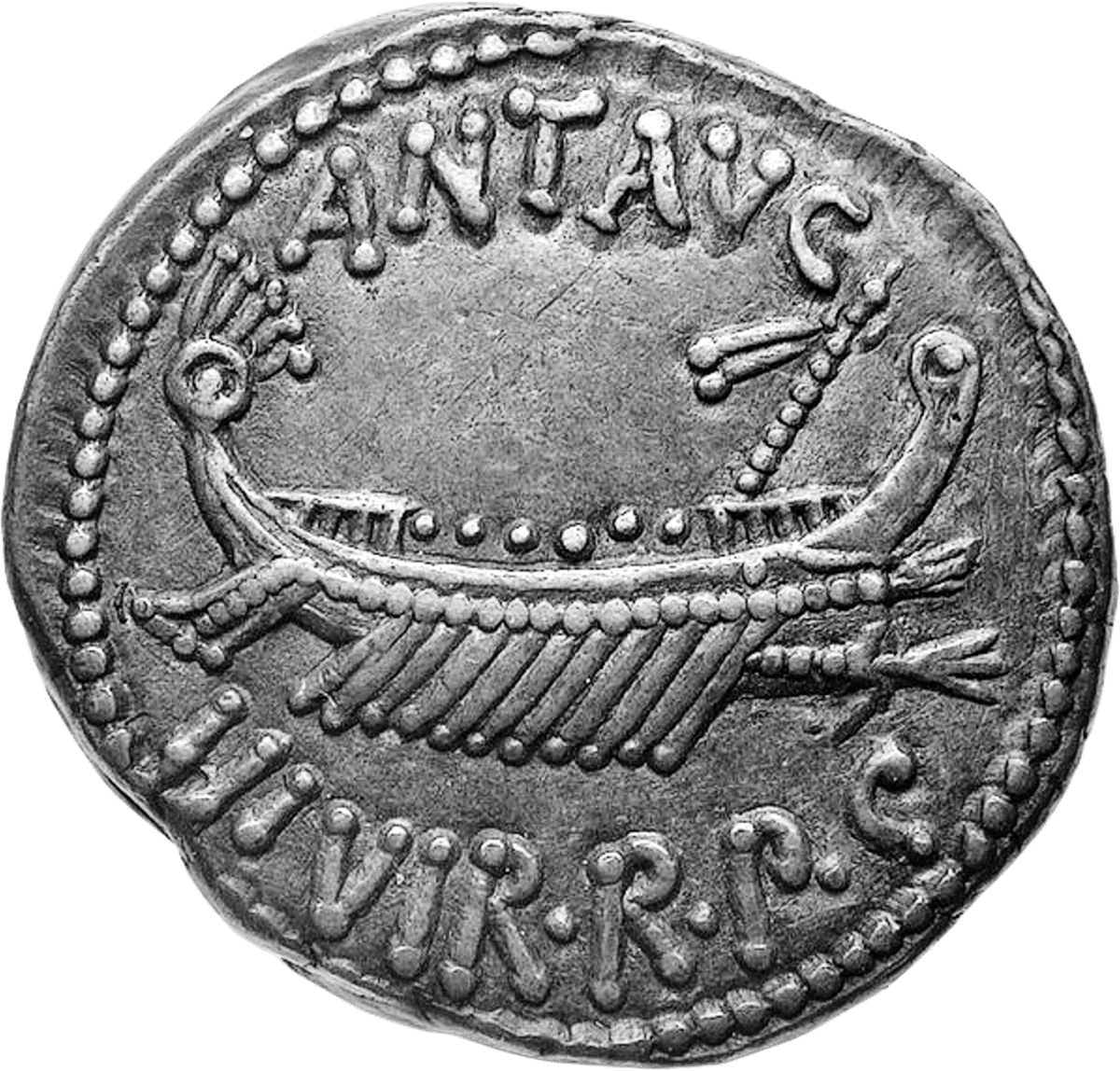
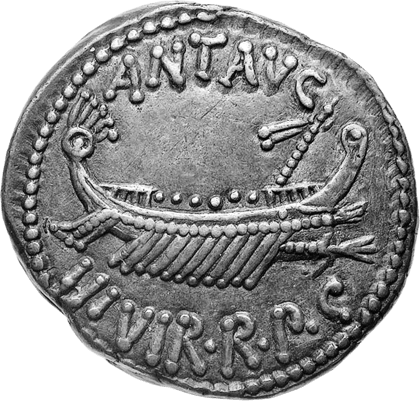
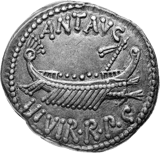 Legionary denariusOne side shows a galley with ANT AVG and III VIR R P C, the other the legionary eagle between 2 standards, on the shop image with LEG IX. The denarius bears no portrait. Such denarii stayed in circulation for a long time and turn up in finds into the 3rd century.
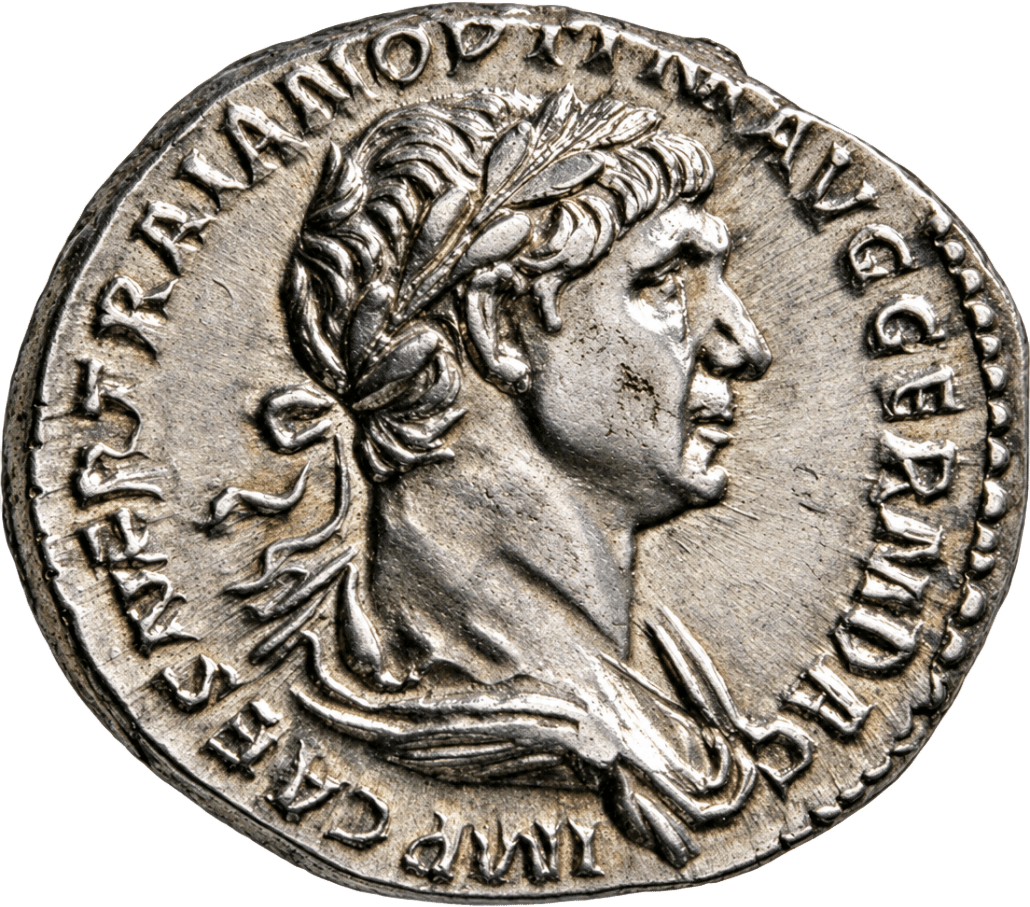
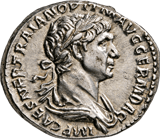 TrajanEmperor from 98 to 117. On the shop image the bust with laurel wreath and OPTIMO in the legend, on the other side Providentia with PRO VID.
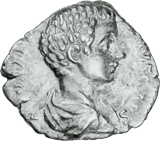 CaracallaCaracalla became Caesar in 195 or 196 and Augustus on 28 January 198. The shop image shows him young and without a wreath, the other side Spes, hope, with a flower. Citizenship for all free inhabitants of the empire followed only in 212.
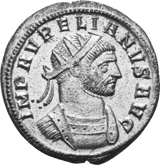 AurelianEmperor from 270 to 275. On the shop image IMP AVRELIANVS AVG around the bust with radiate crown, on the other side Sol between 2 captives and ORIENS AVG.
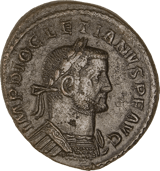 DiocletianAround 294 Diocletian introduced the follis; the name means money bag. On 1 May 305 he and Maximian stepped down at the same time. On the shop image GENIO POPVLI ROMANI runs around the Genius of the Roman people.
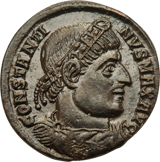 Constantine IConstantine won at the Milvian Bridge on 28 October 312; the agreement of Milan followed in 313, and Constantinople was consecrated in 330. One side bears GLORIA EXERCITVS, “glory of the army”: 2 soldiers with 2 standards between them.
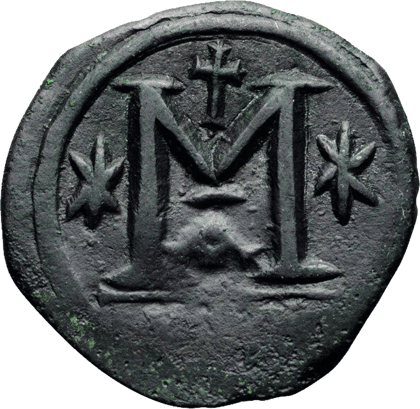
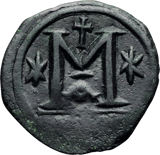 Justinian IJustinian reigned from 527 to 565; from 538 his folles bore the regnal year. On the shop image the large M with a cross above it and a star on each side.
Emperor Trajan
Under Trajan the Roman Empire reached its greatest extent.
Trajan reigned from 98 to 117 and was the first Roman emperor from a province, from Hispania. He is the only emperor the Senate officially honoured as Optimus, the best. On the shop image his denarius bears OPTIMO and the victory titles GERM and DAC for Germanicus and Dacicus; the other side shows Providentia with a sceptre, pointing to a globe, with PRO VID and PARTHICO.
From Persia to Byzantium
From the siglos of the Achaemenids to the follis of Justinian.
- c. 510 to 330 BC
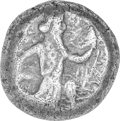 Siglos
- about 500 years32 to 31 BC
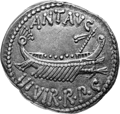 Legionary denarius
- 98 to 117
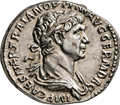 Trajan
- 196 to 198
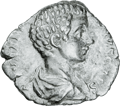 Caracalla
- 270 to 275
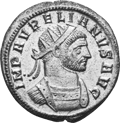 Aurelian
- 284 to 305
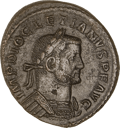 Diocletian
- 306 to 337
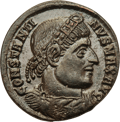 Constantine I
- 527 to 565
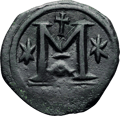 Justinian I
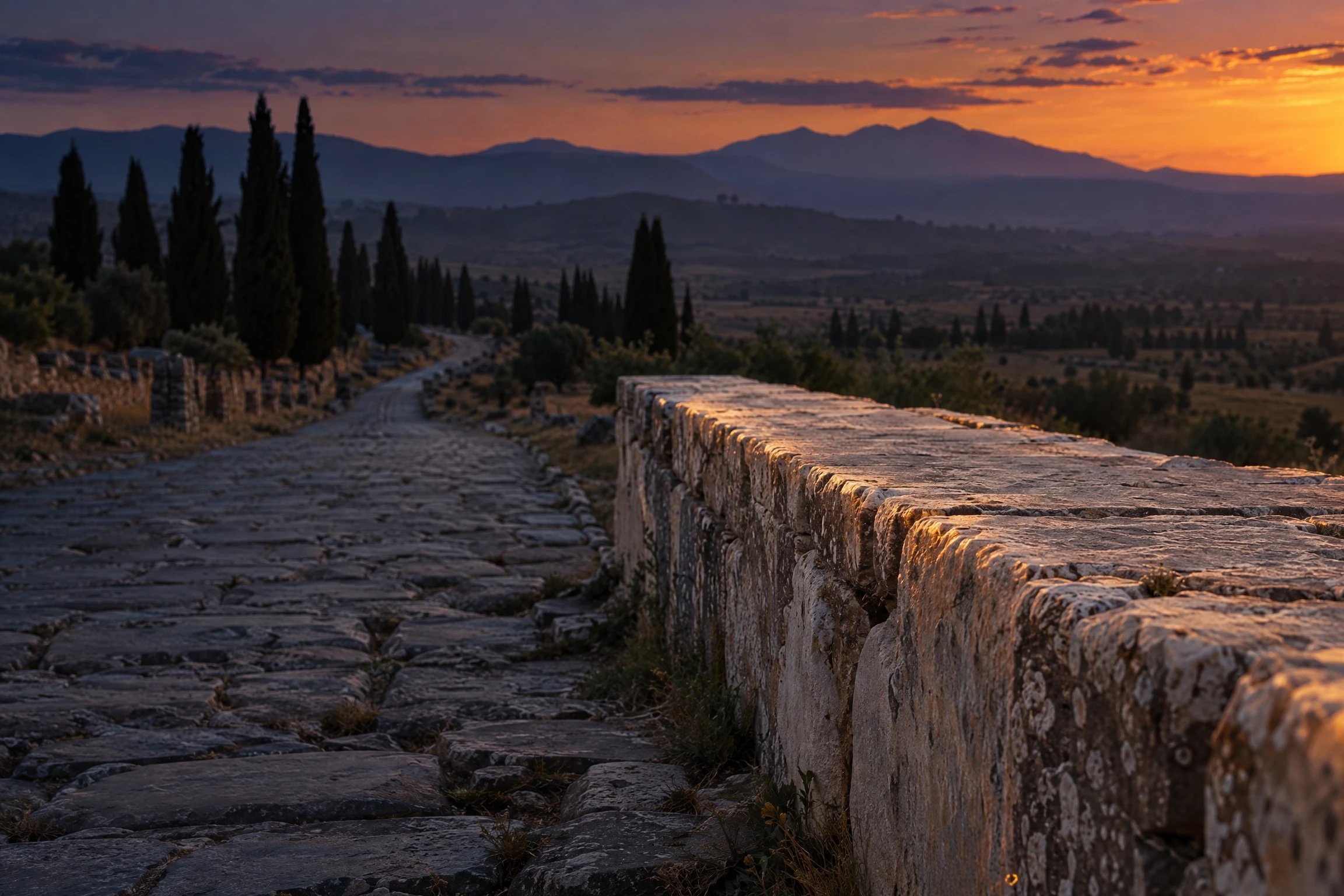
Galley, legionary eagle, sun god and the large M.Turning points of antiquity in 8 coins.
The large M is the Greek numeral 40: a follis was worth 40 nummi. After the Nika riot of 532 Justinian had the Hagia Sophia rebuilt; it was consecrated in December 537. On the wall by the Roman road all 8 stand together.
Turning Points of Antiquity: eight originals, eight pivotal moments in world history
Some collections grow over decades. This one you hold in your hand all at once. The Currency Collection "Turning Points of Antiquity" brings together eight original coins spanning around 900 years. It ranges from the Persian Great King who was defeated by Alexander the Great, via Marcus Antonius on the eve of the naval Battle of Actium, to Justinian I, who had Italy reconquered from Constantinople. Each piece was genuine money. It was used to pay soldiers, pay taxes and buy bread, long before banknotes existed.
The collection combines ancient silver coins with large-format bronze coinage from Late Antiquity. Silver, billon and bronze sit side by side here. It is precisely this mix that shows how the money of antiquity changed over the centuries.
The contents of the collection at a glance
- Ancient Persian silver coin, Great King Darius III (336-330 BC): a siglos of the Achaemenid Empire, approx. 5.4 g
- Silver legionary denarius of Marcus Antonius (32-31 BC, Roman Republic): approx. 3.5 g
- Silver denarius of Emperor Trajan ("Optimus Princeps"): approx. 3.2 g
- Silver denarius of Emperor Caracalla (196-198 AD, struck while still Caesar): approx. 3.2 g
- Antoninianus of Emperor Aurelian (270-275 AD, age of the Crisis of the Third Century): approx. 3.9 g
- Bronze large follis of Emperor Diocletian (284-305 AD, age of the Tetrarchy): approx. 10 g
- Bronze follis of Emperor Constantine I the Great (306-337 AD, rise of Christianity): approx. 4.5 g
- Bronze follis of Emperor Justinian I (543 AD, era of the reconquest of Italy): approx. 17 g
The weights are reference values for the respective individual items. With hand-struck coins of antiquity, weight, diameter and fineness vary from piece to piece.
From Persepolis to Constantinople: the stories behind the coins
Darius III: the end of the first world power
The siglos was the silver currency of the Persian Empire and was introduced under Darius I. Twenty sigloi equalled one gold daric. The coin's design shows the Great King in a kneeling-running pose with bow and spear, the reverse an irregular incuse punch mark. These coins never bore the portrait of a specific ruler. They were struck until the time of Darius III, who lost to Alexander at Issus in 333 BC and at Gaugamela in 331 BC. The empire fell apart. The silver remained.
Marcus Antonius: pay for the decisive battle
For his legions, Marcus Antonius had a huge series of denarii struck in 32/31 BC, presumably at his winter quarters in Patrae. One side shows a war galley with the legend ANT AVG III VIR R P C, the other a legionary eagle between two standards and the number of the respective legion. A few months later, on 2 September 31 BC, the fate of the Republic was decided at Actium. The denarii remained in circulation for a long time afterwards, and this is visible on them.
Trajan: the "best ruler"
Under Trajan (reign 98-117 AD), the Roman Empire reached its greatest extent with the conquest of Dacia. The Senate granted him the honorary title Optimus Princeps. His laureate portrait with titles such as GER DAC (Germanicus Dacicus) represents the golden age of the Roman Imperial period.
Caracalla: an edict that changed the empire
The denarius in this collection shows Caracalla as a young Caesar, still at the side of his father Septimius Severus. As emperor, he issued the Constitutio Antoniniana in 212 AD. This made almost all free inhabitants of the empire Roman citizens, a legal turning point of antiquity.
Aurelian: saviour amid the crisis of the empire
In the 3rd century, the empire threatened to fall apart. Aurelian reunited it between 270 and 275 AD. He had Rome fortified with the wall named after him and reformed the chaotic monetary system in 274. His radiate-crowned antoninianus is instructive, because during this era the silver content of coins kept falling. An ancient example of currency debasement, which shows why people trusted the metal itself more than the promise on the coin.
Diocletian: reorganisation through the Tetrarchy
Diocletian divided rule among four emperors and carried out a comprehensive coinage reform around 294 AD. The large follis often shows the Genius of the Roman people (GENIO POPVLI ROMANI) on the reverse and was struck in mints from Trier to Antioch. The mint mark in the exergue reveals where your specimen comes from.
Constantine the Great: the cross and the new capital
With the victory at the Milvian Bridge in 312, the Edict of Milan in 313 and the founding of Constantinople in 330 AD, Constantine I set the course for Christian Europe. His follis with diademed portrait and the inscription CONSTANTINVS MAX AVG belongs in many collections of ancient Roman coins.
Justinian I: Rome great once more
The impressive follis with the large "M", the Greek numeral for 40 nummi, dates from the reign of Justinian I (527-565 AD). From 538 onwards, these bronzes bear the emperor's regnal year. In 543 AD, the Gothic Wars in Italy were still ongoing, and the Hagia Sophia had been consecrated a few years earlier. At around 17 g, this Byzantine follis is the heaviest piece in the collection.
Condition: circulated currency with genuine traces of use
Please note the information on condition already explained for the individual items. The pieces are circulated currency and bear corresponding traces: darker patina, individual centring, nicks, wear and, in places, weaker legend details. This is precisely what makes them appealing. Each of these coins was struck by hand.
Since the year of minting, mint and reverse variant can vary, the specimen supplied differs from the illustration. You receive an original, not a mass-produced item. We therefore ask for your understanding that the image in the shop is an example and may individually differ from the delivered item in terms of appearance and condition due to historical circumstances.
Empires came and went. Their money of silver and bronze has outlasted them all and still tells their story today.
Who is this collection suitable for?
- Newcomers to numismatics: Eight eras and eight coin types are an ideal foundation for a collection of ancient and Roman coins.
- History enthusiasts: Persia, the Roman Republic, the Imperial period, the Tetrarchy, Late Antiquity and Byzantium are all contained in a single set.
- Collectors focused on tangible assets: These are originals of precious metal and bronze, whose number has been limited by history itself.
- Gift-givers: A gift people will talk about for a long time.
Buying individually or as a collection? An honest comparison
The eight coins can of course also be gathered individually. However, this takes time and requires patience in searching for each type. The collection, on the other hand, offers a complete arc, assembled along major historical turning points. Those seeking an exactly defined fine weight should turn to modern bullion coins made of fine silver. Ancient coins have a different appeal: they are not standardised, but they are authentic and so old that no mint in the world can replicate them.
Gold and silver have accompanied humanity for millennia as money. Gold is considered the oldest currency of mankind and has outlived all others, silver was the everyday money for centuries. This collection makes that tangible. It comes from the "History" series, is a collector's product and is delivered via insured value shipping.
Product image may differ from the actual product.
