





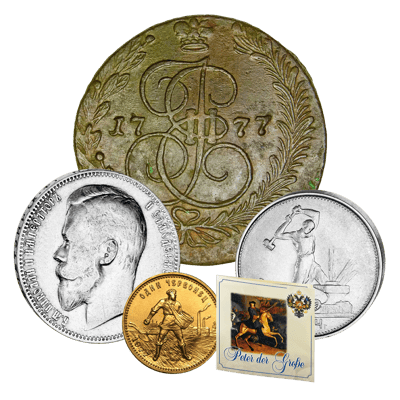

From the Tsars to the Soviet Union - Circulating Currency Collection
- New arrival: Product is new in the shop
- Secure shipping: 100% insured & anonymous delivery
- New arrivalProduct is new in the shop
- Secure shipping100% insured & anonymous delivery





By submitting your order you accept our Terms & Conditions and confirm the Right of withdrawal.
- New arrival: Product is new in the shop
- Secure shipping: 100% insured & anonymous delivery
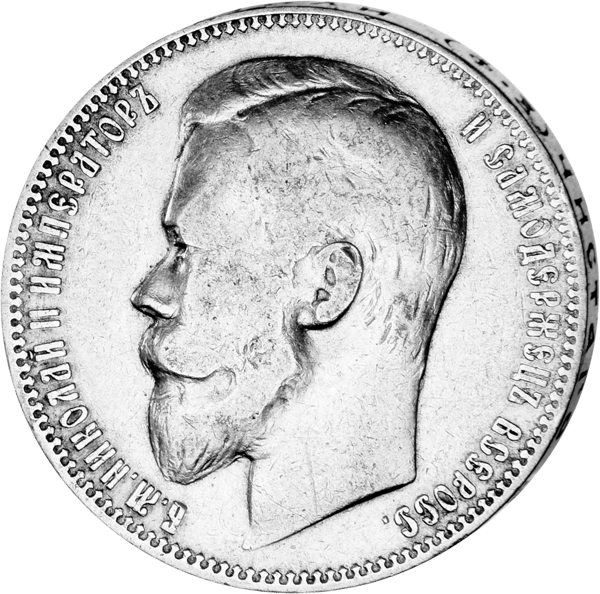 1 ×1 Ruble Silver Tsar Nicholas II (1895-1915 | Last Tsar | Cousin of Kaiser Wilhelm II)
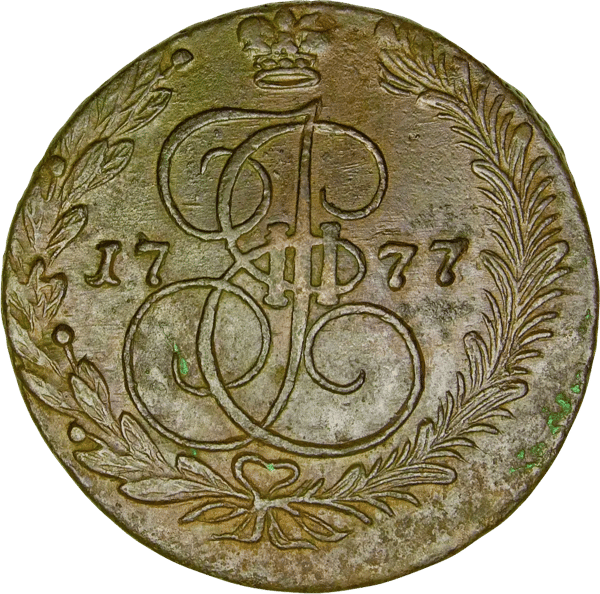 1 ×5 Kopecks Tsarina Catherine the Great (1762-1796 | German Princess on the Tsar's Throne)
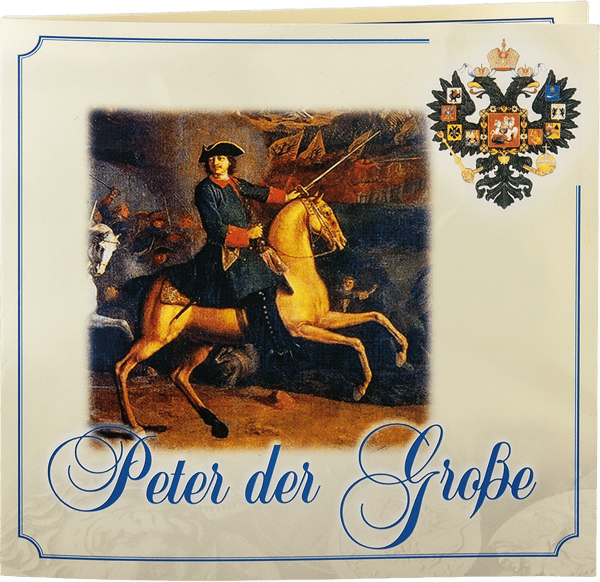 1 ×Wire Kopeck Tsar Peter the Great (1672-1725 | Currency of the Tsarist Empire)
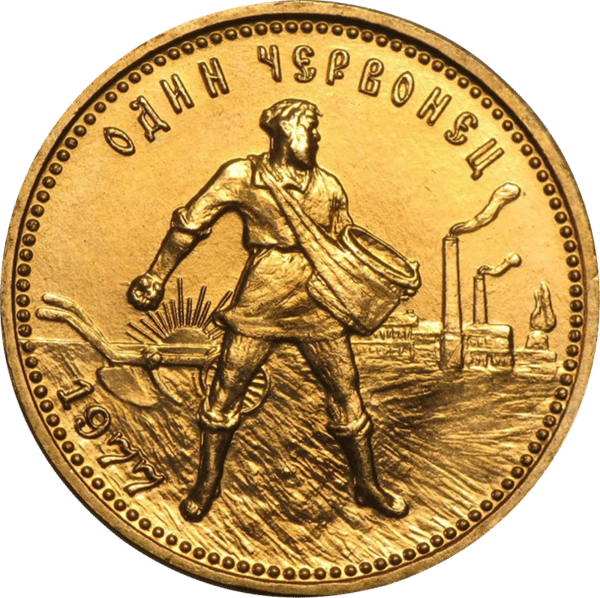 1 ×10 Ruble Gold Chervonets
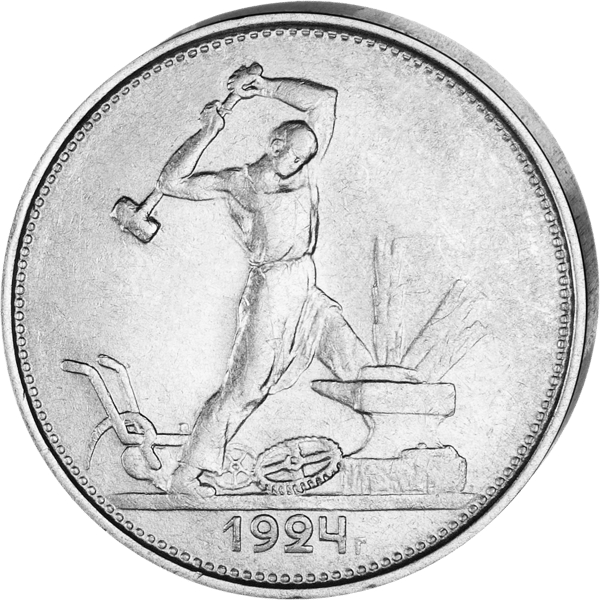 1 ×50 Kopecks Silver Blacksmith (1924-1927 | USSR | Hero of Labor)
This package saves you €50.43
€50.00 promotional discount€0.43 package saving
 Price alert
 Share
From the Tsars to the Soviet Union: over 200 years of Russian monetary history in five originals
A tsar on horseback on a drop of silver. The monogram of a tsarina born a German princess. The profile of the last emperor of all the Russias. A blacksmith at the anvil. And a sower made of gold. This coin set, titled From the Tsars to the Soviet Union - Circulating Currency Collection, tells the story of Russia just as people experienced it themselves: in the hand, at the market, at the till. Five coins in silver, copper and gold span the arc from the tsarist empire of Peter the Great to the Soviet Union, a journey through time that fits into a single collection.
What makes this assortment special? These are not modern commemorative strikes, but coins that were genuinely intended as money. Anyone who loves Russian numismatics or is looking for a gift with real depth gets, with this set, an introduction that spans several centuries at once.
The collection's contents at a glance
- Wire kopeck of Tsar Peter the Great: silver, gross weight around 0.4 g, minted until 1718, supplied in an illustrated fold-out card
- 5 kopecks of Tsarina Catherine the Great: copper, approx. 46 g, around 42 mm, minting type from 1763
- 1 rouble silver coin of Tsar Nicholas II: 20 g, fineness 900/1,000, 18 g fine silver, 34 mm, minted 1895 to 1915
- 50 kopecks silver 'Blacksmith' (USSR): 10 g, fineness 900/1,000, 9 g fine silver, 26.6 mm, years of issue 1924 to 1927
- 10 roubles gold Chervonets: 8.6 g, fineness 900/1,000, 7.74 g fine gold, 22.7 mm
Five coins, five chapters of world history
Peter the Great: Russia's last wire money
Peter I was born in 1672 and crowned at just ten years old. He opened Russia towards the West, built a navy and founded Saint Petersburg. His small silver kopecks were still produced using an ancient technique: silver wire was cut into pieces and struck flat between two dies. This created the typical droplet shape. Almost every piece shows only a fragment of the horseman image, which is exactly what makes every wire kopeck a one-of-a-kind piece. This nearly 200-year-old tradition ended in 1718.
Catherine the Great: heavy copper for everyday use
Born in 1729 in Stettin as Sophie Auguste Friederike von Anhalt-Zerbst, Catherine II ruled the Russian Empire from 1762 to 1796. Her 5 kopecks are a genuine heavyweight: a crowned monogram on one side, a double-headed eagle on the other, plus the characteristic net-pattern edge designed to prevent clipping. This copper was used to pay for the market, the tavern and carriage fares.
Nicholas II: the silver rouble of the last tsar
The cousin of Emperor Wilhelm II ascended the throne in 1894 and was the last Romanov to rule Russia. His silver rouble shows the bearded profile; the reverse bears the crowned double-headed eagle with sceptre and orb. The edge states the silver content in old Russian units: 4 zolotniks and 21 dolyas, which converts to the 18 grams of fine silver still contained in the coin today.
50 kopecks Blacksmith: the hero of labour
A worker swings a hammer over an anvil, with a plough and a gearwheel at his feet. The poltinnik of 1924 to 1927 is one of the most powerful designs of the early USSR. The young Soviet Union deliberately relied on genuine silver for its new currency, even the edge lettering states the content: 9 grams of pure silver. Many of these coins ended up in the melting pot during the 1930s.
Chervonets: the golden crowning touch
The final piece is the most famous gold coin of the Soviet era. The Chervonets was first minted in 1923 and depicts a sower in front of smoking factory chimneys, with the coat of arms of the RSFSR bearing the hammer and sickle on the reverse. Between 1975 and 1981 the coin was reissued with the design unchanged. With 7.74 g of fine gold, the Chervonets brings just under a quarter ounce of pure gold into the collection.
Condition: originals with their own history
Please note: the historical coins in this collection are originals with a history of circulation. Patina, individual centring, small nicks, signs of wear or more weakly struck legends are part of that, they are traces left by the people who once paid with these pieces. Year of minting, mint and appearance vary from piece to piece, so the images shown are example photos. You will find detailed notes on condition in the descriptions of the individual items.
Gold, silver and copper: values that outlast empires
The tsarist empire has fallen, and so has the Soviet Union. Their paper roubles have long since become waste paper. But the precious metal in these coins has remained. Gold is humanity's oldest currency and has outlived every paper money system, this collection demonstrates that impressively. Many investors therefore value physical precious metal as an inflation hedge and as a tangible building block for long-term value preservation. With the silver rouble and the poltinnik, the set also includes two historical silver coins with a fixed, stated fine silver content, plus the Chervonets in gold.
Collection or individual pieces? An honest comparison
- Advantage: Five eras and three metals in one coordinated set, no tedious hunting around required.
- Advantage: The collection extends beyond the tsarist empire into the Soviet Union, whereas sets focused purely on the tsars usually end with Nicholas II.
- Advantage: The Chervonets, an internationally known gold coin, is included, which also makes the set appealing to investors.
- To consider: Anyone focused purely on maximum fine weight is better served by modern bullion coins with 999.9 fineness. This collection is bought for metal and history alike.
- To consider: The year of issue and mint of the individual pieces cannot be selected.
From Peter the Great's wire money to the golden Chervonets: this collection places more than two centuries of Russian coin history in your hands.
Who this collection is suited for
For collectors who love Russia, tsarist portraits and Soviet coin artistry. For history enthusiasts seeking world history you can hold in your hand. And for everyone who understands gold and silver not merely as raw materials, but as lasting value. Whether for your own collection or as a gift with real substance, shipping is, of course, insured value shipping.
Product image may differ from the actual product.
