






1 Pesa German East Africa Company (1890-1892 | German East Africa Protectorate)
- Secure shipping: 100% insured & anonymous delivery
- Kettner Bullion: Already over 310,000 satisfied customers
- Secure shipping100% insured & anonymous delivery
- Kettner BullionAlready over 310,000 satisfied customers








By submitting your order you accept our Terms & Conditions and confirm the Right of withdrawal.
- Secure shipping: 100% insured & anonymous delivery
- Kettner Bullion: Already over 310,000 satisfied customers
 Price alert
 Share
1 Pesa of the German East Africa Company: Copper Coinage from the Colony of German East Africa
Some coins tell history, this one shows it on both sides. The 1 Pesa German East Africa Company was minted from 1890 to 1892 and served as small change in the then protectorate of German East Africa, today's Tanzania, Rwanda and Burundi. On one side sits the crowned imperial eagle of the German Empire, on the other an Arabic inscription within a wreath of branches. This combination of two worlds makes the copper coin one of the most fascinating pieces among German colonial coins. Internationally, collectors know it by the name "German East Africa 1 Pesa".
Imperial Eagle Meets Arabic Script: The Coin's Design
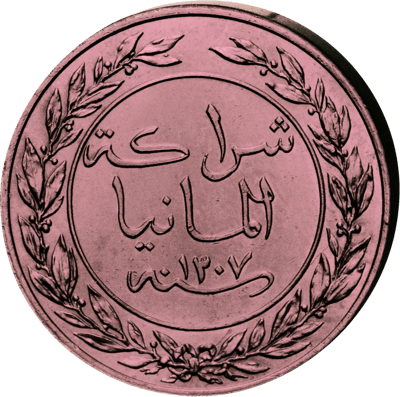
The obverse shows the imperial eagle with the imperial crown, as it was designed under Kaiser Wilhelm II. Running around the edge is the legend DEUTSCH-OSTAFRIKANISCHE GESELLSCHAFT and the year of minting according to the Christian calendar. Even more fascinating is the reverse. In two lines, it bears an Arabic inscription that roughly translates as "Company of Germany". Below this follow the year according to the Islamic calendar in Eastern Arabic numerals and the word "sana", meaning "year". A dense wreath of branches frames the whole design.
Why Arabic? Along the East African coast, which had previously belonged to the sphere of influence of the Sultan of Zanzibar, Arabic was the language of trade. Anyone wishing to pay there had to be understood.
A Piece of the German Empire's Coinage History
At the time, the leading currency in East Africa was the Indian rupee. In 1890, the German East Africa Company (DOAG) was granted the right by the Empire to issue its own coins. It adopted the existing system: 64 pesa made up one rupee, so one pesa corresponded to the British Indian pice. The coins were struck at the Royal Mint in Berlin. In 1891, the Empire took over administration of the colony itself and fixed the exchange ratio between the rupee and the mark: three rupees equalled four marks. The pesa nevertheless remained in circulation for a long time. It was only replaced by the heller coins with the switch to the decimal system (1 heller = 1/100 rupee).
The Years of Issue at a Glance
You will receive one of the three years of issue. The standard catalogues list the following mintage figures:
- 1890 (AH 1307): approximately 1,000,000 pieces, the smallest year of issue
- 1891 (AH 1308): approximately 12,551,000 pieces
- 1892 (AH 1309): approximately 27,541,000 pieces
In the catalogues, you will find the type listed, among others, as Jaeger N 710 and KM# 1. A nice detail for connoisseurs: the Arabic year on the reverse changes with the year of issue. That is why the reverse of each individual piece looks slightly different.
Circulated Coinage with Character: You Receive an Original
These pesa coins were genuine legal tender. They passed over market stalls, through trading houses and through countless hands, and this shows. That is exactly what gives them their appeal. Typical features of this circulated coinage are:
- a darker copper patina that developed over the years
- a different centring of the design on each piece
- nicks, edge flaws and wear from circulation
- some areas of the legend and wreath struck less sharply
The year of issue, reverse variant and grade of preservation vary. The piece delivered may therefore differ from the picture, as the image in the shop merely shows an example. You will not receive a mass-produced item, but a genuine witness to history that is over 130 years old and has its own look and story. Please understand that, due to historical circumstances, appearance and condition can vary from piece to piece.
Technical Specifications
- Face value: 1 pesa (1/64 rupee)
- Issuer: German East Africa Company
- Years of issue: 1890, 1891 or 1892 (varies)
- Material: copper
- Gross weight: 6.5 g
- Diameter: 25.02 mm
- Mint: Berlin
- Condition: circulated, grade of preservation varies
- Series: German Empire, Colony of German East Africa
Pesa, Heller or Modern Copper Rounds?
Copper is a wonderful metal for collecting, and the range of designs is enormous. In the USA especially, many copper rounds are struck with the most varied designs, from wild animals to mythology. These medallic pieces come fresh and flawless straight from striking. The 1 pesa is something different: it was genuine money and was issued in one of the Empire's colonies. Compared to the later heller pieces, it was minted for only a few years and has a distinctive bilingual design. Is there a downside? Pieces fresh from striking are considerably rarer than circulated ones. For a collection, however, an honest circulated piece is often the more authentic item. You can see that it was truly used.
Ideal for Collectors and Beginners
Most copper buyers are passionate collectors who enjoy building their own collection piece by piece. The pesa fits excellently into a collection of German colonial coins, for example alongside rupees and heller from German East Africa or coins from Kiautschou and German New Guinea. It is also an appealing piece for beginners. With it, you learn in a very practical way how historical copper feels, how a patina forms and what matters when assessing condition and strike quality.
A tip for your collection: it is better not to clean historical copper coins. The patina that has developed is part of the piece's character and is valued by collectors. It is best to store the coin dry, for example in an acid-free coin holder or a capsule. This way, your piece from German East Africa will remain well preserved for the long term.
One coin, two scripts and one empire: the 1 pesa of the DOAG is a tangible piece of German and East African history. Its face value is small, its story is great.
Product image may differ from the actual product.
