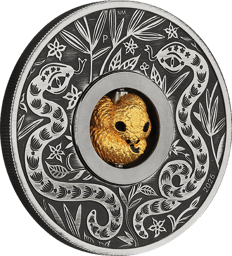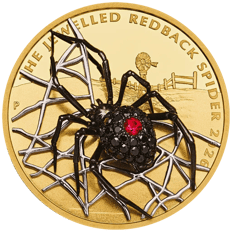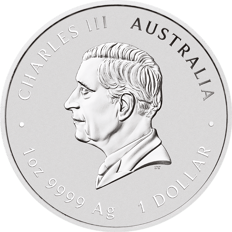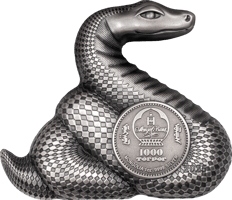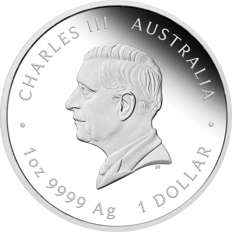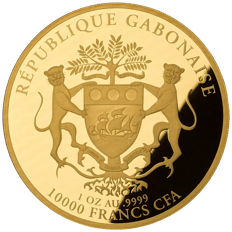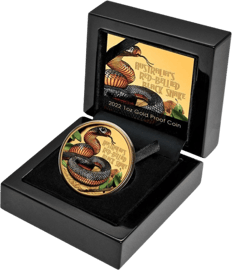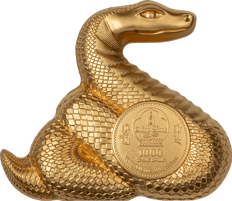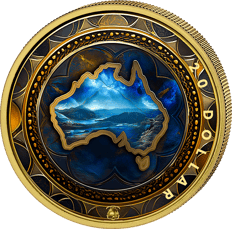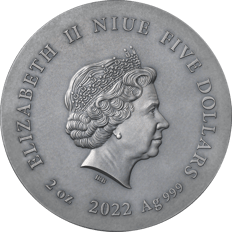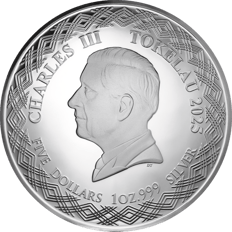
1/2 oz Gold Lunar III Snake 2025
€2,009.09
VAT-free and excl. shipping
Available in 2–3 business days
 +49 7930-2699

 More than 300,000
 Over 30 years
 Secure shipping
 Google: 4.9/5


Researchers counted, measured and described snakes, from 1804 to 2020. The following sections retell what they found, close to their own words.
The forked tongue of snakes has occupied people for thousands of years, but what it does long remained unclear. In 1994 Schwenk described a hypothesis, that is, a reasoned assumption: that the forked tongue is a sensor for the edges of scent trails, with which a snake can follow such trails, including those of its own kind.
Diagram after Schwenk’s hypothesis: over a field stands a fork, a stem with two prongs, each with a tip at its end. The left side of the field carries a scent trail, the right is empty, and between them lies a straight edge. When the fork stands over the edge, one tip lies in the trail and reports scent, the other lies beside it and reports no scent. The tips report different things; the trail ends between them.
Diagram
According to the hypothesis, the two tips take samples at two points at the same time, along a scent gradient, that is, where the scent grows stronger or weaker from place to place. According to Schwenk, this is the basis for telling at once where the trail runs. In his view, the hypothesis is supported by theory, anatomy, nerve pathways, function and behaviour.
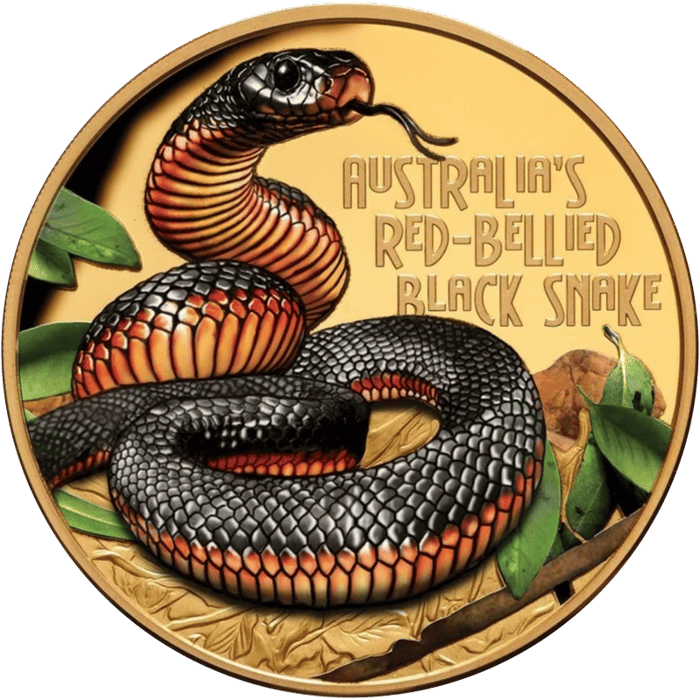
Colour on gold: a red-bellied black snake with its front body raised, head and forked tongue to the right; the back black, in the coils red-orange ventral scales, and some leaves.
In 2015 Khannoon and Evans described how the skull develops in the embryo of the Egyptian cobra, the young animal before it hatches. They followed it through a whole sequence of developmental stages, the sections into which growth is divided, and noted soft parts of the head where relevant. On the tongue they write: The tongue shows incipient forking at stage 5, and becomes fully bifid at stage 6.
According to Schwenk, forked tongues arose in the squamates, the lizards and snakes, at least twice, perhaps four times.
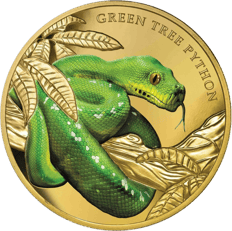
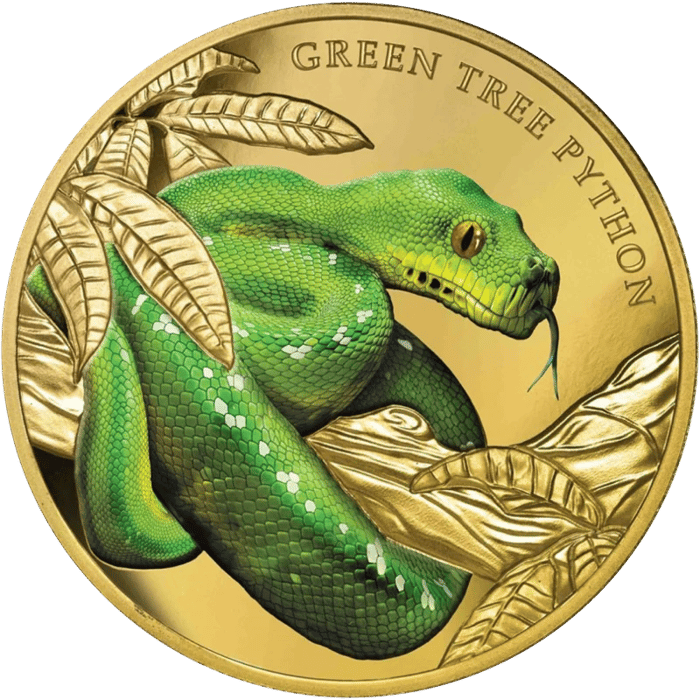
A green tree python in loops over a branch, in colour on gold: the head to the right, the forked tongue hangs down; white spots along the back, golden leaves.
On 14 June 1804 a paper was read, a learned essay, on the hood of the cobra, the spread skin of its neck. In it Patrick Russell described the spreading, and Everard Home the structure of the parts that bring it about. Russell writes: It is a voluntary action, totally distinct from that inflation which all serpents, when irritated, are more or less capable of …

Diagram after Home and after Young and Kardong: from a vertical spine, with the head at its upper end, 20 ribs branch off on each side, drawn in the diagram as straight lines and mirrored. The first is short; up to the tenth and eleventh they grow longer, then shorter again up to the twentieth. Extended, the ribs form an oval whose centre line is the spine; in the diagram a dot marks the tip of each.
Diagram
According to Home, the cervical ribs, the 20 ribs next to the head on each side, have a different shape from the rest. The first is shorter than the following ones; up to the tenth and eleventh they grow longer, both being the longest, then shorter again up to the twentieth, which is almost as long as the first. Extended, the ribs of each side form an oval whose centre line is the spine, the chain of vertebrae in the back. According to Home, they are raised by four groups of muscles. Of the skin he writes:
In the extended state of the ribs, the skin of the back is brought over them, forming the hood; and, in their depressed state, the hood disappears.
According to Home, the round shape of the hood gives the skin the appearance of being inflated. Yet on the most careful examination he found no connection between the windpipe or the lung and the tissue under the skin.
In 2010 Young and Kardong studied how the hood forms. In their view, it is an active process in which the skin, muscles and ribs of the neck take part. The raising begins at the head and continues backwards, often in stages. As long as the hood stays raised, the muscles keep working, and the shape of the fully raised hood reflects the dimensions of the ribs beneath it.
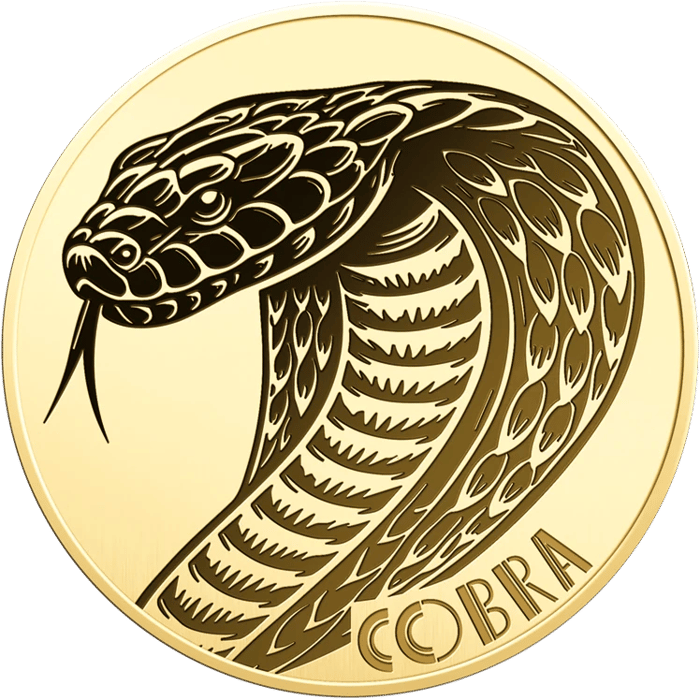
Turned to the left: a cobra’s head in gold with a spread hood marked in crossbands, the forked tongue pointing down to the left.
The scales on the belly side of a snake are called ventral scales. Wu and colleagues describe fine fibres on them, about a thousandth of a millimetre in size, with far finer steps that point towards the tail: The ventral scales of most snakes feature micron-sized fibril structures with nanoscale steps oriented towards the snake's tail.

Diagram after Wu and colleagues: a band of ventral scales from the head to the tail. From head to tail the friction is lower, from tail to head higher. In the snakes studied, the difference between the two directions is lower near the head, medium in the middle and largest near the tail.
Diagram
Wu and colleagues moved a sharp tip up and down the steps and measured the friction, the resistance when sliding over a surface: … friction along the head to tail direction is lower than in the opposite direction.
In the snakes studied, the difference in friction between the two directions is largest near the tail, medium in the middle and lower near the head. The height of the steps differs from snake to snake, but their distribution along the body follows a common pattern.
Earlier studies assumed that snakes slither forward by pushing sideways against stones and branches. According to Hu and colleagues, progress on flat ground, possibly in general, depends crucially on the friction of their scales having a direction.
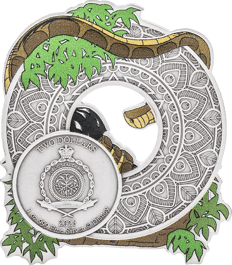
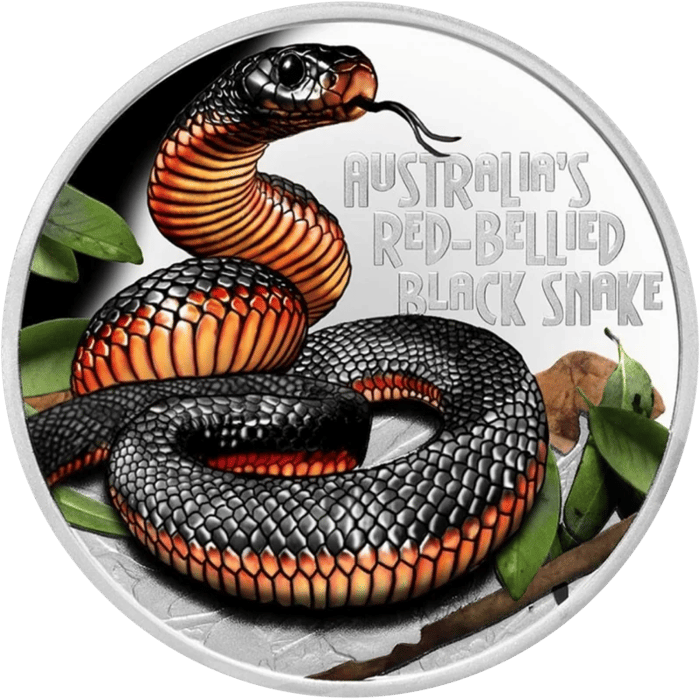
Row upon row of red-orange ventral scales in the coils of a red-bellied black snake, in colour on silver; the front body raised, and some leaves.
For decades, the locomotion of snakes has been sorted into four main types. In 2020 Jayne proposed a finer distinction, by gaits, the ways of moving along: … I propose recognizing five and four distinct types of lateral undulation and concertina, respectively, resulting in a total of 11 distinct gaits previously recognized as only four.
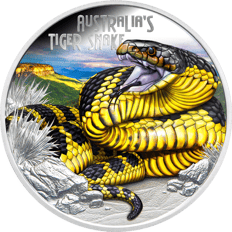
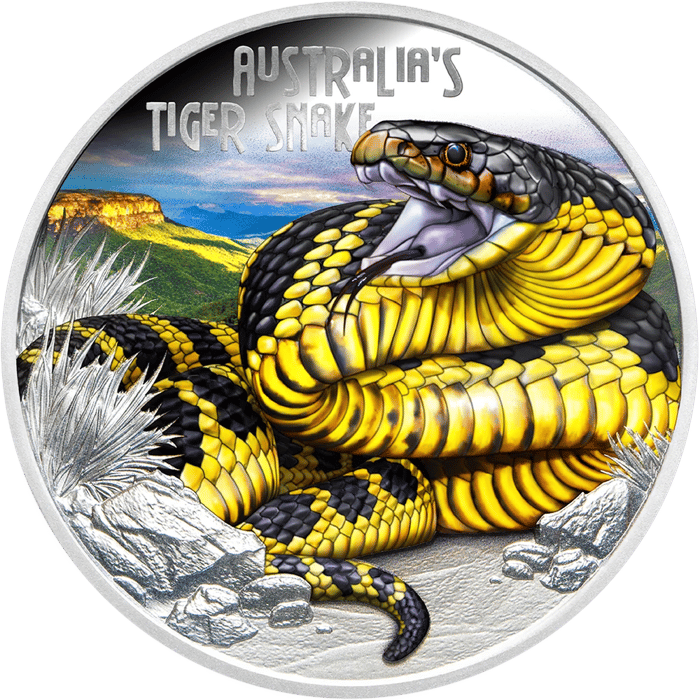
According to the Australian Museum, tiger snakes have 140 to 190 ventral scales. Their name refers to the yellow and black crossbands that are typical of some populations; not all tiger snakes have them.
Raised up over its coils: a tiger snake with yellow and black crossbands, in colour on silver; behind it mountains under a blue sky.
According to Schwenk’s hypothesis, the tongue takes samples with two tips at the same time; according to Home, the skin of the back is drawn over 20 ribs on each side to form the hood; and according to Wu and colleagues, the friction of the ventral scales has a direction. Between the paper of 1804 and the article of 2020 lie more than two centuries.
 Land AnimalsSchlangen
Stay informed with product launches, financial news and exclusive offers. Sign up for our free newsletter today.
By entering your email address and clicking the "Submit" button, you give the following consent: "I agree to be informed by email about new products, financial news and exclusive offers, and therefore consent to the processing of my email address for the purpose of sending the newsletter. I can revoke this consent at any time without giving reasons, with effect for the future. The lawfulness of processing carried out prior to revocation remains unaffected."