





Coin Set of the GDR (1948-1990)
- Genuine relics: no restrikes
- Ideal gift: full of memories
- Beautifully presented: in the blister card
- Genuine relicsEvery coin was truly in circulation, no restrike
- Ideal giftEspecially lovely for those who lived through that era
- Beautifully presentedThe card protects and frames all six coins





- Genuine relics: no restrikes
- Ideal gift: full of memories
- Beautifully presented: in the blister card
 Price alert
 Share

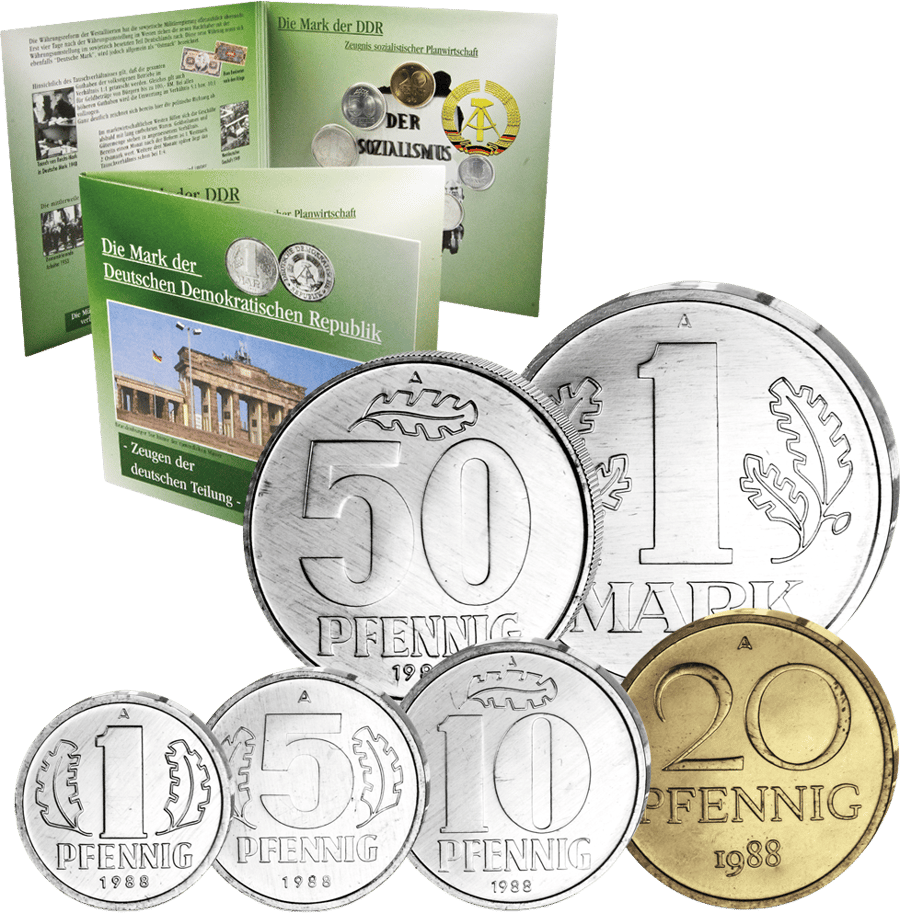
GDR coin set (1948-1990)
6 coins that passed through many hands.The GDR coin set (1948-1990).
1, 5, 10, 20 and 50 Pfennig and 1 Mark: money of the GDR from circulation, on a blister card. With the currency union on 1 July 1990 came the D‑Mark.
- Coins
- 6
- Condition
- Circulated
- Packaging
- Blister card
1, 5, 10, 20 and 50 Pfennig and 1 Mark: money of the GDR from circulation, on a blister card. With the currency union on 1 July 1990 came the D‑Mark.
- Coins
- 6
- Condition
- Circulated
- Packaging
- Blister card

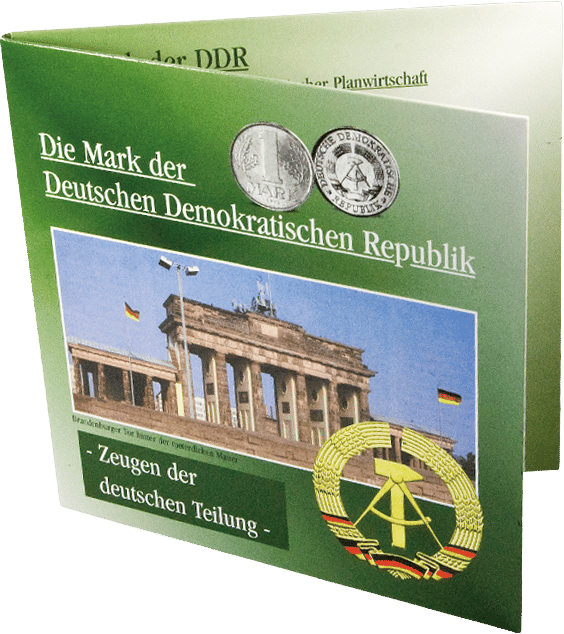
The Mark of the GDR
Pfennig and Mark from everyday life in the GDR. 6 coins in the GDR coin set.
1, 5, 10, 20 and 50 Pfennig and 1 Mark, used and from circulation, on a blister card. Several coins show the year 1988, the front of the card shows the Brandenburg Gate.
- 1948The two currency reforms of the summer show the division of Germany. Here lie the origins of the Mark of the GDR.
- July 1964The currency is now called Mark der Deutschen Notenbank.
- December 1967New name: Mark der Deutschen Demokratischen Republik.
- 1 July 1990With the currency union, exchanging GDR Marks for D‑Mark is no longer needed.
The series
From the 1 Mark of the GDR to fireworks at the Gate. All 6 issues at a glance.
Each card leads to its page.
 GDR coin set (1948-1990)6 coins of the GDR, circulated, on a blister card.This page
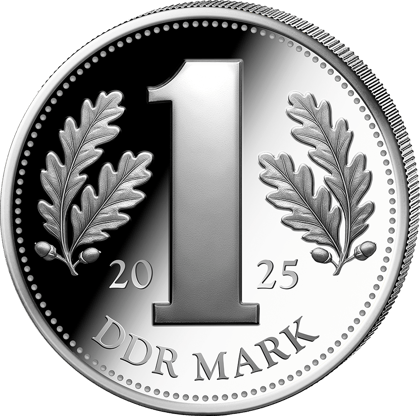 DDR Mark 2025, 1 oz silver1 oz silver, proof, mintage 5,000, in a case.
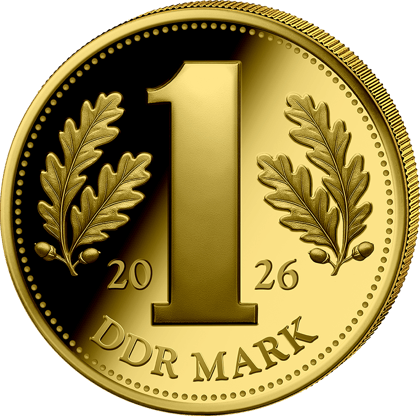 DDR Mark 2026, 1/200 oz gold1/200 oz gold, proof, mintage 5,000, in a coincard.
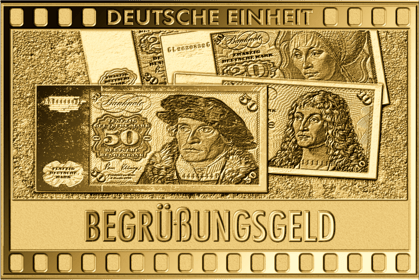 Welcome Money gold coin1/1,000 oz gold, uncirculated, Republic of Chad, in a case.
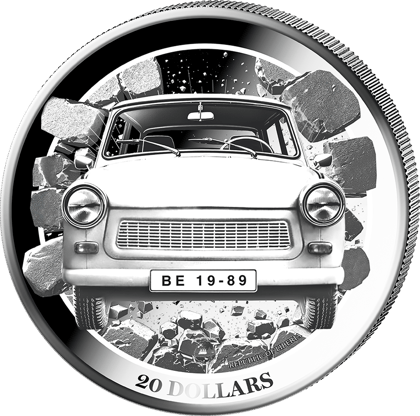 35 Years of Reunification 2025, 1 oz silver1 oz silver, proof, mintage 1,000, in a case.
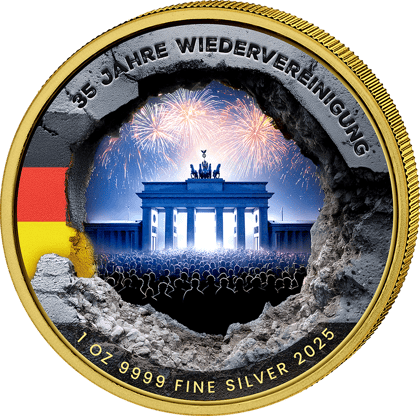 35 Years of Reunification 2025, partly gilded1 oz silver, partly gilded, brilliant uncirculated, mintage 100, in a case.
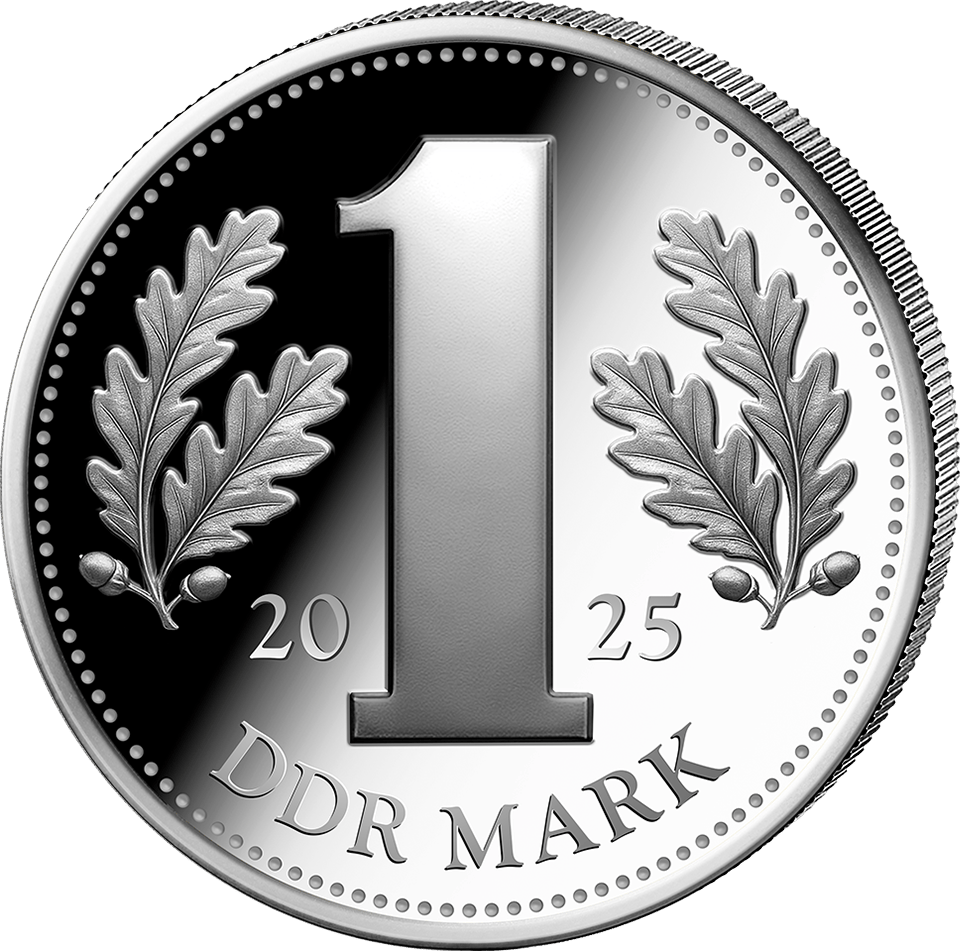
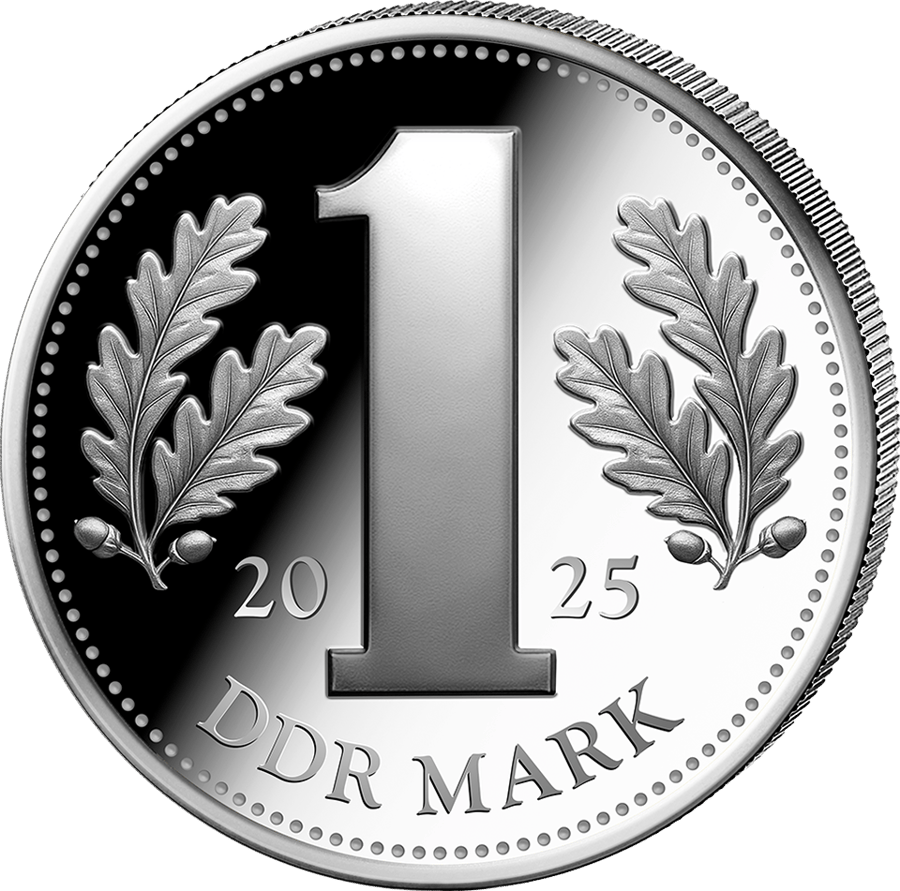
The 1 Mark, struck anew
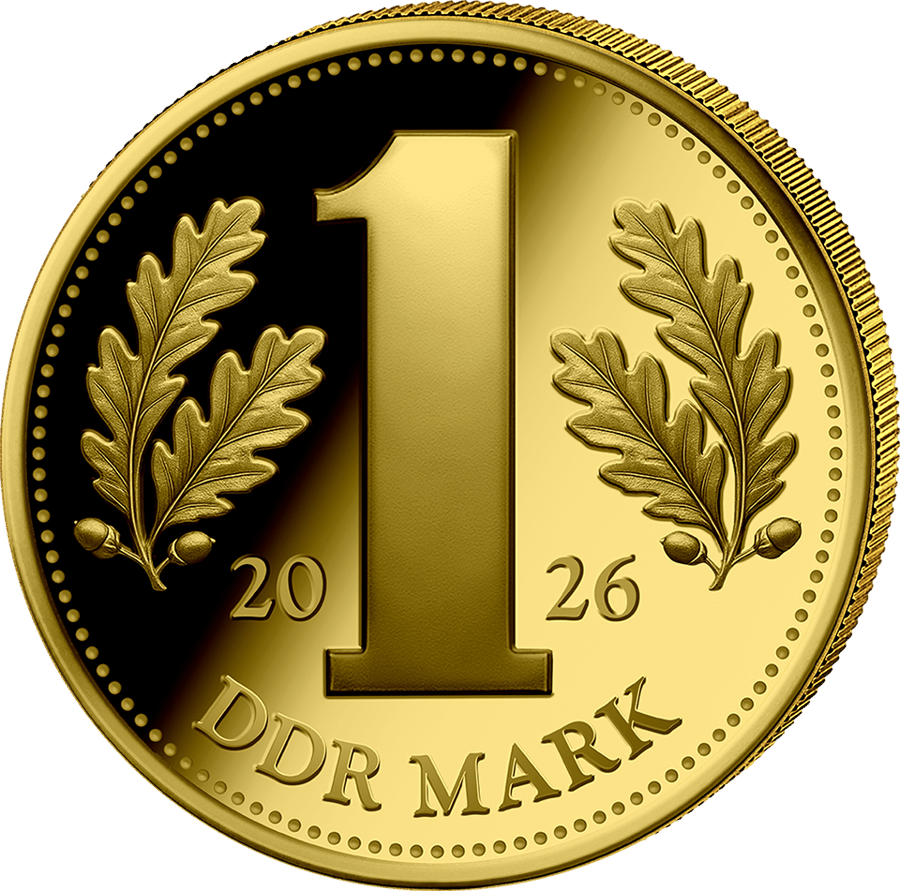
The 1 Mark with oak leaves, struck anew. DDR Mark 2025 in silver, 2026 in gold.
A large 1 between oak twigs, as on the 1 Mark in the GDR coin set. The DDR Mark carries this picture on 1 oz silver in 2025 and on 1/200 oz gold in 2026, both in proof, issued by Liberia.
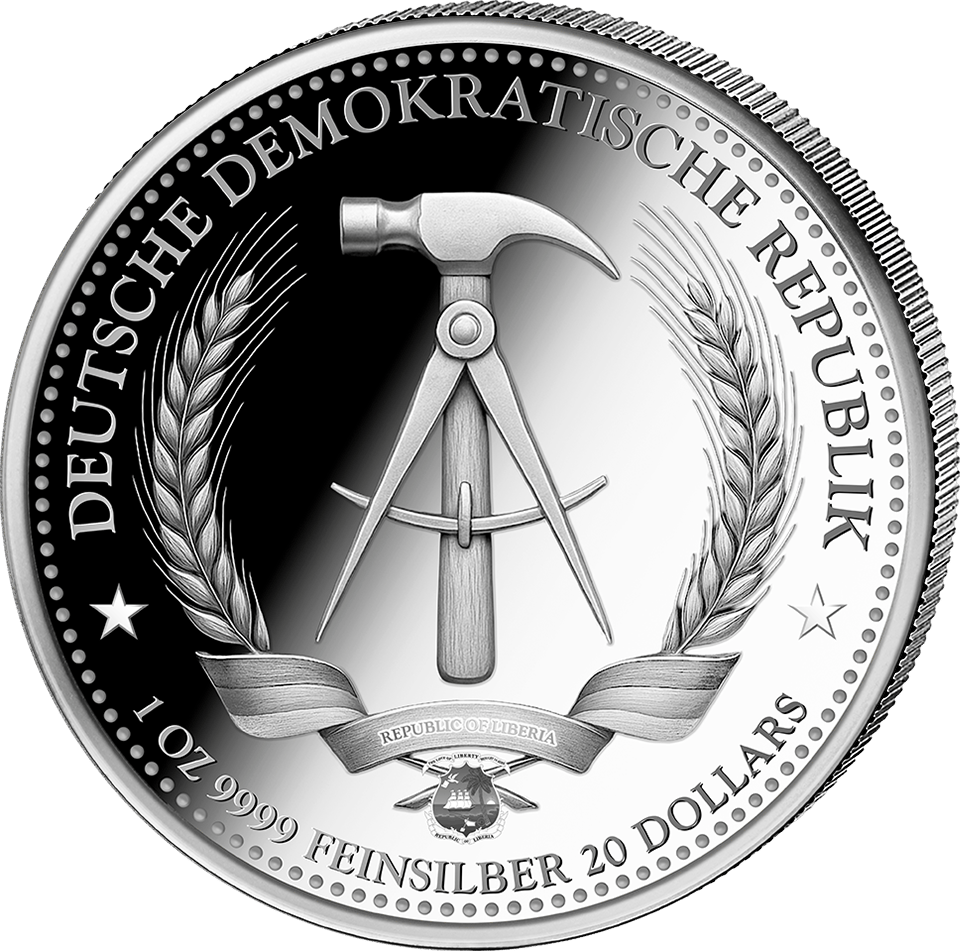
The value side
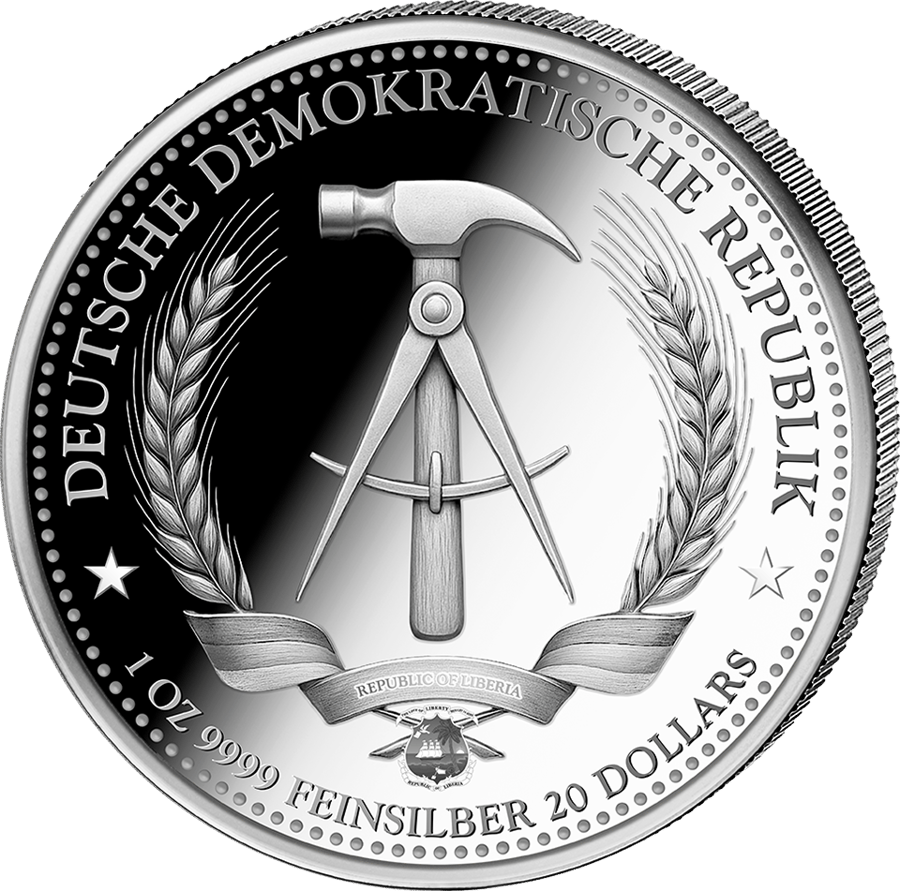
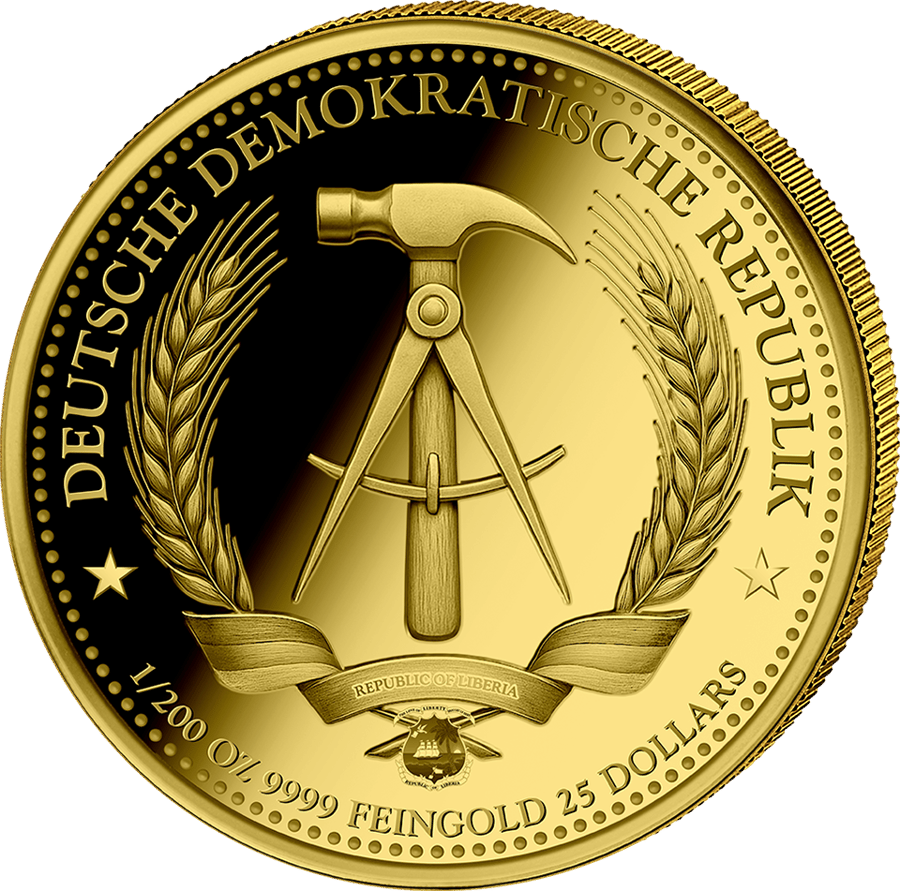
Hammer and compass in a wreath of ears, REPUBLIC OF LIBERIA in the band below.
Around it runs DEUTSCHE DEMOKRATISCHE REPUBLIK. Silver and gold carry the same value side, each with its own weight and face value.
The DDR Mark in silver and in gold.
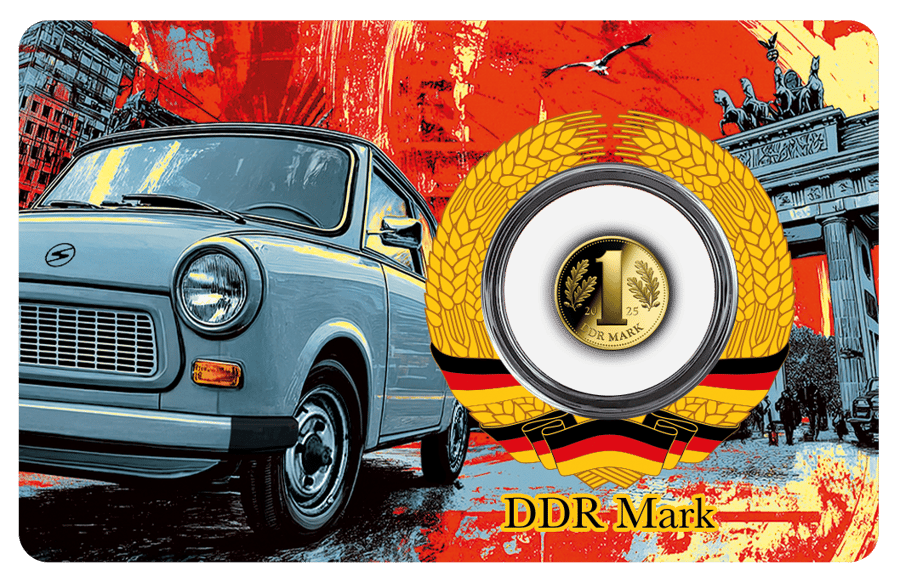
The ounce of silver and the 1/200 oz of gold show the same picture. The gold coin sits in a coincard with Trabant and Brandenburg Gate.

The welcome money
Around 18 million visits, 100 D‑Mark as a welcome. The Welcome Money gold coin.
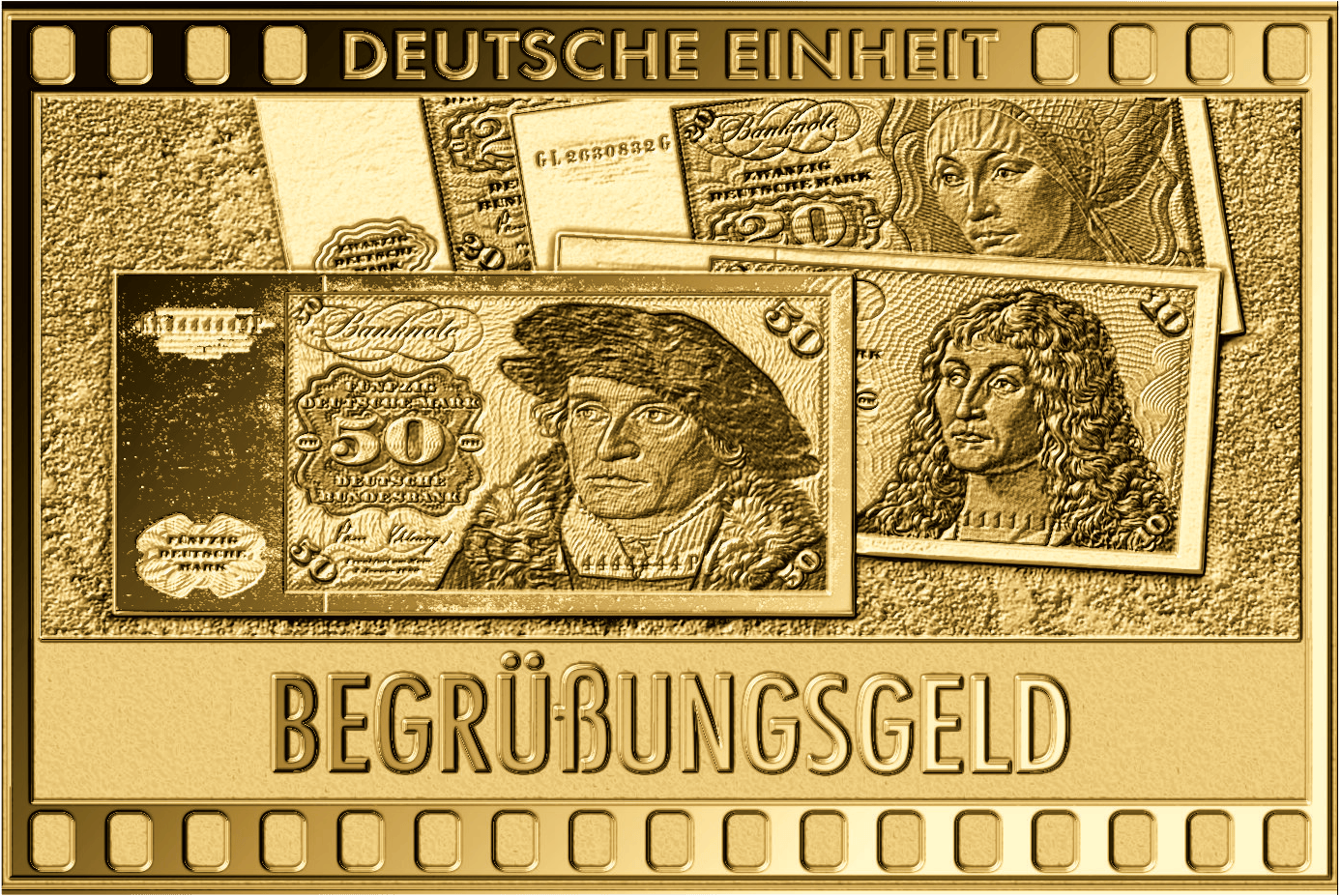
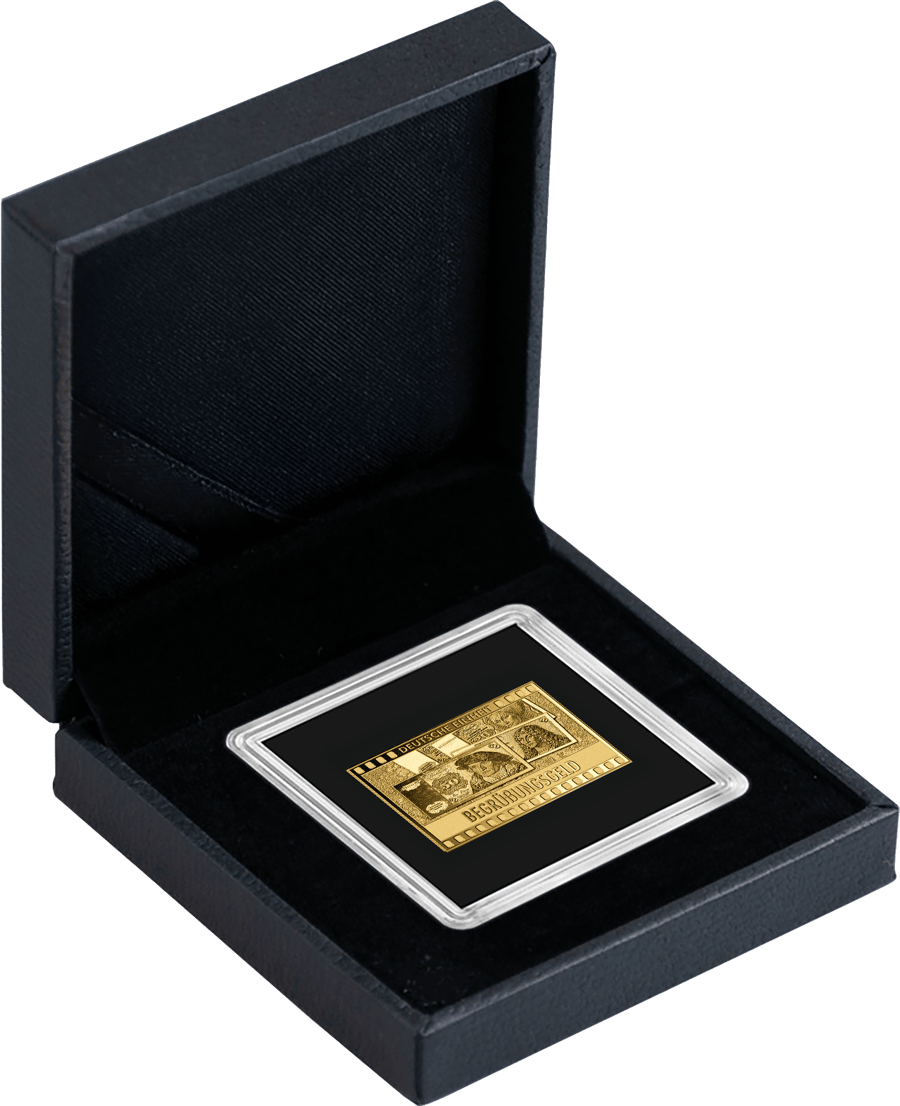
On the motif side lie notes of 50, 20 and 10 D‑Mark, above them DEUTSCHE EINHEIT, below them BEGRÜẞUNGSGELD. Struck in gold 999/1,000, uncirculated, issued by the Republic of Chad.
The value side
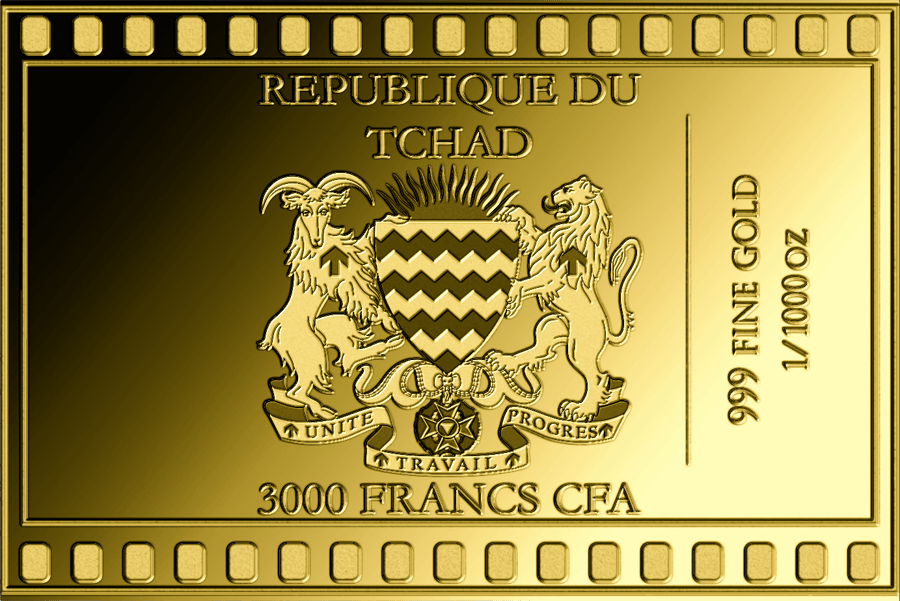
The arms of the Republic of Chad and 3000 FRANCS CFA in gold.
Above the arms stands REPUBLIQUE DU TCHAD, below them 3000 FRANCS CFA, at the right edge 999 FINE GOLD 1/1000 OZ. The coin lies in a case.
- 1987Visitors from the GDR receive 100 D‑Mark welcome money in the West once a year, before that twice 30 D‑Mark.
- November 1989Around 18 million visits to the West in this month alone. Every visitor receives 100 D‑Mark.
- 1 January 1990No more welcome money. Within a very short time it has cost around 2 billion D‑Mark.
The November night of 1989
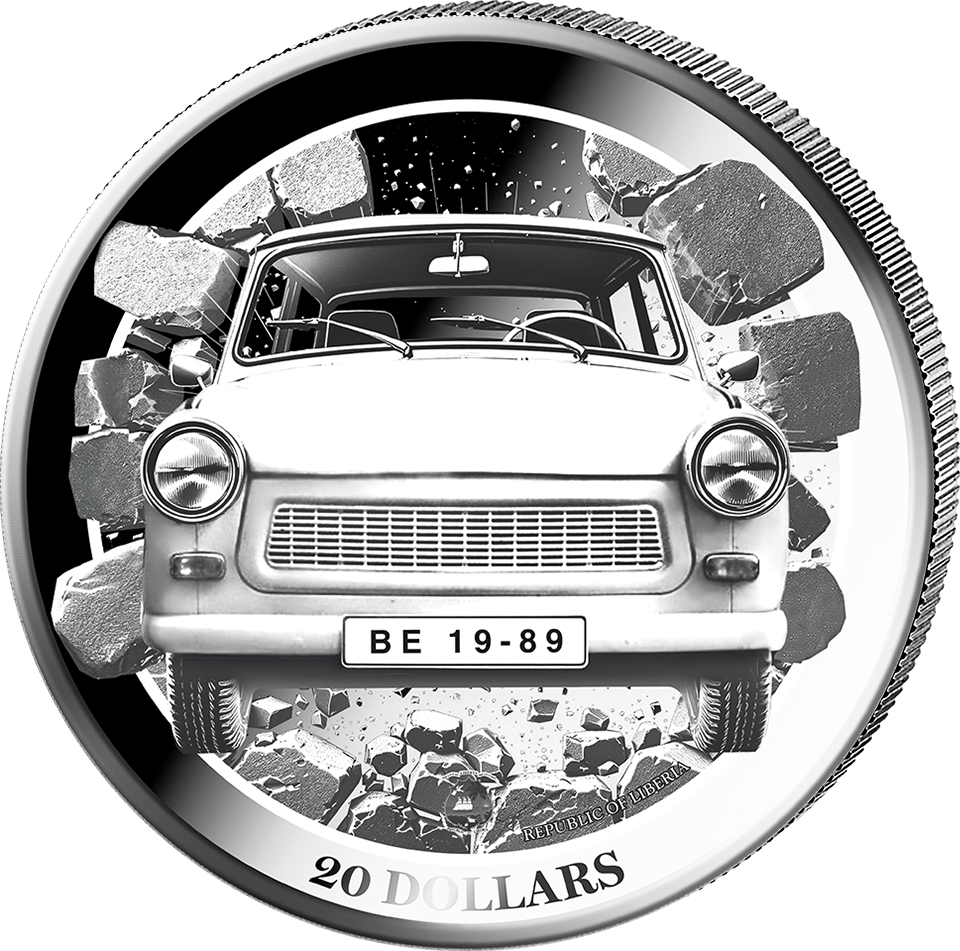
9 November 1989 on 1 oz silver. A Trabant breaks through the Wall.
On the value side a Trabant drives through the Wall, stones fly, in front is the plate BE 19‑89. After 28 years the Wall is open again that evening.
The motif side
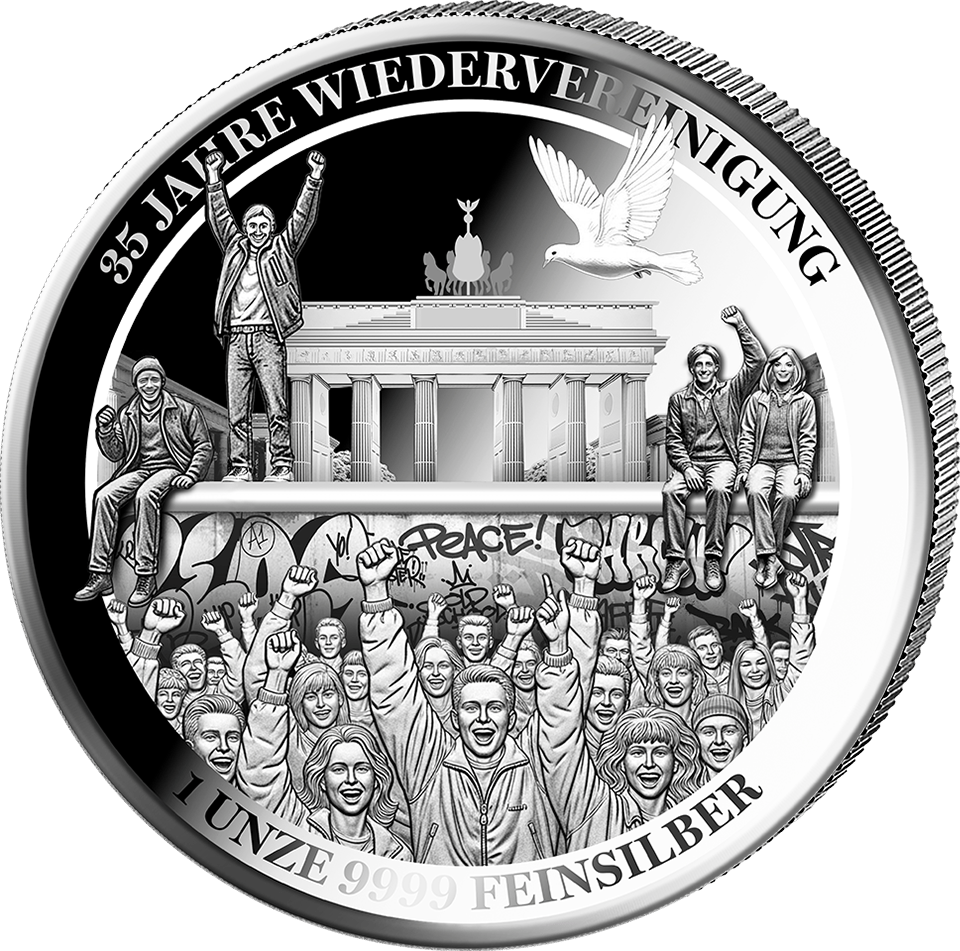
People on the Wall, behind them the Brandenburg Gate.
At the top it reads 35 JAHRE WIEDERVEREINIGUNG. On the morning of 10 November 1989 thousands stand in front of and on the Wall at the Brandenburg Gate.
- 9 November, 9:20 pmAt the Bornholmer Straße crossing the first GDR citizens leave for West Berlin.
- Around 11:30 pmThe crowd is so large that the barrier is opened for good.
- 10 November 1989A column of Trabis drives over Bornholmer Straße to West Berlin, Berliners cheer it on.

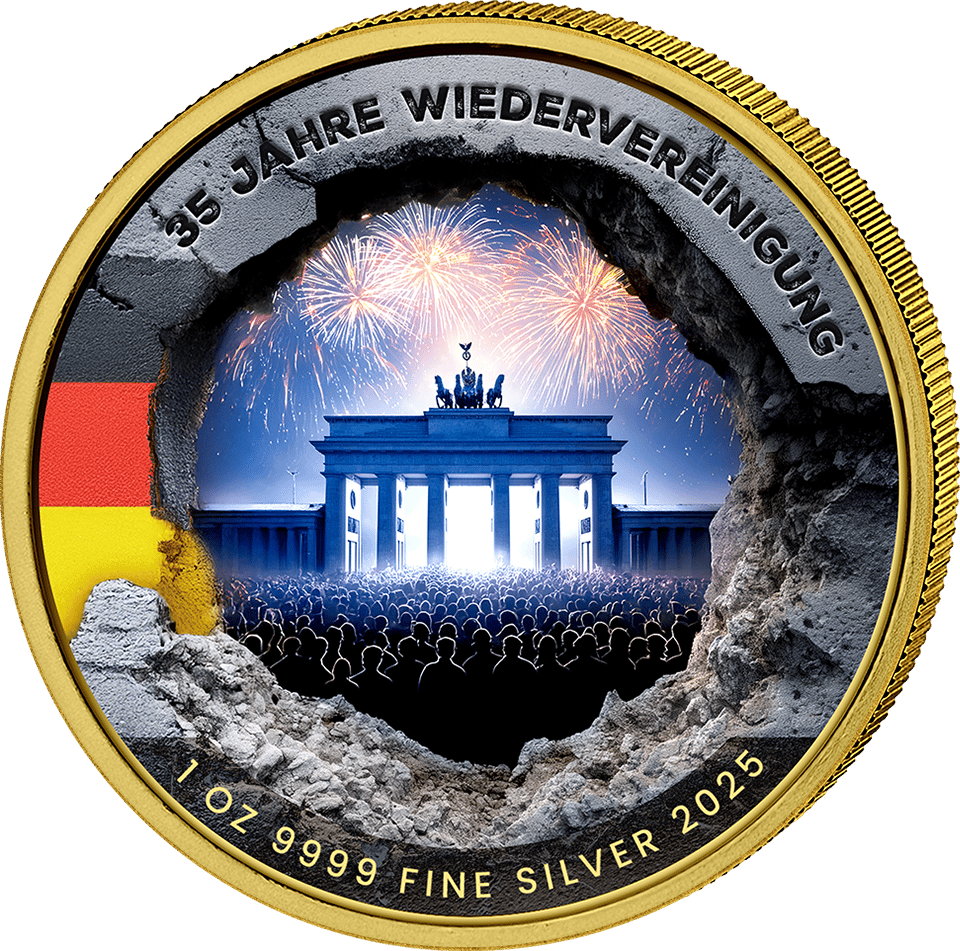
3 October 1990
Black, red and gold on the Wall. 35 years of reunification on 1 oz silver.
On 3 October 1990 the accession of the GDR under Article 23 of the Basic Law takes effect, and the GDR ends. Hundreds of thousands celebrate in front of the Reichstag, at midnight the federal flag is raised, the Freedom Bell rings, fireworks rise. In 2025 the day marks its 35th anniversary.
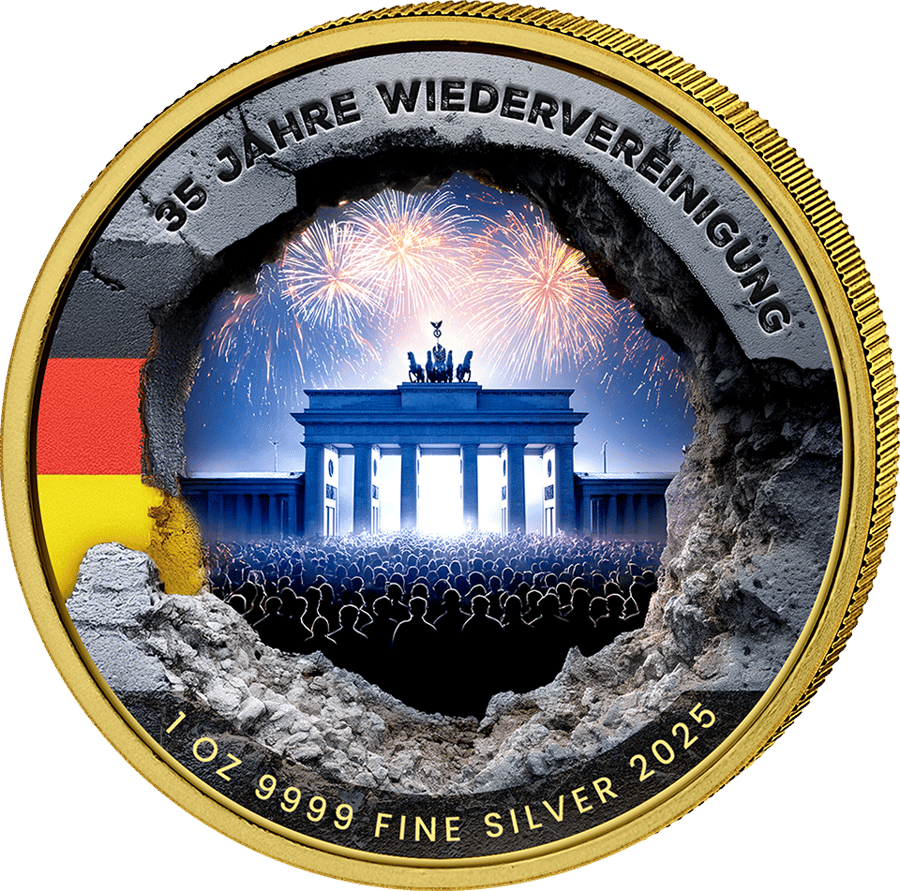
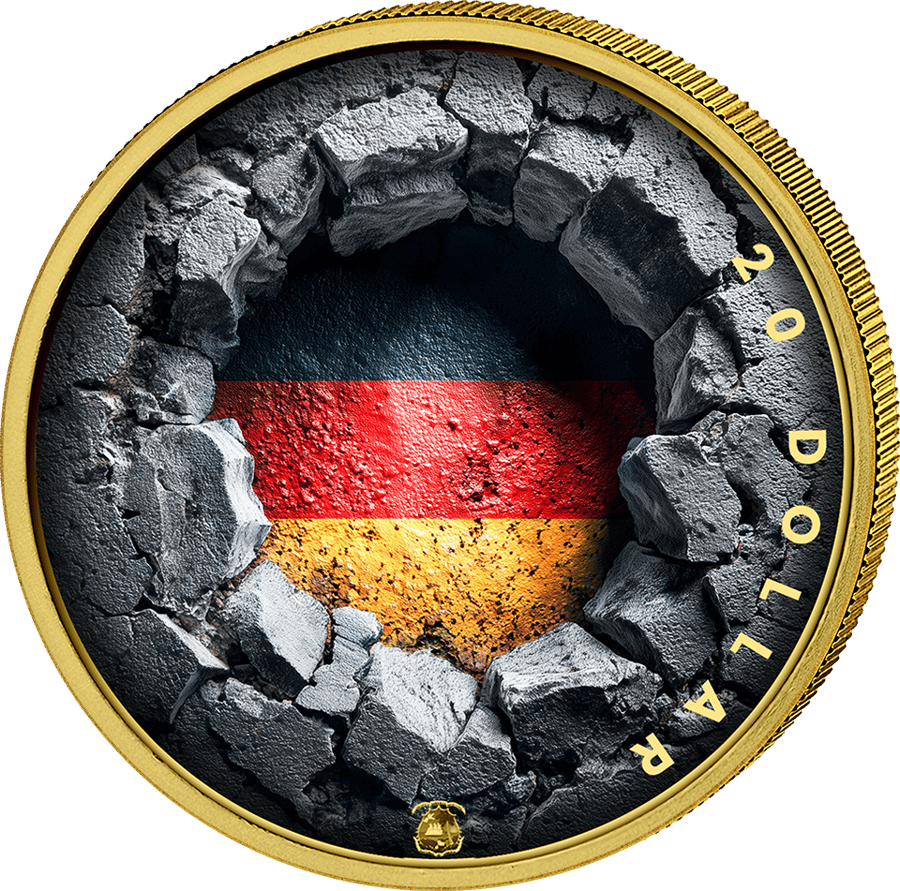
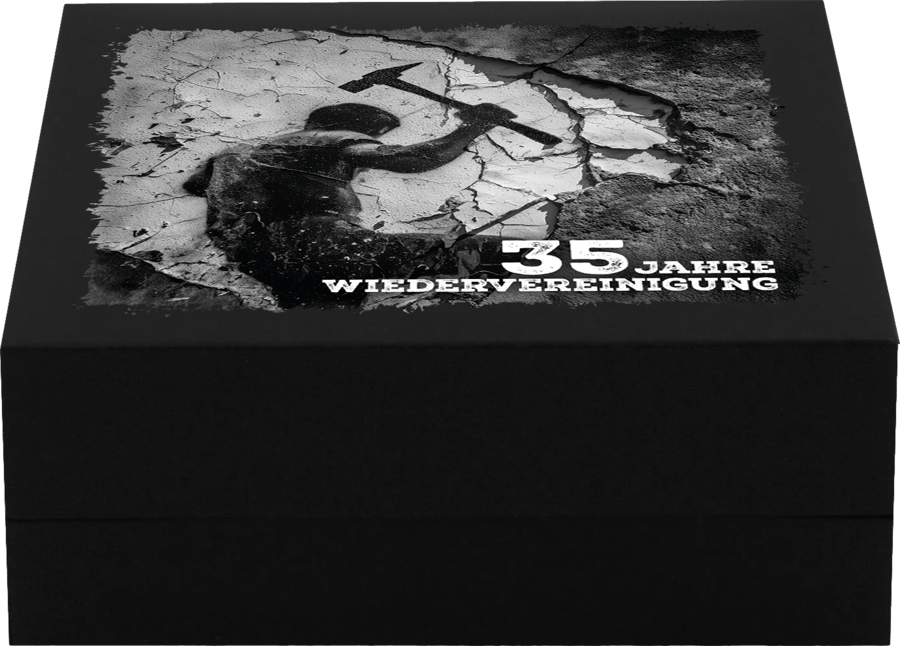
The value side
The flag behind broken stone, 20 DOLLAR at the golden rim.
1 oz silver 999.9/1,000 in brilliant uncirculated, coloured and partly gilded, issued by Liberia.
From the purse into history.The GDR coin set.
From the Mark of the GDR through the November night of 1989 to 3 October 1990: 6 issues tell the way to German unity.
GDR Coin Set (1948–1990) – six originals from four decades of German history
Four decades of German division, captured in six circulation coins: this GDR coin set brings together the typical denominations that millions of people between the Baltic Sea and the Ore Mountains held in their hands day after day. From 1 Pfennig to 1 Mark – each piece a genuine slice of everyday life from the German Democratic Republic. The set is delivered on an attractively designed blister card titled "Die Mark der DDR – Zeugen der deutschen Teilung" ("The Mark of the GDR – Witnesses of German Division"), which protects the set all around while also making it ready for display.
What's included in the circulation coin set?
The set comprises 6 coins in the classic denominations of GDR circulation coinage. Together they form a self-contained picture of the small change of that era:
1 Pfennig – aluminium, the famous lightweight of the series
5 Pfennig – aluminium
10 Pfennig – aluminium
20 Pfennig – brass, noticeably heavier and gold-coloured
50 Pfennig – aluminium
1 Mark – aluminium alloy
On the value side, oak leaves and the characteristic gear wheel frame the large value number, while the other side bears the state emblem of the GDR with hammer, compass and wreath of grain. The mint mark "A" refers to the Berlin mint, the country's most important minting facility. The gross weight of the complete set is around 13.15 grams – a telling indication of just how feather-light these circulation coins actually were.
"Alu-chips" with history
Because the smaller denominations were made of lightweight aluminium, they quickly earned the popular nickname "Alu-Chips" ("aluminium chips"). An exception is the 20-Pfennig piece made of brass: heavier, gold-coloured, and once indispensable at phone booths, cigarette vending machines and ticket machines. It is precisely this contrast that gives the set its appeal – six coins, two metals, one entire era. Anyone who picks up the pieces immediately feels the difference between the light Pfennig coins and the solid "twenty".
The Mark of the GDR – witnesses of a vanished era
The Mark of the GDR was legal tender until the currency union on 1 July 1990; the small Pfennig denominations remained valid in part even beyond that date. With the end of the GDR, these coins disappeared from circulation – and overnight became tangible witnesses of a state that no longer exists. Over more than 40 years, the name and design of the currency changed several times; the denominations gathered here are representative of the final and best-known version of this money.
For beginners, a circulation coin set like this is an ideal entry point into collecting GDR coins: instead of laboriously assembling individual years, you receive six matching coins in one unit. Those who already own individual GDR circulation coins can use it to complement their collection with a compact, display-ready overview of the most important denominations.
For collectors and history enthusiasts
Authentic originals – genuine circulated coins, no restrikes and no modern re-mintings
Complete in a blister pack – six coins, protected and thematically framed
Ideal gift – a vivid piece of German-German history, especially for people with a connection to the GDR era
Solid entry point – a low barrier to entry into the collecting field of Germany after 1945
Please note: these are circulated coins in varying grades of preservation. Each coin was actually in use and bears corresponding traces of its history – which is exactly what makes them honest witnesses of their time. Unlike investment products made of gold or silver, this set derives its appeal from its historical and collector value, not from its precious metal content.
Gold is humanity's oldest currency and has outlasted all others – yet historical circulation coins such as the Mark of the GDR also preserve a piece of memory and tell history you can hold in your hand.
Secure this compact GDR coin set and add six original witnesses of 40 years of German division to your collection.
Product image may differ from the actual product.
