Only 3 left to order
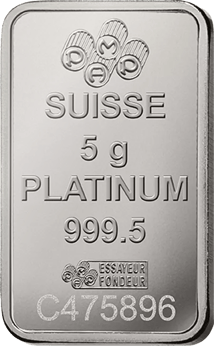
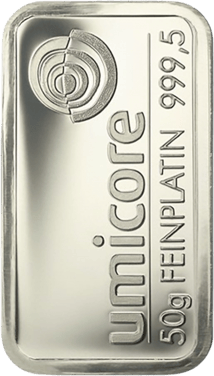
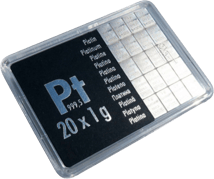
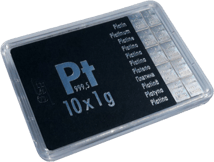
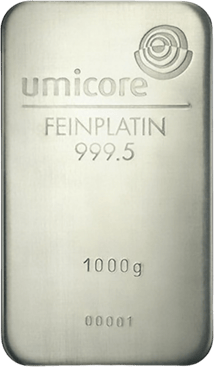
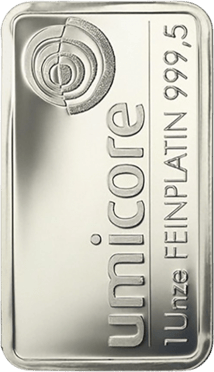
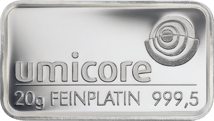
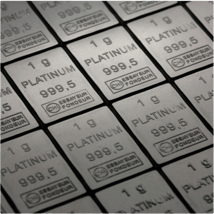
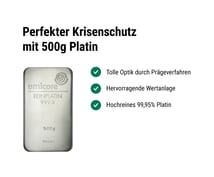
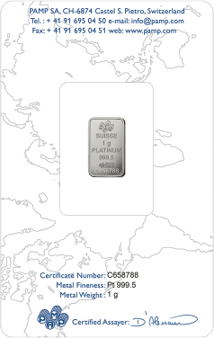
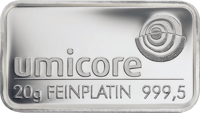
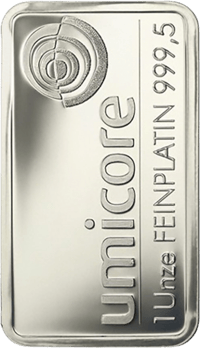
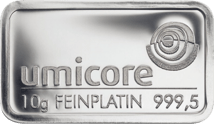
10g Platinum Bar Umicore, Degussa
826,67 €
incl. VAT and excl. shipping
Available in 2–3 business days
 More than 280,000
 Over 30 years
 Secure shipping
 Google: 4.9/5
The significance of platinum coins and platinum bars is growing. For investors, platinum can be a suitable addition as a complement for diversification of their own portfolio.


Platinum and palladium are two of the six platinum-group metals. All six have “similar physical and chemical properties and tend to occur together in nature”, writes the U.S. Geological Survey.
Atomic number, symbol and name. The metal of this page is highlighted.
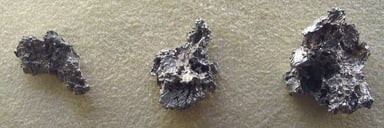
They come together in magma. When it becomes saturated with sulphur, a sulphide melt separates out, and the platinum-group metals preferentially concentrate in it. Deposits of this kind provide almost everything that is mined.
The upper crust contains, on average, half a milligram of platinum per tonne. Ores mined for platinum-group metals contain 5 to 15 grams of all six combined per tonne. Our own calculation: around 10,000 to 30,000 times as much.
Platinum ends up mainly in minerals of its own. In most rocks they are tiny: from less than a thousandth to a few tenths of a millimetre.
“Most geologists can spend a lifetime working on rocks enriched in PGEs and never see a platinum-group mineral in a hand specimen.”
U.S. Geological Survey, 2017
On the coast along what is now the border between Colombia and Ecuador, the La‑Tolita‑Tumaco culture knew platinum some centuries before Christ. Its goldsmiths combined it with gold: they sintered both into alloys, coated gold with platinum and plated objects with foil made of both metals. The sophistication of their metalworking was “in some cases, unique in the world”, writes David A. Scott.

Many centuries later, in 1786, Pierre François Chabaneau succeeded in producing malleable platinum in Madrid, aided by Fausto de Elhuyar. A royal decree of 1787 kept the process secret. The laboratory in Calle Hortaleza was called “Casa de la Platina”. There and in a second laboratory, 435 to 560 kilograms of platinum were produced.
The steps after the study in Mineralogical Magazine, 2020.
“the ingots, all too often cracked and sometimes even crumbled away under the hammer, all for no apparent reason”
Chaston, 1980, quoted in Mineralogical Magazine, 2020
A study from 2020 sees the cause here: the platinum still contained the other platinum-group metals.

William Willis invented platinum printing in 1873. The image first forms from light-sensitive iron salts. During development, these are dissolved out and replaced by platinum, as the Victoria and Albert Museum describes it. In the end, the image consists of platinum.
The prints were prized for their wealth of subtle tonal gradations, mostly silvery greys, and for their permanence. Today, platinum printing is enjoying a return in fine-art photography.
In 1886, Peter Henry Emerson shows cargo sailing boats near Cantley in Norfolk, waiting for the turn of the tide. The print is Plate XXIV of the book “Life and Landscape on the Norfolk Broads”.
In June 1924, A. F. Lombaard panned gravel from a dry river bed on the farm Maandagshoek in South Africa. He found “a few specks of heavy white metal” and immediately suspected platinum. His concentrate was sent to Hans Merensky on 7 June; on 12 August, Merensky joined him in the field.
The most important discovery followed in the first half of September: the rock layer now known as the Merensky Reef. The reports of 1925 do not say who took the first sample, and no one recorded the exact day.
A reef like this is usually a rock layer centimetres to metres thick, extending over tens to hundreds of kilometres. The Merensky Reef can be traced throughout the eastern and western parts of the Bushveld Complex.
The complex is around 2.05 billion years old and underlies an area of around 69,000 km². According to the U.S. Geological Survey (as of 2017), 7,200 tonnes of platinum-group metals have been mined there since the 1920s.
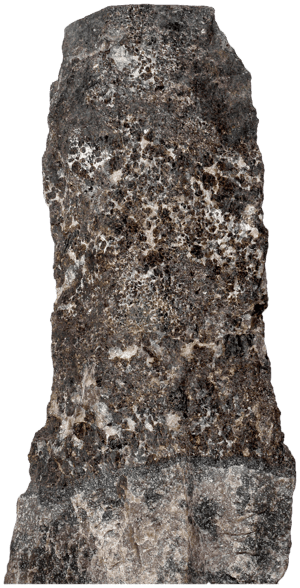
Diagram, not to scale: the band is drawn much thicker than it would be in proportion.
Six stages lie between the ore and the metal. At the refinery, the other metals are separated out first, then the six platinum-group metals from one another, until each is more than 99.99 per cent pure. They are supplied as bars, granules or a fine powder called “sponge”.
After the U.S. Geological Survey, 2017.
For wholesale trade in London and Zurich, the London Platinum and Palladium Market specifies what a bar must be like: 1 to 6 kilograms in weight, at least 999.5/1,000 fine, with edges that are not sharp.
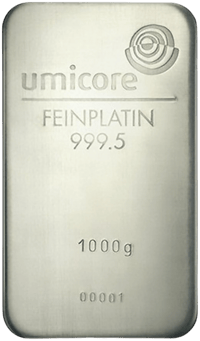
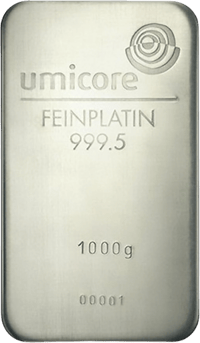
Diagram of the larger surface after the Good Delivery Rules, without real marks. Alongside it, a kilo bar from the shop.
In the ore, platinum usually occurs alongside palladium and the other four platinum-group metals; only the refinery separates them. The palladium page tells how the palladium coin of 2017 came into being.
Receive a free and individual precious metals offer matching your financial goals within just a few minutes.
 Request offer now
Platin ist das stille, seltene Schwergewicht unter den Edelmetallen: Rund 30-mal seltener als Gold, unverzichtbar in Industrie und Medizin und lange sogar wertvoller als das gelbe Metall. Wer Platin kaufen möchte, bewegt sich abseits des Mainstreams – in einem Markt mit überschaubarer Auswahl, starken Preisschwankungen und einem besonderen Reiz für alle, die ihr Edelmetall-Portfolio breiter aufstellen wollen. Dieser Ratgeber beleuchtet die wichtigsten Eigenschaften, Stückelungen, steuerlichen Besonderheiten, Echtheitsmerkmale und Marktfaktoren von Platinbarren und Platinmünzen.
Platin trägt im Periodensystem das Elementsymbol Pt und die Ordnungszahl 78. Es zählt zur Gruppe der Platinmetalle, zu der auch Palladium, Rhodium, Ruthenium, Osmium und Iridium gehören. Chemisch gilt Platin als äußerst korrosionsbeständig, dehnbar und schmiedbar – und es besitzt einen sehr hohen Schmelzpunkt von rund 1.768 Grad Celsius. Diese Kombination aus Robustheit und Beständigkeit macht das Metall in vielen technischen Anwendungen praktisch unersetzbar.
Der wohl wichtigste Verwendungszweck ist die katalytische Wirkung: In Fahrzeugkatalysatoren wandelt Platin Schadstoffe in weniger schädliche Verbindungen um. Hinzu kommen Anwendungen in der Medizintechnik – in nahezu jedem Herzschrittmacher steckt etwas Platin – sowie in der Schmuck- und Chemieindustrie. Dieser hohe Industrieanteil unterscheidet Platin grundlegend von Gold, dessen Nachfrage stärker von Anlage- und Schmuckmotiven getragen wird.
Ein Großteil der weltweiten Platinvorkommen stammt aus Südafrika, ergänzt durch Russland, Simbabwe, Kanada und die USA. Historisch entstand Platin oft als Nebenprodukt der Goldsuche – in Russland wurde daraus sogar einmal der legendäre Platinrubel geprägt. Weil die Förderung stark auf wenige Regionen konzentriert ist, reagiert der Markt empfindlich auf Produktionsausfälle. Zunehmend gewinnt das Recycling an Bedeutung, bei dem Altmaterial in Königswasser aufgelöst und das Metall zurückgewonnen wird. Neben reinem Platin existieren zahlreiche Legierungen, etwa das in der Schmuckverarbeitung genutzte Fasserplatin mit rund 96 Prozent Platin- und 4 Prozent Palladiumanteil.
Wer physisches Platin erwerben will, hat grundsätzlich zwei Wege: den funktionalen Platinbarren oder die motivstarke Platinmünze. Beide Varianten werden nach dem aktuellen Tagespreis pro Feinunze gehandelt und weisen in der Regel den Namen des Herstellers auf. Anders als bei Gold und Silber ist das Angebot an Platinprodukten deutlich kleiner – genau darin liegt für manche Sammler und Anleger der besondere Reiz.
Platinbarren gelten nach wie vor als Nischenprodukt neben Goldbarren und Silberbarren. Sie erreichen typischerweise eine Feinheit von 999,5 und stammen von renommierten Scheideanstalten wie Umicore, Heraeus und Degussa. Die gängigen Stückelungen reichen von kleinen 5- und 10-Gramm-Einheiten bis hin zum 1-Kilogramm-Barren. Kleine Gewichte bieten Flexibilität beim späteren Verkauf, größere Barren punkten mit einem geringeren Aufgeld pro Gramm.
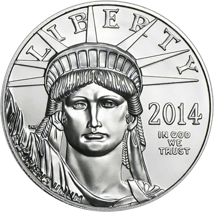
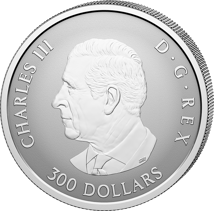
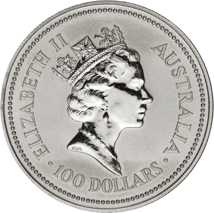
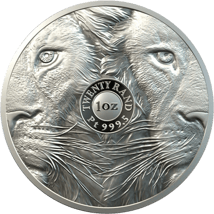
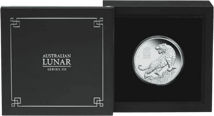
Platinmünzen erreichen üblicherweise eine Feinheit von 999,5 und erscheinen häufig als Platinvariante bekannter Klassiker. So gibt es den Wiener Philharmoniker und den Maple Leaf im vertrauten Design auch in Platin. Beliebt sind zudem die Cook-Islands-Münze mit dem berühmten Segelschiff Bounty, der American Eagle, die Britannia sowie das australische Känguru-Nugget. Weil die Auflagen und Motivzahlen gering ausfallen, tragen viele Platinmünzen einen ausgeprägten Sammlercharakter – das kann Wertsteigerungspotenzial bergen, macht die Preisbildung aber auch weniger transparent als bei reinen Anlageprodukten.
Ein wesentlicher Unterschied zu Anlagegold: Während physisches Anlagegold in Deutschland umsatzsteuerbefreit ist, unterliegt Platin grundsätzlich der Umsatzsteuer. Damit ähnelt die steuerliche Behandlung eher der von Silber. Für Anleger ist dieser Punkt bei der Kalkulation des Einstiegspreises entscheidend, da die Steuer die Anschaffungskosten spürbar beeinflusst.
Steuerlicher Hinweis
Platin gilt in Deutschland – anders als Anlagegold – nicht als umsatzsteuerbefreit. Bei bestimmten Platinmünzen kann die Differenzbesteuerung zur Anwendung kommen. Die konkrete steuerliche Behandlung hängt vom Einzelfall ab; dieser Hinweis ersetzt keine steuerliche Beratung durch einen Fachmann.
Wie bei anderen Edelmetallen gilt beim privaten Verkauf zudem die einjährige Spekulationsfrist: Wird physisches Platin länger als zwölf Monate gehalten, sind etwaige Veräußerungsgewinne für Privatpersonen in der Regel steuerfrei. Wer die steuerlichen Rahmenbedingungen kennt, kann Platin als bewusste Beimischung zur Diversifikation eines breit aufgestellten Portfolios einordnen.
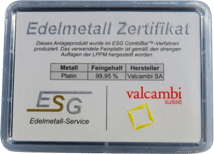
Seriöse Platinprodukte tragen klare Angaben zu Hersteller, Feingewicht und Feingehalt. Barren namhafter Scheideanstalten sind oft mit Prägenummer und Zertifikat versehen und für den internationalen OTC-Handel zugelassen, was die weltweite Handelbarkeit erleichtert. Beim Kauf lohnt der Blick auf einige zentrale Merkmale:
Bei Kettner Edelmetalle durchläuft jedes Produkt eine ISO-konforme Echtheitsprüfung, bevor es das Hochsicherheits-Logistikzentrum verlässt. Für die sichere Aufbewahrung zu Hause bieten sich passende Münzkapseln und Münzkassetten an, die das empfindliche Prägebild vor Kratzern und Umwelteinflüssen schützen.
Der Platinpreis wird von einem Zusammenspiel aus Industrienachfrage, Fördermenge und Anlageinteresse bestimmt. Über weite Strecken blieb Platin hinter Gold und Palladium zurück, weil in der Automobilindustrie verstärkt Palladium in Katalysatoren zum Einsatz kam. Steigt jedoch der Palladiumpreis, wird eine Rückkehr zu Platin für die Industrie wieder attraktiver – ein Faktor, der die Nachfrage künftig stützen kann.
Charakteristisch für Platin sind seine ausgeprägten Preisschwankungen. Der hohe Industrieanteil sorgt dafür, dass konjunkturelle Entwicklungen und Angebotsengpässe stärker durchschlagen als bei reinen Anlagemetallen. Diese Volatilität kann Chancen wie Risiken bedeuten – eine Wertentwicklung lässt sich daraus nicht ableiten. Genau deshalb sehen viele Anleger Platin nicht als Ersatz, sondern als Ergänzung zu klassischen Anlagemünzen aus Gold und Silber.
Ein Metall, das Gold an Seltenheit übertrifft und dennoch abseits des Rampenlichts gehandelt wird – darin liegt die eigentliche Faszination von Platin.
Wer Platin wieder veräußern möchte, sollte den aktuellen Tagespreis im Blick behalten, denn Platinbarren und Platinmünzen werden stets zum tagesaktuellen Kurs gehandelt. Vor einem Verkauf lohnt der Vergleich mehrerer Anbieter, da Ankaufspreise und Gebühren variieren. Gut erhaltene Ware in Originalverpackung und mit Zertifikat lässt sich in der Regel besser verwerten als beschädigte Stücke.
Ob als langfristige Beimischung oder als besonderes Geschenk mit bleibendem Wert – Platin verbindet den nüchternen Charakter eines Industriemetalls mit dem emotionalen Reiz der Seltenheit. Für Einsteiger bietet sich der Start mit kleinen Stückelungen an, während erfahrene Anleger Platin gezielt in eine breit gestreute Strategie neben Silbermünzen und Goldklassikern einbinden.
Ja. Platin kommt in der Erdkruste deutlich seltener vor als Gold und wird jährlich in weit geringeren Mengen gefördert. Die Vorkommen konzentrieren sich zudem auf wenige Regionen, allen voran Südafrika, was den Markt anfälliger für Angebotsschwankungen macht.
Grundsätzlich ja. Anders als Anlagegold ist Platin in Deutschland nicht von der Umsatzsteuer befreit. Bei bestimmten Platinmünzen kann die Differenzbesteuerung greifen. Die genaue Behandlung hängt vom Einzelfall ab und sollte im Zweifel mit einem Steuerberater geklärt werden.
Anlageprodukte aus Platin weisen üblicherweise eine Feinheit von 999,5 auf. Barren stammen häufig von Scheideanstalten wie Umicore, Heraeus oder Degussa, während Platinmünzen von staatlichen Prägestätten ausgegeben werden.
Zu den gefragten Motiven zählen der Wiener Philharmoniker, der kanadische Maple Leaf, die Cook-Islands-Münze mit dem Segelschiff Bounty, der American Eagle, die Britannia und das australische Känguru-Nugget. Viele erscheinen im gleichen Design wie ihre bekannten Gold- und Silberpendants.
Platin hat einen hohen Industrieanteil, vor allem in der Automobil- und Medizintechnik. Konjunkturelle Entwicklungen, Fördermengen und der Preisabstand zu Palladium wirken sich daher unmittelbar auf den Kurs aus, was zu ausgeprägten Preisschwankungen führt.
Platin wird von vielen Anlegern als Beimischung genutzt, um ein Edelmetall-Portfolio über Gold und Silber hinaus breiter aufzustellen. Aufgrund der Volatilität und des Industriebezugs sollte es als Ergänzung und nicht als alleiniger Baustein betrachtet werden. Eine individuelle Anlageentscheidung hängt stets von den persönlichen Zielen ab.
Stay informed with product launches, financial news and exclusive offers. Sign up for our free newsletter today.
By entering your email address and clicking the "Submit" button, you give the following consent: "I agree to be informed by email about new products, financial news and exclusive offers, and therefore consent to the processing of my email address for the purpose of sending the newsletter. I can revoke this consent at any time without giving reasons, with effect for the future. The lawfulness of processing carried out prior to revocation remains unaffected."