





Silver Denarius Emperor Antoninus Pius (138-161 AD | Era of Peace)
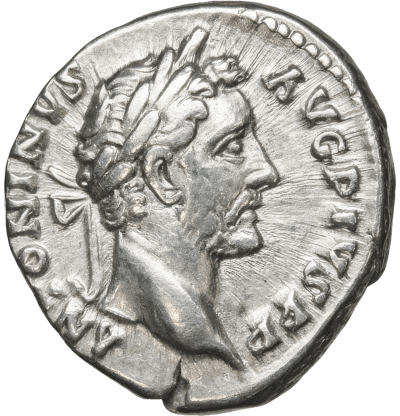
- Genuine Original: almost 1,900 years old
- Emperor's Portrait: predecessor of Marcus Aurelius
- Hand-Struck: each piece a unique find
- Genuine OriginalNot a replica, but real coinage from the Roman Imperial era
- Emperor's PortraitLaurel-wreathed portrait with Latin inscription
- Hand-StruckHand-struck, with its own patina and traces of time
Unfortunately, this item is currently out of stock. We will be happy to send you an email as soon as this product becomes available again.
- Genuine Original: almost 1,900 years old
- Emperor's Portrait: predecessor of Marcus Aurelius
- Hand-Struck: each piece a unique find
 Price alert
  Share
Share
Ancient original · The Roman empire
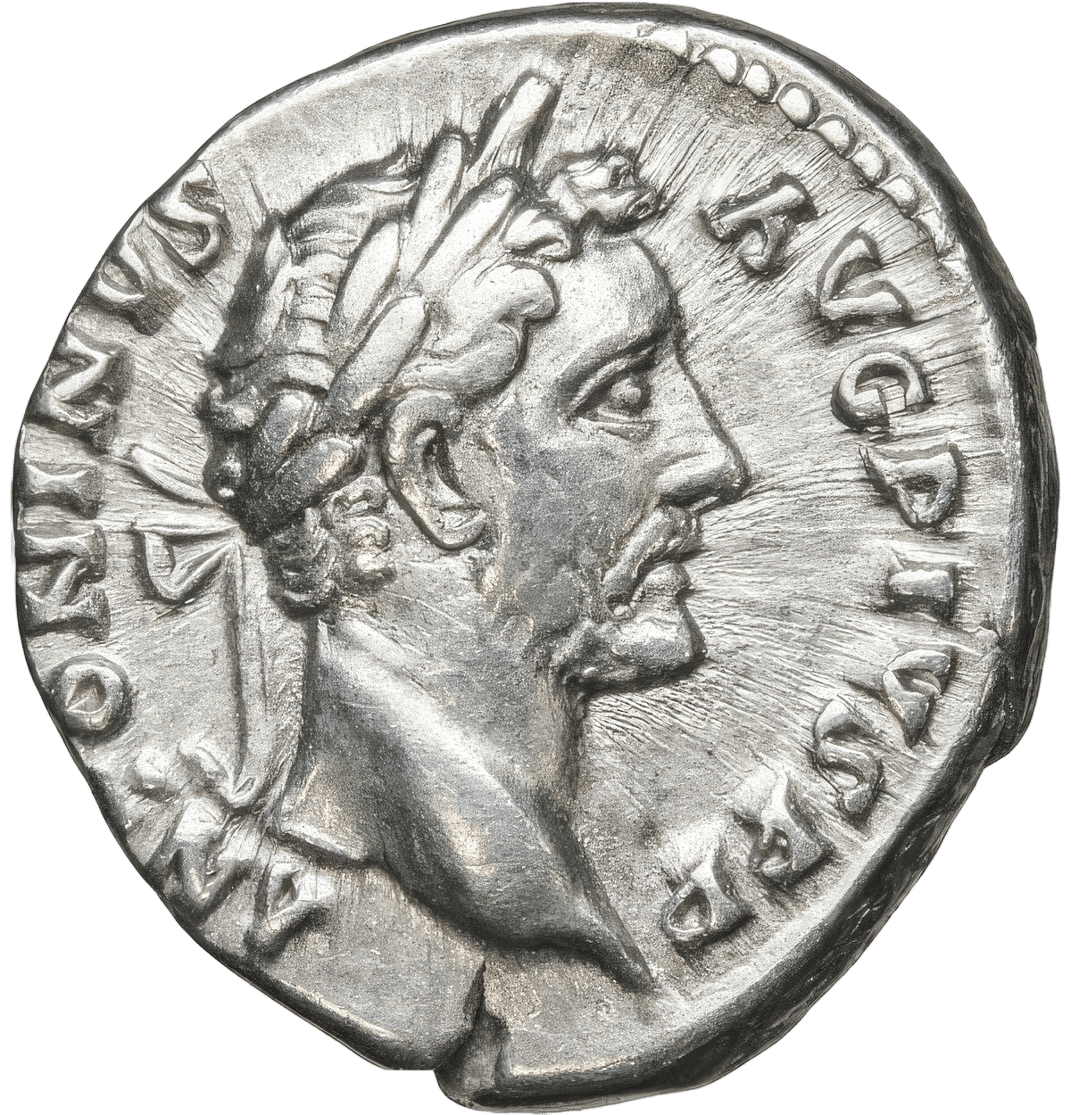
Denarius of Antoninus PiusAbout 1,900 years old.
In the 1st and 2nd centuries, 25 denarii were worth one gold aureus. It was about the same size as a denarius.
- Ruler
- Antoninus PiusAD 138 to 161
- Diameter
- c. 18 mm
- Weight
- c. 3 g
In the 1st and 2nd centuries, 25 denarii were worth one gold aureus. It was about the same size as a denarius.
- Ruler
- Antoninus PiusAD 138 to 161
- Diameter
- c. 18 mm
- Weight
- c. 3 g

The Roman empire · 27 BC to AD 235
The leading currency of the Mediterranean.
For more than two hundred years the denarius was the leading currency of the Mediterranean and paid for the army and administration of an empire reaching from Britain to the Euphrates. Under Augustus a legionary received, according to Tacitus, ten asses a day, about 225 denarii a year. On the reverse the emperor advertised himself: his victories, his piety, his wife.
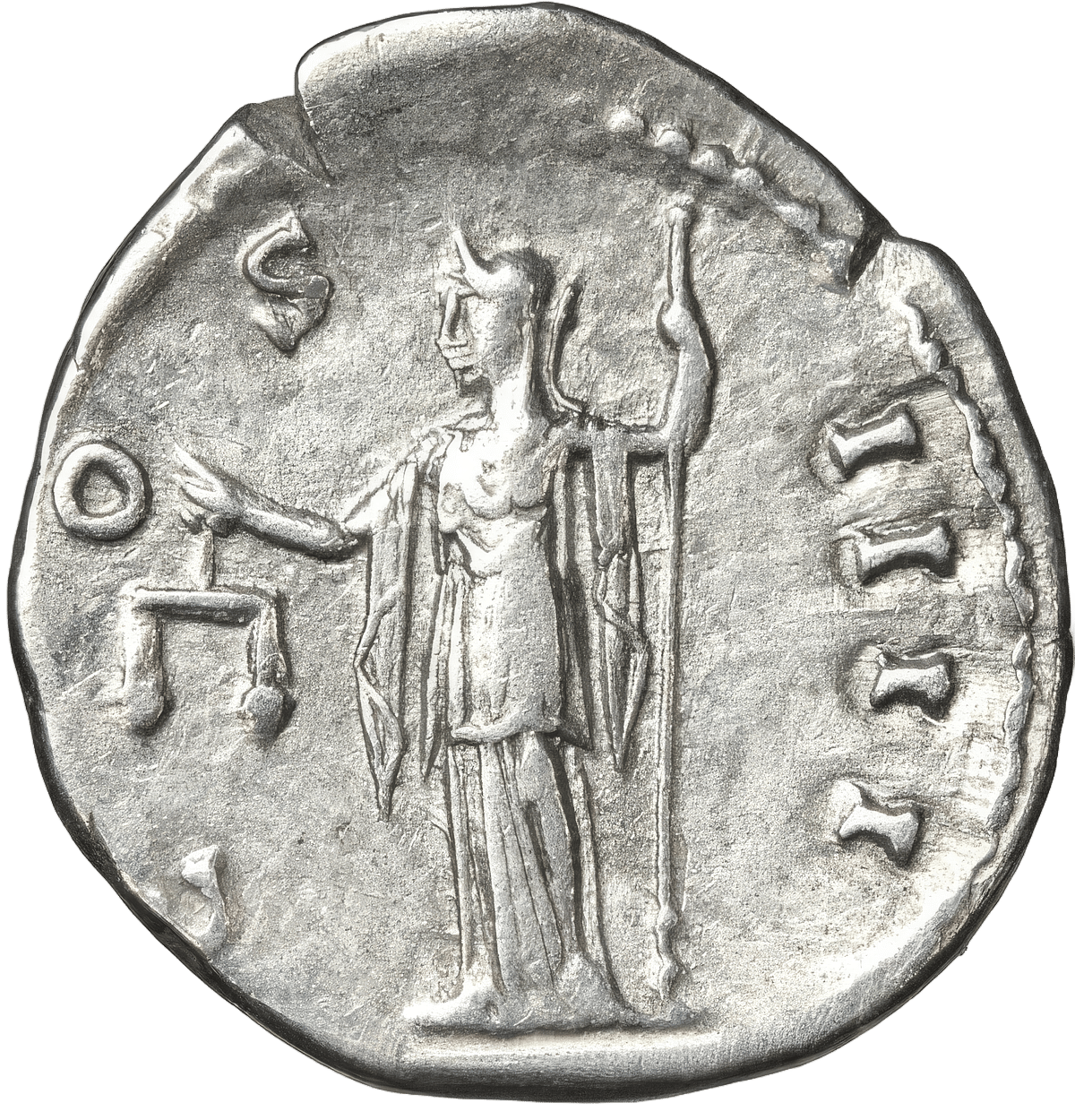
The picture shows an example. The piece you receive may differ in detail.
At the same scale
Denarius, antoninianus, follis and solidus at the same scale
Three sizes are called follis here: about 27 mm in the tetrarchy, 20 mm under Constantine and his sons, 28 mm under Justinian.
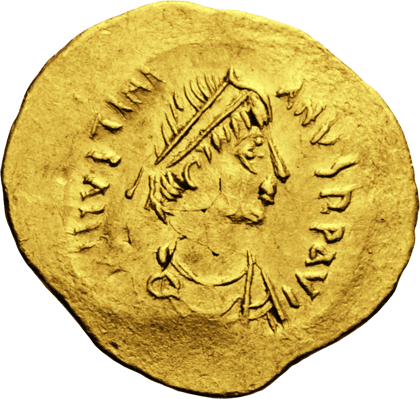 TremissisJustinian I
16 mm
TremissisJustinian I
16 mm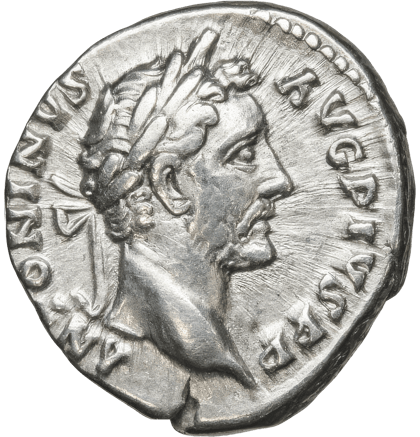 DenariusAntoninus Pius
c. 18 mmthis page
DenariusAntoninus Pius
c. 18 mmthis page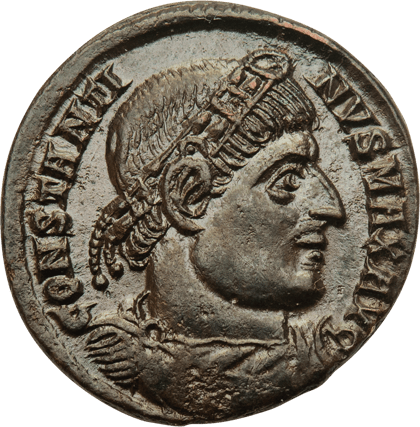 FollisConstantine I
20 mm
FollisConstantine I
20 mm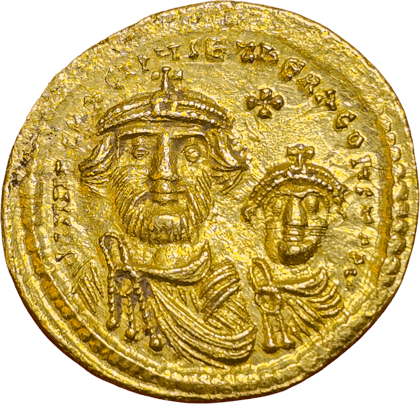 SolidusHeraclius
20 mm
SolidusHeraclius
20 mm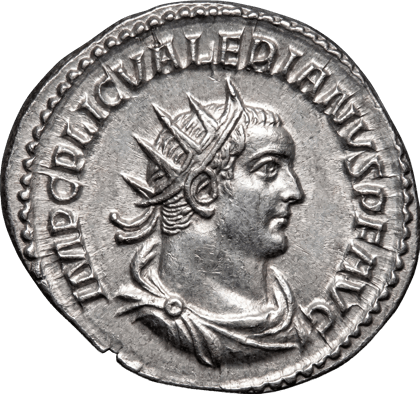 AntoninianusValerian I
21 to 23 mm
AntoninianusValerian I
21 to 23 mm 1 eurofor comparison
23.25 mm
1 eurofor comparison
23.25 mm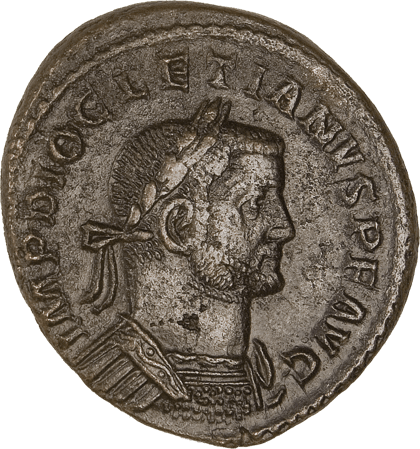 FollisDiocletian
27 mm
FollisDiocletian
27 mm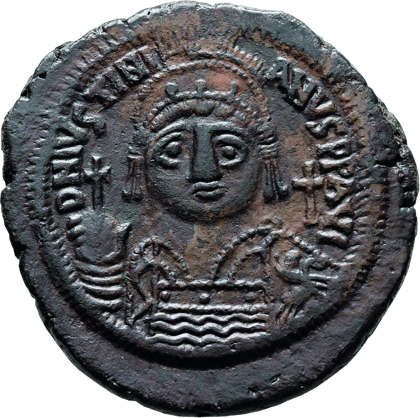 FollisJustinian I
28 mm
FollisJustinian I
28 mmWhere it belongs
31 originals from about 1,100 years
Each piece stands at the years of its ruler or of its type. The era of this piece is highlighted; choose another one to see its originals.
The Roman empire 27 BC to AD 235 · 5 originals
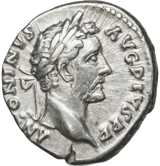 Denarius of Antoninus PiusAD 138 to 161this page
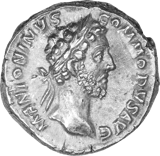 Denarius of CommodusAD 180 to 192
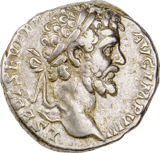 Denarius of Septimius SeverusAD 193 to 211
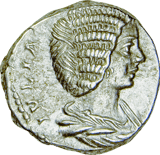 Denarius of Julia DomnaAD 193 to 211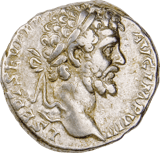
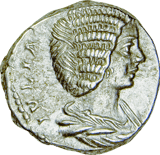 Denarius pair, Severus and Julia DomnaAD 193 to 211

Keeping it
First things first: do not clean it.
The dark layer on bronze and the matte grey on silver are called patina. It has grown over centuries and protects the surface. Polishing it away takes that protection from the piece.
- Hold it by the edgeSkin oil can etch itself permanently into the surface. Take the piece by the rim between thumb and forefinger, over a soft surface.
- Store each piece on its own, and dryKeep each piece on its own in a dry place, in a capsule or an acid-free case. PVC sleeves do not belong there, they attack the surface.
- No agents, no polishing clothNo vinegar, no silver cloth, no ultrasound. According to the Bank of Canada Museum, almost any attempt at cleaning without a conservator leaves damage, mostly from abrasion.

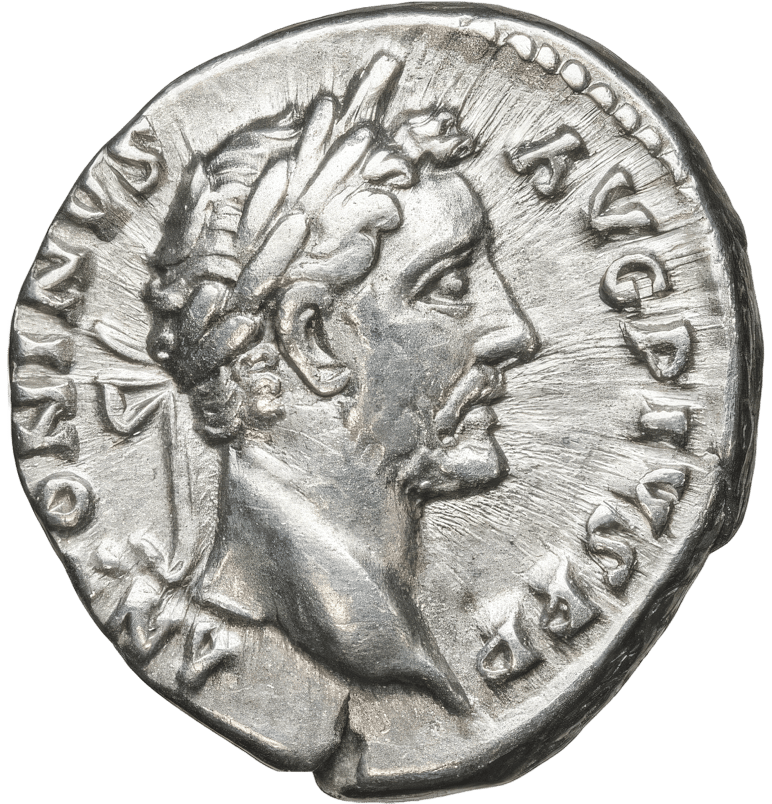
Struck about 1,900 years ago.
Antoninus Pius and his world are long gone. The piece has remained, with the traces of its circulation.
Silver Denarius of Emperor Antoninus Pius – a hand-struck original from Rome's Golden Age
Almost 1,900 years. That's how long it has been since a Roman mint master placed this blank between two dies and let the hammer fall. What you are acquiring here is not a modern re-strike and not a replica, but a genuine means of payment from the Roman Imperial era: a silver denarius from the reign of Emperor Antoninus Pius, 138–161 AD. Merchants, legionaries and farmers have passed this piece through their fingers – long before there were banks, paper money or screens.
Antoninus Pius: the "Peace Emperor" on the throne of the Empire
Antoninus Pius was born on 19 September 86 near Lanuvium and reigned from 10 July 138 until his death on 7 March 161. He was the fourth of the six Adoptive Emperors and founder of the Antonine dynasty – under his rule the Roman Empire experienced its last extended period of peace. During the Principate, his reign was the second longest after Augustus. Remarkably, he never once left Italy as emperor.
He bore the epithet Pius, "the Pious", from the moment he pushed through the deification of his predecessor Hadrian in his first year of rule. In Britannia, he had the empire's frontier moved forward roughly 160 kilometers north of Hadrian's Wall to what became known as the Antonine Wall, named after him. He honoured his wife Faustina the Elder with a temple on the Roman Forum, which remains one of the best-preserved buildings in Rome to this day. His adoptive sons Marcus Aurelius and Lucius Verus succeeded him.
Obverse, reverse – state propaganda in silver
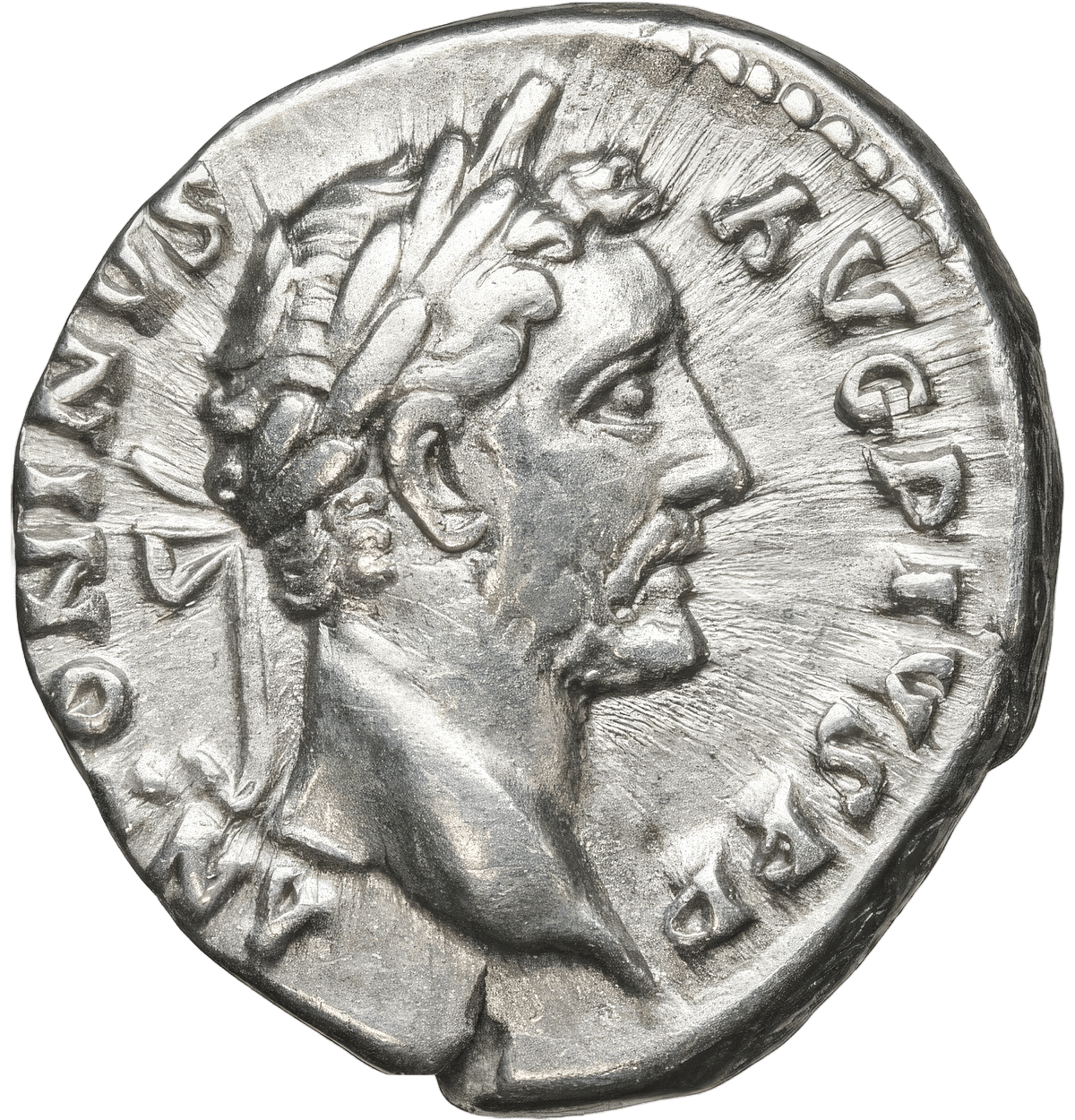
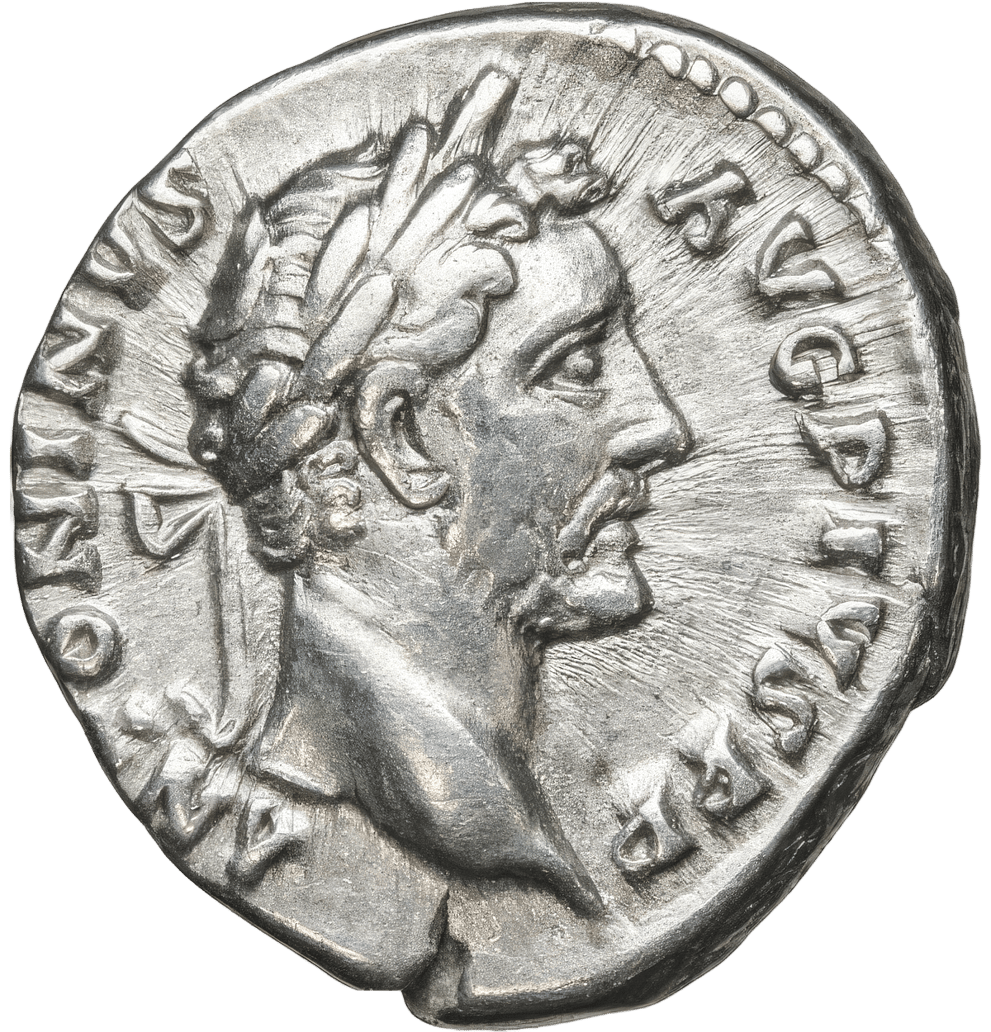
The obverse shows the laureate portrait of the emperor facing right, surrounded by his Latin titulature (typically ANTONINVS AVG PIVS P P). The reverses, on the other hand, are highly varied: personifications such as Aequitas, Salus, Annona, Pax or Liberalitas, often combined with legends like TR POT COS. Anyone who lays several denarii side by side reads the political message of an entire era – justice, provision, prosperity, peace.
Key facts about this coin
- Face value: Denarius
- Material: Silver, fineness: not specified
- Gross weight: approx. 3 g
- Diameter: approx. 18 mm
- Minting period: 138–161 AD, year of issue and mint vary
- Country of origin: Roman Empire
- Investment type: Coin, collector's item from the "History" series
- Shipping: insured value shipping
For context: the denarius was the silver backbone of the Roman monetary system – 25 denarii equalled one gold aureus, with the sestertius and as, made of base metals, ranking below it. The silver content of imperial coinage in the 2nd century stood at around 93 percent and was reduced to about 83 to 84 percent around 148 AD. A lesson that still occupies investors today: currency debasement is nothing new.
Condition: traces of 19 centuries
These pieces are circulated means of payment and bear corresponding traces: darker patina, individual centering, nicks, wear, and occasionally weaker areas of the legend. This is exactly what makes them appealing. Since the year of minting, mint mark and reverse variant may differ, the piece you receive will differ from the image shown – you are getting an original, not a mass-produced item. Please understand that the image in the shop is an example and may individually differ from the delivered item in terms of appearance and condition due to historical circumstances. Each of these coins was struck by hand. The depiction of the reverse may vary.
A denarius of Antoninus Pius is history you can hold in your hand: no catalogue photo, no museum glass – but genuine silver that has outlasted the fall of a world empire.
Why silver – and why ancient silver coins?
Silver has been a monetary metal, store of value and status symbol for thousands of years. Unlike fiat money, whose purchasing power depends on trust in governments, the metal possesses an intrinsic value derived from its physical properties. For many investors, silver coins are therefore a fixed component of their portfolio:
- A tangible asset in hand: Silver is durable, divisible, tradable worldwide, and liquid.
- Inflation hedge: As a scarce precious metal, silver traditionally serves as protection against loss of purchasing power.
- Crisis protection: Small silver units are in demand as a medium of exchange in times of currency instability.
- Industrial base: Electronics, solar technology and medical technology consume silver continuously – with limited supply.
- Tax-attractive: Profits from the sale of physical silver are generally tax-free for private individuals, provided a minimum holding period of one year is observed.
- Generational value: Silver can be passed on easily to the next generation – this denarius has already proven that.
Comparison: ancient denarius or modern bullion coin?
A modern silver ounce offers more metal per piece, standardized fineness and close alignment with the spot price – ideal for predictable wealth accumulation. The denarius plays in a different league: its value derives not only from the silver, but from rarity, age and historical significance. Similar fascination is offered by denarii of Marcus Aurelius, Hadrian or coins struck for Faustina; the Antoninus Pius denarius is regarded as a particularly accessible entry point into Roman numismatics – a well-known emperor, a clearly recognizable portrait, a piece of the Pax Romana.
Our tip: combine both. Modern silver products for substance, ancient originals like this denarius for collector's joy and character in your holdings. Gold is humanity's oldest currency and has outlived all others – silver has accompanied it for just as long. This denarius has outlasted emperors, wars and monetary reforms. It is the best witness to the fact that genuine precious metal endures long after paper promises have been forgotten.
Product depiction may differ from the final product.